Blake Johnston: Grief, the Ocean and Doing Hard Things
77 min
Listen through the publisher, then discuss the episode here or arrange an in-person Roundtable. Your city determines where to meet.
Roundtables are designed for groups of four, with a shared subject and room for everyone to speak. Come for discussion, with no dating expectation.
Blake Johnston grew up in Cronulla with four brothers, a surfboard under his arm and a dad he still calls his hero. After losing his dad to suicide, Blake faced grief, guilt and questions he couldn't answer. Years later, he paddled out to break the world record for the longest surf, raising money and opening up conversations about mental health along the way. In this episode, Blake opens up about losing his dad, the pressure of providing for a young family, and finding his identity when his dream of becoming a professional surfer didn't work out. We talk about the place the ocean has in his life, barefoot running, breathwork and why he chooses to do hard things. Blake also shares the patterns he had to recognise in himself, what fatherhood has taught him, and why you don't have to believe everything you think. An honest conversation about grief, fatherhood, identity and learning to back yourself. If you've lost someone, felt stuck in your own head or questioned who you are outside of what you do, this episode is for you. This episode is brought to you by True Protein. SHOP NOW! (https://www.trueprotein.com.au/) Don’t miss out - hit FOLLOW or SUBSCRIBE to stay updated with our latest episodes! If you found value in this episode, please leave a review, share it with your friends, and tag us on social media! Instagram: @mindyourhead.podcast YouTube: @mindyourhead.podcast Facebook: @mindyourhead.pod
Episode information is provided by the publisher. Listening takes place on the publisher’s service.
Jay takes four listener calls about what it really means to choose yourself, especially when it comes with guilt or the fear of hurting someone you love. He explores how to support others without losing yourself, navigate complicated family relationships, find connection when you feel alone, and know when it's time to walk away from someone you still love. Jay shares practical ways to set healthy boundaries, protect your energy, and trust difficult decisions even when they hurt. With Love and Gratitude, Jay Shetty Disclaimer: This episode is for informational and entertainment purposes only and is not medical advice. Consult a qualified healthcare professional before starting any treatment or changing your health regimen. JAY'S DAILY WISDOM DELIVERED STRAIGHT TO YOUR INBOX What We Discuss: 00:00 Introduction 00:48 Why Is It So Hard to Put Yourself First? 01:42 The Caregiver Burnout 03:55 The Power of Relinquishing Control 10:00 Going No Contact From Toxic Parents 11:00 Boundaries vs. W
What has your old self cost you? Your unhealthy attachment patterns, your limiting beliefs, your past relational trauma, your people pleasing. How much of yourself have you been willing to disappoint so that nobody else is disappointed in you? In this tough love episode, I’m sharing one of the biggest regrets of my life: the day I showed up to my twin sister’s wedding as her maid of honor, and I was there, but I wasn’t actually there. It was one of the defining moments of “this is not who I am.” You are the common denominator in your relationships, your career, and your health, and that is hard and so empowering. Inside the Episode: The moment I couldn’t even show up for my twin sister, and why I numbed it instead of feeling it “Just because you can does not mean that you should”: the belief hiding underneath overfunctioning The lie “I’ll be happy when...” and why joy is not a reward Ready to draw your line in the sand? We only have a few spots left inside the Empowered. Secure. Loved.
Tom started speaking on the AA circuit at three years sober, but the applause did something he couldn't do for himself: it made him feel worthwhile. Five minutes after the room sat down, that feeling was gone. ☀️ Sober Sunrise App ☀️ Sober Sunrise Episode Archive Hundreds of AA speaker tapes and recovery stories: Sober Sunrise Merch Sober Sunrise Newsletter More than 31 years sober, Tom talks about the emotional dependencies that can remain long after the drinking stops. The end of a relationship brought him to an emotional bottom, and Bill W.'s writing on emotional sobriety helped him examine how much of his worth he had placed in other people's hands. His wife and friends could write pages describing the good in him, and his son could tell him he couldn't have asked for a better father, yet Tom struggled to believe any of it. With blunt humor, he connects his people-pleasing, perfectionism, controlling behavior, and automatic self-criticism to the continuing work of the Twelve Steps.
You've started your fat loss phase, you're doing everything right, and then 3pm hits and you'd happily eat the whole pantry. So you start wondering if something's wrong. In this episode, I share my favourite strategies to stay full while you're in a deficit, and why a bit of hunger is a normal, manageable part of the process. Why some hunger is expected when you're losing fat The difference between real hunger, boredom and habit My top strategies to stay fuller for longer, from protein to volume eating How sleep, stress and drinks sneak up on your appetite The signs your deficit is too aggressive and needs adjusting Walk away with a toolkit to keep hunger manageable, and the confidence to ride it out without derailing your progress. Love this episode? Share it on your intagram story and tag me @sami_livestrong Want to connect? Follow me on Instagram: Ready to start living a Stronger Life — inside and out? Apply for my online coaching program here: bit.ly/ApplywithSami (https://forms.gl
Gratitude gets handed out a lot this time of year, usually as an instruction, and if the holidays are hard for you, being told to feel grateful can make things worse. In this episode, I'm exploring what the research says about gratitude, including how it may help with the impulsiveness that shows up in binge eating and emotional eating. I share how I use glimmers and body gratitude in my own life, and specific ways to practice gratitude with food, with your body, with yourself, and with difficult family dynamics during the holidays. What you'll discover: What gratitude research reveals about impulsiveness Why the same gratitude list stops working How to practice gratitude toward a body you're frustrated with Gratitude when family or grief makes the holidays hard If you're heading into Thanksgiving with a knot in your stomach about the food, the people, or a year that won't look anything like previous years, this episode is for you. Previous episodes referenced: Overcoming Holiday Obsta
Age doesn't mean decline. Believing it does could cost you seven and a half years. Gina sits down with Lyndsey Simpson, CEO of 55/Redefined and author of The Age Rebellion: Supercharge the Second Half of Your Life, to tear up the old script: work hard, retire, fade out. Lyndsey explains the Yale research on how negative thoughts about aging shorten your life. When you tell yourself you can't do something at your age, "your brain believes you and restricts your body." She also explains why stopping work all at once may be one of the worst things you can do for your health. Lyndsey also shares everyday learning habits that keep your brain sharp as you age. Your age isn't a countdown. It's a level, and you're still unlocking new ones. Where to Find Lyndsey: Instagram: https://www.instagram.com/simpson.lyndsey Her book - The Age Rebellion: Supercharge The Second Half Of Your Life: https://www.the-age-rebellion.com/ This podcast aligns with Day 73 of our Fall Program, members can find video
Andrew Logan’s son Johannes was a great kid. A high achiever, a rugby league player, a loyal mate, and a young man with his whole life in front of him. In 2025, at just 19, Johannes died by suicide. In this episode, Andrew opens up about the son he lost, the last time he saw him, and the one question he wishes he had asked: “Are things so bad you’ve thought about suicide?” We talk about the weight of expectation on high-performing kids, the risk factors he didn’t know to look for, the pride, shame and fear that stop men from speaking up, and the guilt and grief that never fully leave. Andrew also shares how he’s turning his pain into purpose through Say Hey I’m Not Okay, giving boys and young men a simple tool that’s just four words long, and helping parents recognise the signs before it’s too late. This is a raw, honest and deeply human conversation about love, loss, grief and the conversations that can save a life.If you’re a parent, a mate, or someone who’s struggling right now, thi
Communities losing a major industry deserve transition support before jobs disappear.
Share your view, then see how readers voted. No sign-in required. This poll is shared across stories.
Do you agree or disagree?
Common Quandary
A Common Quandary to discuss
Another conversation to explore, separate from this news story.
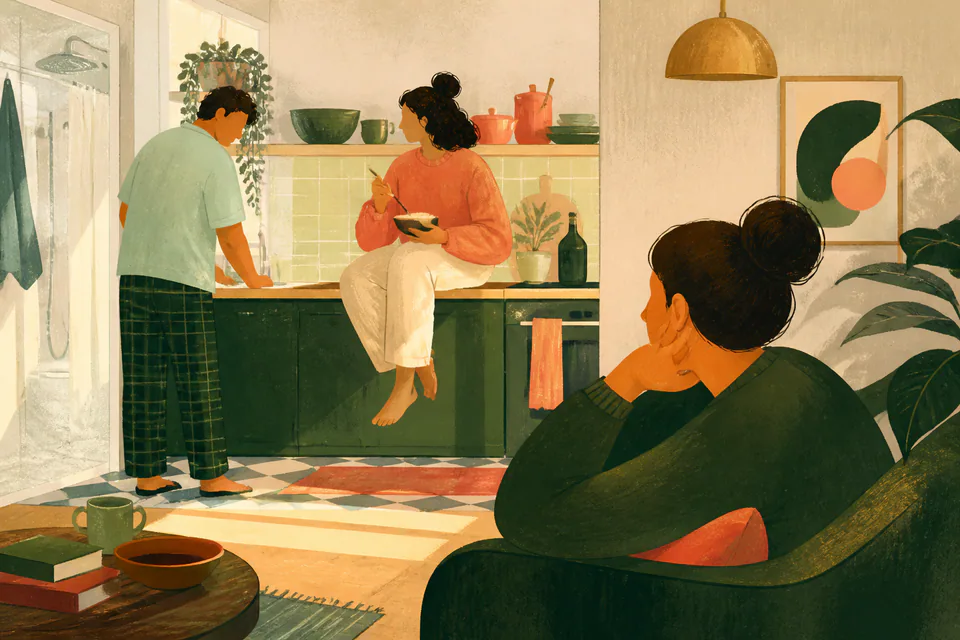
Your roommate's partner sleeps over six nights a week. Are they now a roommate?
Your roommate's partner stays almost every night, showers daily, and keeps food in the kitchen. They are pleasant and spend weekends elsewhere, but pay no rent or utilities. The lease limits overnight guests.
When does welcome presence become an obligation to contribute?