Listen through the publisher, then discuss the episode here or arrange an in-person Roundtable. Your city determines where to meet.
Roundtables are designed for groups of four, with a shared subject and room for everyone to speak. Come for discussion, with no dating expectation.
Are teenagers increasingly developing violent fixations? One in five children, aged 13-17, have sought out violent material or thought about harming others at least once in the past year. More worryingly, one in ten in this age group have thought about committing specific acts of violence against a person or group during the same period. Tom McTague speaks to Anoosh Chakelian about her report into Britain’s new adolescent nightmare. READ: https://www.newstatesman.com/politics/uk-politics/2026/11/inside-britains-new-adolescent-nightmare-0 LISTEN AD-FREE: MORE FROM THE NEW STATESMAN: Hosted on Acast.
Episode information is provided by the publisher. Listening takes place on the publisher’s service.
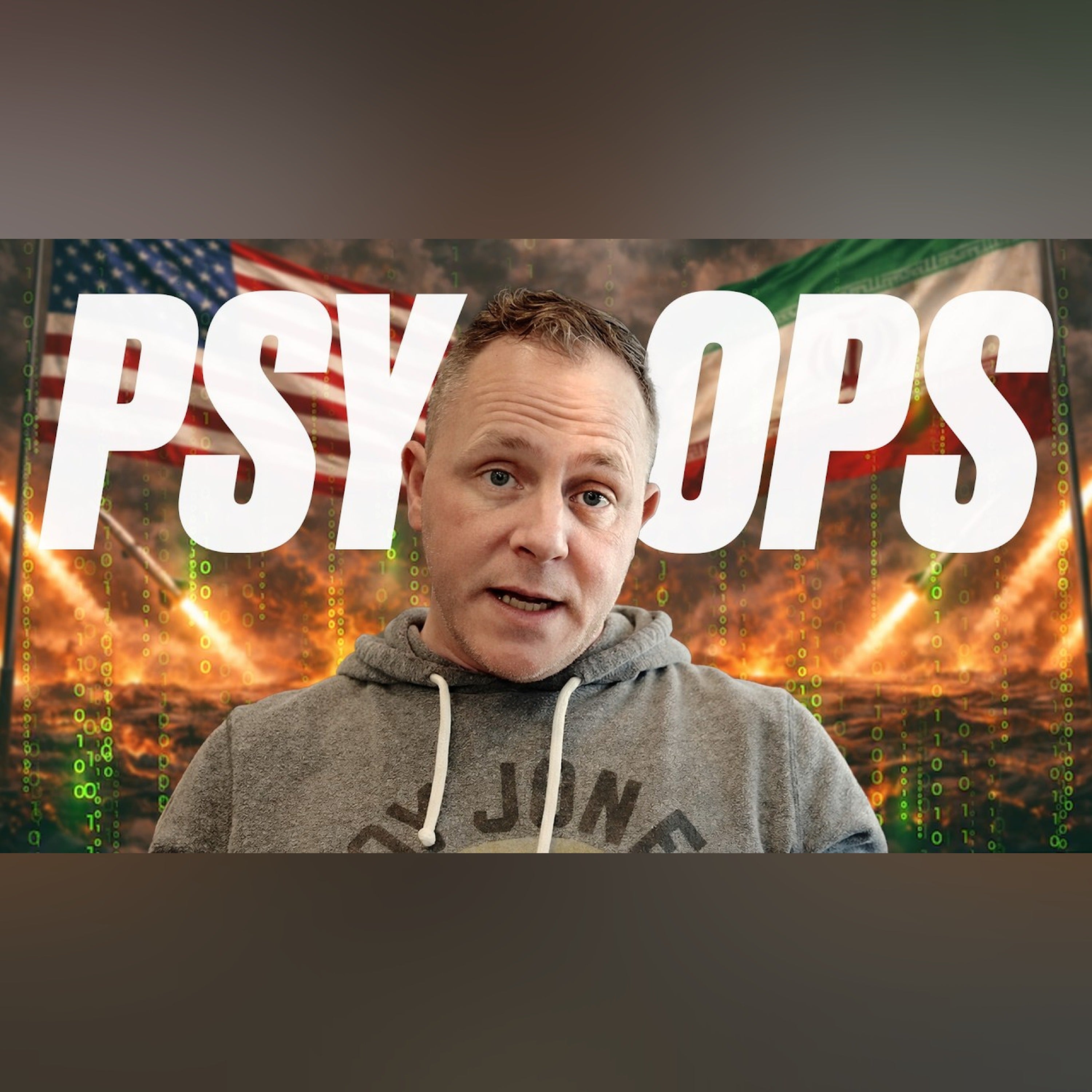
Master the skills that change lives — enroll in your free human behavior course today: https://nci.university/learn Uploaded 01-03-26 Iran didn’t slowly become what you see on the news — it was psychologically taken. In this episode, I break down the real mechanism behind Iran’s transformation: the difference between a people and the system that cages them, how revolutions don’t shift power but shift who gets to use violence, and why fear — not religion — became the enforcement tool. From a modern, secular Iran in the 60s and 70s to a regime sustained by narrative control, surveillance, and compliance rituals, this is a case study in how educated civilizations get hijacked without realizing it. We’ll dissect the psychological trap that started in 1979, why today’s protests are memory colliding with fear, and the three paths Iran is likely to take next. This isn’t just about Iran — it’s a preview of what happens anywhere belief becomes mandatory and truth becomes a liability. Please not
The Democrats swept the midterms. Donald Trump is still president. What will the next two years look like? And what can history teach us about what comes next? Martin Wolf speaks to historian Heather Cox Richardson about the cycles in the past 250 years of US politics — how renewal (and division) can both follow periods of oligarchy, and how the Democrats should react to a “constitutional crisis”. To enjoy future episodes, be sure to subscribe to ‘Martin Wolf on the World’ wherever you get your podcasts. You can also watch Martin’s podcast series on the FT’s YouTube channel here:https://www.youtube.com/@FinancialTimeshttps://www.youtube.com/@FinancialTimes Host: Martin Wolf Producer: Mischa Frankl-Duval Senior producer: Laurence Knight Video editor: Richard Topping Senior audio engineer: Breen Turner Broadcast engineer: Andrew Georgiades Podcast development: Laura Clarke FT Global Head of Audio: Flo Phillips Learn more at www.ft.com/martin-wolf-on-the-world (http://www.ft.com/martin-wo
Prince Harry criticizes the Trump administration’s approach to Ukraine and says he would return to military service if asked. Palace Intrigue covers his interview with The Telegraph during a visit to Lviv, his support for Ukraine, and his comments about veterans being prepared to serve again. Former royal protection chief Dai Davies argues that Harry’s public remarks could complicate his security and create difficulties for King Charles. A source close to the Duke of Sussex pushes back, questioning Davies’s decision to discuss Harry’s protection publicly. Royal writer Tom Sykes also criticizes the timing of Harry’s publicity during Prince William and Kate Middleton’s Earthshot visit to India. Plus, Harry discusses life in Britain with Meghan Markle, Prince Archie, and Princess Lilibet during an appearance on ITV’s This Morning. He shares updates on the children’s adjustment to school, Christmas plans, country walks, and pub life. The family’s Winter Wonderland visit also draws coverage
Matthew Farwell’s conviction settled the federal case against him. It did not settle what may have happened to evidence, what other officers knew, or how many cases depended on his work as a Stoughton police detective. Tony Brueski is joined by retired FBI agents Jennifer Coffindaffer and Robin Dreeke to connect two questions that belong together: could there be more arrests in the Sandra Birchmore case, and should prosecutors review the cases Farwell once investigated? These are not the same question, and neither has an automatic answer. William Farwell, Matthew’s twin, testified under federal immunity. Former Stoughton deputy chief Robert Devine has contested an oversight board’s findings concerning the “Marty Riggs” Facebook account, saying he was hacked. Neither has been charged in Sandra’s death. Coffindaffer lays out what investigators would need: corroborated communications, authenticated account access, consistent timelines and proof of each person’s conduct. Knowing somebody i
Many homeschooling families once kept their kids out of sight during school hours. Today about 6% of households with school-age children homeschool, and they come from varying backgrounds. WORLD’s Lindsay Mast talks with historian Dixie Dillon Lane, author of Skipping School: The History of American Homeschooling and How It Went Mainstream, about how it happened and what factors could still threaten that freedom. ---------------------------- Days before he was arrested by the Romanian secret police, Pastor Richard Wurmbrand read that the Bible included 366 passages to help Christians overcome fear—one for every day of the year, including leap year. This idea inspired Wurmbrand’s faith and helped him stand strong for Christ in the face of opposition, imprisonment, and torture. Whom Shall I Fear? is a 366-day devotional including stories of persecuted Christians that will inspire believers to overcome anxiety, doubt, and fear. More information on this special offer is available at vom.or
One of the best Christian films that Glenn Beck has ever seen was written by… Ben Shapiro? Glenn speaks with Ben about his new film, “Confession,” starring Rob Lowe and James Franco, a gritty drama about a prisoner in Stalin’s USSR. They discuss why Ben wanted to tell this story, why it feels very different from your standard Christian film, and what it may signal about Hollywood, which is snubbing it. Glenn also gets Ben’s thoughts on why antisemitism has become so popular on both the left and right, as well as what it truly means to be a man. Plus, Ben gives his rapid-fire takes on this week’s biggest news stories: the release of GTA VI, the outages, Jensen Huang and Nvidia, Robert Pattinson’s casting as James Bond, the midterms, the next leaders of the Republican and Democratic parties, data centers in space, how Joe Rogan became a right-wing icon, and whether woke is coming back. Glenn’s Sponsors: PreBorn: This Christmas, you can sponsor an ultrasound and help save a baby’s life fo
A pilgrimage to England’s biggest Poundland, a celebration of Parliament’s “sitting Fridays” and the GB News presenter who thought Robert Pattinson wasn’t British. Anoosh Chakelian and Will Dunn round up the stories of the week. LISTEN AD-FREE: MORE FROM THE NEW STATESMAN: Hosted on Acast.
Alan Milburn’s long-awaited review into the crisis of NEETs - young people not in education, employment or training - has arrived. In it, the New Labour veteran tasked by Keir Starmer’s government with looking into youth unemployment proposes radical changes to welfare, education and incentives for employers to help get 440,000 young people into work in the next ten years. Andy Burnham, in full support of the report, has said he wants this to be a "watershed moment in how we think about welfare and how we support young people"But are the proposals fully costed? Who will pay? And does Andy Burnham have a prospective welfare rebellion on his hands? LISTEN AD-FREE: MORE FROM THE NEW STATESMAN: Hosted on Acast.
The leather jackets of rich, powerful middle-aged men, an evening with Michael Portillo and the “extreme wealth line”. Anoosh Chakelian and Will Dunn round up their stories of the week. LISTEN AD-FREE: MORE FROM THE NEW STATESMAN: Hosted on Acast.
Welcoming newcomers involves responsibilities for both receiving communities and new arrivals.
Share your view, then see how readers voted. No sign-in required. This poll is shared across stories.
Do you agree or disagree?
Common Quandary
A Common Quandary to discuss
Another conversation to explore, separate from this news story.
A pricey AI tutor can turn B students into A students. Should schools let them use it?
An effective AI tutor adapts to each student and dramatically improves performance, but its subscription is expensive. A public school cannot provide it to everyone and worries that allowing its use will deepen existing inequality.
Should access be limited when a beneficial tool cannot yet be shared fairly?