Bruce Shapiro's US midterms wrap, plus gun control in Renaissance Italy
55 min
Listen through the publisher, then discuss the episode here or arrange an in-person Roundtable. Your city determines where to meet.
Roundtables are designed for groups of four, with a shared subject and room for everyone to speak. Come for discussion, with no dating expectation.
US correspondent Bruce Shapiro brings his analysis of the 'blue wave' that saw the Democrats take both the House and the Senate in a resounding repudiation of Trumpian politics in the US mid-term elections. Did any potential presidential candidates emerge? What's the future for the Republicans, and what can the Democrats achieve with Donald Trump threatening to veto their legislation? Plus in the fifteenth and sixteenth centuries technological developments meant guns became small enough and affordable enough to be used by ordinary men. Italy led the way, helped along by Leonardo da Vinci. They caused havoc, and posed a difficult question for rulers - how to balance their need for defence versus how to control the use of guns in everyday life. Guests: Bruce Shapiro, contributing editor with The Nation magazine and Director of the Global Center for Journalism and Trauma. Catherine Fletcher, author of The Firearm Revolution: From Renaissance Italy to the European Empires (https://press.princeton.edu/books/hardcover/9780691272672/the-firearm-revolution) Get in touch: Email us at [email protected]
Episode information is provided by the publisher. Listening takes place on the publisher’s service.
One of the best Christian films that Glenn Beck has ever seen was written by… Ben Shapiro? Glenn speaks with Ben about his new film, “Confession,” starring Rob Lowe and James Franco, a gritty drama about a prisoner in Stalin’s USSR. They discuss why Ben wanted to tell this story, why it feels very different from your standard Christian film, and what it may signal about Hollywood, which is snubbing it. Glenn also gets Ben’s thoughts on why antisemitism has become so popular on both the left and right, as well as what it truly means to be a man. Plus, Ben gives his rapid-fire takes on this week’s biggest news stories: the release of GTA VI, the outages, Jensen Huang and Nvidia, Robert Pattinson’s casting as James Bond, the midterms, the next leaders of the Republican and Democratic parties, data centers in space, how Joe Rogan became a right-wing icon, and whether woke is coming back. Glenn’s Sponsors: PreBorn: This Christmas, you can sponsor an ultrasound and help save a baby’s life fo
Runaway government spending, rising costs, and a new wave of legal battles over constitutional rights. With Democrats preparing to take control of Congress and several state governments, Republicans are confronting a very different political landscape. John Solomon and Amanda Head welcome Montana Senator-elect Kurt Alme, who says Washington must get serious about reining in spending, lowering inflation, and making everyday life affordable again. Already preparing for his arrival in the Senate, Alme discusses his priorities for protecting Montana's way of life, keeping taxes low, creating good-paying jobs, and working across party lines when possible. He also addresses the challenges Republicans face in the minority, the remaining lame-duck session, and concerns about efforts to expand the Supreme Court and eliminate the filibuster. Then, Southeastern Legal Foundation President Kimberly Hermann joins the show with a warning about potential policy reversals in states where Democrats have
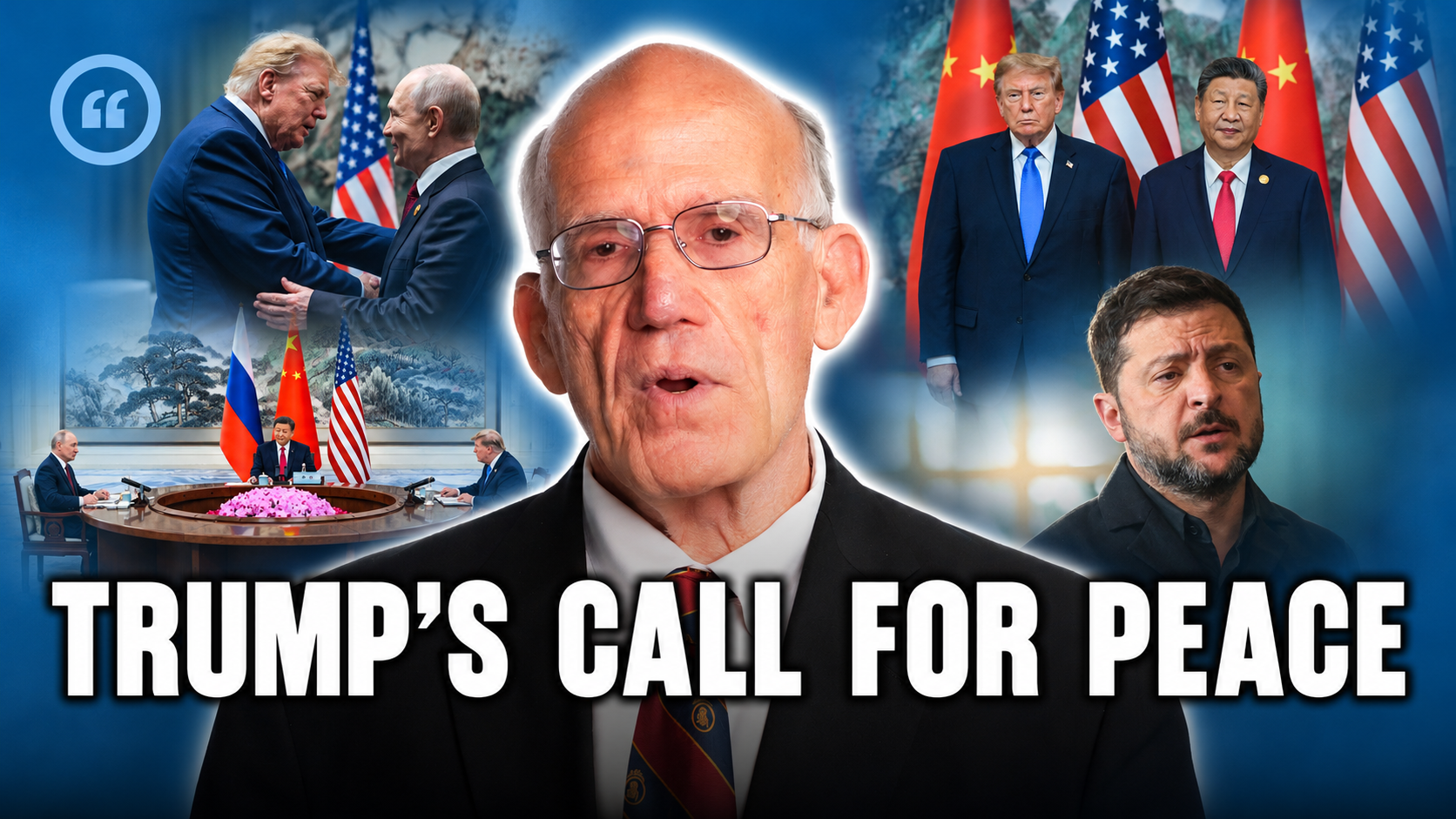
President Donald Trump's first ever trilateral summit with Vladimir Putin and Xi Jinping raises questions about the future of the war in Ukraine and whether a peace agreement could finally be within reach. Victor Davis Hanson and Sami Winc examine the summit on today’s edition of “Victor Davis Hanson: In His Own Words,” discussing Russia's declining influence, potential territorial concessions in Ukraine, and Europe's frustration over Trump's peace negotiations. Hanson criticizes Hillary Clinton's attacks on Trump's diplomacy; he also argues that European leaders have weakened their influence by neglecting defense spending and relying on American military protection. They discuss Elon Musk's shifting political allegiances, and Hanson warns that distancing himself from MAGA may not protect him from Democrat investigations. They also discuss the potential economic benefits of artificial intelligence and the challenges facing Hakeem Jeffries as Democrats prepare to take control of the Hou
This week on the Mark Levin Show, 2028 Republican Presidential candidates must directly address the urgent threats to the country - Marxism and Islamism. These candidates should deliver bold, courageous speeches that clearly explain what is happening in the country, identify those responsible, and directly challenge these threats rather than leaving such warnings to a small number of media voices. Also, it is difficult to believe so many major outages affecting entities such as the NSA, FAA, airline systems, Microsoft, and Apple services could be merely coincidental. The timing and scale of the incidents are troubling and remain inadequately explained. President Trump had proposed a major modernization and restructuring of air traffic control in 2017 that Congress failed to enact. Had those reforms been adopted, many current FAA failures might have been avoided. Later, does Senator John Kennedy know anything about originalism? Originalism is not pure textualism. The meaning and intent
Hey everybody, Tom Bilyeu here. On today’s episode of Impact Theory, we’re taking on a topic that’s got the whole world holding its breath: the escalating crisis between the United States and Iran. As tensions ratchet up, we’re asking the tough questions—how did we get stuck in this “escalation trap,” and what does it mean for America’s global leverage, our economy, and our very sense of security? The conversation focused on why the traditional idea of “strategy” might be failing policymakers, using powerful analogies—like chess versus roulette—to show how doubling down in conflict can spiral out of control. We’ll break down the risks of tactical “wins” that create even bigger crises, the real leverage Iran holds with control of the Strait of Hormuz, and the mounting pressure on President Trump as political support erodes and legacy hangs in the balance. A key theme that emerged is what happens when military might runs into decentralized opposition, and why high-stakes gambles—like the
November 21, 2026; 8am: With just weeks left before democrats take control of Congress, Senate Republicans are in a race against the clock to put as many of president trump’s judicial nominees on the federal bench as possible. Seven Trump nominees appeared before the Senate Judiciary Committee just this week. Retired Judge J. Michael Luttig, who served on the U.S. Court of Appeals for the Fourth Circuit, joins “The Weekend” to discuss. For more, follow us on social media Bluesky: @theweekendmsnow.bsky.social Instagram: @theweekendmsnow TikTok: @theweekendmsnow Hosted by Simplecast, an AdsWizz company.
New Zealanders are still waiting weeks to see who will run their country, two weeks after a knife-edge election result. New players, such as the Opportunity Party, are likely to bring change, regardless of who forms the government. And the many ways to interpret a kiss, over time. From public symbolic displays of trust, to unwelcome kissing of babies. Guests: Anna Fifield, Wellington-based journalist and commentator, author of the Between Giants newsletter on Substack. Former foreign correspondent Katie Barclay, Professor of History, and ARC Future Fellow, Macquarie University. Author of 'The Kiss: a History of Passion and Power' (Reaktion, Nov 2026) Get in touch: Email us at [email protected]
"Attack, counterattack, and never apologise". That was the advice of attorney Roy Cohn to the embattled real estate mogul Donald Trump in the 1970s and 80s, decades before Trump's entry into politics. A new biography reveals the ruthlessness of Mr Cohn, a brutal fixer from the McCarthy era, until his death from HIV/AIDS in 1986. It's quite a story. Guests: Kai Bird and Susan Goldmark, co-authors of 'American Scoundrel: Roy Cohn's Dark Journey from Joe McCarthy to Donald Trump (https://www.simonandschuster.com.au/books/American-Scoundrel/Kai-Bird/9781398566903)' Producer: Catherine Zengerer Get in touch: Email us at [email protected]
Bruce Shapiro surveys a changed US political landscape, as the dust settles on the US midterm results. Chinese President Xi Jinping has just conducted an internal purge of historic proportions - but is this a show of strength, or weakness? Plus, new documents paint a vivid picture of life inside Adolf Hitler's wartime bunker in Poland, the 'Wolf's Lair'. Guests: Bruce Shapiro, contributing editor with The Nation, executive director of the Global Center for Journalism and Trauma Neil Thomas, Senior Geoeconomics Analyst for China at Bloomberg Felix Bohr, journalist and author of 'Before the Downfall: Hitler's years in the Wolf's Lair' Get in touch: Email us at [email protected]
Individuals should control whether organizations share their personal information.
Share your view, then see how readers voted. No sign-in required. This poll is shared across stories.
Do you agree or disagree?
Common Quandary
A Common Quandary to discuss
Another conversation to explore, separate from this news story.
Would you want a doctor to give you a fake pill if the lie might make you feel better?
A patient has persistent symptoms that have not responded to standard treatments. A harmless placebo may help, but its effect could weaken if the clinician fully explains that it contains no active medicine.
Can a beneficial deception respect the person it helps?