This episode is brought to you by Sarmaya Partners. Learn more about Sarmaya’s LENS ETF, their full data and comparison, including performance here: https://sarmayaetf.com/ In this episode of Other People's Money, Max Wiethe sits down with Muddy Waters Capital founder Carson Block to discuss his firm's explosive new short thesis on Nvidia. Block breaks down the alarming connections between a former Nvidia executive and a former SMCI executive recently implicated in a major chip smuggling scandal. The conversation dives deep into the national security implications of dual-use technology and how the ongoing geopolitical tug-of-war between the US and China is reshaping the semiconductor sector. Tune in to hear why Block believes this scandal goes far beyond CEO indiscretions and could trigger a massive regulatory reckoning for Silicon Valley's biggest players. Follow Muddy Waters on X: https://x.com/muddywatersre Follow Max on X: https://x.com/maxwiethe Follow Other People’s Money on: App
#JimRohnMotivation #JimRohn #JimRohnSpeech In this Jim Rohn Motivation video, unlock the 10 life-changing habits that separate average effort from unstoppable execution. Learn how elite performers train focus, build unshakable discipline, and protect energy to create a life of clarity, purpose, and momentum. Key Topics From This Motivational Video: The daily habits that build unstoppable self-leadership How to rewire your identity through action and discipline The power of alignment, clarity, and non-negotiable routines Protecting your energy and mastering your emotional environment Creating lasting results through reflection and urgency This Jim Rohn-style motivational video reveals the habits that silently drive long-term success. It's not about hustle—it’s about systems, mindset, and personal responsibility. These 10 habits are your blueprint for a high-performance life rooted in self-trust, consistency, and elevated standards. This Jim Rohn Motivational Video Is Perfect For: Indivi
When you set a goal, what do you focus on? Odds are, you put most of your energy towards how you will achieve the results you’re after. But what if you shifted that focus from the how to the when. What if timing was that important? What if good timing could not only enhance your performance – it could actually give you the edge that you need to achieve your goal? Uploaded 30-07-19 In this episode of the Tony Robbins podcast, we have a very special guest – New York Times bestselling author and one of the most influential business minds of our time, Daniel Pink. Dan is widely regarded as one of the foremost thinkers in behavioral sciences. He’s upended conventional wisdom about what gives people drive and motivation. He’s challenged the value that society places on left brain over right brain skills. And he’s dispelled preconceived notions about what really makes a great salesman. His latest work is no exception. In When: The Scientific Secrets of Perfect Timing – Dan offers profound ins
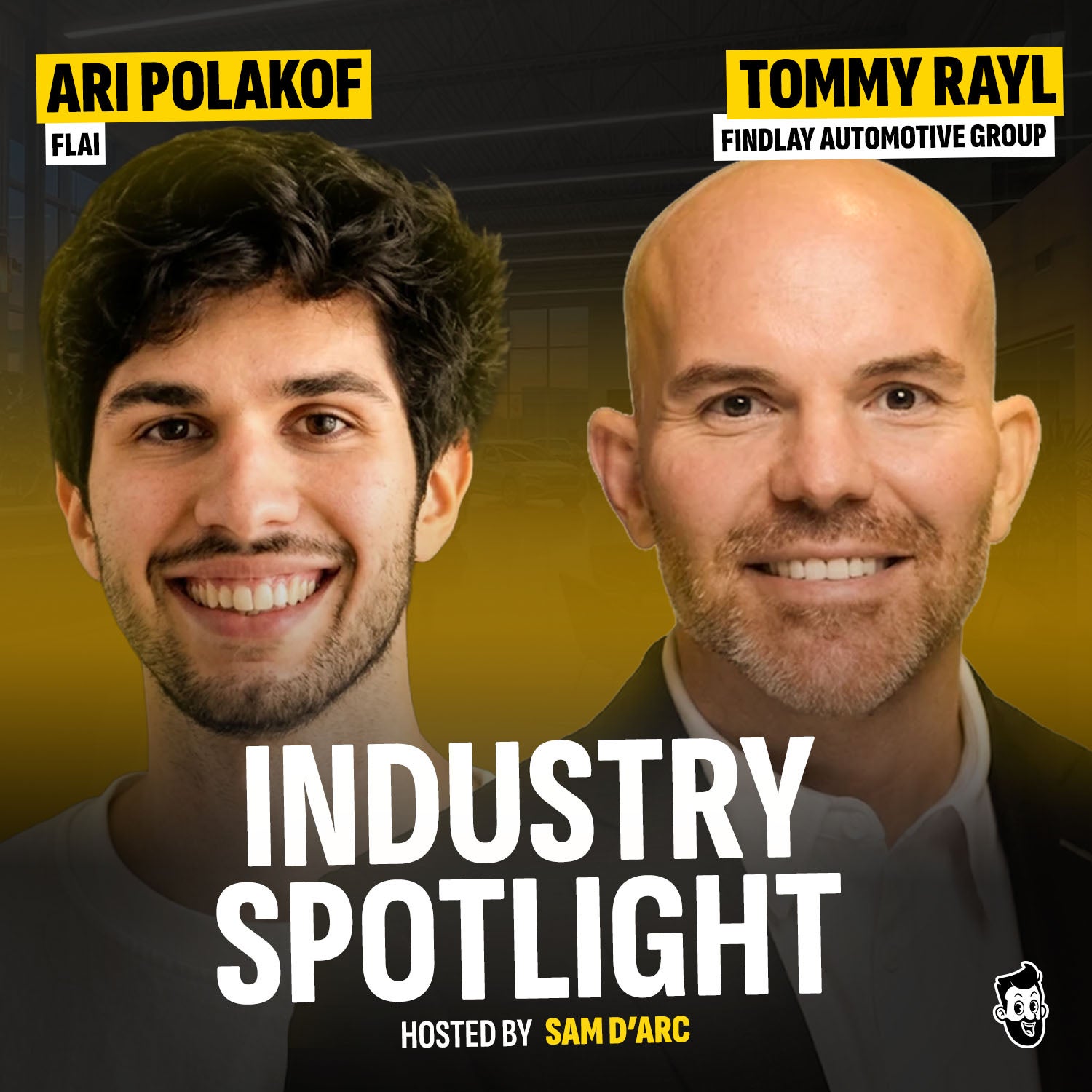
In this episode of the Industry Spotlight, joining host Sam D'Arc are Ari Polakof, CEO at Flai, and Tommy Rayl, Operations Director at Findlay Automotive Group to discuss how unanswered calls, voicemail dead ends, and 10-minute hold times are quietly sending service customers to the shop down the street, and how Findlay put an AI receptionist on the phones across 34 dealerships to win them back. Tommy shares how Findlay's paid service visits went from falling every single month to up 5.7% year over year, with some stores booking more than 85% of appointments without a human ever picking up. He and Ari break down what went wrong early (including an AI that offered every caller a free Uber ride), why most dealers are worse on the phone than they believe, and the simple late-night test every dealer should run on their own store tonight. This episode of the Car Dealership Guy Podcast is brought to you by Flai. Topics: 02:45 Retention Beats Unit Sales As A Metric. 06:15 Sales Sells One, Ser
Zvi does the reading on OpenAI’s system card for GPT-6.2 Astra and Sol: the first externally deployed model to meet OpenAI’s High threshold for AI self-improvement, already at Critical for cybersecurity. He works through the preparedness results, the safeguards against misuse, distillation and model escape, and the alignment and monitorability findings, including rising evaluation awareness, reasoning that happens without visible chain of thought, and UK AISI’s tour of misaligned behaviours, asking what the numbers do and don’t show. This has been an Askwho Casts audio conversion. Thanks for listening. * 00:00 - Introduction * 01:10 - Table of Contents * 02:45 - Safety Overview (1) * 05:19 - Internal Deployment (1.2) * 05:32 - Preparedness Assessment (2) * 06:40 - Biological Threats (2.1.1) * 09:55 - Cyber Threats (2.1.2) * 11:36 - AI Self-Improvement Threats (2.1.3) * 14:32 - OpenAI Epoch Capabilities Index (OECI) * 16:10 - Safeguards (2.2) * 17:34 - AI Self-Improvement Threat Modelin
Commodities, precious metals, and broader equity markets are caught in a sharp sell-off fueled by a surging U.S. dollar, aggressive Federal Reserve rhetoric, and year-end tax-loss selling. In this Weekend Edition of The KE Report, hosts Cory and Shad speak with Mike Larson (Editor-in-Chief at MoneyShow) and Brien Lundin (Editor of The Gold Newsletter) to separate short-term market panic from long-term fundamentals. Both guests share how they are navigating extreme sentiment swings, fading crowded trades, and identifying overlooked bargains across the resource sector. Segment 1 & 2 - Mike Larson, MoneyShow Editor-in-Chief, kicks off the show to unpack the sharp pullbacks across precious metals, copper, critical minerals, energy, and AI-driven tech stocks, exploring how a surging U.S. dollar and shifting Federal Reserve expectations are driving recent market volatility. Tune in as we discuss whether the recent downturn signals lasting chart damage or a contrarian opportunity to lean agai
We're live in Los Angeles from the show floor of the 2026 LA Auto Show! Walk with our experts as they explore the booths at this year's event, highlighting newly unveiled models from Hyundai, and models from Toyota, Subaru, Honda, Genesis, Nissan, Tesla, Acura, and more! CR Experts: Alex Knizek, Michael Crossen :44 - 2027 Hyundai Elantra 2:29 - 2027 Hyundai Tucson 7:27 - 2028 Toyota Highlander EV 11:08 - Tesla Cybercab 12:38 - Tesla Roadster 13:31 - 2027 Nissan Rogue Hybrid 17:03 - 2027 Hyundai IONIQ 6 N 18:35 - Honda booth highlights 19:42 - Acura Nexera Vision Concept 20:22 - 2027 Acura Integra Type S 22:31 - 2027 Honda Passport TrailSport 23:19 - 2027 Chevrolet Silverado 1500 24:51 - 2028 Genesis GV80 Hybrid 27:35 - 2027 Subaru Forester Wilderness Hybrid
On this week's episode, the Consumer Reports auto team shares its biggest pet peeves about modern cars—from giant touchscreens, distracting alerts, and complicated door handles to cramped back seats, fake interior materials, missing Apple CarPlay, and sky-high prices. What frustrates you most about new cars? Join CR at https://CR.org/joinviaYT to access our comprehensive ratings for items you use every day. CR is a mission-driven, independent, nonprofit organization. SHOW NOTES ----------------------------------- 00:00 - Intro 01:02 Unusable Armrests 01:23 Why New Nissans Smell Like Mice 02:04 Poor Build Quality 02:25 The Fake Third-Row Center Seat 02:53 Self-Driving Tech Can't Handle Bad Weather 03:44 Where Did the Backseat Legroom Go? 04:06 Stop Reinventing Door Handles 04:43 Nowhere to Put Your Stuff 05:00 Square Steering Wheels & Bad Controls 06:12 Too Many Screens, Beeps & Ambient Lights 08:16 Why New Cars Are So Expensive 09:04 Pickup Trucks Became Fashion Accessories 10:16 Scree
Companies should provide a reasonable transition when ending support for a product.
Share your view, then see how readers voted. No sign-in required. This poll is shared across stories.
Do you agree or disagree?
Common Quandary
A Common Quandary to discuss
Another conversation to explore, separate from this news story.
You wear an expensive outfit once and return it spotless. Clever or dishonest?
You buy an expensive outfit for a single event, keep it spotless, and return it the next day. The store's generous policy allows returns without asking whether an item was worn.
Does exploiting a policy differ from breaking a rule?