Listen through the publisher, then discuss the episode here or arrange an in-person Roundtable. Your city determines where to meet.
Roundtables are designed for groups of four, with a shared subject and room for everyone to speak. Come for discussion, with no dating expectation.
On this episode, recorded Sunday night, November 15th, we discuss the wave of newly-elected antisemites, and the complacency of some on the left regarding the possibility of their radicalism finding its way into law considering the horseshoe effect and their like-minded colleagues on the right. Plus, the renewed signs of the Iranian arena heating up and whether Trump will pursue further action despite the war's unpopularity, the public airing of the divisions within the Trump cabinet over the nvidia export controls scandal, Marco Rubio's political future, and the collapse of trust in authority after the nationwide air traffic system failure. John also recommends Fredrik DeBoer's All in Your Head.
Episode information is provided by the publisher. Listening takes place on the publisher’s service.
Billions in taxpayer dollars allegedly lost to fraud, Chinese-backed efforts to undermine American energy production, and a growing wave of AI-powered cyber threats. Is America doing enough to protect itself? John Solomon and Amanda Head are joined by Minnesota Congressman Pete Stauber, who discusses the expanding welfare fraud scandal, efforts to hold those responsible accountable, and allegations that Chinese-funded organizations are working to obstruct American mining and energy projects. Stauber also addresses permitting reform and the battle over America's critical mineral independence. Then, American Energy Institute CEO and former Texas state representative Jason Isaac warns that proposed electricity price controls could discourage investment, threaten grid reliability, and ultimately drive energy costs even higher. He also examines China's influence over global oil markets, America's growing energy production, and how AI data centers could generate their own electricity rather
What is really happening behind the explosive Nvidia controversy? Has Washington used a personal scandal to wage an even bigger war against China's technological rise? In this conversation, Carl Zha joins Rachel Blevins to unpack the controversy that surrounds Nvidia CEO Jensen Huang. Carl explains why Chinese technology companies increasingly turn toward domestic semiconductor manufacturers such as Huawei and SMIC, why Beijing wants its major tech companies not to purchase Nvidia chips, and how American export restrictions accelerate China's drive toward technological self-reliance. China's open-source AI models now challenge Silicon Valley's business model, which depends on control over expensive computer infrastructure and proprietary AI systems. Does America's semiconductor blockade actually help China become stronger? In This Interview we Discuss the Nvidia controversy: what is behind the allegations that involve Jensen Huang and Alice Wong? Observe Alibaba's AI Ambitions: Chinese
On Open Line Friday, Erick Erickson brings the receipts on America's lost measles elimination status, walking through the University of Minnesota data on Somali and Ethiopian vaccination rates, the Gaines County, Texas Mennonite outbreak, and why blaming RFK Jr., Donald Trump, or MAGA for measles is partisan hackery. Then Senator Tom Cotton goes after Commerce Secretary Howard Lutnick over Nvidia chips flowing to China, Russia fires missiles at British troops in Poland, Zohran Mamdani pitches a climate friendly Rikers Island, and callers ask why gas prices are falling. Measles outbreak data the fact checkers buried: MSNBC blames the Trump administration, but University of Minnesota research shows only 31% of Somali Minnesotan children vaccinated by age 2, plus the Gaines County Mennonite outbreak that traveled from Canada to Texas to Mexico Tom Cotton vs. Howard Lutnick: Megaspeed, 800,000 Nvidia and AMD chips approved for China, Scott Bessent, Marco Rubio, and Jamieson Greer doing an
Start earning interest in gold: https://Monetary-Metals.com/LinJay Singh, founder of Special Situations Report, discusses Nvidia's latest earnings and its future without Jensen Huang, growing concerns over AI financing and chip exports to China, and the upcoming Anthropic IPO. He also examines recent cyberattack concerns, the tech stock selloff, and investment opportunities emerging from market volatility.*This video was recorded on November 17, 2026Subscribe to my clips channel: https://www.youtube.com/@DavidLinReportClipsSubscribe to my free newsletter: https://davidlinreport.substack.com/Listen on Spotify: https://open.spotify.com/show/510WZMFaqeh90Xk4jcE34sListen on Apple Podcasts: https://podcasters.spotify.com/pod/show/the-david-lin-reportFOLLOW JAY SINGH:Special Situations Research Newsletter: https://www.specialsitsresearch.com/X (@SpecialSitsNews): https://x.com/SpecialSitsNewsFOLLOW DAVID LIN:X (@davidlin_TV): https://x.com/davidlin_TVTikTok (@davidlin_TV): https://www.tiktok
On this week’s edition of “Happy Hour,” Emily Jashinsky tackles whether America’s political system is irreparably broken, the growing distrust of political institutions, and why voters are increasingly fed up with corruption and self-serving politicians. She discusses Thomas Massie’s political future, the possibility of breaking up the two-party system, why she generally distrusts ProPublica’s reporting, and the ethics of the Supreme Court. She also weighs in on the dangers of authoritarian communism, foreign influence in Washington, and why maintaining faith in elections is so important. Emily addresses the political risks of embracing artificial intelligence, which careers might survive the technological revolution, and why she struggles to unplug from work. Finally, she shares her favorite time to visit Washington, D.C., her thoughts on Robert Pattinson as the next James Bond, and more… Hosted by Simplecast, an AdsWizz company.
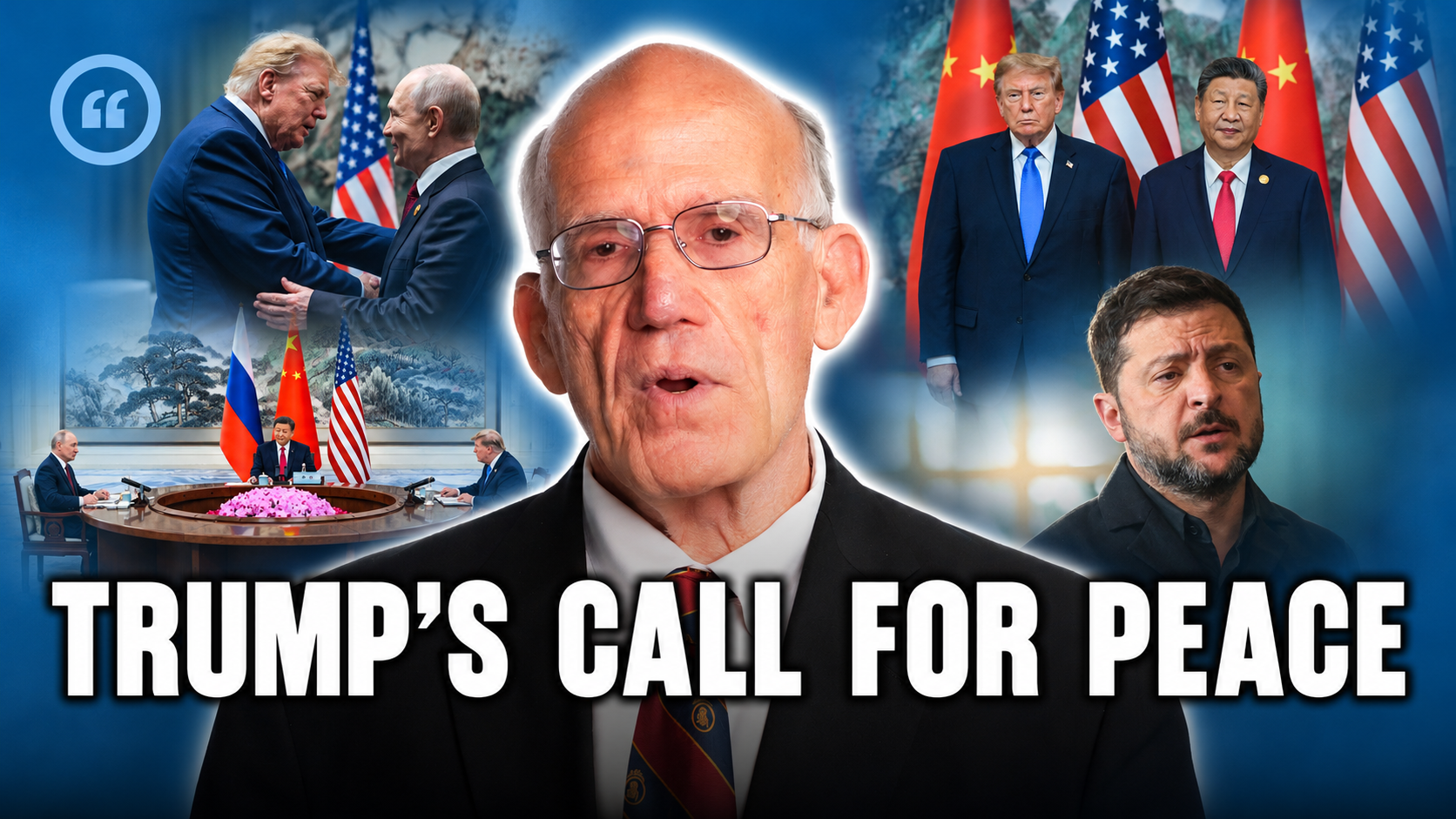
President Donald Trump's first ever trilateral summit with Vladimir Putin and Xi Jinping raises questions about the future of the war in Ukraine and whether a peace agreement could finally be within reach. Victor Davis Hanson and Sami Winc examine the summit on today’s edition of “Victor Davis Hanson: In His Own Words,” discussing Russia's declining influence, potential territorial concessions in Ukraine, and Europe's frustration over Trump's peace negotiations. Hanson criticizes Hillary Clinton's attacks on Trump's diplomacy; he also argues that European leaders have weakened their influence by neglecting defense spending and relying on American military protection. They discuss Elon Musk's shifting political allegiances, and Hanson warns that distancing himself from MAGA may not protect him from Democrat investigations. They also discuss the potential economic benefits of artificial intelligence and the challenges facing Hakeem Jeffries as Democrats prepare to take control of the Hou
Contributing editor Eli Lake joins us this Friday to discuss the current upheaval in the tech world with Anthropic's IPO, Trump's national cyber director resigning, the rallying around Jensen Huang, and how Elon Musk's attempt at a post-election heel turn embodies the tech world's philosophy on shifting political power. Plus, Trump's latest turn on Ukraine, and the release of the video game Grand Theft Auto VI.
Today we discuss the trilateral meeting in China with Xi Jinping and Vladimir Putin and what results we might expect Trump to deliver on Ukraine and Taiwan, the farce at the National Book Awards and the grim realities of the publishing industry, Abdul El-Sayed's view of what Israel should be, a new poll reported by Axios shows strong support for Israel on the right, and the emergence of the leading republican candidates for 2028. Plus, John recommends Rachel's Ain's Watch How You Go.
We welcome back stranded traveller Eliana Johnson to discuss the New York Times list of 10 days that changed the world, and which days we would have chosen instead, as well as Trump's China trip on the backdrop of Ukraine destroying the Kerch bridge in Crimea and the emerging potential magnitude of the Nvidia scandal, the ongoing fight over neocons and "forever wars," and Seth recommends the Shane MacGowen tribute album 20 Century Paddy.
Students should help shape decisions about what and how they learn.
Share your view, then see how readers voted. No sign-in required. This poll is shared across stories.
Do you agree or disagree?
Common Quandary
A Common Quandary to discuss
Another conversation to explore, separate from this news story.
You lecture everyone about climate change—then get invited on a dream flight. Do you go?
A close friend living overseas invites you to an important celebration. Flying is affordable but carbon-intensive. Your individual decision will not determine whether the flight operates, yet it conflicts with commitments you publicly encourage others to make.
When is a small personal contribution to a large harm morally significant?