Listen through the publisher, then discuss the episode here or arrange an in-person Roundtable. Your city determines where to meet.
Roundtables are designed for groups of four, with a shared subject and room for everyone to speak. Come for discussion, with no dating expectation.
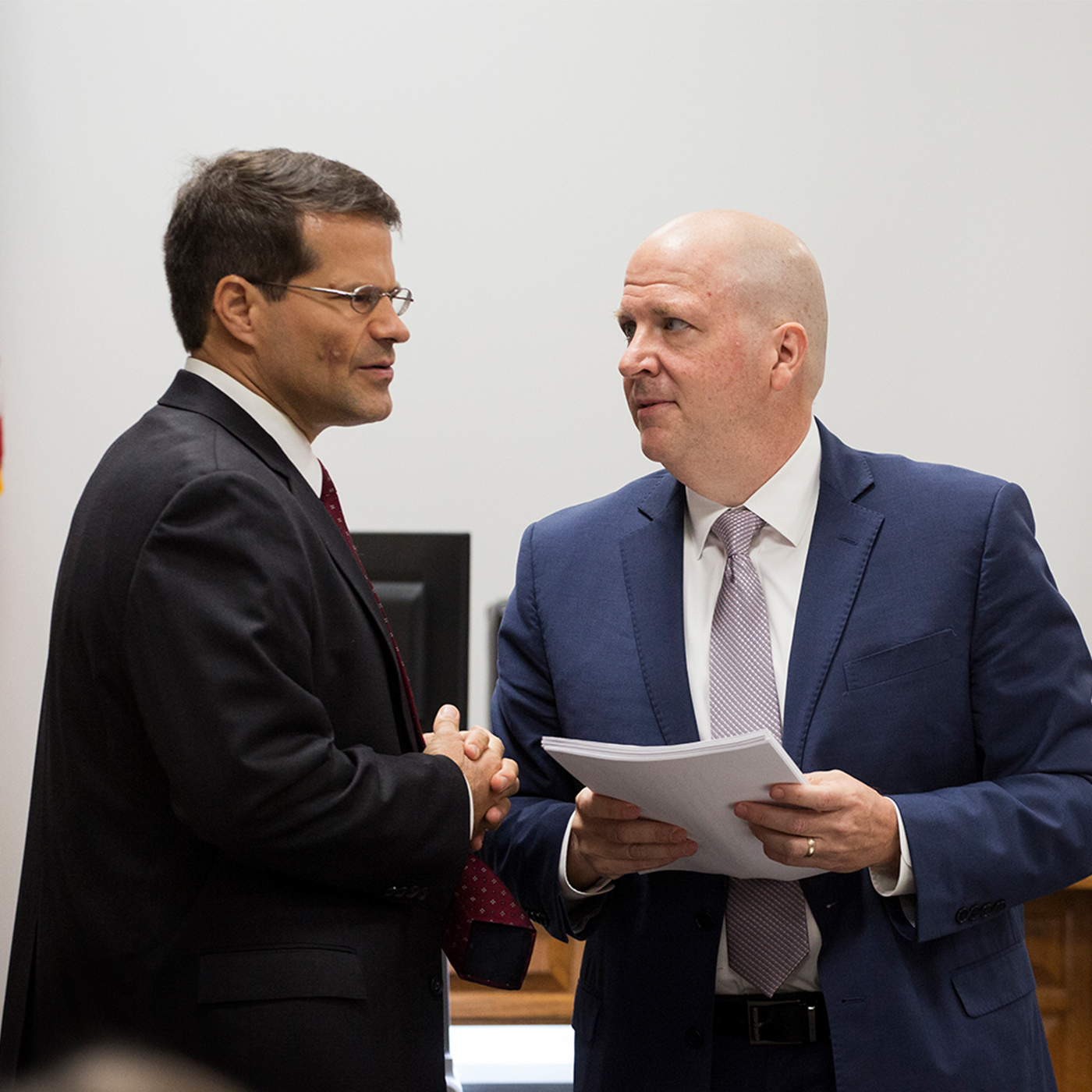
On the latest episode of St. Louis Public Radio’s “Politically Speaking,” attorney Chuck Hatfield talks about how he expects a push by Missouri Republicans to change the way the state appoints certain judges. “The judiciary is there to provide a check and a balance on the legislature, and it really ticks them off when the judiciary points out they're wrong,” Hatfield said. Hatfield is a Pulaski County native who is a partner at the Stinson law firm. He’s been heavily involved in cases involving Missouri state government, including the flurry of lawsuits over a congressional map passed in 2025 and a measure known as Amendment 6 that makes it harder for the legislature to overturn some voter-approved initiatives. NOTE: There were some technical difficulties with STLPR reporter Jason Rosenbaum's microphone, which is why he may sound tinny.
Episode information is provided by the publisher. Listening takes place on the publisher’s service.
Al Gore just bought his hometown newspaper. The Carthage Courier is a 113-year-old weekly that serves Smith County, Tennessee — a place of roughly 20,000 people about an hour east of Nashville. The Lake family ran it for 50 years. Gore stepped in, cited his early days as a military reporter in Vietnam and later at the Tennessean, and said he wants to preserve a free, independent local press for the community. Staff stays, new publisher steps up, deal closes in the coming weeks. On the surface it reads like a hometown guy keeping a paper local. Here’s the problem. Gore is not a neutral local. He is the face of climate alarmism whose highest-profile claims — ice-free Arctic summers on a short timeline, snow gone from Kilimanjaro, disasters that were supposed to get dramatically worse — have not held up the way the original packaging promised. When the same person who spent years treating uncertainty as settled science suddenly owns the only paper in a small town, the "independent voice"
Niron Magnetics was born in Minneapolis. It makes the world's first high-performance magnets that don't rely on rare earth elements from China—the magnets that go into AI infrastructure, cars, and defense systems. Last week the company announced where it's building its $1.8 billion plant: Dothan, Alabama. 700 high-wage jobs. A 10,000-ton plant. Its CEO put it plainly: "Every step of the way, Alabama treated our success as its own." That doesn't happen by accident. Alabama competed for this plant. Minnesota ranks 44th in the nation in business tax climate, with a 9.8% corporate tax rate, electricity costs that keep climbing, and a permitting process that treats job creators like the enemy. Minnesota isn't unaffordable by accident. It's unaffordable by policy. If we want the next Niron to build here, we have to make Minnesota a place where businesses can afford to build. Lower taxes. Cheaper energy. Faster permits. Affordable Minnesota starts with a government that costs less. A Minneapo
With most races called, Democrats are on track for a 260-seat majority in the House. No state felt the blue wave more than North Carolina, where Democrats flipped seven House seats and a Senate seat. In the 5th Congressional District, someone never elected to office before, Chuck Hubbard, narrowly beat longtime Republican incumbent Virginia Foxx. Lisa Desjardins spoke with Hubbard about his win. Hosted on Acast. See acast.com/privacy
The number of free-to-use ATMs in the UK has been steadily declining, with a 6% drop from 2022 to mid-2023. This reflects a shift in consumer habits, as cash usage has decreased significantly. For example, weekly ATM withdrawals fell by nearly a third, from £2.2 billion in 2019 to £1.5 billion in 2023. The shift began years ago but accelerated during the COVID-19 pandemic. In 2021, cash accounted for only 15% of all payments in the UK, driven by the rise of contactless and online transactions. While 74% of adults use cash occasionally or rarely, certain groups, including older adults and those without access to digital banking, still rely heavily on it. When did we start paying less in cash? Does this mean cash payments are on their way out? Why are ATMs disappearing? In under 3 minutes, we answer your questions! To listen to the last episodes, you can click here: How can I use the 80/20 method to save money? (https://originals.bababam.com/do-you-really-know/202412050359-how-can-i-use-
Caleb Flynn told a 911 dispatcher that somebody broke into his Ohio home and shot his wife, Ashley, and a jury later convicted him of her murder. Conor Hanlon told a dispatcher he'd just found his wife, Brooke Hanlon, bleeding upstairs in their Chester, New Jersey home. Conor has never been accused of a crime, he has denied any part in Brooke's death, and nobody has been charged. Played back to back, the two calls line up in places. Both men are frantic from the start. Both say there's blood everywhere. Both tell the dispatcher right away what's wrong with their wives. Retired FBI Special Agent Robin Dreeke, former chief of the FBI's Counterintelligence Behavioral Analysis Program, goes through the matching moments with me. I ask what a man who just found his wife should be able to tell a dispatcher about her wounds, and what investigators do with a husband's first answer about where he was. Flynn said he'd been with his children. Hanlon, according to NewsNation, said he was "gone." So
Miss Puerto Rico has won the 75th Miss Universe pageant. The night wasn’t just about glitz, glam, tears and tiaras. Jennifer Barreto became the first mother and first married woman to win the competition after a rule change three years ago. Over 110 queens from around the world participated. But six Asian nations — Thailand, Vietnam, Malaysia, Singapore, Indonesia and Laos — were banned and visa difficulties forced Nepal and five African countries, including Republic of Congo and South Sudan, to drop out. BBC culture reporter William Lee Adams joins us to talk about what happened at this year’s competition, including the controversy over Miss Israel’s national costume. Plus we hear from fans in the Philippines, Mexico and the USA about the significance of this years win and beauty pageants overall. Nadeen Ayoub — Miss Palestine 2025 — also discusses the importance of representation. Instagram: @bbcwhatintheworld Email: [email protected] WhatsApp: +44 330 12 33 22 6 Presenter: Ha
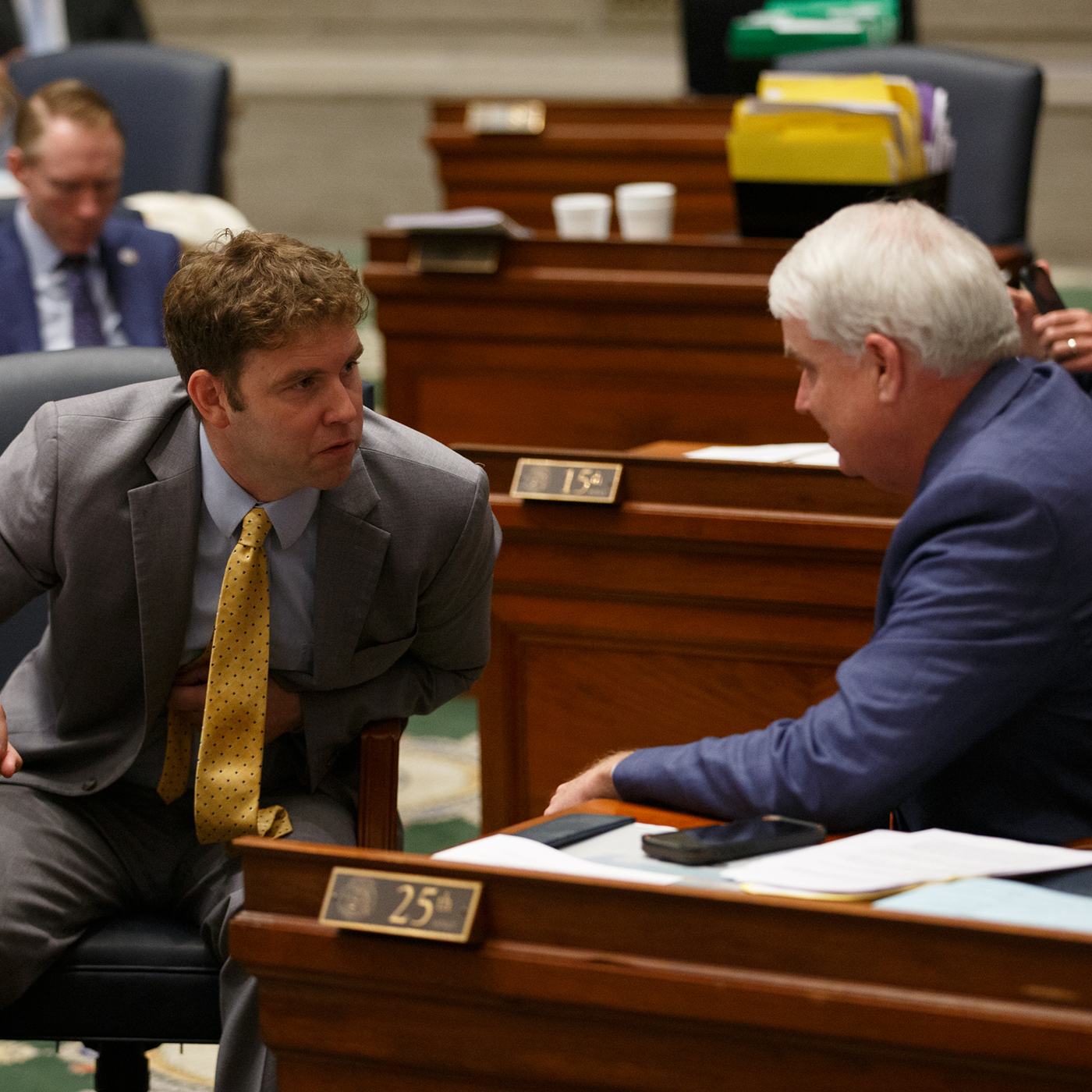
On the latest episode of The Politically Speaking Hour on St. Louis on the Air, STLPR's Jason Rosenbaum takes a deeper look into what the end of the GOP supermajority means for the Missouri General Assembly. Rosenbaum also talks with Sen.-elect Gina Mitten of Richmond Heights about her expectations for the Democratic caucus. He also talks with Rep.-elect Chris Stigall about his transition to Congress.
On the latest episode of the “Politically Speaking” podcast, Missouri state Sen.-elect Mike Deering talks about his priorities when he gets to Jefferson City next year — and the lessons Republicans should heed from the past midterm elections. After Republicans lost two Senate seats and 16 House seats, Deering said his party needs to change how it legislates and be more responsive to what the public wants. Deering was elected to represent Missouri’s 10th Senate District, which takes in a portion of western St. Charles County and all of Pike, Lincoln, Montgomery and Callaway counties.
On the latest episode of The Politically Speaking Hour on St. Louis on the Air, STLPR's politics team breaks down how the Blue Wave crashed into Missouri — and provided Missouri Democrats with a lot of optimism going into 2028. Guests include Congressman-elect Fred Wellman, Abortion Action Missouri's Mallory Schwarz and St. Louis County Executive-elect Jake Zimmerman.
Governments should remove practical barriers to voting, even when doing so costs more.
Share your view, then see how readers voted. No sign-in required. This poll is shared across stories.
Do you agree or disagree?
Common Quandary
A Common Quandary to discuss
Another conversation to explore, separate from this news story.
You inherit a fortune made in ways you despise. Can you keep it?
You inherit a substantial sum from a relative who accumulated it through practices you consider exploitative. Keeping it would improve your family's security; donating it could support people harmed by similar practices.
Can ownership be morally clean when its history is not?