Listen through the publisher, then discuss the episode here or arrange an in-person Roundtable. Your city determines where to meet.
Roundtables are designed for groups of four, with a shared subject and room for everyone to speak. Come for discussion, with no dating expectation.
With the rise of prediction markets, it’s never been easier to make a buck off of the climate crisis. You can bet on everything from heat waves and droughts to catastrophes like a hurricane making landfall. It can feel ghoulish to bet on disasters in this way, but some small businesses are turning to these markets as a way to hedge against their own climate risk. This episode, host Amy Scott visits an ice cream shop and a farm store that use prediction markets to hedge against climate extremes to protect their business losses, with very mixed results. We’re finding out if these markets can be an effective tool for hedging against climate risk, or if that’s just the industry’s strategy to legitimize gambling and avoid stricter regulation.
Episode information is provided by the publisher. Listening takes place on the publisher’s service.
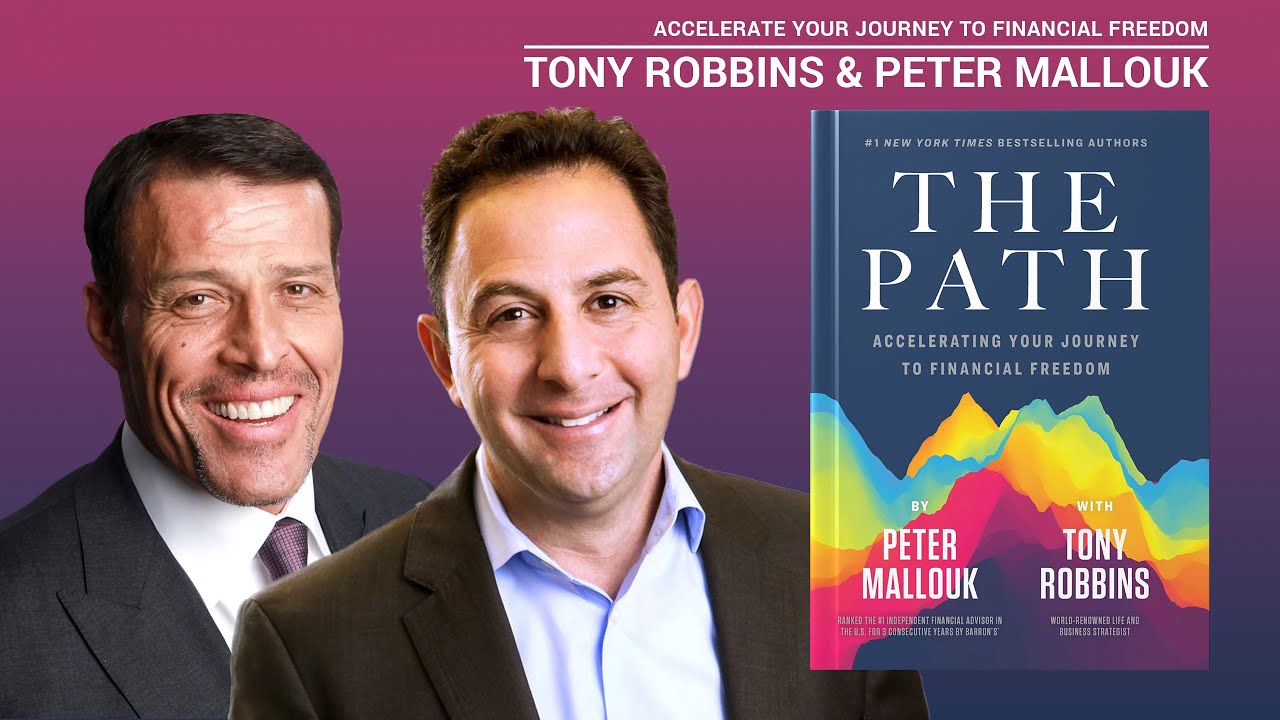
This interview with Peter Mallouk, global finance expert and co-author of The Path, pulls the curtain back on what’s really happening in today’s marketplace – and shows you how to leverage it to build true financial independence. It’s a sneak peek of what’s in the book, packed with valuable advice from one of the greatest minds in finance: Mallouk has been ranked the #1 financial advisor by Barron’s and grew his wealth management firm, Creative Planning, from managing $30 million in assets to more than $50 billion. Uploaded 18-10-20 From financial principles like inflation, bear markets and taxes to the psychology of success, in this video Mallouk shares a few of the most essential concepts from the book. He’ll go over the importance of getting laser-focused on your goals, an idea that Tony Robbins himself also champions. As Peter explains, superstar athletes didn’t just wake up one day and start working out. They know their sport and they know what they have to do to win. This applies
Jordi Visser is a veteran macro investor with 30+ years of experience and the author of the VisserLabs Substack. In this conversation, we break down why AI is destroying capitalism, the wave of cyber attacks shaking markets, the AI stock selloff, and the Anthropic IPO. We also discuss why bitcoin still matters, the 200-day moving average, global liquidity, and the year-end pain trade. ======================== ======================== This episode is sponsored by GraniteShares. GraniteShares is launching AIL and ANS, two ETFs built to trade Anthropic's daily move. AIL seeks two times Anthropic's daily performance and ANS seeks two times the opposite, with no margin or borrowing needed. Both reset daily, are built for short-term traders, and carry significant risk. Learn more at https://www.graniteshares.com/anthropic-leveraged-etfs This video includes a paid sponsorship with GraniteShares. AIL and ANS are proposed funds and are not yet available for trading; their launch depends on Anth
The gate doesn't have a lock. It doesn't have a key. There's nobody standing on the other side waiting to wave you through. Uploaded 09-09-26 The gate was open the whole time. You just couldn't see it, because you were staring at the ground, waiting for your feet to feel light. You've been standing there for years, warming up for a race you never run. Here is the truth: readiness is not a feeling you receive. It is a decision you make. The people who built the things you wish you'd built didn't feel more ready than you do — they just stopped waiting to feel it. This seminar unpacks the single mechanic behind why you never feel ready — and why willingness, not readiness, is what actually builds a life. CHAPTERS 0:00 Intro — The gate was open the whole time 2:04 The classroom lie: prepare, then perform 4:24 Fear wearing the mask of wisdom 6:36 Readiness is a quality you bring, not a state you arrive at 8:24 The glass never fills — skill comes from use 11:36 The cruel arithmetic of the wa
WORRIED ABOUT THE MARKET? SCHEDULE YOUR FREE PORTFOLIO REVIEW with Thoughtful Money's endorsed financial advisors at https://www.thoughtfulmoney.comWell, last week's ugly action got a lot uglier this week.Tech stocks continued to drag the S&P and the NASDAQ downwards, wiping out much of their returns for 2026.Is this the big correction the bears have been warning about? Has the AI bubble popped?Or are things so oversold in the near term that a sharp recovery rally is due?Lance and I discuss the odds in this week's Market Recap.For everything that mattered to markets this week, watch this video.#aistocks #marketcorrection #technicalanalysis _____________________________________________ Thoughtful Money LLC is a Registered Investment Advisor Promoter.We produce educational content geared for the individual investor. It’s important to note that this content is NOT investment advice, individual or otherwise, nor should be construed as such.We recommend that most investors, especially if in
Commodities, precious metals, and broader equity markets are caught in a sharp sell-off fueled by a surging U.S. dollar, aggressive Federal Reserve rhetoric, and year-end tax-loss selling. In this Weekend Edition of The KE Report, hosts Cory and Shad speak with Mike Larson (Editor-in-Chief at MoneyShow) and Brien Lundin (Editor of The Gold Newsletter) to separate short-term market panic from long-term fundamentals. Both guests share how they are navigating extreme sentiment swings, fading crowded trades, and identifying overlooked bargains across the resource sector. Segment 1 & 2 - Mike Larson, MoneyShow Editor-in-Chief, kicks off the show to unpack the sharp pullbacks across precious metals, copper, critical minerals, energy, and AI-driven tech stocks, exploring how a surging U.S. dollar and shifting Federal Reserve expectations are driving recent market volatility. Tune in as we discuss whether the recent downturn signals lasting chart damage or a contrarian opportunity to lean agai
In this week's episode of The Wrap with Chris Whalen, Chris says Fed Chair Kevin Warsh has lost credibility with the markets. He compares Warsh to G. William Miller, Carter’s Fed chair, and argues that quarter-point hikes all year would have kept long-term yields in check. He also lays out what real leadership would look like: successive quarter-point hikes and a gap between the fed funds rate and the interest paid on reserves. Chris warns that rates are already at their upper bound. Long-term yields are up four and a half points since 2021, the bottom ten of the 38 mortgage companies he tracks are basically insolvent, and firms like Brookfield are walking away from commercial properties they can’t refinance. He explains why the Fed needs to think in spreads, not just rates, and why the push for centralized Treasury clearing could hurt demand right as Treasury needs to raise $800 billion in January, setting up a possible bond market breakdown. Plus: why central banks can’t fix war-driv
Economists use “core” inflation to describe price changes minus food and energy (which can be up one week and down the next). But for the past six months, energy prices have been stubbornly high, as the White House drags out its war in Iran. That sustained inflation is having a trickle-down impact. In this episode, why core inflation can’t escape fuel costs. Plus: Retailers cater to picky consumers, and the stock market tumbles after a historic IPO. Every story has an economic angle. Want some in your inbox? Marketplace is more than a radio show. Read the stories in today’s episode: Who wants more oil? (https://www.marketplace.org/story/2026/11/20/trump-xi-and-putin-meet-in-china-plus-anthropics-ipo) Core inflation measures can't escape high energy prices (https://www.marketplace.org/story/2026/11/20/core-inflation-measures-cant-escape-high-energy-prices) Salmon may soon be off the menu as fisheries struggle to meet demand (https://www.marketplace.org/story/2026/11/20/salmon-supply-flo
A new flood of leaked documents is putting fresh scrutiny on banking behemoth Deutsche Bank. The documents include more than 15 million internal emails and files, covering the early 2010s through 2021. A group of more than 200 journalists from around the globe has been analyzing the leaked information, revealing questionable practices, deals with Russian oligarchs, and more. Today, we hear from one of those reporters. But first, what did we get out of President Donald Trump's Asia summit? Every story has an economic angle. Want some in your inbox? Marketplace Morning Report is more than a radio show. Stories in this podcast: What you need to know about the Deutsche Bank leak (https://www.marketplace.org/story/2026/11/20/what-you-need-to-know-about-the-deutsche-bank-leak)
Last week’s nationwide FAA ground stoppage hit JetBlue particularly hard. No other airline canceled a higher percentage of its flights than JetBlue, according to The Wall Street Journal. The company was already under pressure from investors worried about its heavy debt load and its struggles to turn a profit. What is the path forward for JetBlue? But first, when it comes to Federal Reserve rate hikes, size really does matter. Every story has an economic angle. Want some in your inbox? Marketplace Morning Report is more than a radio show. Read the stories from this episode: Why would the Fed consider a half-percentage-point hike in December? (https://www.marketplace.org/story/2026/11/20/would-the-fed-consider-a-halfpercentagepoint-hike-in-december) High fuel prices hamper JetBlue's path back to profitability (https://www.marketplace.org/story/2026/11/20/why-jetblue-is-struggling-to-turn-a-profit)
A rule should not be introduced unless it can be enforced fairly.
Share your view, then see how readers voted. No sign-in required. This poll is shared across stories.
Do you agree or disagree?
Common Quandary
A Common Quandary to discuss
Another conversation to explore, separate from this news story.
A stray cat adopts you—and starts killing birds. Do you keep feeding it?
A stray cat visits your yard daily and appears to depend on the food you leave out. Neighbors complain that outdoor cats kill birds and say feeding it encourages the problem without taking responsibility for the animal.
Does caring for one visible animal excuse harm to less visible ones?