English-language podcasts

The Interview

David Robinson, former OpenAI leader: Why I quit over safety

22 min

Listen through the publisher, then discuss the episode here or arrange an in-person Roundtable. Your city determines where to meet.

Roundtables are designed for groups of four, with a shared subject and room for everyone to speak. Come for discussion, with no dating expectation.

“It's a cultural thing. There's an aspect of this that's a Silicon Valley belief that what's invented in California has a special status. I implored colleagues to bring people in from other industries. And people said to me ‘well they can't imagine how powerful AI is, and they can picture what we're doing’ and there's really a sense that the people in the Bay Area are a special group with some special franchise to understand and deal with this technology.” Rick Edwards speaks to David Robinson, who until recently led safety and transparency at OpenAI, the company behind ChatGPT. Robinson resigned because he no longer believed that the industry was doing enough to protect us from the risks posed by increasingly powerful artificial intelligence systems. He warns that Silicon Valley’s culture of overconfidence is leaving us exposed to systems that are becoming harder to control. He explains what AI companies could learn from industries with decades of experience managing serious risks, and what needs to change to keep the technology safe. The best interviews from the BBC, including episodes with Veolia CEO Estelle Brachlianoff, billionaire Mohammed Dewji, and TaskRabbit founder Leah Solivan. Presenter: Rick Edwards Producer: Osman Iqbal Editor: Farhana Haider (Image: OpenAI logo. Credit: EPA/Shutterstock)

Episode information is provided by the publisher. Listening takes place on the publisher’s service.

Listen at the source ↗

Featured places to meet in Palo Alto, CA

Explore these places and arrange a conversation through ThinkMatch.

City guide for Palo Alto, CA

More from The Interview

The Interview

Michael Freeman, forensic medicine expert: Why I dispute official ruling on Epstein’s death

24 min

“By a process of elimination, he didn't die from a natural cause. He didn't die from old age in his cell, and he didn't die from an accident. So the only option that we have is that he died as a result of a homicide.” BBC Newsnight presenter Victoria Derbyshire speaks to forensic medicine expert Michael Freeman, who says he's reviewed Jeffrey Epstein's autopsy records and contends Epstein's death in jail was the result of homicide rather than suicide. Epstein was a wealthy American financier and convicted sex offender, with links to prominent figures around the world. He died in a New York jail in 2019 while awaiting trial on charges of sex trafficking involving underage girls. His death was ruled a suicide by New York City's medical examiner. A subsequent FBI investigation found no evidence of criminal activity connected to his death, while the US Department of Justice’s Inspector General also concluded there was no evidence of foul play. In an interview with BBC Newsnight, Freeman ch

Discuss this episode

The Interview

Ann Druyan, science author: Our message to the stars

25 min

“I like to think of it as a kind of love poem to our home planet. And if you think about what's a billion years from now, Earth would be unrecognisable. Everything we love will have either left for parts unknown or be gone... but the Voyagers will still sing for us.” Kaine Pieri speaks to Ann Druyan, the American science director and author. In 1977, Druyan was the Creative Director of NASA's Voyager Interstellar Message Project, helping to curate and design the contents of the Golden Records carried by both Voyager 1 and Voyager 2. The discs contain images and various recordings of music, natural sounds and spoken greetings from Earth, intended as a message from humanity to any extraterrestrial intelligence that might one day encounter the spacecraft. Originally launched to explore Jupiter and Saturn, the Voyager probes far exceeded their primary mission. Voyager 2 went on to visit Uranus and Neptune a decade later, before both probes continued their journeys towards the outer reaches

Discuss this episode

The Interview

Naomi Klein, author: Basic needs must come before profits

25 min

Gabriel Gatehouse speaks to Canadian author and activist Naomi Klein. She first rose to international prominence in 1999, when she published her first book No Logo. It investigated how global corporations prioritised lifestyle branding over manufacturing, exposing the human cost of sweatshop labour and the growing corporate invasion of public space. She has since written several more books exploring capitalism and globalisation, establishing her as one of the most influential and outspoken figures on the political Left. Her latest book End Times Fascism, co-written with Astra Taylor, argues that the global economic order is combining with other powerful forces to hasten the end of the world as we know it. In this interview, Klein discusses what a world beyond capitalism might look like, and suggests we should start by getting rid of billionaires. Thank you to the Radical team for their help in making this programme. The best interviews from the BBC, including episodes with Nobel Peace

Discuss this episode

Community Poll

Public officials should meet ethical standards higher than the minimum required by law.

Share your view, then see how readers voted. No sign-in required. This poll is shared across stories.

Do you agree or disagree?

Choose one answer

Common Quandary

A Common Quandary to discuss

Another conversation to explore, separate from this news story.

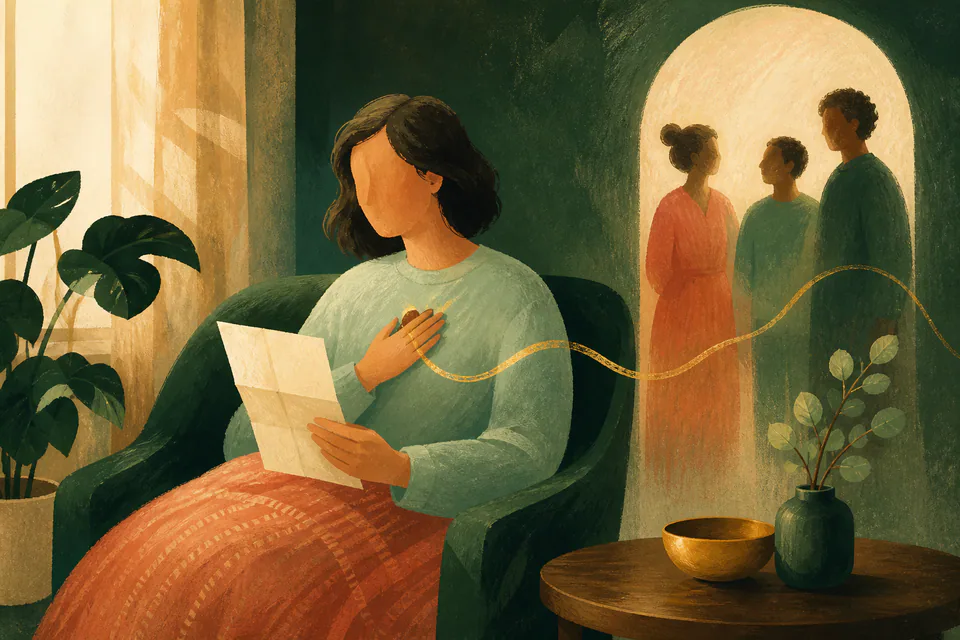
A donor's family wants to hear their loved one's heart beating in you. Do you meet them?

A transplant recipient receives a letter from the donor's family asking to meet. The recipient feels profound gratitude but also discomfort and wants their recovery to remain private and separate from another family's grief.

Can receiving an extraordinary gift create a personal obligation to strangers?

Explore this quandary