Listen through the publisher, then discuss the episode here or arrange an in-person Roundtable. Your city determines where to meet.
Roundtables are designed for groups of four, with a shared subject and room for everyone to speak. Come for discussion, with no dating expectation.
What happens when a devout Muslim sets out to defend the Quran, and ends up finding Jesus instead? Shahriq Khan shares how comparing the Quran and the Bible side by side led him to faith in Christ, and why he believes the Muslim world is one of the ripest harvest fields for the gospel today.Shahriq Khan grew up in Texas as a devout Sunni Muslim, surrounded by a loving family and community. Shaped from early childhood by the fear and scrutiny that followed 9/11, he devoted himself to studying theology and debates in order to defend Islam, until his study of Scripture brought him to faith in Jesus in late 2022. Today he leads Christ Underground, a non-profit equipping Christians to understand Islam, engage Muslims with compassion and conviction, and share the gospel with confidence.In this episode, he joins host Troy to explain:■ The Unexpected Conversion: How a sincere effort to defend Islam through comparative scripture study became the very thing that led him to Christ.■ The Steel Man Approach: Why accurately representing what Muslims believe works far better than political or character attacks.■ Not a Monolith: How Muslims range from devout elders and casual believers to apologists, and why each conversation must start with the person in front of you.■ The Story Problem: How the Quran's retellings of Adam and Eve, Moses, the Ten Plagues, Gideon and Saul, and Abraham and Ishmael differ from the biblical accounts, and why the missing Passover matters for atonement.■ Love Over Fear: Why the church must trade hostility and fear-mongering for relational integrity, biblical literacy, and genuine love for Muslim neighbours.Join Shahriq's free training community at skool.com/christ, and find Apologetics Canada's free AI for Educators resource at apologeticscanada.com/ai
Episode information is provided by the publisher. Listening takes place on the publisher’s service.
The debate over Christian nationalism raises some uncomfortable questions about faith, politics, and the role of government. Al, Zach, John Luke, and Christian examine how Christianity transformed the Roman Empire and why the early church flourished despite intense persecution. The guys also revisit the Garden of Eden, questioning whether Adam's failure to protect Eve was the first sin and what his actions reveal about responsibility and obedience. They consider what history teaches us about the dangers of unchecked power and why Christians must put their allegiance to God's kingdom above any earthly government. In this episode: Genesis 2, verses 15–17; Genesis 3, verses 1–7; Daniel 2; John 1, verses 4–5; Matthew 5, verses 27–30; Matthew 28, verses 18–20; John 11, verses 49–52; Luke 23, verses 6–12; Galatians 3, verse 28; 1 Timothy 2, verses 11–14; Romans 13, verses 1–7 Today’s conversation is about Lesson 6 of Western Heritage: From the Book of Genesis to John Locke taught by various
How Do You Know It's God's Voice? The I Am and Sacred Echoes | Daily Devotional and Bible Study How do you know it's God's voice? He told me "I am," and the Word said the same thing, from Exodus 3:14 to John 8:58. It's Friday, so instead of a Bible study episode I'm sharing something that happened in my own life. I asked the Lord how He could be everywhere at once and with every generation after me, and He answered with two words, I am. Then I heard it again in my church's sermon. We walk through the seven I am statements in John, what each one reveals, and Jesus' claim in John 8:58, and we talk about how to recognize a word from God: it echoes, and it agrees with Scripture. Join me on an immersive Bible Study Experience. Learn more at BibleStudyLive.org (https://biblestudylive.org/) Have a question about the series or a prayer request? Ad-free episodes and the full library of past series: Patreon (https://www.patreon.com/c/HearingJesus) Questions we answer today How do you know it's G
Sometimes, all it takes is one powerful Islamic reminder to bring your heart closer to Allah ﷻ and change the way you see your life. In a world filled with distractions, taking even a few moments to remember Allah can help us reconnect with our faith, reflect on our purpose, and find peace through the beautiful teachings of Islam. These short but meaningful Islamic reminders share timeless lessons inspired by the Holy Quran and the Sunnah of Prophet Muhammad ﷺ, offering spiritual motivation, wisdom, and encouragement in less than a minute. Whether you are searching for inner peace, struggling with life's challenges, or simply looking to strengthen your Iman, these reminders invite you to reflect on what truly matters. Discover the beauty of trusting Allah, practising Sabr, expressing gratitude, seeking forgiveness, and living each day with greater faith and purpose. Every reminder is an opportunity to pause, reflect, and remember that our ultimate success lies in pleasing Allah and pre
️ TODAY'S RESOURCE: PODCASTS: https://MorningMindsetMedia.com (https://morningmindsetmedia.com/) TODAY'S SCRIPTURE: Deuteronomy 30:19–20 - I call heaven and earth to witness against you today, that I have set before you life and death, blessing and curse. Therefore choose life, that you and your offspring may live, [20] loving the LORD your God, obeying his voice and holding fast to him, for he is your life and length of days, that you may dwell in the land that the LORD swore to your fathers, to Abraham, to Isaac, and to Jacob, to give them.” (ESV) CONTACT: [email protected] (NOT a Morning Mindset resource)
In this Lonesome Conversation, Jonathan and I explore his reframe that recovery is really the recovery of agency — and that chasing “false freedom” can leave us more alone, not less. He makes the case that binding yourself into a marriage, a family, something with real constraints is where a surprising depth opens up, and I share my own years of love avoidance that I mistook for freedom until I realized I’d built a prison. A conversation that turns our ideas about freedom and connection upside down. About Jonathan Jonathan Dickinson is the chief executive officer and co-founder of Ambio Life Sciences. One of the world’s leading experts on ibogaine, Jonathan brings over 15 years of experience in clinical care, traditional practice, and psychedelic research to his leadership at Ambio. A Mexico-licensed psychologist and former executive director of the Global Ibogaine Therapy Alliance, he authored the field’s foundational safety guidelines and has published widely on ibogaine’s therapeuti
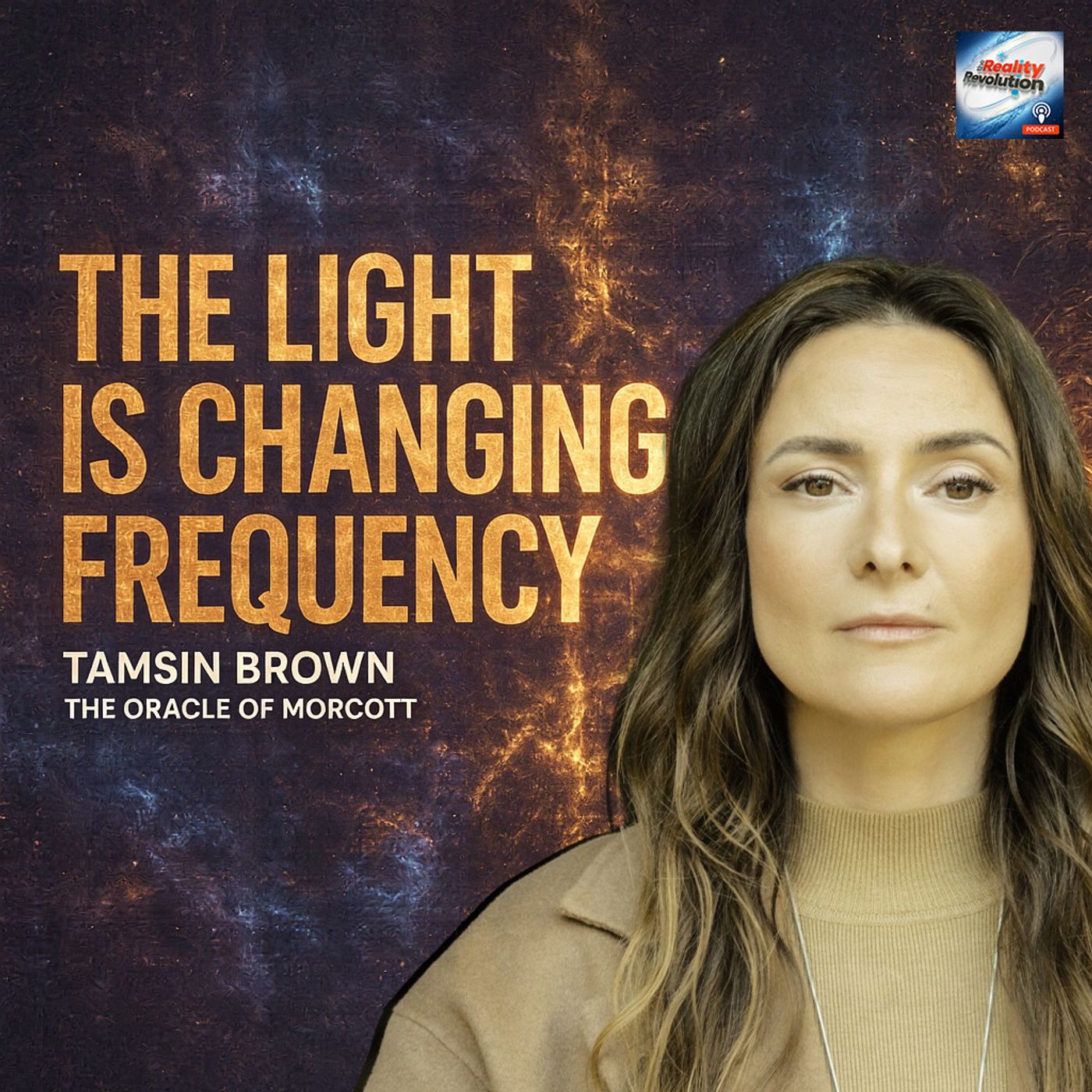
Free 21-Day Large Sums of Money Challenge: one session every morning, one every night, sent to your inbox. Join me at https://largesumsofmoney.com ⠀ ⠀ Join The Reality Revolution Tribe Tamsin Brown channels a Lumarian collective called Mokot. On the day she was supposed to leave Sedona and fly home to Los Angeles, Mokot told her to stay for seven to ten days. She checked into a hotel and waited. The next morning the Palisades fires started. Eleven fires in one day. Her entire hillside burned to the ground. Her small wooden cottage was singed on every edge of its deck and was the only house on the hill that did not burn. ⠀ Mokot comes through live in this interview. They guide a breath that pulls golden light from the forehead down into the heart. They describe the toroidal field of the heart as the same field as the planet, and they explain what the shift in the light is actually doing to people right now. Discomfort surfacing. Old fears appearing with no biographical explanation. Patt
Can a machine ever truly be aware, or is it just getting better at looking like it is? Andy and Ben cut through what Andy calls the “philosophical dumpster fire” of AI and consciousness, asking whether AI could ever become conscious, or even human, and whether people will believe it is anyway. Andy, Steve, and Ben are part of the AC Podcast team at Apologetics Canada, helping Christians think clearly about the biggest questions of our time. With AI tools like Claude and ChatGPT reshaping how people work, relate, and even seek comfort, they explore whether belief in conscious AI could become something like a new religion, dividing those who see AI as a living being from those who don’t, and whether those fears are justified or overblown. In this episode, Andy and Ben join host Steve to explain: ■ The Great Confusion: Why intelligence (measurable problem-solving) and consciousness (first-person inner awareness) are not the same thing, and why AI’s convincing imitation of both makes it ea
What if the “apocalypse” isn’t the end of the world, but an unveiling, and the next generation is already living in it? Shaila Visser reveals why young people across the West are more spiritually open than they’ve been in decades, why so many of our prayers feel unanswered, and what the whole church must do before this moment passes. Shaila Visser is the National Director of Alpha Canada and Global Senior Vice President for Alpha International. Through Alpha, she helps churches across Canada and around the world create welcoming spaces where people can explore life’s biggest questions and encounter Jesus. Her work focuses on prayer, evangelism, and equipping every generation of the church to make Jesus known. In this episode, she joins host Troy to explain: ■ The Purpose of Prayer: Why prayer is not a transaction for getting what we want, but a two-way conversation that realigns our hearts with the Father’s will. ■ The Problem of Unanswered Prayer: How grounding prayer in Scripture, es
An athlete's recovery should take priority over pressure to return for an important game.
Share your view, then see how readers voted. No sign-in required. This poll is shared across stories.
Do you agree or disagree?
Common Quandary
A Common Quandary to discuss
Another conversation to explore, separate from this news story.
One friend is rich, one is broke, and everyone ordered differently. How do you split dinner?
A group of longtime friends traditionally divides restaurant bills equally. Their incomes have grown increasingly unequal, and one friend now declines gatherings because even their share is difficult to afford while others order without thinking about price.
When should friendship adjust for differences in wealth?