Listen through the publisher, then discuss the episode here or arrange an in-person Roundtable. Your city determines where to meet.
Roundtables are designed for groups of four, with a shared subject and room for everyone to speak. Come for discussion, with no dating expectation.
In a resounding rebuke to President Trump, voters this week gave Democrats control over both the House and Senate. Call it a blue wave or a blue tsunami. The power has suddenly shifted to a party that just two years two ago was decimated by Trump and the MAGA movement—and didn’t seem to know how to respond. Hanna Rosin talks with the Atlantic staff writers Ashley Parker and Michael Scherer about how Democrats pulled it off and what comes next for both parties. - - -
Episode information is provided by the publisher. Listening takes place on the publisher’s service.
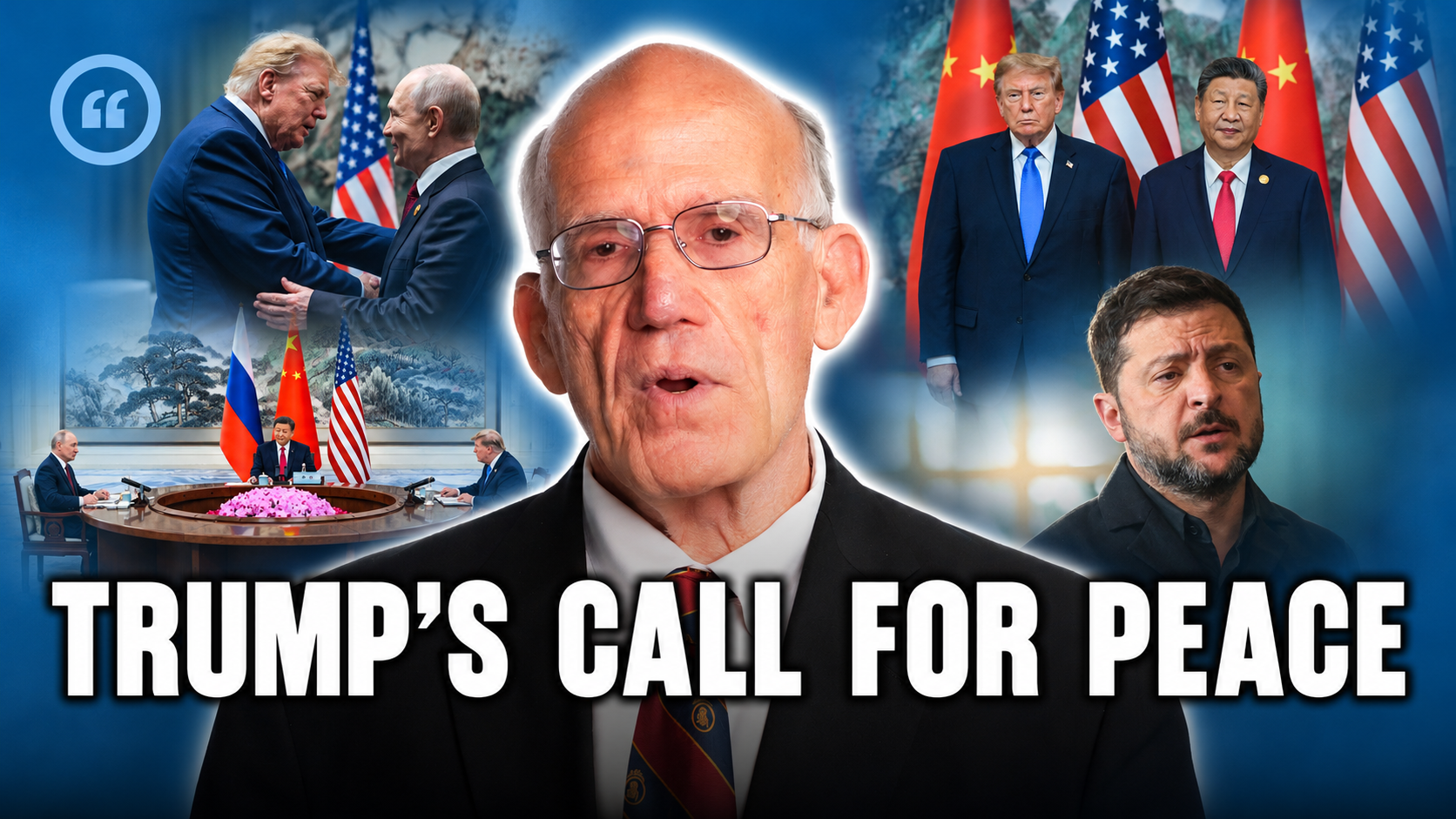
President Donald Trump's first ever trilateral summit with Vladimir Putin and Xi Jinping raises questions about the future of the war in Ukraine and whether a peace agreement could finally be within reach. Victor Davis Hanson and Sami Winc examine the summit on today’s edition of “Victor Davis Hanson: In His Own Words,” discussing Russia's declining influence, potential territorial concessions in Ukraine, and Europe's frustration over Trump's peace negotiations. Hanson criticizes Hillary Clinton's attacks on Trump's diplomacy; he also argues that European leaders have weakened their influence by neglecting defense spending and relying on American military protection. They discuss Elon Musk's shifting political allegiances, and Hanson warns that distancing himself from MAGA may not protect him from Democrat investigations. They also discuss the potential economic benefits of artificial intelligence and the challenges facing Hakeem Jeffries as Democrats prepare to take control of the Hou
November 21, 2026; 8am: With just weeks left before democrats take control of Congress, Senate Republicans are in a race against the clock to put as many of president trump’s judicial nominees on the federal bench as possible. Seven Trump nominees appeared before the Senate Judiciary Committee just this week. Retired Judge J. Michael Luttig, who served on the U.S. Court of Appeals for the Fourth Circuit, joins “The Weekend” to discuss. For more, follow us on social media Bluesky: @theweekendmsnow.bsky.social Instagram: @theweekendmsnow TikTok: @theweekendmsnow Hosted by Simplecast, an AdsWizz company.
The Democrats swept the midterms. Donald Trump is still president. What will the next two years look like? And what can history teach us about what comes next? Martin Wolf speaks to historian Heather Cox Richardson about the cycles in the past 250 years of US politics — how renewal (and division) can both follow periods of oligarchy, and how the Democrats should react to a “constitutional crisis”. To enjoy future episodes, be sure to subscribe to ‘Martin Wolf on the World’ wherever you get your podcasts. You can also watch Martin’s podcast series on the FT’s YouTube channel here:https://www.youtube.com/@FinancialTimeshttps://www.youtube.com/@FinancialTimes Host: Martin Wolf Producer: Mischa Frankl-Duval Senior producer: Laurence Knight Video editor: Richard Topping Senior audio engineer: Breen Turner Broadcast engineer: Andrew Georgiades Podcast development: Laura Clarke FT Global Head of Audio: Flo Phillips Learn more at www.ft.com/martin-wolf-on-the-world (http://www.ft.com/martin-wo
November 21, 2026; 12pm: In almost every presidency, there comes a time when the president turns their attention overseas – usually after some sort of political defeat. President Trump’s attention is definitely overseas, but for personal reasons. Ruth Ben-Ghiat points out the red flags of Trump cozying up to notorious Strongmen; Democrats have never held this much power before and it’s not just in Congress, it’s at the state level too. State Rep.-elect Allie Phillips (D-TN) and State Senator-elect Robyn Vining (D-WI) explain how they will set their most important agenda items into action; MS NOW’s Rachel Maddow continues her discussion with Jacob Soboroff about her brand new book “The Department of Fate,” Stephen Miller’s rise, and much more. Hosted by Simplecast, an AdsWizz company.
Runaway government spending, rising costs, and a new wave of legal battles over constitutional rights. With Democrats preparing to take control of Congress and several state governments, Republicans are confronting a very different political landscape. John Solomon and Amanda Head welcome Montana Senator-elect Kurt Alme, who says Washington must get serious about reining in spending, lowering inflation, and making everyday life affordable again. Already preparing for his arrival in the Senate, Alme discusses his priorities for protecting Montana's way of life, keeping taxes low, creating good-paying jobs, and working across party lines when possible. He also addresses the challenges Republicans face in the minority, the remaining lame-duck session, and concerns about efforts to expand the Supreme Court and eliminate the filibuster. Then, Southeastern Legal Foundation President Kimberly Hermann joins the show with a warning about potential policy reversals in states where Democrats have
Master the skills that change lives — enroll in your free human behavior course today: https://nci.university/learn Uploaded 10-04-26 The Cheat Code for Controlling Conflict Every argument, meltdown, or power struggle follows a pattern. Most people miss it—and that’s why they lose control in the moment. This video breaks down the exact psychological system behind conflict escalation, including why people suddenly become defensive, aggressive, manipulative, or unpredictable. Once you see it, you’ll recognize the moment before things spiral—and you’ll know how to respond without escalating, backing down, or losing your frame. This isn’t about winning arguments. It’s about understanding what actually triggers human behavior under pressure. Inside this breakdown: • Why people suddenly “flip” in conversations • The hidden triggers behind anger, defensiveness, and power plays • How ego threat drives conflict escalation • Why logic fails when emotions take over • How to read the exact moment
When the Democrat Scott Colom clinched the U.S. Senate race in Mississippi last week, Senator Raphael Warnock of Georgia wasn’t surprised. He’d campaigned for Colom, and believed that the state, like Georgia, might be on the verge of turning blue. On this episode of Radio Atlantic, Warnock talks to Adam Harris about his bullishness on the South as a source of Democratic power. He calls voting rights “job one,” criticizes gerrymandering, defends empathy, and talks about which legislation he’ll try to pass when the Democrats take the majority. - - -
This episode of Radio Atlantic taped before Nvidia CEO Jensen Huang’s resignation. The AI race between the United States and China heated up in a different way this week: Nvidia CEO Jensen Huang admitted to having an affair with a woman who is reportedly a Chinese spy. Days later, news of a second affair broke, this one with an Nvidia executive who reports to Huang. The board met on Wednesday to consider the future of the man who’s seen as indispensable to his company and the American AI effort at large. What would happen with his ouster? And what do we know about how far the alleged espionage went? The Atlantic’s staff writers Shane Harris, who covers national intelligence, and Charlie Warzel, who covers tech and hosts the Atlantic podcast “Galaxy Brain,” explain how this may have happened, how Silicon Valley’s responded, and why this could destabilize the U.S. economy. - - -
Last week’s midterms were clear: American voters are not happy with the war in Iran. Less clear, though, is what President Trump can or will do now. After elevating his hard-line adviser Stephen Miller to chief of staff and shielding Secretary of Defense Pete Hegseth against impeachment calls, Trump seems unlikely to back down from the conflict. But he is about to lose Congress—and Iran knows it. Our staff writers Nancy Youssef and Tom Nichols join Adam Harris to discuss where the administration goes from here, what options exist to get out of Iran, what to make of Hegseth’s potential impeachment, and how the Defense Secretary has changed the relationship between American democracy and the American military. - - -
Institutions should publicly explain how they respond to research misconduct.
Share your view, then see how readers voted. No sign-in required. This poll is shared across stories.
Do you agree or disagree?
Common Quandary
A Common Quandary to discuss
Another conversation to explore, separate from this news story.
A better public school is one borrowed address away. Would you use it?
Your child is struggling at the assigned school. A grandparent lives inside the boundary of a much stronger public school and offers to let you use their address. The desired school has limited places and verifies residency unevenly.
Can a parent's duty justify taking an opportunity allocated by an unfair boundary?