Listen through the publisher, then discuss the episode here or arrange an in-person Roundtable. Your city determines where to meet.
Roundtables are designed for groups of four, with a shared subject and room for everyone to speak. Come for discussion, with no dating expectation.
What has no legs, arms, or eyes…but has hair? Earthworms! Wait, earthworms have hair? Discover the mysterious underground life of worms and how they’re designed to help plants, creatures, and humans. Here’s our trail map: Do Earthworms Really Have Five Hearts? How Is a Baby Worm Born? Do Worms Really Eat Dirt? How Can Worms Help Us Work Faithfully? Download this lesson’s free coloring sheet: https://thenaturaltheologyproject.com/do-earthworms-have-five-hearts/ Episodes to Listen to Next: Is a Snail Born With a Shell?: https://player.captivate.fm/episode/062f10aa-c4b2-4d23-939b-f695e5c0c409/ Why Are Slugs Slimy?: https://player.captivate.fm/episode/535e6982-0693-4eac-af6a-239e5a9438d9/ Eryn's Books: Episode Links: Explore trusted books and resources by Master Books: https://www.masterbooks.com/ Free Worm Coloring Sheet: https://thenaturaltheologyproject.com/do-earthworms-have-five-hearts/ Scriptures Referenced in This Episode: “So let’s not get tired of doing what is good. At just the right time we will reap a harvest of blessing if we don’t give up.” Galatians 6:9 (NLT) “In all the work you are doing, work the best you can. Work as if you were doing it for the Lord, not for people.” Colossians 3:23 (NCV) Terms Learned in This Episode: Invertebrates: Animals without backbones. Annelida: The animal group (phylum) made up of segmented worms—worms whose bodies are divided into repeating sections. Annuli: The ring-like segments or grooves that divide an annelid’s body into sections. Aortic Arches: Blood vessels in an earthworm that help pump blood through its body. Hermaphrodite: A creature with both female and male parts in its body. Clitellum: The thick, lighter-colored band around an earthworm’s body that helps with reproduction and forms the cocoon where its eggs develop. Detritivores: Creatures that eat dead or decaying things and mix it into the soil. This podcast episode contains paid advertisements.
Episode information is provided by the publisher. Listening takes place on the publisher’s service.
What does it take to be an awesome kid who WOWs, and can you guess which stories are true? In this game show podcast for kids, Mindy Thomas sits down with Aaron to share surprising facts and sneaky fibs about his life! This interactive interview podcast for kids invites listeners to play along, think critically, and discover what it really means to be a kid who WOWs! In this two-truths-and-a-lie podcast all about Aaron, families will hear unbelievable stories about which talent Aaron has performed on stage, a challenge he's undergone, and his unique friendship! But not everything you hear is true… Can you figure out which facts are real? This episode blends gameplay with real conversation as Mindy and her guest share stories that are surprising, funny, and sometimes totally unbelievable. From talents and challenges to friends, listeners will explore how Aaron WOWs every day! Along the way, kids and grownups will get to combine curiosity and play, discover the joy of human connection, a
Read: Jeremiah 17:7-10; Hebrews 4:13 (https://www.biblegateway.com/passage/?search=Jeremiah+17%3A7-10%3B+Hebrews+4%3A13) When two strange-looking people appeared in the doorway of the living room, three-year-old Vale quickly jumped up from where he was sitting on the floor and ran behind Mom’s chair. One of the newcomers laughed. “What’s wrong, Vale?” said a familiar voice. “Don’t you like the way we look?” Vale peeked out but stayed where he was. He certainly did not like the way these people looked! They were dressed funny and had masks over their faces. One looked like a giant green monster. The other wore a shimmery blue dress and had long blonde hair. Mom laughed. “You guys did a good job on your costumes for the party tonight. Take off your masks so Vale can see who you are.” The masks came off, and Vale saw his brother, Arlo, and…was that his sister, Elodie? She reached up and peeled off a blond wig. “Do you recognize me now, Vale?” she asked, running a hand through her short re
What if the scale isn't telling you the whole story? Have you ever been consistent with your workouts, making better food choices, and really trying to take care of yourself, only to step on the scale and see absolutely no change? And just like that, your motivation takes a hit. You start questioning whether your workouts are working, whether you're doing enough, or whether you need to change something. But here's what I want you to understand: The scale is only measuring one small piece of your health and fitness journey. It doesn't measure how much stronger you've become, how much better your endurance is, how much energy you have, or how much easier it is to do things that used to feel difficult. And if you're only using the scale to determine whether you're making progress, you could be missing some pretty amazing changes happening in your body. Today, we're talking about five ways to measure your fitness progress beyond the scale so you can start recognizing the changes that actua
- - - - - - - P.S. Happy Birthday, David Sr.! Today is a red-letter day in Sower Nation as we celebrate my dad turning 86. And to mark the occasion, he and Mom (Susan) are matching the first $500 given to our Harvest Campaign to help sow seeds for a great awakening! You can also send a note along with any gift you give. Click here to give and join Dad's $500 Matching Gift Challenge: https://givebutter.com/david500 - - - - - - - - - - - - - - - - - - - JD Walt opens the Sower Nation wake-up call wearing a shirt that reads "Ask Me About My Band." The entry of that name is based on Romans 15:14-22, where Paul describes his priestly duty of proclaiming the gospel so that the Gentiles might become an offering acceptable to God, and his ambition to preach where Christ was not yet known. JD says the shirt, designed by his friend Nick, lets him talk about his country band, JD and the Dukes, or his Seedbed band, and he saves the Dukes story for another day. He tells how he, Mark, and Omar start
Today I'm joined by author Micah Boyett, whose new book Advent Unhurried (http://amazon.com/dp/1587436108?asc_item-id=amzn1.ideas.DL4M6AD2Z4ZN&creativeASIN=1587436108&linkCode=ssc&ref_=aip_sf_list_spv_ofs_mixed_d_asin&tag=dianeboden-20) offers a refreshing invitation to slow down, pay attention, and rediscover the beauty of waiting. Drawing from her own experiences with motherhood, grief, and raising three boys, Micah shares how she's learned to separate our worth from our productivity and embrace a more intentional approach to the holidays. We explore why we feel responsible for manufacturing wonder, how to make room for both joy and grief during a season that often demands happiness, and why slowing down doesn't necessarily mean doing less. Sometimes, it's simply about noticing more. In this episode, we discuss: Why the pressure to make Christmas magical can steal our joy The surprising connection between Advent and minimalism What motherhood has taught Micah about worth, productivit
What helps us move beyond loneliness and separation to experience a deeper sense of belonging—with ourselves, with each other, and with the living world? In Part 2 of Medicine for the Lonely Heart, Tara Brach continues exploring how we can awaken our hearts to the love and connection that are always possible. While our deepest longing is to feel close to others, familiar habits of judgment, wanting, and fear can keep us from truly seeing those around us. When we become caught in our own needs and expectations, we lose touch with the humanity and goodness of others. Yet through mindful presence and loving-kindness, we can begin to look beyond these patterns, recognize the tenderness and vulnerability we share, and rediscover the possibility of genuine soul-connection. Through personal stories, reflections, and guided heart practices, Tara invites us to see others with fresh eyes, appreciate their goodness, and express our care. As we extend this loving attention beyond our familiar rela
Why do different trees have different bark? Smooth, rough, bumpy… red, brown, and even white—bark comes in many varieties, but why is it important? Discover why God dressed trees in bark and what tree bark teaches us about our inner spirit. Here’s our trail map: Why Do Different Trees Have Different Bark? Why Is Tree Bark Important? What Happens If a Tree Loses Its Bark? How Does God Protect Our Inner Being? Download this lesson’s free coloring sheet: https://thenaturaltheologyproject.com/why-do-trees-have-bark/ Related Episodes to Listen to Next: How Do Redwood Trees Grow So Tall?: https://player.captivate.fm/episode/b2563e6d-2853-4a30-9758-1531aee73964/ Do Trees Have Friends and Can They Talk to Each Other?: https://player.captivate.fm/episode/2d40ff13-97f1-4384-8249-89a6fe7cbe6f/ Eryn's Books: Episode Links: Discover God’s designs in trees and plants with Apologia’s Discovering Creation with Botany course: https://www.apologia.com/subject/science/botany/ Explore all of Apologia’s aw
In this special episode with the Kids Bible Stories podcast, we discover what Jesus taught about soil in Mark 4:1–20. In this episode, we journey through the Gospel of Mark as Jesus teaches beside the lake and tells the Parable of the Sower. Using the picture of a farmer scattering seed, Jesus helps us understand what can happen in our hearts when we hear God’s Word. Children will be invited to consider an important question: How do I respond when I hear God’s Word? Kids Will Learn What a parable is. What the seed and the different kinds of soil represent. Why people respond to God’s Word in different ways. Why we all need Jesus to forgive us, change us, and help us receive His Word with faith. That the “crop” Jesus describes isn’t corn or tomatoes! It is the fruit of a changed heart—one that increasingly reflects Jesus through love, joy, peace, patience, kindness, goodness, faithfulness, gentleness, and self-control. Keep Listening Discover more than 400 episodes of Kids Bible Stories
Have you ever heard of a fish that can walk across dry land and even rockclimb? Meet the catfish: a mysterious bottom dweller full of shocking surprises. Discover a 600-pound monster catfish, a tiny catfish with rock climbing skills, and what’s up with a catfish’s whiskers. Learn how these fascinating creatures navigate murky waters and how we can find our way in life when the path ahead isn’t clear. Here’s our trail map: How Big Can a Catfish Grow? Can Catfish Rockclimb? Why Do Catfish Have Whiskers? How Can We Navigate Murky Waters in Life? Download this lesson’s free coloring sheet: https://thenaturaltheologyproject.com/why-do-catfish-have-whiskers/ Related Lessons to Listen to Next: Why Do Salmon Swim Upstream?: https://player.captivate.fm/episode/100ea2de-129d-4109-8f2a-2ad963c50a8c/ What Makes Electric Eels So Shocking?: https://player.captivate.fm/episode/782bf286-5c1f-4eb7-973a-5914e204f8c4/ Eryn's Books: Episode Links: Discover God’s designs in catfish and other water creature
Welcoming newcomers involves responsibilities for both receiving communities and new arrivals.
Share your view, then see how readers voted. No sign-in required. This poll is shared across stories.
Do you agree or disagree?
Common Quandary
A Common Quandary to discuss
Another conversation to explore, separate from this news story.
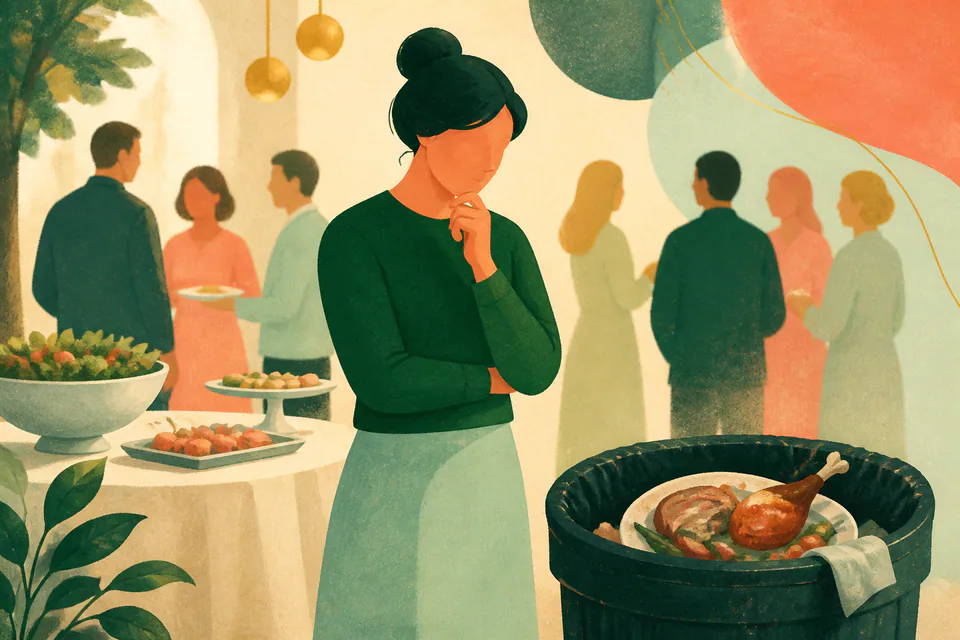
You are vegetarian, but the leftover steak is headed for the trash. Do you eat it?
A vegetarian avoids buying meat because of animal welfare concerns. At work events, untouched meat is routinely thrown away, and eating it would neither increase demand nor cause another animal to be harmed.
Should a moral practice be judged by its consequences or its consistency?