Dr Mindy Pelz: The Unexpected Thing That Changed When I Put Myself First
5 min
Listen through the publisher, then discuss the episode here or arrange an in-person Roundtable. Your city determines where to meet.
Roundtables are designed for groups of four, with a shared subject and room for everyone to speak. Come for discussion, with no dating expectation.
What if putting yourself first could change how you feel about everyone around you? In this Motherkind Moment, Zoe is joined by Dr Mindy Pelz, a women’s health educator, chiropractor and New York Times bestselling author of Fast Like a Girl. Known for her work on women’s health, hormones and menopause, Mindy shares a deeply personal lesson about caring for herself. After years of putting family and then work first, she finally began prioritising herself at 55. The biggest change? Letting go of resentment. Together, they explore what our children learn from watching us constantly doing, rushing and putting our own needs last. Mindy offers a different way to think about self-care: as something we can model for our children, helping them see that their needs deserve space too. In this episode, you’ll learn: How Mindy connects putting herself first with feeling less resentful. Why our everyday habits can teach our children more than our words. A simple question to ask when prioritising yourself feels difficult. A reminder that caring for yourself is something your children can learn from, too. Loved this episode? If you enjoyed this episode, you can listen to the full episode: 2026 health reset: Dr Mindy Pelz on burning fat, clearing brain fog, balancing moods and getting your energy back (https://podcasts.apple.com/gb/podcast/2026-health-reset-dr-mindy-pelz-on-burning-fat-clearing/id1295306961?i=1000745247669) Feeling different since becoming a mother? Connect with Zoe: This Motherkind episode is sponsored by: Want to feel the Food-Grown difference yourself? Ts and Cs apply. Grape Tree Feel Good Foods.
Episode information is provided by the publisher. Listening takes place on the publisher’s service.
What if some of the things you've always considered part of your personality were actually skills you developed to survive? In this episode, Danielle is joined by senior coach Brigid Morgan for a deeply personal, thought-provoking and refreshingly candid conversation about the Good Girl Contract, childhood conditioning, healthy relationships and what it means to live with genuine autonomy. Brigid shares the profound impact of listening to the Good Girl Contract podcast series, reflecting on her own experiences of conditional love, hypervigilance, rebellion and the difference between who she is and who she learned to become. Together, Danielle and Brigid explore: The possible origins of the qualities and abilities we've always considered our personality. Why rebellion isn't necessarily the same thing as freedom. The discomfort of holding boundaries and allowing others to be disappointed. How we build self-trust through the choices we make. Navigating conflict, disagreement and genuine r
You think about it every single day. It feels like you’re doing the work. But the thing still isn’t done. Monday you found the note under a brown banana: angel costume, white, needed Thursday. You thought about it in the shower, at pickup, in Woolies, in bed. Thursday, ten past eight, she’s at the door in her uniform and you’re pulling the fitted sheet off your own bed. That’s ADHD at Christmas: thirty jobs living in your head at once, and none of them going off at the right moment. It isn’t because you don’t care. This is why the reminder in your head is the worst place for it to live, why ‘write a list’ and ‘start earlier’ keep failing you, and four ways to get the thing done anyway. More for when December is on top of you: Overwhelm episodes (https://tr.ee/overwhelm) Mentioned in this episode: ADHD and Losing Things: Why You Get It Ready Early and Still Can’t Find It (https://tr.ee/losingthings) Doing Too Much (https://adhdmums.com.au/product/adhd-reset-workbook-values-energy-planni
What if I told you that you could have LESS stress, fewer battles with your kids, more time for yourself, and actually ENJOY motherhood more… without doing a single thing MORE? Because here's the thing: We're constantly being told what we need to START doing to be better moms. More routines. More activities. More magical childhood memories. More patience. More EVERYTHING. But what if the biggest thing standing between you and a happier motherhood is all the stuff you need to STOP doing? In this solo episode, Kristin is sharing the 5 things she stopped doing after 10 years of motherhood that genuinely changed EVERYTHING. And we're not talking about another parenting hack or a morning routine you'll never stick to. In this episode, you'll learn: why trying to create the "perfect childhood" might actually be stealing your joy (and what decades of research say your kids REALLY need) the one question that can instantly eliminate unnecessary battles with your kids how to stop letting mom gui
It takes a village to raise a child. But what happens when the village starts telling you how to parent? Today, Dale is joined by returning guest Ali Knowles, emotional therapist and founder of the Ollie Model, to discuss why it takes a village to help raise a child (https://thesendcast.com/why-it-takes-a-village-to-help-a-child), and what that support should really look like. Together, they explore: - Why the village has changed, and why so many parents now feel isolated. - The difference between offering support and giving advice, and why wisdom helps where instructions don't. - How social media and well-meaning opinions can wear down parents' confidence. - Why a parent's own school experiences can quietly shape how they respond to their child. - What 'safe' means to a child, and why feeling safe is not the same as being told you are. When parents ask her what they should do, Ali's answer is always the same: "I can't tell you, because there isn't a book. You haven't written it. This
The most valuable thing you can have in an emergency might not be a stockpile of supplies. It might be a neighbor who knows your name. In this encouraging conversation, Ginny Yurich welcomes archaeologist and survival expert Chris Begley and author Amy Edelman, coauthors of The Emergency Playbook: The Bunker-Free Guide to Disaster Preparation. (https://link.amazon/B0a06ZOGv)Together, they challenge the idea that surviving difficult circumstances requires expensive equipment, elaborate bunkers, or an everyone-for-themselves mentality. Instead, they reveal how communities often come together during disasters, why practical knowledge can be more valuable than possessions, and how everyday activities like gardening, building fires, and learning first aid can prepare families for the unexpected while enriching their lives right now. From helping children develop useful skills to discovering why hope matters in a crisis, this conversation offers a reassuring perspective on preparedness. Bein
What if you could ask questions that got your teens talking, build critical thinking and connection? We spend a lot of time trying to optimise our teenagers: their grades, their screen time, their behaviour. It’s easy to forget to be interested in who they actually are. This week on Teenagers Untangled I spoke to Andy Nadler, dad of two teenage boys and founder of Food for Thought. One silly question at dinner changed the way his family talks to each other, and it changed how well he knows his sons. It started with worry. Andy’s older son brought home an English essay where the paragraphs didn’t connect. His younger son made bold claims about music, and when Andy pushed back, he dug in rather than rethinking. Andy works in software and asks questions for a living. He’d assumed his kids would pick up the habit. They hadn’t. So he brought one question to dinner: “If animals could talk, which would give the best advice, and which would be the biggest complainers?” First came the side-eye,
TRIGGER WARNING: This episode includes discussion of miscarriage, bereavement, breast cancer, fertility treatment and health anxiety. What happens when the motherhood you wanted so much feels harder than you expected? And why can finally having your baby make it difficult to admit you’re struggling? Peloton instructor Leanne Hainsby-Alldis joins Zoe Blaskey for an honest conversation about becoming a mother after miscarriage, breast cancer and IVF, and finding space for yourself once the baby you dreamed of is here. Leanne shares her experience of being diagnosed with breast cancer at 34, preserving her fertility before treatment, and navigating the loneliness of watching friends grow their families while her own plans were on hold. Now a mum to her son Ace, she opens up about the realities of postpartum life: sleep deprivation, mum guilt, changes in identity and the resentment she felt when her husband, fellow Peloton instructor Ben Alldis, returned to work. They also explore why retu
What if you achieve everything you’ve worked towards, but still feel empty? In this Motherkind Moment, Zoe is joined by Maria Hatzistefanis, founder of skincare brands Rodial and NIP+FAB, bestselling author and mother of two. Having launched Rodial in 1999, Maria has spent more than two decades building her business alongside raising her sons. She shares how becoming a mother changed her definition of success - from growing her business and proving herself to protecting her time, becoming a more compassionate leader and making space to enjoy her life. Maria recalls sitting outside her home in her car, completely burnt out. On paper, things were going well. Inside, she felt caught on a treadmill of work and family responsibilities, with little left for herself. Together, Zoe and Maria explore why we can’t keep waiting for life to slow down before we start living it, and how deliberately making room for ourselves can change the way we experience both work and motherhood. In this Moment,
What if the skills you’ve gained in motherhood could help you get a pay rise, change careers or build something of your own? When you’re juggling school runs, navigating toddler negotiations and making a hundred decisions before breakfast, it can be hard to recognise the skills you’re developing - let alone see their value at work. In this solo episode, Zoe explores seven skills motherhood can strengthen, from prioritisation and communication to staying calm when everything changes. She shares how she runs Motherkind within school hours, why working longer isn’t always the answer, and how to talk about your strengths with more confidence. Whether you’re returning to work, ready for a change, or wondering what to do next, this episode offers practical ways to recognise what you bring and take your next step. In this episode, you’ll learn: 7 skills you may have developed through motherhood and how they translate to work. Why having less time can sharpen your focus on what matters. How to
Schools should explain the purpose of a rule before punishing students for breaking it.
Share your view, then see how readers voted. No sign-in required. This poll is shared across stories.
Do you agree or disagree?
Common Quandary
A Common Quandary to discuss
Another conversation to explore, separate from this news story.
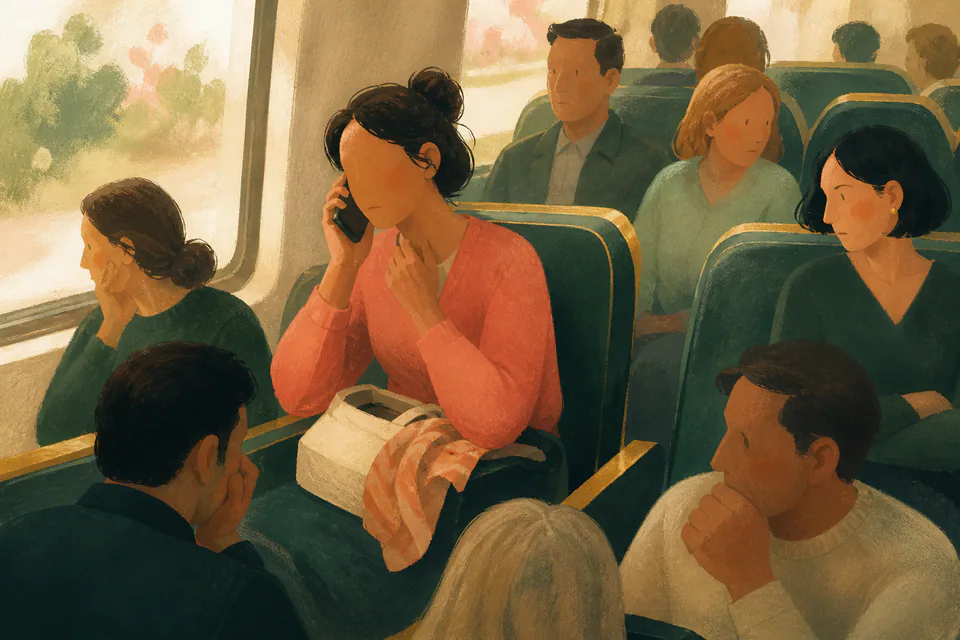
A stranger takes an emotional call in the quiet car. Do you shush them?
On a crowded train's designated quiet car, a passenger answers a call and begins discussing an apparent family emergency. They are speaking softly but continuously, and everyone nearby is listening despite trying not to.
Do public rules make room for private emergencies?