E226 - Management of acute hyperkalaemia: evidence, practice and pitfalls
18 min
Listen through the publisher, then discuss the episode here or arrange an in-person Roundtable. Your city determines where to meet.
Roundtables are designed for groups of four, with a shared subject and room for everyone to speak. Come for discussion, with no dating expectation.
Jo Cheah speaks to clinical pharmacist Samuel Ford about his article on acute hyperkalaemia. Samuel discusses the presentation and diagnosis of acute hyperkalaemia, the current stepwise approach to management, highlighting what has changed and how to prevent treatment complications such as hypoglycaemia, and the importance of restarting renin–angiotensin–aldosterone system inhibitors (e.g. ACE inhibitors) once serum potassium concentration has normalised. Read the full article (https://australianprescriber.tg.org.au/articles/management-of-acute-hyperkalaemia-evidence-practice-and-pitfalls.html) in Australian Prescriber.
Episode information is provided by the publisher. Listening takes place on the publisher’s service.
Pulsatile tinnitus causes people to hear a rhythmic sound that matches their heartbeat. This report explores what causes it, why diagnosis can be challenging and the expanding treatment options available to some patients. Reporter: Sarah Diprose Guest/s Dr Robert Fahed, Interventional Neuroradiologist and Stroke Neurologist at The Ottawa Hospital, and Assistant Professor at the University of Ottawa. References The assessment of pulsatile tinnitus—a systematic review of underlying pathologies and modern diagnostic approaches (https://www.theajo.com/article/view/4101/html) Pulsatile Tinnitus: A Comprehensive Clinical Approach to Diagnosis and Management (https://www.mdpi.com/2077-0383/14/13/4428) The day the ‘whooshing’ stopped: World-first trial at The Ottawa Hospital brings relief from pulsatile tinnitus (https://ohri.ca/en/newsroom/day-whooshing-stopped-world-first-trial-ottawa-hospital-brings-relief-pulsatile-tinnitus)
Does your relationship feel like home, or does it feel like standing on the edge of something you might lose? In Part 3 of our Relationship Anxiety series, clinical hypnotherapist and former paramedic Martin Hewlett guides you through the process of teaching your nervous system that love doesn't have to hurt to be real. We explore the physical manifestations of anxiety—the tight chest, the 2:00 AM racing mind, and the "stomach drop" when a text takes too long—and provide the tools to "turn down the alarm" of your internal survival response. If you are ready to stop "cherry-picking" evidence of disaster and start building a foundation of trust, this session is for you. In This Episode, We Cover: The Science of Safety: Understanding how your nervous system confuses love with danger. Guided Visualization: A journey into your own "safe room" where you are already enough. Rewiring the Brain: Moving from worst-case disaster reels to the reality of small, daily kindnesses. Breaking the Cycle:
Robert “Bob” Sutton (https://engineering.stanford.edu/people/robert-sutton) is an expert on organizational behavior. He studies a key workplace dynamic he calls friction – moments where reaching goals is more difficult than it should be. In any organization, whether a company, government, university, or nonprofit, there are good kinds of friction and bad, Sutton says. And good friction can undo the bad, but it’s not easy. He champions what he calls a “subtraction mindset,” removing what doesn’t work to focus on what does: virtues like competence, hard work, and compassion. He likens the approach to film editing. The best editors “cut out the bad stuff and keep the good,” Sutton tells host Russ Altman (https://bioengineering.stanford.edu/people/russ-altman) on this episode of Stanford Engineering’s The Future of Everything podcast. Have a question for Russ? Episode Reference Links: TheAI and Organizations Lab at HAI (https://hai.stanford.edu/centers-labs/ai-organizations-lab) Connect wi
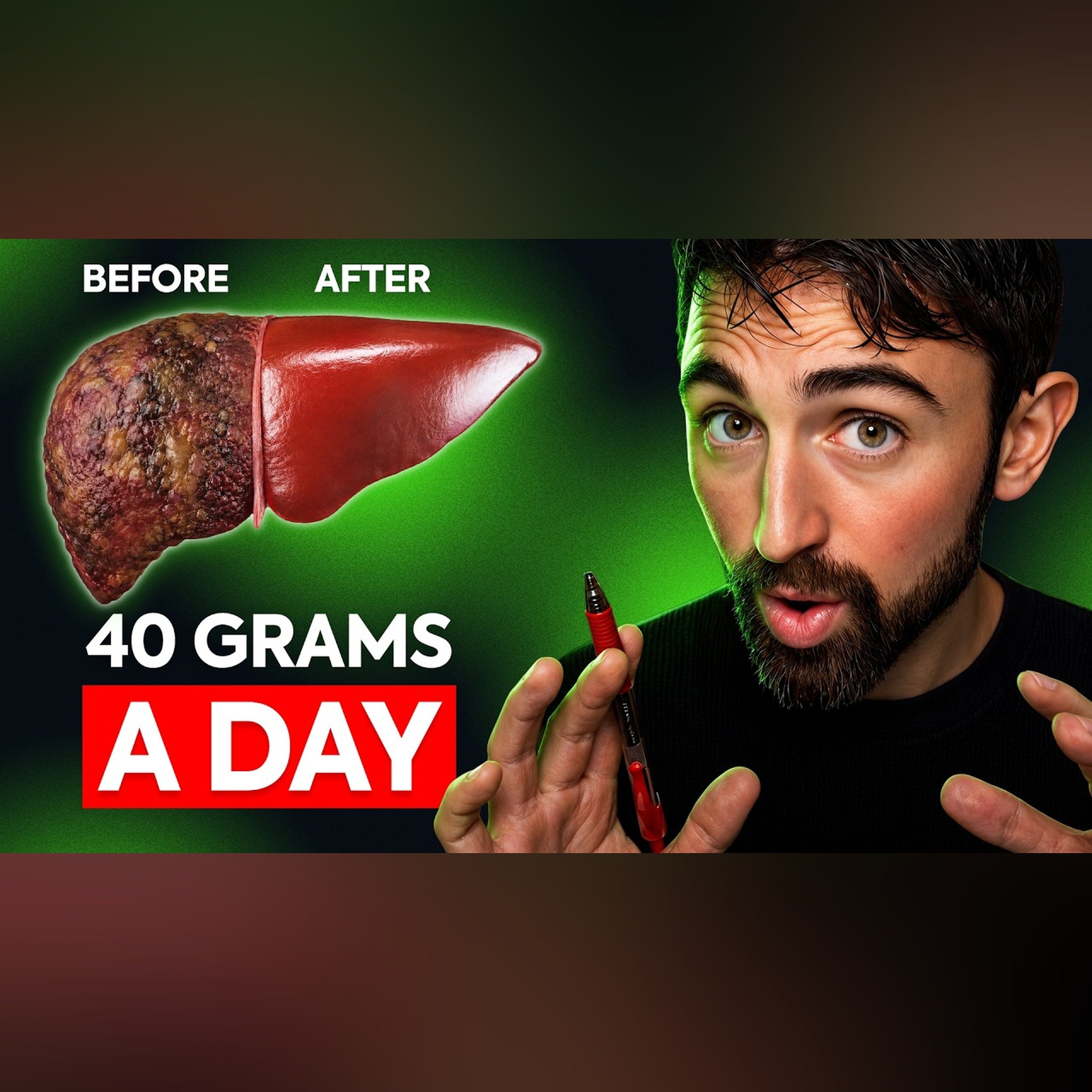
For all references, extra nuances, and early access to breakdowns like this, see the associated newsletter: https://staycuriousmetabolism.substack.com/p/shrink-visceral-fat-by-feeding-your?r=40ekz2 Winnow Microplastic Binding Probiotic: https://www.winnowlabs.com/STAYCURIOUS Microplastics and Heart Health, Letter https://staycuriousmetabolism.substack.com/p/microplastics-in-my-heart-its-worse?r=40ekz2 Microplastics and Brain Health, Letter: https://staycuriousmetabolism.substack.com/p/this-graph-changed-how-i-think-about?r=40ekz2 Description: In this video we examine the scientific evidence behind resistant starch, including randomized controlled trials showing reductions in body weight, total fat mass, and visceral fat measured by MRI—even when calorie intake remains controlled. We also explore the biological mechanism, including how changes in the gut microbiome may drive these effects. But there’s an important twist: not everyone responds the same way. We’ll look at new research exp
Keto Consult #11. This week Jennifer and I discuss Intermittent Fasting vs. Keto Supplements for Weight Loss. Jennifer’s in an interesting situation where she needs to decide whether she’d rather Intermittent Fast or use Keto Supplements to help balance her Hormones. Keto Supplements can be a great way to Kick Start Ketosis however Intermittent Fasting can sometimes be equally or more effective. We also answer many questions from viewers that I believe are great teachable moments on How to Keto Diet. We talk about your cholesterol when starting the Keto Diet, How to use Keto Supplements for Weight Loss such as Exogenous Ketones and whether you should take Keto Supplements such as Exogenous Ketones. Stick around until the end when we talk a bit about Fasting for Children and whether or not a child should practice Intermittent Fasting. Thanks for tuning into my channel. Find more stories and information at my website: www.BozMD.com BOOK-LINK - ANYWAY YOU CAN. AUDIBLE: https://adbl.co/2SL
Today, I’m sitting down with Shalin Shah (https://mariuspharma.com/team/shalin-y-shah/), whose personal health journey led him to challenge some of the biggest myths around testosterone therapy and men’s health. After being diagnosed with borderline low testosterone at the age of 30, Shalin launched a 13-year mission that not only resulted in the creation of the first FDA-approved oral testosterone pill, Kyzatrex, but also sparked him to advocate for better hormone education and diagnostics for both men and women. Episode Timestamps: Introduction and FDA changes regarding testosterone ... 00:00:00 Testosterone Project: advocacy and public health ... 00:06:37 Regulatory hurdles and the history of restrictions ... 00:08:17 Dispelling cardiovascular and prostate cancer myths ... 00:12:06 Declining testosterone trends and contributing factors ... 00:14:42 Concerns about low testosterone in younger generations ... 00:18:13 Importance of early screening and baselines ... 00:20:36 Early, over
Laura Beaton speaks with Danielle Mazza, a GP specialist in women's sexual and reproductive health, about diagnosis and management of endometriosis and adenomyosis. Danielle explains how clinically based early diagnosis and treatment improves outcomes, how re-characterisation of endometriosis as a chronic condition affects ongoing care, and outlines treatment options and resources for practitioners. Read the full article (https://australianprescriber.tg.org.au/articles/endometriosis-and-adenomyosis-diagnosis-and-management.html) in Australian Prescriber.