Listen through the publisher, then discuss the episode here or arrange an in-person Roundtable. Your city determines where to meet.
Roundtables are designed for groups of four, with a shared subject and room for everyone to speak. Come for discussion, with no dating expectation.
Millions of Americans head to the polls in all 50 states as control of Congress hangs in the balance, with Democrats seeking gains in both the Senate and House and President Trump's low approval ratings looming over key races. CNN reporters check in from battleground states including Texas, Michigan, Kansas and Ohio, where closely watched Senate and governor's races are testing voter frustration over the economy, inflation, tariffs and political polarization.
Episode information is provided by the publisher. Listening takes place on the publisher’s service.
Runaway government spending, rising costs, and a new wave of legal battles over constitutional rights. With Democrats preparing to take control of Congress and several state governments, Republicans are confronting a very different political landscape. John Solomon and Amanda Head welcome Montana Senator-elect Kurt Alme, who says Washington must get serious about reining in spending, lowering inflation, and making everyday life affordable again. Already preparing for his arrival in the Senate, Alme discusses his priorities for protecting Montana's way of life, keeping taxes low, creating good-paying jobs, and working across party lines when possible. He also addresses the challenges Republicans face in the minority, the remaining lame-duck session, and concerns about efforts to expand the Supreme Court and eliminate the filibuster. Then, Southeastern Legal Foundation President Kimberly Hermann joins the show with a warning about potential policy reversals in states where Democrats have
Hey everybody, Tom Bilyeu here. On today’s episode of Impact Theory, we’re taking on a topic that’s got the whole world holding its breath: the escalating crisis between the United States and Iran. As tensions ratchet up, we’re asking the tough questions—how did we get stuck in this “escalation trap,” and what does it mean for America’s global leverage, our economy, and our very sense of security? The conversation focused on why the traditional idea of “strategy” might be failing policymakers, using powerful analogies—like chess versus roulette—to show how doubling down in conflict can spiral out of control. We’ll break down the risks of tactical “wins” that create even bigger crises, the real leverage Iran holds with control of the Strait of Hormuz, and the mounting pressure on President Trump as political support erodes and legacy hangs in the balance. A key theme that emerged is what happens when military might runs into decentralized opposition, and why high-stakes gambles—like the
In this special episode, Sen. Lisa Blunt Rochester joins Leigh Ann Caldwell for Puck’s latest Power Breakfast to discuss the Schumer–Van Hollen leadership showdown, where she expects her party to land on healthcare, how they’re navigating the looming government funding deadline, legislating in Trump’s lame-duck era, and more.
One week after the U.S. midterm elections, join Valérie Beaudoin, one of Canada's most respected commentators on U.S. politics, for a discussion on how Canadian policymakers and officials are digesting the results in Washington. From the new balance of power in Congress to the potential implications for Canada-U.S. relations, trade economic growth, and cross-border policy priorities, we'll explore what the election outcome could mean for Canada in the months ahead. Recorded on November 10, 2026. -- Optique canadienne sur les élections américaines de mi-mandat – Valérie Beaudoin Pour une version avec des sous-titres français, veuillez consulter Une semaine après les élections de mi-mandat aux États-Unis, Valérie Beaudoin, l’une des commentatrices de la politique américaine les plus respectées du Canada, discute des façons dont les décideurs canadiens et Ottawa ont réagi aux résultats à Washington. Du nouvel équilibre des pouvoirs au Congrès aux répercussions possibles sur les relations
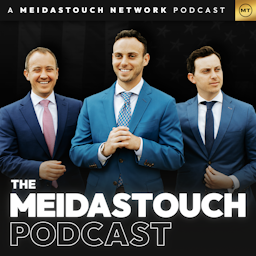
MeidasTouch host Ben Meiselas reports on Donald Trump’s midnight meltdown and the late-night executive order aimed at blocking federal employees, contractors, and subcontractors from cooperating with congressional investigations. Meiselas breaks down what the order could mean for congressional oversight and covers the latest market sell-off and outages affecting critical systems, including at the FBI. Visit https://meidasplus.com (https://meidasplus.com/) for more! Remember to subscribe to ALL the MeidasTouch Network Podcasts: https://meidasnews.com/podcast Support the MeidasTouch Network: https://patreon.com/meidastouch (https://patreon.com/meidastouchAdd) Add the MeidasTouch Podcast: https://podcasts.apple.com/us/podcast/the-meidastouch-podcast/id1510240831Buy MeidasTouch Merch: https://store.meidastouch.com (https://store.meidastouch.com/) Follow MeidasTouch on Twitter: https://twitter.com/meidastouchFollow MeidasTouch on Facebook: https://facebook.com/meidastouchFollow MeidasTouch
November 21, 2026; 8am: With just weeks left before democrats take control of Congress, Senate Republicans are in a race against the clock to put as many of president trump’s judicial nominees on the federal bench as possible. Seven Trump nominees appeared before the Senate Judiciary Committee just this week. Retired Judge J. Michael Luttig, who served on the U.S. Court of Appeals for the Fourth Circuit, joins “The Weekend” to discuss. For more, follow us on social media Bluesky: @theweekendmsnow.bsky.social Instagram: @theweekendmsnow TikTok: @theweekendmsnow Hosted by Simplecast, an AdsWizz company.
President Trump returns from an unprecedented summit with Vladimir Putin and Xi Jinping as questions remain about what the meetings accomplished and Russia launches a major new attack on Ukraine ... The White House shakes up its cybersecurity leadership amid a cascade of major tech outages affecting Americans ... Trump administration nominees face scrutiny on Capitol Hill over their answers about January 6 and the 2020 election.
President Trump heads home after an unprecedented three-way meeting with Russian President Vladimir Putin and Chinese leader Xi Jinping, but with few signs of any major breakthroughs ... New CNN reporting says Secretary of State Marco Rubio is seriously considering a 2028 presidential run as doubts grow about Vice President JD Vance’s political future ... Former Vice President Al Gore reflects on the climate crisis 20 years after “An Inconvenient Truth,” saying progress is being made but more action is urgently needed.
House Democrats overwhelmingly nominate Hakeem Jeffries for speaker, putting him in position to become the first Black speaker in U.S. history when the full House votes January 3. Jeffries emphasizes affordability, lowering costs and government accountability while brushing aside concerns that a small group of progressive dissenters could dictate the agenda ... His substantial Democratic majority gives him considerably more room to govern than recent Republican speakers had ... Meanwhile, senior U.S. intelligence and security officials tell Congress they have no indication that the recent wave of technology outages is coordinated or the work of a state-sponsored actor.
Communities should invest in adapting to unavoidable hazards as well as preventing future damage.
Share your view, then see how readers voted. No sign-in required. This poll is shared across stories.
Do you agree or disagree?
Common Quandary
A Common Quandary to discuss
Another conversation to explore, separate from this news story.
A reserved meeting room has been empty for twenty minutes. Can your group take it?
Every library study room is occupied except one marked reserved. Its booking began twenty minutes ago and nobody has appeared. Your group has an urgent presentation to prepare, while library rules say reservations remain valid for half an hour.