Encore: The boy dancing with teatowels who became a ballet icon
50 min
Listen through the publisher, then discuss the episode here or arrange an in-person Roundtable. Your city determines where to meet.
Roundtables are designed for groups of four, with a shared subject and room for everyone to speak. Come for discussion, with no dating expectation.
Growing up David McAllister was tormented by school bullies for his dancing, but within years, it was clear he was one of the best ballet dancers of his generation. When David was a little boy, he would tuck tea towels into his undies and dance around in front of the TV. He watched his own reflection in the screen (the TV was turned off) as he twirled and leapt around the lounge room. At 7, David went to his first ballet class at a suburban scout hall and loved it right away. But doing ballet was a kind of social death for a boy, in the 1970s in Western Australia. David says the torment he went through at school spurred him on. After winning at place at the Australian Ballet School, he joined the Australian Ballet company in 1983. One artistic director told him his nose was all wrong and he would never be cast as a prince, but he eventually danced many principal roles. David was named as the Artistic Director of the Australian Ballet in 2001 and spent 20 years guiding the company. Further information First broadcast in 2020
Episode information is provided by the publisher. Listening takes place on the publisher’s service.
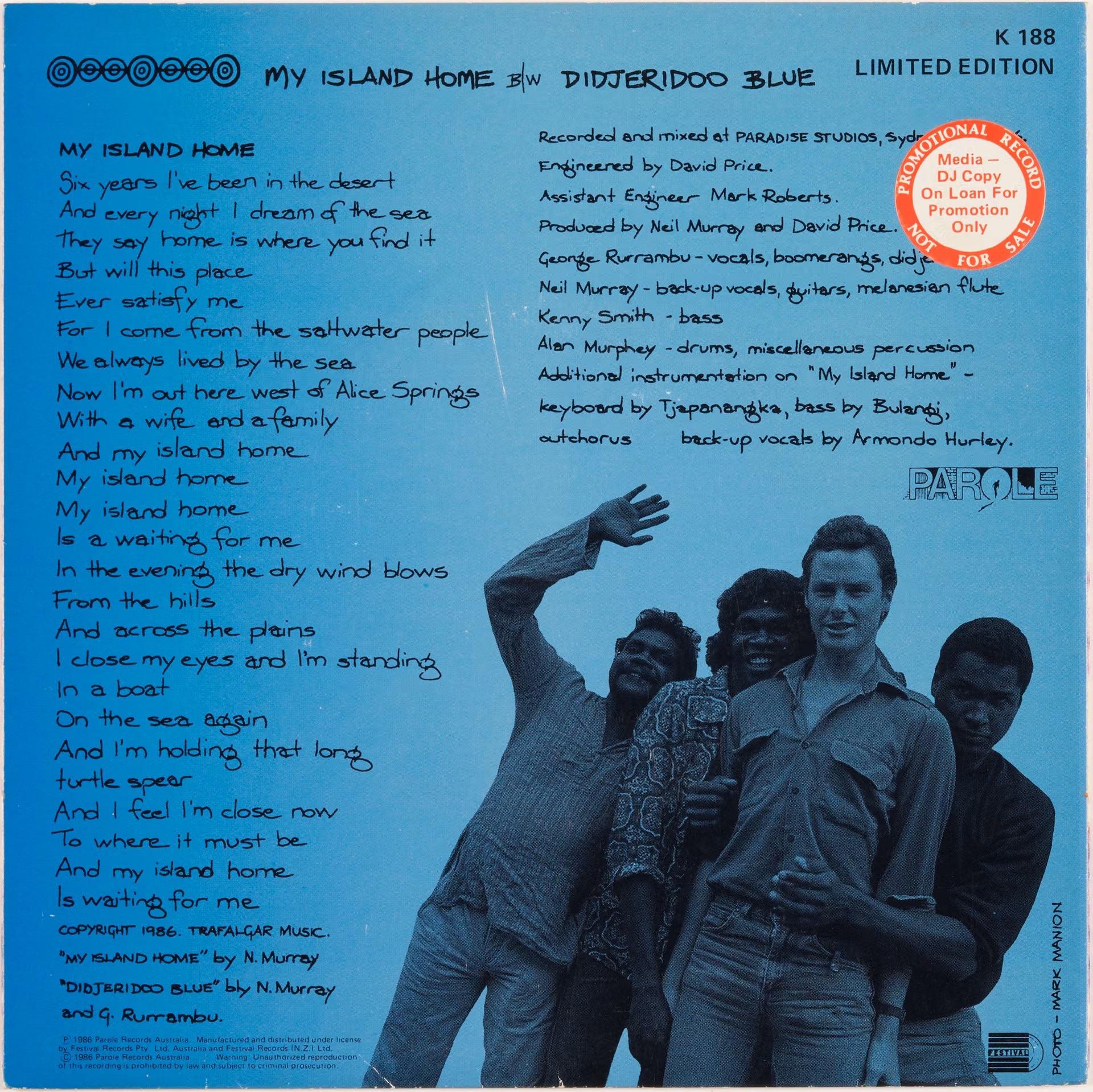
My Island Home came to Neil Murray on a bus, when he was thinking about Galiwin’ku, the island home of his Warumpi Band bandmate George Burarrwanga, and his own home country in western Victoria. This month, it was among the first 10 songs selected for the inaugural National Songbook (https://www.nfsa.gov.au/stories/deep-dives/national-songbook?gad_campaignid=24434697280&gad_source=1&gbraid=0AAAAAoyuqE8IloqWPu7EV-y2rDtcfF5WC&hsa_acc=4074694733&hsa_ad=830541886523&hsa_cam=24434697280&hsa_grp=202695137678&hsa_kw=nfsa+songbook&hsa_mt=p&hsa_net=adwords&hsa_src=g&hsa_tgt=kwd-2511061033177&hsa_ver=3), an annual collection “to honour songs that profoundly shape Australia's culture, identity and collective memory”. Neil speaks with Julian about the My Island Home story, Christine Anu's 1995 cover, and the songs he thinks should be included in the Songbook in the future. Neil will be playing (https://www.neilmurray.com.au/pages/itin.html) at The Presynct in Nambour on November 26, The Royal in N
How does a relationship go from feeling safe to living in fear? And how do you find your way out when you still love the person hurting you? Hollie Dowding joins Max Palasi on Shaun Attwood’s channel to share her experience of coercive control, violence and rebuilding her life after leaving. The relationship began with someone she already knew through friends. Hollie recounts how that familiarity made her feel safe, how control gradually entered her everyday life and how she began questioning her own judgement. We’ll explore the moments that changed her understanding of the relationship, the difficult path to leaving and her experience of the court process. What helped her speak out? What did she need from the people around her? And why didn’t getting out immediately bring peace? We’ll also discuss motherhood, rebuilding confidence and learning to trust yourself again. We’ll explore why she created House of H.E.R., a support platform and podcast helping other women feel less alone. Fri
This is a Grave Talks CLASSIC EPISODE! PART TWO Built in 1901 in the small railroad town of Wymore, Nebraska, the Haunted Stephenson Building has carried more than a century of stories within its walls. Located in the heart of downtown near the railroad line that built the town, the structure was part of the early business district and reportedly served over the years as a dance hall, saloon, gambling space, and possibly even a brothel — the kind of place where money flowed, tempers flared, and secrets were buried. Today, it operates as a paranormal investigation site and oddities museum, attracting those who want to see if the rumors are true. Visitors consistently report footsteps pacing on empty upper floors, whispers captured in silent rooms, cold air that moves against logic, and shadow figures that vanish the moment you focus on them. Owner Christie Ayers joins us to discuss the building’s layered past and the unsettling question at the center of it all: are these simply echoes o
Read: Matthew 28:19-20; Hebrews 4:12 (https://www.biblegateway.com/passage/?search=Matthew+28%3A19-20%3B+Hebrews+4%3A12) Sheri clutched her new book to her chest as she held the phone to her ear. “Yes, you totally need to read it! The last few chapters are great!” “You always find such fun books! I’ll look for it at the library the next time I go,” her friend Megan said. “Oh, my dad is calling. I’ve got to go.” Sheri hung up, then went into the family room and plopped on the couch beside Mom. “You really enjoyed that book, didn’t you?” Mom said as she folded some towels. “Yes!” Sheri flipped through it. “It’s the best I’ve read in ages! There’s romance, heroes and villains, battles of good versus evil, and so much more!” “That does sound exciting.” Mom smiled. “I know of another book like that, filled with good versus evil, heroes battling villains, and even romance. It’s my favorite.” Sheri furrowed her brow. “What book is that?” Mom held up the book beside her. “The Bible. Have you t
The stage and screen actor Dame Kristin Scott Thomas is currently on stage in Anton Chekov's The Cherry Orchard at the Harold Pinter Theatre in London. She joins Nuala McGovern to talk about the play, losing her mother and that Fleabag scene. Joanne Young who was drugged, raped and advertised for sex online by her husband has said she will "never feel completely safe" after four men were found guilty of sexually abusing her, in the first trial of its kind in England. Anita Rani talks to campaigner Zoe Watts whose husband was jailed in 2023 for the drugging and sexually assaulting her while she was unconscious and who waived her right to anonymity earlier this year after the Gisele Pelicot trial, and also to Jess Phillips, Labour MP and former Minister for Safeguarding . We hear from Shanaze Reade whose rise in British cycling was extraordinary. A BMX world champion before 20, she went on to win five world titles across BMX and track cycling and arrived at the Beijing Olympics as the fa
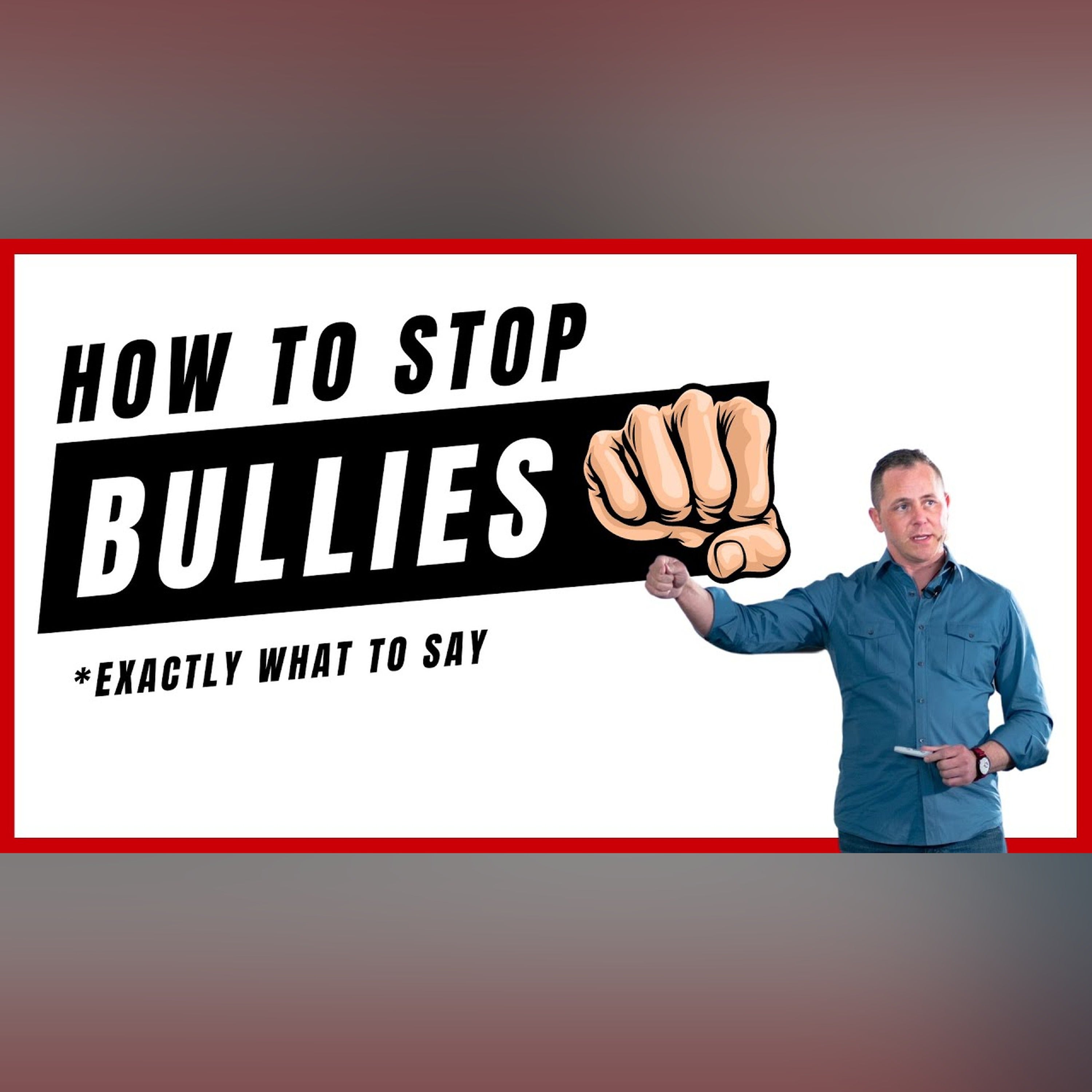
Join NCI University today to master human behavior and influence: Uploaded 03-09-22 Bullies come in all shapes and sizes. In this video, I'll walk you through what bullying is, the types of bullies, how to identify them, and how to deal with them, with direct word-for-word examples. Bullying is unwanted, aggressive behavior among school aged children that involves a real or perceived power imbalance. The behavior is repeated, or has the potential to be repeated, over time. Both kids who are bullied and who bully others may have serious, lasting problems. In order to be considered bullying, the behavior must be aggressive and include: An Imbalance of Power: Kids who bully use their power—such as physical strength, access to embarrassing information, or popularity—to control or harm others. Power imbalances can change over time and in different situations, even if they involve the same people. Repetition: Bullying behaviors happen more than once or have the potential to happen more than
Journalist Cory Doctorow on why we need to dig deeper into the scary messaging around AI to flip the narrative so it works FOR us instead of the other way around. AI is now widely seen as a job destroyer, a slop maker, a privacy invader and another burden on the warming planet. But journalist Cory Doctorow believes that much of the messaging around AI--which says it's coming to eat our jobs and families--is hype that's being driven by the same people who are selling AI, and he doesn't buy it. For Cory, the most important aspect of a new technology isn't what the machine does, it's who it does it for and who it does it to. And how we use AI is really a question of power. He thinks the people pushing this new technology want to scare us to drive up the share price of their companies, which are a very long way from seeing a return on their massive investments in AI. Cory says there's no getting rid of AI, but we can think about how to make this new technology work for us as individual wor
Euahleyai and Gamillaroi law academic, Larissa Behrendt on continuing her flawed but extraordinary dad's work and forging her own path as the first Aboriginal woman to study law at Harvard. Larissa grew up hearing mischievous stories from her dad Paul, who grew up in an orphanage. Their family had been touched by Australian government policy when Larissa's grandmother was taken from her home country as a girl. After her parents met in the Navy, the family relocated to Cooma, NSW, where Larissa was born. The family lived in the second-last house on the last street in town, where kangaroos hopped by and Larissa and her younger brother could explore their surrounds. Larissa's father Paul became involved with the community in Redfern in the 1970s and Larissa would often join him there, where she was introduced to the idea of Aboriginal self-determination, which would go on to shape her life's work. After a near-death experience, Larissa's dad started to research his family story in the arc
Artist Judy Cotton reflects on the Australia that formed her, and the legacy of her exacting mother. When Judy was sent off to boarding school in country NSW at the age of 4, she decided there was no point crying and that she would meet life’s challenges head on. This attitude carried her through an unhappy time as a diplomat’s wife in South Korea and gave her the courage to make her way as a single mum in Tokyo in the early 1970s. Judy then threw herself into New York’s macho art scene and emerged with a new husband and a brilliant career. First broadcast in 2022 Further information Swimming Home is published by Black Inc This episode of Conversations explores family, mothers, daughters, boarding school, country towns, New York, marriage, art, being a diplomat's wife, Korea, women's rights, divorce, memoir, art, independence, Japan To binge even more great episodes of the Conversations podcast with Richard Fidler and Sarah Kanowski go the ABC listen app (Australia) or wherever you get
Reporting on court cases should protect personal privacy when details add little public value.
Share your view, then see how readers voted. No sign-in required. This poll is shared across stories.
Do you agree or disagree?
Common Quandary
A Common Quandary to discuss
Another conversation to explore, separate from this news story.
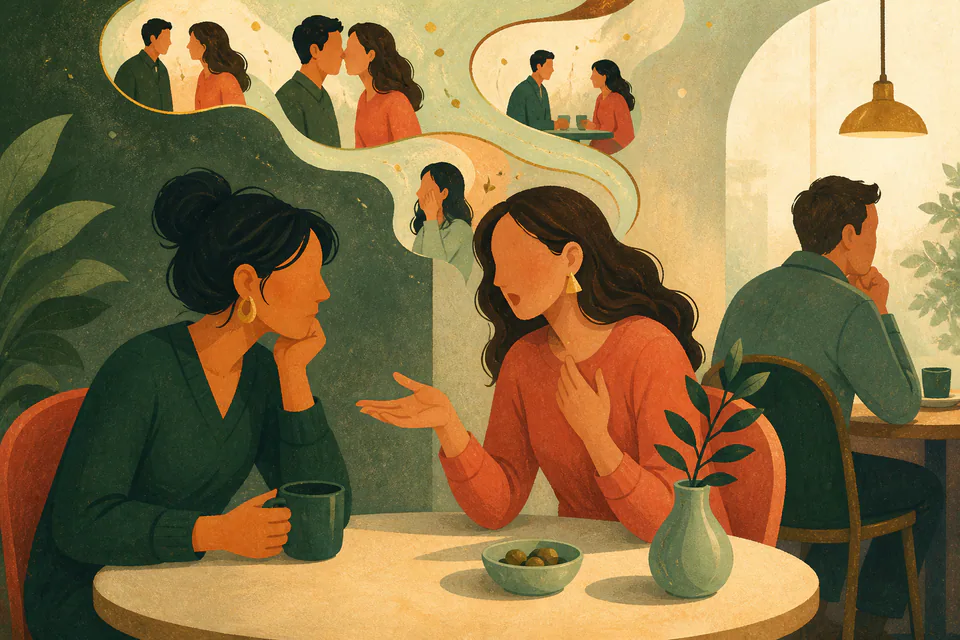
Your friend asks for an honest review after every date. Do their dates deserve privacy?
A close friend sends detailed post-date reports and expects your advice about every message, kiss, and awkward silence. One recent date is someone you know professionally, who would be embarrassed to learn how much you have heard.
Where does friendship's need for advice become gossip about an unsuspecting person?