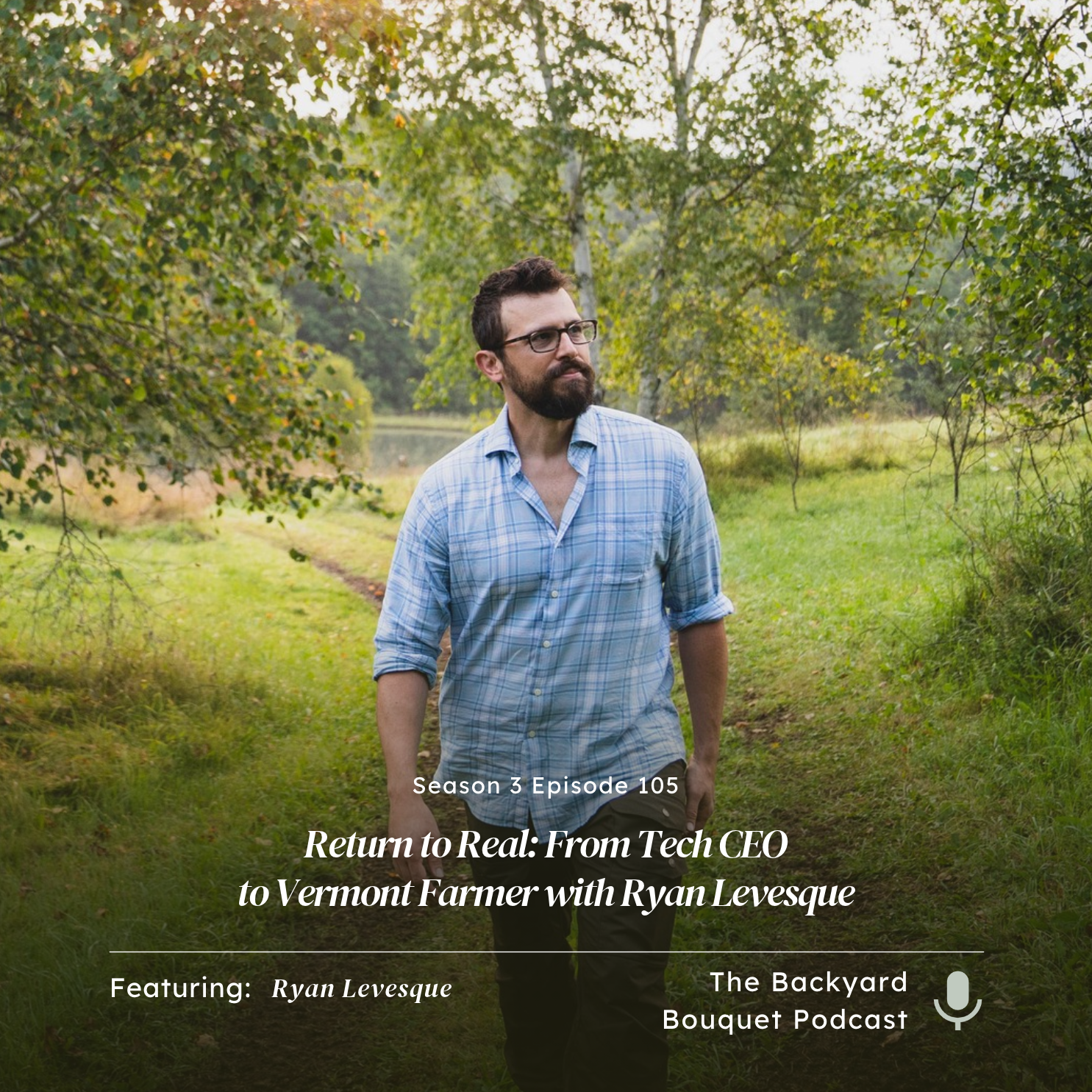
Ep. 105: Return to Real: From Tech CEO to Vermont Farmer with Ryan Levesque
62 min
Listen through the publisher, then discuss the episode here or arrange an in-person Roundtable. Your city determines where to meet.
Roundtables are designed for groups of four, with a shared subject and room for everyone to speak. Come for discussion, with no dating expectation.
Ryan Levesque built a software company, wrote the number one national bestseller Ask, and spent his days deep in the digital world. Today his family raises 80% of the food they eat on a 200-year-old hill farm in the Green Mountains of Vermont. The turning point started with the 2021 Texas winter storm that took down the state's power grid. Then came a summer living in a tent and bathing in a pond while he earned his permaculture certificate. When he texted his wife with one bar of service and said "let's put the house on the market," the first person to see it made a full price cash offer. And they began their greatest adventure. In this episode, Ryan talks about his new book, Return to Real: The Last Human Advantage in an Age of Artificial Everything, and the three forces he believes are reshaping our world right now. AI is only one of them. He makes the case that the more artificial life gets, the more people will want what's real, and that growers are sitting right where that craving leads. What you'll hear in this episode: Why "touch earth before touching a screen" might be the simplest morning habit you can start this week The three colliding forces Ryan sees, and why the answer to all three looks a lot like a farm Where AI belongs in a farm business, and the one place it should never go "Choose your hard," and why every path, including the 9 to 5, comes with its own kind of hard For anyone who has ever stood at the edge of a big change and wondered if now is the time, this one is for you. About our guest Ryan Levesque is a number one national bestselling author, a 7-time Inc. 5000 founder, and has built and sold two companies. He writes a weekly newsletter called The Digital Contrarian, which he writes himself. In 2022 he and his wife and two boys sold their home in Texas, spent a year on the road, and landed on a 200-year-old farm in Vermont, where they raise livestock, tap a thousand maple trees, keep 48 beehives and grow most of what they eat. His newest book is called Return to Real. Where to find Ryan https://returntorealbook.com (https://returntorealbook.com/) Stay Connected With The Podcast Web: https://thefloweringfarmhouse.com/the-backyard-bouquet-podcast/ Instagram: https://www.instagram.com/thebackyardbouquetpodcast Newsletter: https://thefloweringfarmhouse.myflodesk.com/backyardbouquetpodcast If this conversation stirred something in you, send it to the friend who keeps talking about "someday."
Episode information is provided by the publisher. Listening takes place on the publisher’s service.
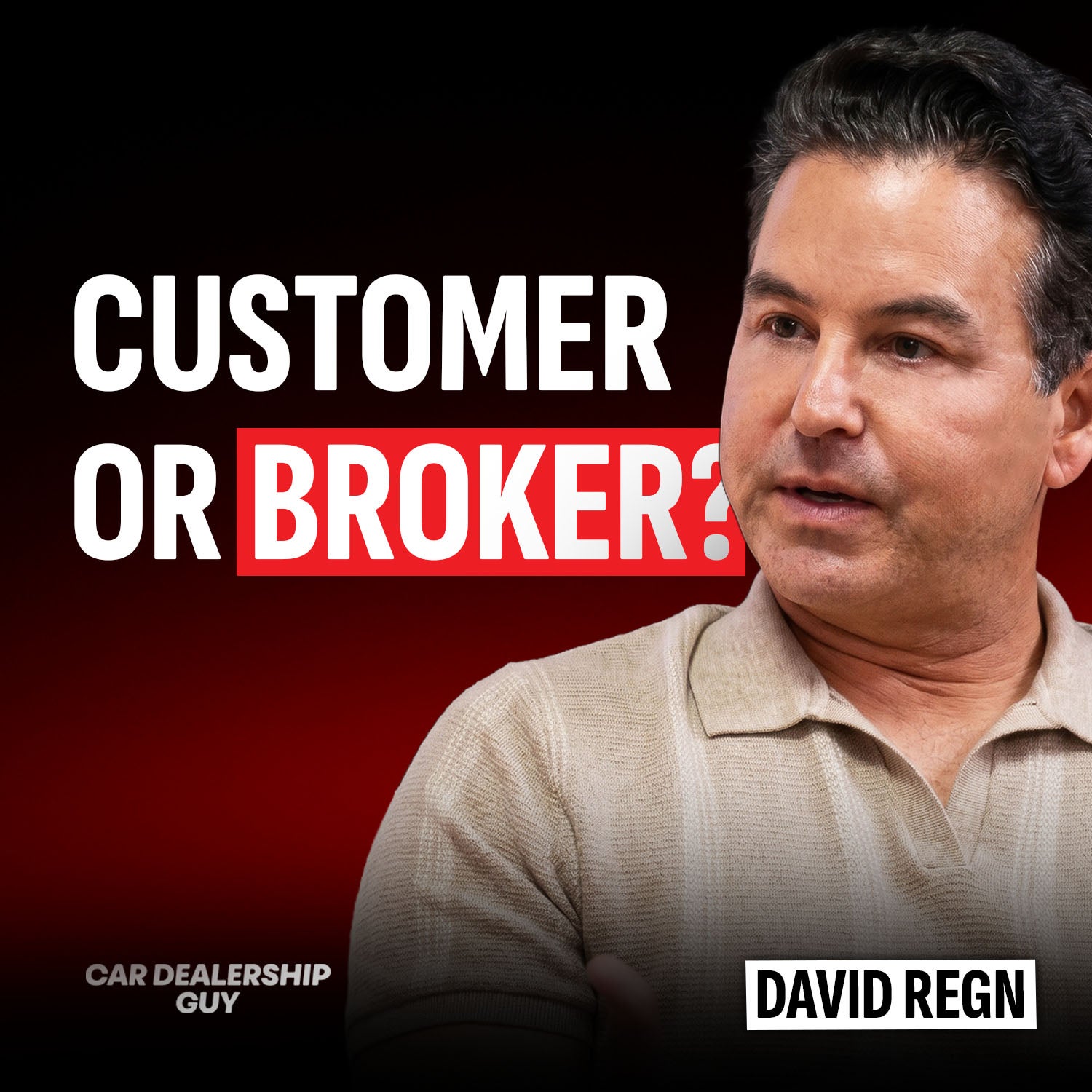
David Regn submitted one online inquiry to a dealer group with hundreds of stores, asking if the car was available, what the out-the-door price was, and whether he could buy online, and got back 36 text messages from four different people, at least two of them AI, without a single answer to his question. He says that's the real risk as AI shopping agents arrive: United and Amazon have already blocked them from making purchases, and if an agent starts shopping cars on a buyer's behalf, dealers have to ask whether it's a customer or just a new kind of broker. He believes agents could level the playing field for dealers or commoditize them even further, and the stores that win will be obsessed with the customer experience, not the click count. David Regn is the CEO of Stream Companies, the marketing agency he founded and has led for 30 years, working with thousands of dealers since before dealerships had email or websites. He has taken the company through the financial crisis, COVID, and
A 13 year wait, hundreds of millions of players, and two book lovers who couldn't let release day pass without asking what GTA 6 says about us. Grand Theft Auto VI is finally here, so The Bibliofilles have swapped the reading pile for a controller. Sophie and Chaya (yes, the criminal barrister) look at why a fictional world where nothing is off limits has such a pull, from choose-your-own-adventure books and AOL chat room role play to The Remarkable Life of Ibelin. They get into the Hot Coffee scandal, Hobbes, Rousseau and Dostoyevsky, the novels Dan Houser says shaped him (Middlemarch, Wuthering Heights, Vanity Fair), his Dickens comparison, and why GTA started life in Dundee. Plus Tomorrow, and Tomorrow, and Tomorrow, Dungeon Crawler Carl, Klara and the Sun, and a gaming confession or two. CHAPTERS 00:00 GTA 6 is here: why a books podcast cares 03:11 Welcome to The Bibliofilles: the GTA phenomenon 06:25 The Great Escape: the psychology of escapism 08:02 Choose your own adventure: the
FOLLOW UP: JLR OVERSTEPPED WITH BYD RAID The judge at The Hague, who is presiding over the case JLR has brought against BYD has ordered the UK firm to destroy or return all the documents they seized when their bailiffs raided the Chinese company’s offices in Holland. We got some of the details wrong as the case is not just about the technology but also the looks as one of the claims is “infringement of copyright and slavish imitation of the Defender”. To read more on this, click the link here to an article from Business Matters (https://bmmagazine.co.uk/business/jlr-byd-defender-documents-destroy-ruling/). FOLLOW UP: MERCEDES MANAGEMENT THREATEN EXTREME MEASURES The board of Mercedes-Benz has gone even harder on their employees and unions, over the negotiations for cost cutting measures in Germany. They are now halting investment and threatening to close plants in the country. On top of that they are looking at what models will be built in which of their plants, globally, to reduce cos
Greg has Jade in the chair for all three hours, and he is back from Mexico one shade darker. It is Black Friday week, so he makes it an advice show: cars, money, life, anything that keeps you up at night. And his firstborn, Josh, gets married in under three weeks, so the father of the groom has a speech to write. The spine is that it's a buyer's market. The car business is so slow that the deals are the best Greg has seen, and Jade says she has never seen this much 0% in almost three years of selling. So don't pay cash for a depreciating asset, take anything under 2.9%, and if you keep cars for 20 years, buy new, because used-car interest eats whatever you saved on the price. Then the show turns into a fight about school. Greg wants to homeschool his youngest: "They don't teach you how to think anymore. They teach you what to think." Jade pushes back, the text line explodes, and Anthony, a teacher retired after 33 years, calls in to set the record straight. "You cannot send your childr
Today I'm joined by author Micah Boyett, whose new book Advent Unhurried (http://amazon.com/dp/1587436108?asc_item-id=amzn1.ideas.DL4M6AD2Z4ZN&creativeASIN=1587436108&linkCode=ssc&ref_=aip_sf_list_spv_ofs_mixed_d_asin&tag=dianeboden-20) offers a refreshing invitation to slow down, pay attention, and rediscover the beauty of waiting. Drawing from her own experiences with motherhood, grief, and raising three boys, Micah shares how she's learned to separate our worth from our productivity and embrace a more intentional approach to the holidays. We explore why we feel responsible for manufacturing wonder, how to make room for both joy and grief during a season that often demands happiness, and why slowing down doesn't necessarily mean doing less. Sometimes, it's simply about noticing more. In this episode, we discuss: Why the pressure to make Christmas magical can steal our joy The surprising connection between Advent and minimalism What motherhood has taught Micah about worth, productivit
What makes you return to a seller when you can buy cards from thousands of people? Dalen and Amanda of JunkWaxVintage have built their business around remembering the person buying. Your name. Your team. Who your kids collect. The conversations that continue after the cards change hands. They join Brett to share how opening junk wax on camera became a business they run as a couple. We discuss streaming to 10–15 viewers for years, the $40,000 loss that forced them to examine their pricing, Amanda’s work building the brand and operations, and their move to eBay Live. We get into what comes next: hiring, finding space outside their home, and growing without losing the attention that brings collectors back. Plus, Brett examines the routines hobby businesses need to revisit as tools, platforms, and customer expectations change. Hobby Jobs is presented by BCW Supplies. Hobby Jobs is sponsored by BCW Supplies. For over 45 years, BCW has helped retailers and wholesale partners stay stocked wit
Cassidy Thompson spent about fifteen years as an agribusiness banker. Today she and her older sister, Candice Meier, cut ranunculus in central Nebraska in January, in tunnels heated by 2,000 pound bales of corn stalks raked off the fields a quarter mile down the road. Creek's Bend Family Farm started in 2023 in their parents' garage, with a quarter of a million seedlings set on old floor trusses on trailers. Every morning they pulled the trays outside on a wagon for sun, and every night they hauled them back in. When they asked around about growing ranunculus through a Nebraska winter, they were told it couldn't be done. This spring, a 90 degree week in April cut their spring crop to 10 to 20 percent of normal. The winter crop had already been cut and sold. In this episode, Cassidy and Candice walk through the biomass boiler their dad and Cassidy's husband built, why propane for one greenhouse once cost them $6,000 in a single week, and how a banker's way of looking at risk led them to
Platforms should explain their content-removal decisions using publicly available rules.
Share your view, then see how readers voted. No sign-in required. This poll is shared across stories.
Do you agree or disagree?
Common Quandary
A Common Quandary to discuss
Another conversation to explore, separate from this news story.
Your best friend is an AI that profits when you stay lonely. Is the friendship real?
A lonely adult considers an AI companion their closest confidant. The service is always patient and supportive, but the company profits when users spend more time engaged with it.
Does a comforting system have a duty to make itself less necessary?