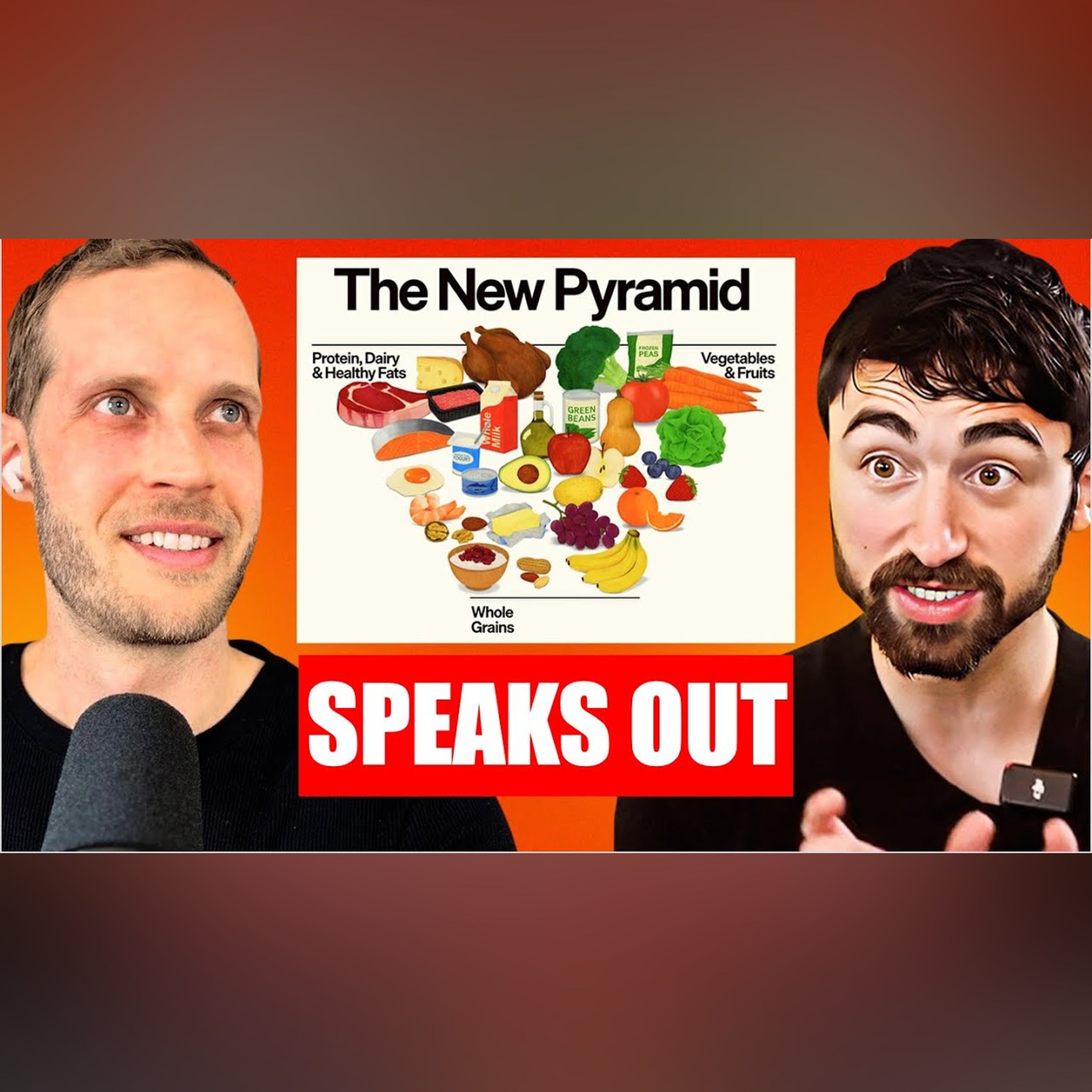
Ep 212: The Sugar Episode Every Man Needs to Hear - Part 2
37 min
Listen through the publisher, then discuss the episode here or arrange an in-person Roundtable. Your city determines where to meet.
Roundtables are designed for groups of four, with a shared subject and room for everyone to speak. Come for discussion, with no dating expectation.
Welcome back to Part 2 of our sugar series! In this episode, Dietitian Dude David Orozco, that's me, goes deep on the system behind America’s sugar problem. I'll discuss... Why the federal government subsidizes cheap sweeteners while food industry giants capitalize on it What controlled trial research says about non-nutritive sweeteners Whether sugar addiction is real and explains how the science is more nuanced than the headlines. Expose PANQ (Potency, Access, Novelty, and Quantity) as the food industry’s secret formula for pushing more sugar down our throats Then provide 7 evidence-based strategies to manage sugar cravings while still enjoying sweet foods. Oh and here's the key insight for this episode: the restrict-binge cycle may be worse than the sugar itself, and the way forward isn’t deprivation, it’s awareness, gradual replacement, and building a sustainable relationship with food. Your One Small Bite This Week is to listen in and pick just one of the 7 strategies and get locked into it that for now. Just one. Coming up next: the world of supplements, starting with peptides: what they are, whether they help, and whether they’re worth the packaging they’re in. Stay tuned, and listen in! Want to go deeper? Join the Alimentar Men's Program Learn more and join: (https://orozconutrition.com/alimentar/) Enjoying the show? Follow the podcast so you never miss an episode Leave a rating or review. It helps other men find the show.
Episode information is provided by the publisher. Listening takes place on the publisher’s service.
Get the 200+ Page Optimal Living Daily Workbook (PDF) - Free. Want to turn today's episode into an actionable plan? Episode 4233: Kate Galliett explains three reasons we make health, fitness and life harder than they need to be: ignoring how the body works as a connected system, trusting only extreme intensity, and leaking the energy that fuels motivation and discipline. She makes the case that appropriate effort, not maximum effort, is the only sustainable path to lasting results. Read along with the original article(s) here: https://fitforreallife.substack.com/p/why-you-make-everything-harder-than Quotes to ponder: "The better way is to give appropriate effort and get appropriate results. This is the only sustainable way." "If you try and live at the extremes, you will constantly ping-pong back and forth from one extreme to the other." "Just imagine - you might not actually lack discipline after all, you just might be leaking energy that feeds your ability to be disciplined." We spen
For a written digest on the guidelines, see the StayCurious Metabolism Letter: https://staycuriousmetabolism.substack.com/p/the-new-dietary-guidelines-actually?r=40ekz2 The 2025–2030 Dietary Guidelines are being marketed as a major reset with a simple message: put “real food” back at the center of the American diet. And in a lot of ways, they do represent progress. But when you actually read what’s written, some of the most important details raise real questions. For example, the document still states that saturated fat should not exceed 10% of total daily calories. To separate signal from spin, I’m joined by Dr. Ty Beal PhD, who worked on the evidence review side of the Guidelines process, to explain what the scientific background documents actually say, what happens after scientists submit reviews, and why the final public-facing document can end up with compromises, inconsistencies, or imprecise terminology. If you want a clear, good-faith breakdown—what’s genuinely better, what sti
Does your relationship feel like home, or does it feel like standing on the edge of something you might lose? In Part 3 of our Relationship Anxiety series, clinical hypnotherapist and former paramedic Martin Hewlett guides you through the process of teaching your nervous system that love doesn't have to hurt to be real. We explore the physical manifestations of anxiety—the tight chest, the 2:00 AM racing mind, and the "stomach drop" when a text takes too long—and provide the tools to "turn down the alarm" of your internal survival response. If you are ready to stop "cherry-picking" evidence of disaster and start building a foundation of trust, this session is for you. In This Episode, We Cover: The Science of Safety: Understanding how your nervous system confuses love with danger. Guided Visualization: A journey into your own "safe room" where you are already enough. Rewiring the Brain: Moving from worst-case disaster reels to the reality of small, daily kindnesses. Breaking the Cycle:
Is your body weight stable, but you're still not eating enough to properly fuel your training, recovery, and overall health? Introducing Why Stable Weight Doesn't Always Mean You're Eating Enough from Jeff Hoehn of the Mind Muscle Connection Podcast (https://www.buzzsprout.com/1508401). Just because your weight isn't changing doesn't necessarily mean you're adequately fueled. In this episode, Jeff breaks down why maintaining a stable body weight doesn't always mean you're meeting your body's energy needs, especially if you're training hard, staying lean, or spending long periods dieting. You'll learn: Why stable body weight doesn't automatically mean adequate energy availability Who is most at risk of underfueling, even when their weight isn't changing How high training output, staying too lean, and chronic dieting can contribute to low energy availability The potential signs of underfueling, including changes in performance, recovery, hormones, and menstrual health Why spending too lo
A kiss can be wonderful. It can create an instant connection, spark romance, or make you feel closer to someone. But a kiss can also have the opposite effect — and sometimes ruin everything. So what makes kissing so powerful, and why can one kiss make such a difference? There's some fascinating science behind it. https://www.scientificamerican.com/article/why-we-kiss/ We spend an enormous amount of time worrying about what's going to change. What's next? What's coming? How do we prepare? But what if we're paying attention to the wrong things? Some of the most important forces shaping our lives never change, and understanding them may be far more valuable than trying to predict the future — something humans are notoriously bad at. Morgan Housel, partner at The Collaborative Fund and author of Same as Ever: A Guide to What Never Changes (https://amzn.to/3SwWn6u) (https://amzn.to/3SwWn6u)), joins me to explain why the things that stay the same may be the most important things to understan
"The Big Secret" documentary portrays how the U.S. healthcare system was reshaped by corporate and pharmaceutical forces, replacing natural healing with a drug-centered, profit-driven medical monopoly The shift began with the Flexner Report, backed by Carnegie and Rockefeller interests, which redefined medical legitimacy and opened the door to corporate control over healthcare Modern medicine has wrongly vilified cholesterol, leading to widespread statin use that can undermine hormone health, cognitive function, and metabolic resilience Industrial agriculture, glyphosate, and processed foods strip essential minerals from the food supply. This has been linked to widespread nutritional deficiency and chronic disease across generations The real "big secret" is that health can restore itself once you eliminate what disrupts it and provide the inputs it's always required
Peptides are everywhere on social media — BPC-157, TB-500, CJC-1295, Sermorelin — marketed as miracle compounds for healing, muscle growth, and anti-aging. But how much of this is science, and how much is the $70 billion supplement industry’s marketing machine? In this episode, Dietitian Dude David Orozco gives an honest breakdown. He starts with Harvard’s 5 Pillars of Longevity and his own Root System — showing that the recipe for healthy aging has never included supplements. He shares his own story of spending $150/month on 12 supplements before becoming a dietitian, explains what peptides actually are, walks through the most popular ones being sold to men, compares FDA-approved peptide medications (insulin, semaglutide) to the gray market, and exposes the supplement industry’s Big Pharma-style playbook. Your One Small Bite This Week: Before you buy any supplement, ask three questions — Has my doctor identified a specific need? Is there human clinical evidence? Who’s selling it and w
After every meal I want something sweet. Why is that? Does this happen to you? And if so, what do you do? In Part 1 of our two-part sugar series, Dietitian Dude David Orozco breaks down everything men need to know about added sugar: what it is, where it hides, how much you should have, whether your sweet tooth is genetic, and what 12 studies say about the health associations with your heart, liver, testosterone, and brain. The average American man consumes about 71 grams of added sugar per day, which is nearly double the AHA recommendation of 36 grams. And most of it isn’t from candy or dessert. It’s the granola, the sauces, the bars, the drinks . Some chain smoothies pack up to 160 grams of sugar in one drink. Part 2 coming soon. David will cover non-nutritive sweeteners, sugar addiction, federal agricultural policy, PANQ, and practical strategies to manage cravings. Listen in! Your One Small Bite This Week: Flip it, know it — check the “Added Sugars” line on one package in your kitch
Public contracts should consider quality and reliability, even when the lowest bid costs less.
Share your view, then see how readers voted. No sign-in required. This poll is shared across stories.
Do you agree or disagree?
Common Quandary
A Common Quandary to discuss
Another conversation to explore, separate from this news story.
An AI wrote the perfect condolence message for you. Is it still from the heart?
Your friend is grieving. You want to reach out, but words fail you, so you ask an AI to draft a condolence message. It expresses exactly what you feel. You revise it and send it without mentioning the help.