Listen through the publisher, then discuss the episode here or arrange an in-person Roundtable. Your city determines where to meet.
Roundtables are designed for groups of four, with a shared subject and room for everyone to speak. Come for discussion, with no dating expectation.
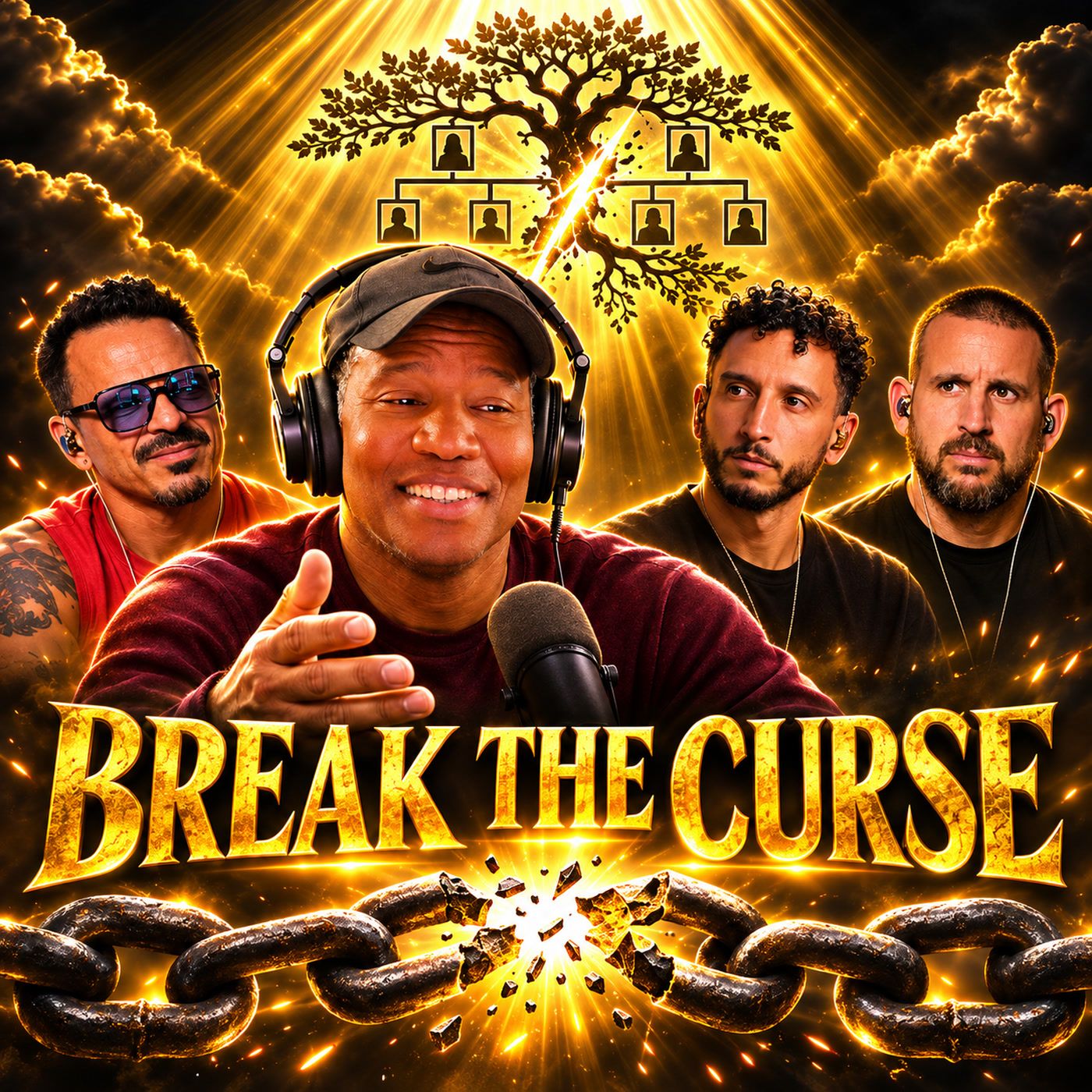
Broken relationships rarely heal by simply pretending the wound never happened. Ray, E.Z., Mark, and Oscar begin by examining the difference between genuine forgiveness and false reconciliation, emphasizing that Christians should pursue peace without ignoring serious problems. They distinguish forgiveness as releasing a person from the debt they owe, while reconciliation is rebuilding trust between two people. The guys discuss how repentance and changed behavior can be necessary for reconciliation and also consider how bitterness takes root. The conversation turns toward practical ways to stop bitterness before it takes hold. The guys discuss the importance of listening instead of talking over one another and setting rules for handling conflict before emotions run high. They share examples from marriage about pausing an argument, showing affection, communicating expectations, and giving the other person space to speak when they are ready. They also address the tendency to approach disagreements like court cases, where everyone tries to prove they are right. The guys examine how easily relationships can become centered on personal happiness rather than holiness. They discuss the danger of dehumanizing people after they have hurt us and the importance of remembering that difficult people are still made in God's image. Rather than building a case against someone, they encourage us to look for the small part of an accusation that may be true and own it. They explore the biblical balance between overlooking an offense and lovingly confronting serious sin, emphasizing that rebuke should aim at restoration rather than punishment. The conversation also addresses how Christians can pursue peace without assuming they can control whether the other person will reconcile. Finally, the guys return to the gospel and the humility required to pursue reconciliation. The guys consider how resentment can amount to taking God's place as judge and how remembering the forgiveness believers have received through Christ should motivate them to forgive others. They discuss Joseph's response to his brothers and Jesus' command to reconcile even when we feel like the offended party. Practical encouragement follows: don't presume your own innocence, communicate honestly, seek wise counsel rather than recruiting a jury, and take the initiative to make things right. Even when reconciliation ultimately remains outside our control, the guys Thanks for listening! You can connect with us at [email protected]. We're thankful for your input! Learn more about the hosts of this podcast. Ray Comfort (https://www.livingwaters.com/team/ray-comfort/) Mark Spence (https://www.livingwaters.com/team/mark-spence/) Oscar Navarro (https://www.livingwaters.com/team/oscar-navarro/)
Episode information is provided by the publisher. Listening takes place on the publisher’s service.
What if your birth chart could help you understand why you think, feel, and react the way you do? In this enlightening conversation, renowned astrologer, author, and teacher Debra Silverman returns to Next Level Soul to explore the four elements of astrology—water, air, earth, and fire—and how they can serve as a framework for understanding our personalities, relationships, and spiritual growth. Debra discusses why some people seem to face more difficult life lessons than others, how astrology can help us recognize patterns we may have struggled with for years, and why accepting our natural tendencies can be the beginning of profound personal transformation. Through a fascinating exploration of the host's own astrological chart, she demonstrates how elemental patterns can offer a different perspective on sensitivity, creativity, control, and the way we navigate the world. The conversation moves into soul evolution, Saturn returns, the importance of surrender, and Debra's spiritual inte
Free assessment: https://linktr.ee/dramenkaur Reality Transurfing by Vadim Zeland is one of the most recommended books in personal development, and one of the least finished. Four hundred pages, written by a Russian physicist, in a language all of its own. Pendulums. Excess potential. The space of variations. In this episode I break down all ten of his core ideas in plain English, and tell you honestly which ones hold up, which are half right, and which I can't back up at all. If you've read the books, done the courses, and the thing you want still hasn't moved, this is for you. The ten ideas: The space of variations, and why selecting is a lighter word than creating The wave of good fortune, and what actually knocks you off it Pendulums, which are really about judgment and who gets to decide whether you're doing all right Importance and balancing forces, and the best line in the book: don't make it important, make it normal Inner and outer intention, and the research showing your inte
Could your approach to evangelism be leaving people with a false sense of assurance? Todd Friel and Ray Comfort put real-world gospel presentations and popular evangelism methods to the test. Discover what even well-meaning Christians can overlook and how to share the gospel more clearly and faithfully. Segment 1 What a viral airplane message gets wrong. Is telling someone “Jesus loves you” enough? Should you street preach on an airplane? Segment 2 How Ray Comfort created 27 false converts. Should you start evangelism with John 3:16? What this Tim Keller gospel presentation missed. Segment 3 Can you distinguish regret from true repentance? Does the 3 Circles method get the gospel right? Is the Romans Road missing something essential? Segment 4 How do you awaken someone to their need for Christ? Can you accurately share the gospel in 90 seconds? The witnessing encounter that terrified Ray. ___ Thanks for listening! As part of our Multiply 2027 year-end campaign, every gift made through
In Part One, Laurel “Lolly” Shae shared the story of how she came to marry her gay best friend, Josh Weed, after years of navigating Mormon expectations around sexuality, marriage, and eternal families. Now, in Part Two, Laurel reflects on what their marriage was really like, the damage caused by trying to make it work, and what it took to finally choose herself. Laurel opens up about their sexual relationship, the difference between emotional intimacy and feeling genuinely desired, and how she learned to center Josh’s needs while minimizing her own. She reflects on how Mormon teachings about chastity, gender roles, sacrifice, and marriage shaped her understanding of what she was allowed to want –and how difficult it was to acknowledge that she had been unhappy. The interview also explores the viral blog post that changed everything. On their tenth wedding anniversary, Josh publicly came out as gay in a post titled “Club Unicorn: How I Came Out as Gay on My Ten Year Wedding Anniversary
What Does It Feel Like to Burn in Hell? Can I Trust the G-d Who Created It? Can I Trust the G-d Who Created Hell? Are There Really Fires in Hell? How can we heal our trauma around paradise and purgatory? For many of us, the words Gan Eden and Gehenna evoke a terrifying picture of God and the afterlife. Even when we question that picture intellectually, our bodies may still brace for punishment every time we make a mistake. This class returns to the very language that frightened us, including the Talmud’s teaching that earthly fire is one-sixtieth of the fire of Gehenom. Through the Mitteler Rebbe’s maamar, we explore purgatory as the experience of having our own lives reflected back to us with a clarity we can't always perceive in this world. There is the pain of losing a mask we mistook for our skin. And there is the deeper grief of discovering how much of our passion went into securing a feeling of love or validation at the cost of our own truth. Why can an affair feel so alive to a
Ed Mabrie of Faith By Reason joins TopLobsta, David Lee Corbo "The Raven," and Matttttt Hepner for this Friday live. After the usual plugs, the first hour is a loose, unfiltered recap of TrutherCon and BroHemian Grove: meeting Nancy in person, what the event actually felt like from the floor, panels versus audience engagement, Cult of Conspiracy, Ed's book table and a flat-earth argument, a tense Q&A, prayer and laying on of hands, and a warning about who you let pray for you. Then Ed gets to the Friday teaching. A generational curse, he argues, is a covenant: words you speak or that are spoken over you that you come into agreement with. He walks through involuntary versus voluntary curses, the father's blessing in the story of Jacob and Esau, and how to break a curse in the courtroom of God — confess the agreement, confess the sins of your ancestors, and speak life over your children instead. He also takes on the "10-generation curse" on illicit unions and why, in his reading, that wa
The universe is so vast that a single grain of sand can represent more stars than we can comprehend, yet the God who made it all knows His people by name. Ray, Mark, Oscar, and Eric Hovind begin by looking at the breathtaking scale of creation through James Webb telescope images and the sheer number of stars in the universe. But creation isn't meant to impress us with size alone. The guys explain that the heavens point beyond themselves to the glory of their Creator and consider how that truth shapes conversations with people who reject God. That leads to the difficult question: what happens to people who have never heard of Jesus? The guys challenge the idea that people are simply neutral toward God, explaining that our problem is not merely a lack of information but a tendency to suppress the truth we already know. They discuss how our presuppositions shape how we interpret evidence and why evangelism must go beyond winning an intellectual argument. People need to understand both the
Difficult people can reveal more than our patience; they can expose what is happening in our own hearts. Ray, Mark, and Oscar, joined by John Harris of Living Waters Europe, begin by looking at why Scripture directs us to examine ourselves before focusing on the faults of others. The guys discuss Alexander Solzhenitsyn’s observation about the line between good and evil running through every human heart, then talk about not attending every argument and receiving corrections with humility. Proverbs 19:11 provides the framework for being slow to anger and willing to overlook an offense. The conversation moves into how selfishness can make all of us difficult, especially in marriage and family. Drawing from Timothy Keller, the guys consider looking for the small piece of truth in an accusation instead of immediately defending every point. John shares an encounter with a man who challenged him about the Bible and admits that he became focused on winning an apologetics argument until his wif
What does it look like to have confidence that is rooted in God rather than in ourselves? Ray, E.Z., Mark, and Oscar explore righteous confidence by considering why dependence on the Lord is a good foundation. The guys contrast biblical confidence with the world's message to believe in yourself, discussing expressive individualism and the anxiety of looking inward. They turn to Martin Luther's understanding of an alien righteousness, emphasizing that his confidence came not from his own performance but from the righteousness of Christ given to him. David's confrontation with Goliath then provides a picture of confidence rooted in knowing that God is able to deliver His people. Ray shares a story from his years preaching in the square, when he became friends with a gang and later found himself preaching to prisoners after footage from his film was used as evidence in a gang fight. His confidence in preaching the gospel in that prison came from knowing that the authorities were backing h
Established legal precedents should change when strong reasons outweigh the value of consistency.
Share your view, then see how readers voted. No sign-in required. This poll is shared across stories.
Do you agree or disagree?
Common Quandary
A Common Quandary to discuss
Another conversation to explore, separate from this news story.
A likable but unreliable former employee lists you as a reference. How honest are you?
A former employee who was unreliable but personally likable lists you as a reference without asking. Their prospective manager calls and asks only whether you would hire them again.
How much truth do you owe a stranger when it may cost someone a fresh start?