When a family moved into an apartment in New York, they had no idea just how much history the building held. Over the years, it had reportedly served several purposes, including a city hall and a jail. But they wouldn't learn those details until after some frightening experiences had already begun. On their very first night, the mother came running into her son's room, terrified by a man who had appeared in her bedroom. He hadn't simply frightened her. According to her account, he'd made it very clear that the family wasn't welcome. And things only became stranger from there. As the family settled in, they experienced unexplained sounds, unsettling physical encounters, and incidents that made them question what was actually moving around their home. Had something remained behind from the building's long history? And was it determined to make the new occupants leave? #RealGhostStoriesOnline #TrueGhostStories #HauntedApartments #HauntedJail #HistoricHauntings #NewYorkGhostStories #Parano
Why doesn’t knowing what Jesus taught always change how we live? In Episode 32 of Become New, John Ortberg talks with theologian and pastor Keith Matthews, who worked with Dallas Willard as his teaching assistant for 19 years, about what it means to learn as an apprentice of Jesus. Keith explains his Transformational Learning Cycle: hear the teaching, put it into practice, and talk with someone about what happened. From learning plumbing in high school to watching how Jesus talked with his disciples after they tried something, Keith shows why that last step matters and how to ask a trusted friend for feedback today. New episodes every weekday. One day at a time. TEXT us at 51504 EMAIL US at [email protected] GET A TEXT REMINDER FOR NEW VIDEOS: text NEW to 51504 DOWNLOAD FREE STUDY GUIDES: BecomeNew.com/study-guides Music Credits: Welcome to the World by Sarah Watson License# MB01XUUTGU633PL 0:00 Keith Matthews and why teaching should change us 1:14 What we learn by watching Jesus 2
This week, Laylla and Chelle have a lovely conversation with Fiona Heckels and Kazz Goodweather, better known as the Seed Sistas, about their book Witches’ Forbidden Herbs and the plants with the most wonderfully wicked reputations. Clinical herbalists, eco-activists, and self-described herbal drama queens, Fi and Kaz have spent more than twenty years bringing plant science, folklore, and magick together. They join us to explore the witching world of belladonna, henbane, and datura, and to ask who decided these herbs were forbidden. Was it the plants, their potency, or the people who knew how to work with them that made everyone so nervous? Naturally, we get into flying ointments, the stories behind a witch’s flight, and the ways plants become part of ritual. Laylla brings her Beyond Flying Ointment workshop into the conversation with talk of cannabis as an entheogen and smokable spells. We also make room for the overlooked, unloved, and decidedly ugly herbs, because apparently every p
The debate over Christian nationalism raises some uncomfortable questions about faith, politics, and the role of government. Al, Zach, John Luke, and Christian examine how Christianity transformed the Roman Empire and why the early church flourished despite intense persecution. The guys also revisit the Garden of Eden, questioning whether Adam's failure to protect Eve was the first sin and what his actions reveal about responsibility and obedience. They consider what history teaches us about the dangers of unchecked power and why Christians must put their allegiance to God's kingdom above any earthly government. In this episode: Genesis 2, verses 15–17; Genesis 3, verses 1–7; Daniel 2; John 1, verses 4–5; Matthew 5, verses 27–30; Matthew 28, verses 18–20; John 11, verses 49–52; Luke 23, verses 6–12; Galatians 3, verse 28; 1 Timothy 2, verses 11–14; Romans 13, verses 1–7 Today’s conversation is about Lesson 6 of Western Heritage: From the Book of Genesis to John Locke taught by various
Why does Allah allow good people to suffer? When hardship enters your life, does it mean Allah is displeased with you, or could your struggles be bringing you closer to Him? Every believer experiences moments of pain, loss, uncertainty, and heartbreak. But in Islam, suffering is not necessarily a sign of Allah's anger, and experiencing sadness does not mean your faith is weak. In this powerful and comforting Islamic lecture, Ustadh Reece explores the deeper wisdom behind life's difficulties, the true meaning of Sabr, and how Muslims can remain connected to Allah ﷻ during their hardest moments. Through lessons from the Qur'an, authentic Hadith, and the lives of the Prophets, this reminder explores: - Why Allah tests those who believe in Him - How hardship can become a means of spiritual growth - What Prophet Muhammad ﷺ taught us about grief and sadness - The patience and beautiful du'a of Prophet Ayyub (AS) - How the story of Prophet Yusuf (AS) reveals Allah's wisdom - Why both blessing
Hey Carpool Crew! You've asked God for the same thing every night since October, and this morning it looks exactly the same. Today we read Luke 18:1, hear about a woman who kept knocking on a judge's door, and learn one sentence you can say out loud tonight. About 5 minutes, made for the car. Today's One Thing: Keep asking. Do not quit early. Scripture: Luke 18:1 (CSB) SAVE A SEAT FOR THE NEXT FAMILY Carpooling with Jesus is a nonprofit. Give here: https://carpoolingwithjesus.com/give FOR YOUR KIDS Book a Shout Out (https://carpoolingwithjesus.com/shoutout) CARPOOLING WITH JESUS+ Everything is on our website (https://carpoolingwithjesus.com/) FOLLOW ALONG • Instagram (https://bit.ly/carpooling-insta) • TikTok (https://www.tiktok.com/@carpoolingwithjesus) • YouTube (https://bit.ly/YoutubeCPWJ) • Facebook Group (https://bit.ly/CPWJFB) Download the ROAD TRIP game (https://apple.co/4xFb21N) ABOUT THE SHOW
What does it mean to inherit a faith written in the blood of martyrs? Sr. Christiana, O.P. sits down with Sr. Miriam, O.P. to share the beauty of Vietnamese faith and culture, and her own winding path from a village in Vietnam to the convent in Ann Arbor. She paints a picture of a childhood steeped in faith: 4 AM Mass, the family Rosary prayed in Vietnamese, meals and feast days shared with a whole extended family living close by, and the joy of the Lunar New Year. Sister remembers coming to America at twelve, sponsored by her oldest brother, learning a new language and a new world, and the pinky promise she made to the Lord at seven years old to one day be His. Along the way, she and Sr. Miriam talk about the deep Vietnamese values of respect for elders and the beauty of words, she sings a tender hymn to Our Lady’s Fiat, and she shares the astonishing discovery that her own great-great-grandparents were among the hundreds of thousands martyred for the faith in the 1800s. Download the
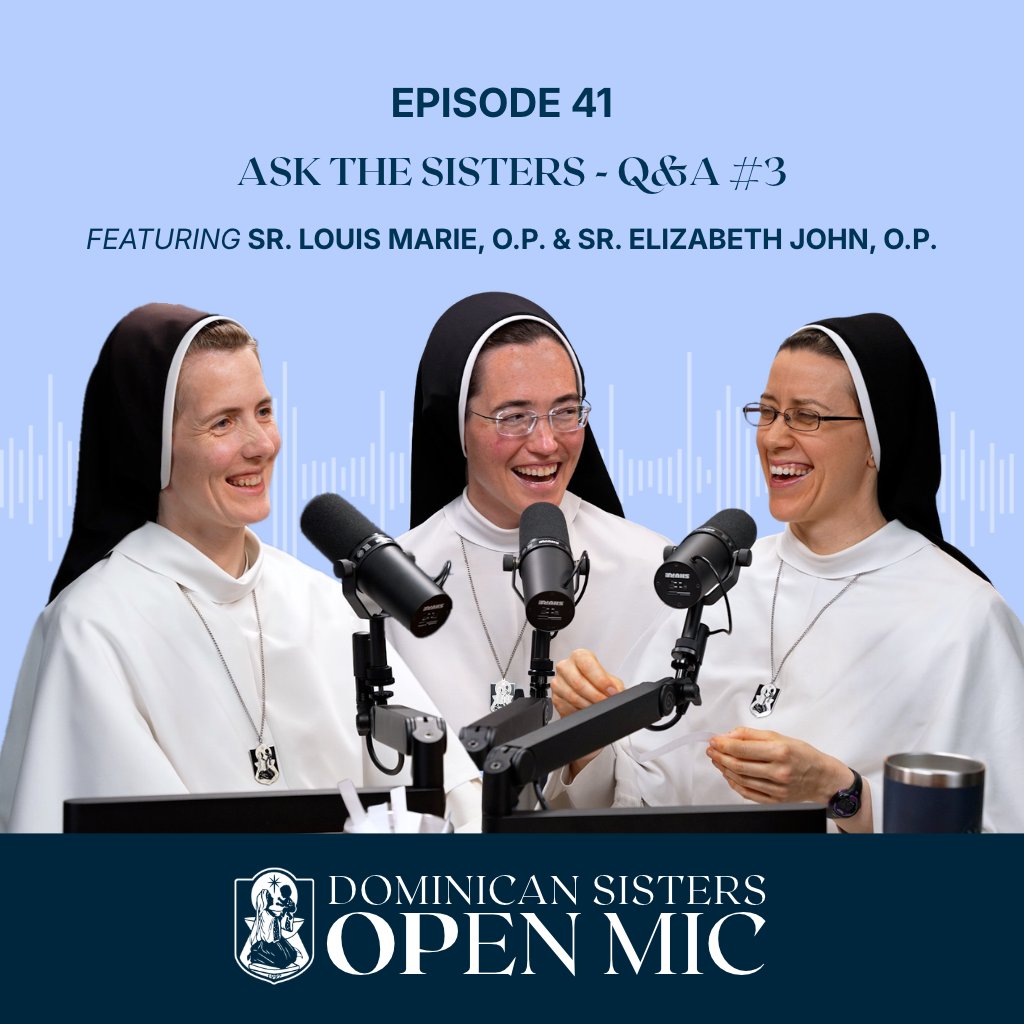
Are snacks allowed? What about naps? Do Sisters have to be able to sing? When we launched the podcast, we expected big questions about God, Church teaching, and morality, and those come in constantly. But just as often, you want to know about the everyday details of the Sisters’ life. So the question cup is back for a third round. Sr. Miriam, O.P. is joined again by Sr. Elizabeth John, O.P. and Sr. Louis Marie, O.P. to pull your questions at random and answer whatever comes out. This one is more than lifestyle trivia, though. Alongside the fun, the three of them take on some real heavy hitters: Do the Sisters ever wish they could be priests? How do you trust God again after going through trauma? And what’s the difference between a true vocation and an identity crisis? You can submit your own questions for the Sisters through our app, Torch, and they just might get pulled from the cup next time. Download the Torch App (https://openlightmedia.com/torch-app/) Take the Virtue Survey (https
Access to effective legal representation should not depend mainly on personal wealth.
Share your view, then see how readers voted. No sign-in required. This poll is shared across stories.
Do you agree or disagree?
Common Quandary
A Common Quandary to discuss
Another conversation to explore, separate from this news story.
The company allows an $80 dinner. Is ordering the lobster fair game?
During work travel, company policy permits an expensive dinner. A modest option is nearby, but colleagues choose the nicest restaurant because the company can easily afford it and everyone is within the stated limit.
Is following a rule enough when you are spending someone else's money?