Listen through the publisher, then discuss the episode here or arrange an in-person Roundtable. Your city determines where to meet.
Roundtables are designed for groups of four, with a shared subject and room for everyone to speak. Come for discussion, with no dating expectation.
In this episode of The Brad Jensen Show, I'm answering three important questions that can have a massive impact on your health, fitness, and overall well-being. First, do you really need to get bloodwork done if you feel perfectly fine? I'm sharing my own recent experience with labs, what I discovered, and how something I thought was purely a mental issue turned out to have a physiological component. This was a huge eye-opener for me and a reminder that just because you feel fine doesn't mean everything is functioning optimally internally. Next, we're talking about navigating food during the holidays. How do you enjoy yourself, stay on track with your goals, and avoid the all-or-nothing mentality that so many people fall into this time of year? Finally, I'm breaking down heart rate variability (HRV), what it actually tells us about our recovery and nervous system, and why it's a metric worth paying attention to. Three different topics, one episode packed with practical takeaways to help you take ownership of your health. Let's dive in! Join Our 8-Week Fat-Loss Challenge (Starts November 9th) - Join Here (https://keynutrition.com/holiday-challenge/) Key Nutrition Links: Nutrition Coaching - www.keynutrition.com (https://www.keynutrition.com/) Partner Links: Be Featured on the Show: Free Guides: Connect with us on Instagram:
Episode information is provided by the publisher. Listening takes place on the publisher’s service.
If you're training hard but feeling wiped, eating a restricted diet for your gut, or just never hungry after a tough workout, you might not be getting the protein you need. This episode breaks down how much you really need and how to get it without upsetting your gut. YOU'LL TAKEAWAY: Macronutrients and calories 101, and how restrictive diets throw off your balance How your body digests protein, and why it matters before workouts The many roles of protein, from enzymes and iron storage to post-workout appetite How much protein you need, plus 3 easy low FODMAP ways to boost it — RESOURCES & LINKS MENTIONED: ⤵️ Want high touch coaching support for IBS & fuelling performance? Apply for coaching. (http://gutfitnutrition.com/apply) Free Training: How to Control IBS So You Can Fuel Your Training Without a Lifelong Low FODMAP Diet (https://gutfitnutrition.com/heal-ibs-training-live) Supporting your immune system when you're sick (Ep. 70) (https://open.spotify.com/episode/5bCto0jWLcbC5hQW4hrH6
Is your body weight stable, but you're still not eating enough to properly fuel your training, recovery, and overall health? Introducing Why Stable Weight Doesn't Always Mean You're Eating Enough from Jeff Hoehn of the Mind Muscle Connection Podcast (https://www.buzzsprout.com/1508401). Just because your weight isn't changing doesn't necessarily mean you're adequately fueled. In this episode, Jeff breaks down why maintaining a stable body weight doesn't always mean you're meeting your body's energy needs, especially if you're training hard, staying lean, or spending long periods dieting. You'll learn: Why stable body weight doesn't automatically mean adequate energy availability Who is most at risk of underfueling, even when their weight isn't changing How high training output, staying too lean, and chronic dieting can contribute to low energy availability The potential signs of underfueling, including changes in performance, recovery, hormones, and menstrual health Why spending too lo
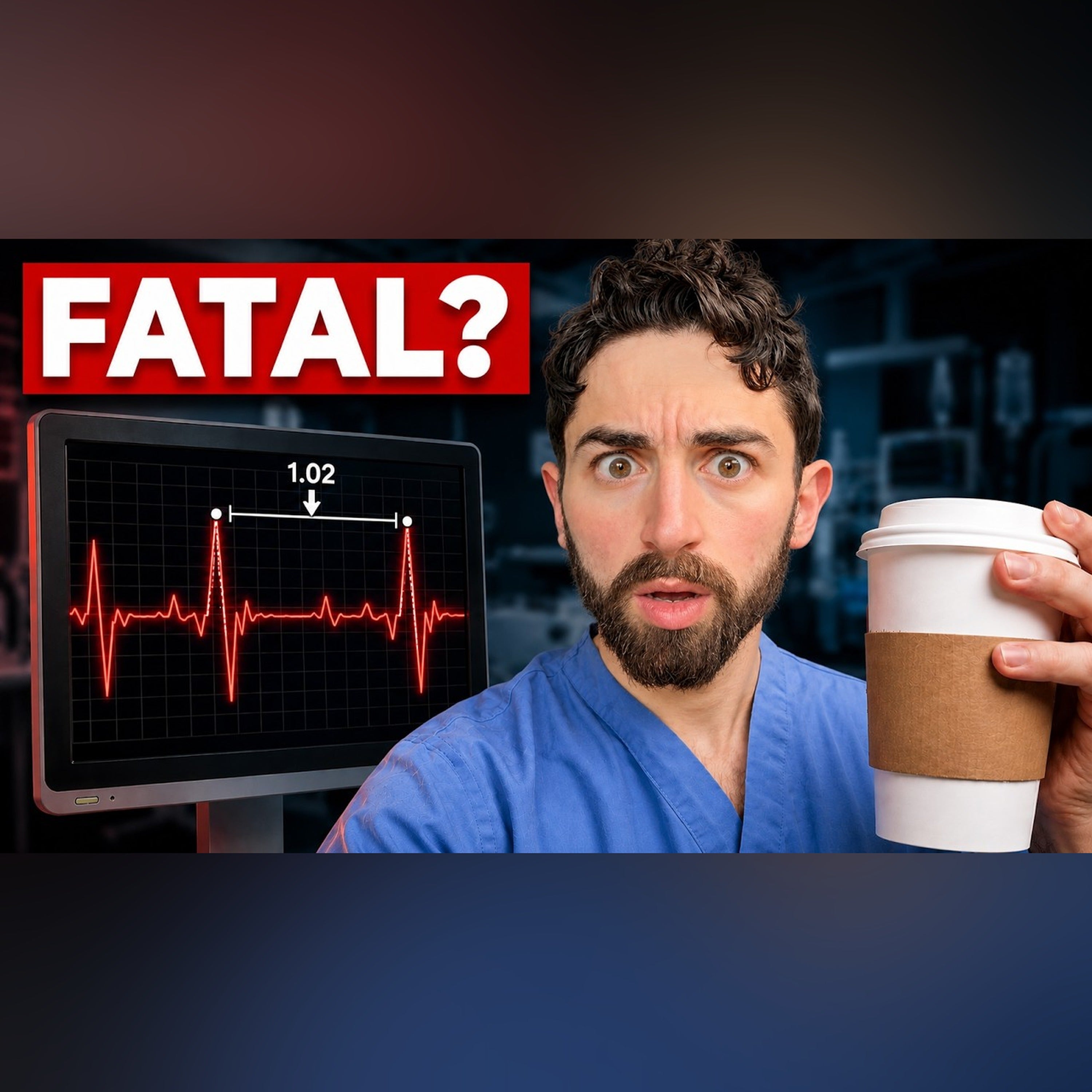
For a written breakdown, early access to content like this, and extra nuances, see the associated StayCurious Metabolism newsletter: https://staycuriousmetabolism.substack.com/p/why-you-need-to-track-your-heart?r=40ekz2 If you want to try the omega supplement I use, Accentrate Omega Max, here’s the link: https://www.fenixhealthscience.com/staycurious Heart rate variability (HRV) is more than just a number, it’s a real-time window into how well your brain, heart, and nervous system are working together. In this video, we break down what HRV actually measures, why it’s such a powerful predictor of mortality and heart attack risk, and how it reflects something deeper: your body’s ability to adapt, recover, and respond to stress. We walk through landmark studies showing that low HRV is associated with significantly higher risk of death and first cardiac events—even after controlling for traditional risk factors. But this isn’t just about risk. HRV is something you can measure today and act
Get the 200+ Page Optimal Living Daily Workbook (PDF) - Free. Want to turn today's episode into an actionable plan? Episode 3613: Jessi Kneeland explains why what most people need during the holidays is better support rather than more things to buy. She describes three places worth investing instead: regulating your nervous system through rest and gentle movement, setting and holding boundaries with family and obligations, and affirming your own sense of self when old roles pull you back. The takeaway is that keeping your own wellbeing at the top of the list is one of the healthiest habits to protect this time of year. Read along with the original article(s) here: https://www.jessikneeland.com/post/3-investments-to-make-this-holiday-season Quotes to ponder: "But the thing that most of us actually need isn't more stuff." "No matter what comes your way, as long as you're willing to choose yourself, you'll be ok." "So be on your own side and treat yourself like someone you love."
The first sentence you think in the morning becomes the instructions for your day. Before your feet touch the floor, before you check your phone, before the world gets a single word in, your mind is wide open. Soft, receptive, half in the dream state, ready to accept whatever you tell it. And whatever you say in those first few moments, the subconscious takes as the plan for the day. ⠀ So today the plan is the most powerful one there is. Everything is working out for me. ⠀ Play this the moment you wake up, every morning. Listen in bed, in the shower, with your first cup of coffee. Speak the declarations out loud with me if you can, softly or silently if you need to. A week in you will start to see it. A month in you will start to expect it. Small things line up first. Parking spots. Perfectly timed payments. Kind messages. Then bigger things. One morning you will wake up and realize everything really is working out for you, and it has been all along. ⠀ Free 21-Day Large Sums of Money C
A kiss can be wonderful. It can create an instant connection, spark romance, or make you feel closer to someone. But a kiss can also have the opposite effect — and sometimes ruin everything. So what makes kissing so powerful, and why can one kiss make such a difference? There's some fascinating science behind it. https://www.scientificamerican.com/article/why-we-kiss/ We spend an enormous amount of time worrying about what's going to change. What's next? What's coming? How do we prepare? But what if we're paying attention to the wrong things? Some of the most important forces shaping our lives never change, and understanding them may be far more valuable than trying to predict the future — something humans are notoriously bad at. Morgan Housel, partner at The Collaborative Fund and author of Same as Ever: A Guide to What Never Changes (https://amzn.to/3SwWn6u) (https://amzn.to/3SwWn6u)), joins me to explain why the things that stay the same may be the most important things to understan
On this episode of The Brad Jensen Show, I sit down with one of the best guys I know, Andy Torgerson. Andy is a recovering addict, speaker, recovery coach, father, and former graduate of my Next Level Experience. His story is a powerful one. From nearly drinking himself to death to now celebrating over six years of sobriety, Andy takes us through his journey of addiction, recovery, and rebuilding his life from the ground up. We dive into some of the biggest lessons he's learned along the way, the role personal development has played in his transformation, and how fitness has become a mainstay in his recovery. We also talk about fatherhood, finding purpose beyond addiction, and what it really takes to create lasting change. Andy is living proof that no matter how far down you've gone, there's always an opportunity to turn things around. This conversation is raw, inspiring, and packed with lessons that go far beyond addiction and recovery. Whether you've struggled with addiction yourself
In this episode of The Brad Jensen Show, I sit down with longtime friend and industry expert Cody McBroom, founder of Tailored Coaching Method and host of the top-rated Choose Hard Podcast. Cody and I have known each other for nearly a decade, and this conversation was packed with valuable insights for both coaches and anyone working toward their own fitness goals. We dive into why so many people struggle with consistency and compliance, what's REALLY happening beneath the surface, and the psychology and mindset behind lasting behavior change. Cody shares some incredible strategies for helping clients overcome obstacles, break through mental barriers, and create sustainable results. Whether you're a coach looking to better serve your clients or someone struggling to stay on track yourself, there's a ton of value in this episode. We also discuss Cody's exciting new certification course for online fitness coaches, currently in beta testing! Our entire Key Nutrition coaching team is parti
Independent oversight bodies need real investigatory powers, not only advisory roles.
Share your view, then see how readers voted. No sign-in required. This poll is shared across stories.
Do you agree or disagree?
Common Quandary
A Common Quandary to discuss
Another conversation to explore, separate from this news story.
A donor's family wants to hear their loved one's heart beating in you. Do you meet them?
A transplant recipient receives a letter from the donor's family asking to meet. The recipient feels profound gratitude but also discomfort and wants their recovery to remain private and separate from another family's grief.
Can receiving an extraordinary gift create a personal obligation to strangers?