Episode 033: BresicWhitney’s New CEO - Looking Ahead
58 min
Listen through the publisher, then discuss the episode here or arrange an in-person Roundtable. Your city determines where to meet.
Roundtables are designed for groups of four, with a shared subject and room for everyone to speak. Come for discussion, with no dating expectation.
Will Gosse, CEO of BresicWhitney, leads a team of more than 200 people at just 33. Last financial year, the business sold approximately 1,400 properties worth $3.5 billion. Having started as a sales associate and spent nearly 13 years with the business, Will shares his journey into leadership, how he navigates self-doubt, and why earning trust matters more than being liked. We unpack how BresicWhitney is using AI to connect buyers with properties, what it takes to deliver a better customer experience, and how Will balances leading a major real estate business with being a dad to young twins. For anyone in real estate, this is a conversation about leading through change, staying grounded and building a business that gives people a reason to choose you.
Episode information is provided by the publisher. Listening takes place on the publisher’s service.
Most people say they want a better life, better results, and more progress. But wanting something and deciding to do what is required to achieve it are not the same. Uploaded 25-03-26 This video breaks down the real difference between interest and commitment, and why that difference quietly explains why some people move ahead while others stay in the same place. It explores how progress begins when a person stops hoping for change and starts taking responsibility for creating it. You’ll see why excuses, delay, and waiting for the right conditions keep people stuck, while ownership, discipline, and consistent action create momentum over time. This lesson also explains how time is either invested or wasted, why small daily choices matter more than occasional bursts of effort, and how standards shape the direction of a person’s life long before the results become visible. It covers the importance of skill development, personal value, responsibility, and using each day with intention. If y
Master the skills that change lives — enroll in your free human behavior course today: https://nci.university/learn Uploaded 15-01-26 EXECUTIVE SUMMARY: Video: What It Feels Like to See Into People Purpose: Reframe how human behavior is actually driven and perceived Outcome: Permanent shift in how you experience people and conversations CORE IDEA: Human behavior is not driven by beliefs, opinions, or logic. Those are after-action reports. Behavior is driven by the nervous system’s constant assessment of: • safety • approval • power • avoidance of shame Decisions are made before conscious thought. Beliefs are constructed afterward to justify what already happened. WHY THIS MATTERS: Most people spend their lives interacting with: • beliefs • arguments • explanations • surface narratives As a result, they miss the layer where real decisions are made. This video focuses on that lower layer — the one that actually governs: • conflict • influence • attraction • resistance • leadership • trus
This week on The Necessary Conversation, it's Chad, Haley, and Mary Lou. Bob is still recovering but sent in a video message about Trump calling Putin his friend that we watch together. 🇷🇺 Trump held the first-ever three-way talks with Putin and Xi, called it a "12 out of 10," and produced nothing. Then at a press conference he called Putin his friend — and when asked if Putin is a friend to America, the president of the United States said, "I can't speak to America." That same day, Trump's friend Putin launched massive strikes into Ukraine, hit Poland with two missiles — an act of war against a NATO ally — then struck near a Ukrainian restaurant and drone-bombed the first responders, killing a 7-year-old child and a 20-year-old paramedic. We watch Bob's video and ask Mary Lou: is Russia our friend? 🇨🇳 The House Foreign Affairs Committee revealed Trump's Commerce Department approved nearly 880,000 advanced AI chips for Chinese military-linked companies including Alibaba, Tencent, a
In this video, Disability Attorney Walter Hnot of the Disability Resolution Law Firm goes over the process for restoring the Marble Mountain Horse Estate patio. America’s Most Viewed Social Security Disability Attorney Like the content? Review us here: https://g.page/r/CcwyektC7nCPEAg/review . If the link does not work, Google: Disability Resolution, P.A. Welcome to the largest Social Security Disability Tutorial Video Library On Earth. PRIVATE ONE HOUR SESSION PHONE CALL NEED MEDICARE? I don’t do it, but I trust these folks to help you. Call Chapter Medicare at 339 226 6287, or use askchapter.org/disability (* Note Below) THIS IS HOW YOU CAN GIVE BACK TO HELP GROW THE CAUSE: Option 1: Leave 5 |==================5 STAR REVIEWS==================| Google (Search Disability Resolution Orlando, FL)- https://g.page/r/CcwyektC7nCPEAg/review AVVO (Search Walter Hnot) - https://www.avvo.com/attorneys/32817-fl-walter-hnot-4523042/reviews.html BBB (Search Disability Resolution Orlando, FL)- http
Withholding physical intimacy takes away one of a narcissist's strongest controls. This episode covers the manipulation tied to sex, the clarity and self-worth that come back when you stop, and the collapse it triggers in them. Chapters 00:00 Breaking Free from Narcissistic Control 01:45 Understanding the Narcissist's Manipulation Tactics 02:51 The Power of Withholding Physical Intimacy 03:49 Gaining Emotional Clarity and Self-Worth 05:21 The Consequences of Withdrawing Intimacy 06:53 The Challenge of Touch Starvation 08:08 Empowerment and Healing 08:49 Conclusion and Final Thoughts Is this narcissistic abuse? Watch this episode on YouTube: youtu.be/oa8Y84po8Ls (https://youtu.be/oa8Y84po8Ls)
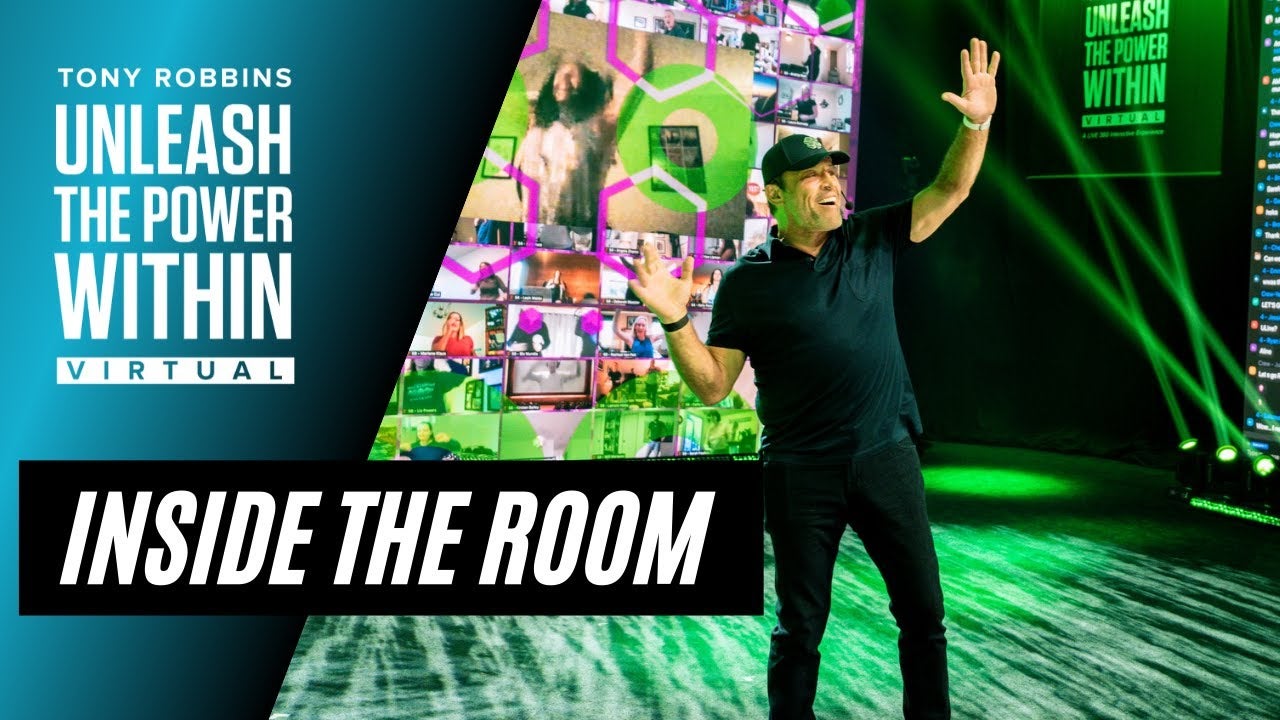
The FIRST Unleash the Power Within of 2022 just wrapped and we had 26,000 households from 151 countries around the world STEP UP and JOIN TOGETHER for one of our largest events in history! Uploaded 23-03-22 Here are some highlights from the week. Enjoy this video for a peek inside our virtual stadium It’s such a privilege to spend time with such DRIVEN, COMMITTED, LOVING SOULS all coming here with a hunger to GROW. For me, getting to hear your goals and witness each of you creating a unique life for yourselves, your loved ones, and your communities is deeply moving. We grow so we have MORE to GIVE, and the truth is, the world is a better, more beautiful and kind place because of people like YOU. If you’ve never experienced an Unleash the Power Within, it can be hard to imagine the HUMAN POTENTIAL and the RAW ENERGY⚡️ that converge over these four days and nights. It's electrifying to feel people from every walk of life, every background, every stage of life UNITE to find a deeper meani
Juliette Tobias-Webb is a behavioural scientist with a PhD from Cambridge University who has spent years helping some of the world's biggest organisations, including Google, Mastercard, CBA and Atlassian, understand why people do what they do. In this episode of The Oddi Poddi, we unpack the psychology behind human behaviour and how it plays out in today's challenging real estate market. Why do buyers freeze when it's time to bid at auction? Why do sellers respond so differently to the same circumstances? And why do we often do the opposite of what we know we should? A thought-provoking conversation exploring the human behaviours that shape decisions, influence outcomes and impact the way we do business.
Giving a player another chance should depend on their effect on the whole team.
Share your view, then see how readers voted. No sign-in required. This poll is shared across stories.
Do you agree or disagree?
Common Quandary
A Common Quandary to discuss
Another conversation to explore, separate from this news story.
Software says a student cheated with AI. Is that enough to fail the paper?
A teacher suspects several essays were written with AI. Detection software marks one student's work as highly likely to be generated, but the software is known to make mistakes and the student denies using it.
How should responsibility be assigned when evidence is powerful but unreliable?