Listen through the publisher, then discuss the episode here or arrange an in-person Roundtable. Your city determines where to meet.
Roundtables are designed for groups of four, with a shared subject and room for everyone to speak. Come for discussion, with no dating expectation.
What can a plant tell us about the world it evolved in – and what happens when we take it somewhere it doesn't belong? This week, I'm joined by botanist and naturalist Joey Santore of 'Crime Pays But Botany Doesn't' to talk about plant ecology, native species and the importance of understanding the relationships that hold ecosystems together. We also tackle the increasingly heated debate around native and invasive plants, and why ecology should always come before ideology. Benny's Insect of the Week: The Plane Tree Lace Bug Links Website (https://www.crimepaysbutbotanydoesnt.com/) YouTube Crime Pays But Botany Doesn't (https://www.youtube.com/@CrimePaysButBotanyDoesnt) Instagram (https://www.instagram.com/crime_pays_but_botany_doesnt) TikTok (https://www.tiktok.com/@crimepaysbutbotanydoesnt) Patreon (https://www.patreon.com/CrimePaysButBotanyDoesnt) If you enjoyed this week's episode with Joey Santore, you might also enjoy these episodes from the archives: Episode 85: Invasive Plants with Tomos Jones (https://rootsandall.co.uk/podcast/episode-56-invasive-plants-with-tomos-jones/) Tomos Jones explores the world of invasive plants, looking at how introduced species can escape from gardens, establish themselves in the wild and threaten native biodiversity. We discuss what makes a plant invasive, the ecological consequences of introducing species into new environments and the role gardeners can play in preventing future problems. A particularly relevant companion to Joey's discussion about the importance of understanding plants in their ecological context. Episode 97: Nature's Best Hope with Prof Doug Tallamy (https://rootsandall.co.uk/podcast/episode-68-natures-best-hope-with-prof-douglas-w-tallamy/) Professor Doug Tallamy makes the case for rethinking how we garden, explaining why native plants are so important for supporting insects, birds and wider biodiversity. Drawing on his research, he explores the connections between plants and wildlife, the consequences of losing specialist species and how our gardens can become part of a wider conservation effort. Like Joey, Doug challenges us to look beyond appearances and consider the ecological value of the plants we choose to grow. And follow Roots and All:
Episode information is provided by the publisher. Listening takes place on the publisher’s service.
This year’s National Tree Week runs from 21st to 29th November, celebrating trees in all their glory, and putting them at the heart of horticultural conversation. The week also marks the official start of tree planting season, and Melissa Mabbitt talks to horticultural researcher Dr Lis Larsen about her recent findings into functional and useful trees for small domestic gardens. These are trees that not only look good but also serve a greater purpose for uses such as rainwater capture, shading and cooling. Sticking with the theme of plants being useful, Gareth talks to RHS Science & Horticulture Editor Olivia Drake about this month’s wildlife wonder plant, Viburnum opulus, otherwise known as guelder rose. And we’ll finish off the episode with your questions, answered by Gareth and Melissa Mabbitt. Host: Gareth Richards Producer: Dan Cocker Contributors: Dr. Elisabeth (Lis) Karlstad Larsen, Olivia Drake, Melissa Mabbitt Links: The Tree Council - National Tree Week (https://treecouncil.o
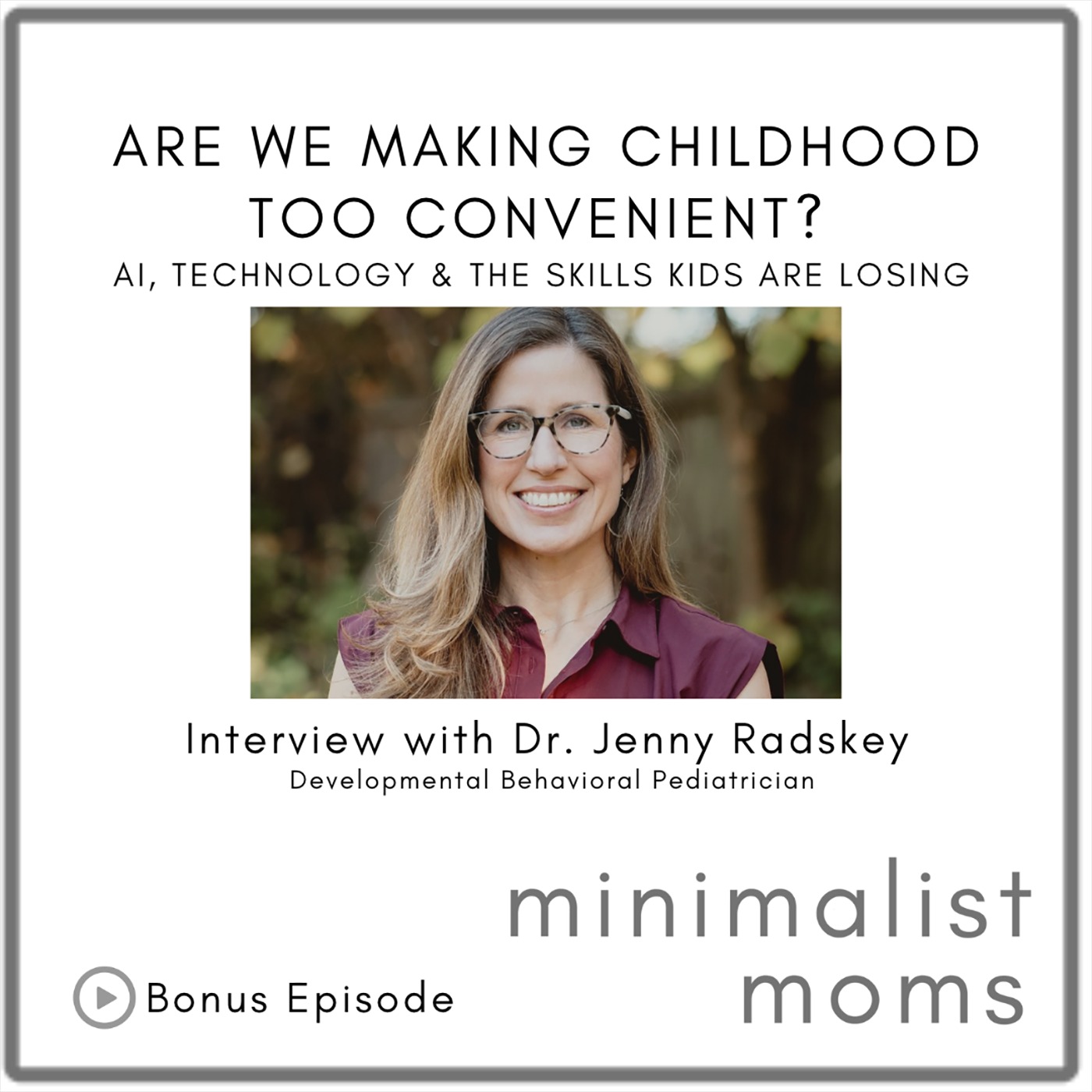
Are we making childhood easier at the expense of the very skills our kids need to thrive? We've talked about screen time and technology on the podcast before, but today's conversation takes us into territory we haven't really explored on the show yet: artificial intelligence and its potential impact on our children's development. As AI becomes more integrated into everyday life, I think it's worth asking some important questions about what our kids might be gaining - and what they could be missing along the way. I'm joined by pediatrician and researcher Dr. Jenny Radesky to explore how technology is reshaping childhood in ways we may not even recognize. From handing over a device to calm a difficult emotion to turning to AI for instant answers, are we unintentionally removing the everyday opportunities our children need to develop patience, persistence, creativity, and critical thinking? Just because something makes life easier doesn't necessarily mean it's making life better. Links Di
A mid-engined, twin-turbo Chevy LUV with 700hp and a sequential gearbox? It's probably not what Chevrolet had in mind back in 1974, but that's exactly what Cole Reynolds has created. What started as a simple project at just 13 years old has evolved into one seriously impressive race truck. Use the code ‘PODCAST500’ to get $500 OFF HPA's VIP Package:https://hpcdmy.co/podvip In this episode of Tuned In, Cole shares how he went from having almost no fabrication experience to building his own tube chassis race truck. We discuss the challenges of learning to weld, designing suspension components on a tight budget and the importance of mentorship, particularly the guidance he received from Mike DuSold from DuSold Designs. We dive into the truck's unique engineering, including its centre-seat layout, cantilever rear suspension and mid-mounted twin-turbo LS engine. Cole explains how his original junkyard 5.3L evolved into a 388ci engine producing 700 wheel horsepower, paired with a six-speed S
A 13 year wait, hundreds of millions of players, and two book lovers who couldn't let release day pass without asking what GTA 6 says about us. Grand Theft Auto VI is finally here, so The Bibliofilles have swapped the reading pile for a controller. Sophie and Chaya (yes, the criminal barrister) look at why a fictional world where nothing is off limits has such a pull, from choose-your-own-adventure books and AOL chat room role play to The Remarkable Life of Ibelin. They get into the Hot Coffee scandal, Hobbes, Rousseau and Dostoyevsky, the novels Dan Houser says shaped him (Middlemarch, Wuthering Heights, Vanity Fair), his Dickens comparison, and why GTA started life in Dundee. Plus Tomorrow, and Tomorrow, and Tomorrow, Dungeon Crawler Carl, Klara and the Sun, and a gaming confession or two. CHAPTERS 00:00 GTA 6 is here: why a books podcast cares 03:11 Welcome to The Bibliofilles: the GTA phenomenon 06:25 The Great Escape: the psychology of escapism 08:02 Choose your own adventure: the
Alvaro volunteered to take on this season's taxonomy updates, so he took the reins for this episode! Get an overview of recent changes in species around the world - more splits than lumps! - along with tons of tips for understanding species and subspecies in your own birding circles. Get more Life List by subscribing to our newsletter (https://lifelistpodcast.substack.com/) and joining our Patreon (https://www.patreon.com/lifelist) for bonus content. Talk to us and share your topic ideas at lifelistpodcast.com (https://lifelistpodcast.com/talk-to-us/). Thanks to Kowa Optics (https://kowaoptics.com/) for sponsoring our podcast! Want to know more about us? Check out George's company, Hillstar Nature (https://www.hillstarnature.com/); Alvaro's company, Alvaro's Adventures (https://alvarosadventures.com/), and Mollee's company, Nighthawk Agency (https://nighthawkagency.com/), to see more about what we're up to.
️ Episode 168 – Pure Imagination From the extraordinary to the everyday, from the world of sport to the realms of mythology, this episode invites you to let your imagination roam. Expect a few familiar faces, some surprising connections and a journey through knowledge that takes us in some unexpected directions. In this episode of 20 Questions Quiz, we explore a wonderfully eclectic mix of subjects, bringing together history, science, language, geography, sport and popular culture. So put your thinking cap on and see where your imagination takes you! Among this episode’s topics: Popular Culture – Cartoon favourites and the magic of the movies. Language & Expressions – Familiar sayings and words with fascinating origins. Sport – Famous venues, sporting achievements and the people who make history. ⚗️ Science – The elements, the natural world and discoveries that changed our understanding. History & Politics – Royal connections, world leaders and the story of a nation. ️ Geography – Isla
This week, I'm joined by William Rowlandson, writer, academic and environmental campaigner, to explore our complicated relationship with the natural world. We discuss what it really means for something to be wild, how the language we use shapes our understanding of nature, and why even the smallest, overlooked corners of the landscape deserve our attention and protection. Along the way, we question where humans fit within the natural world, and whether the boundaries we draw between ourselves and nature make any sense at all. Benny's Insect of the Week: Marmalade Hoverfly Links Wyld of the Woodling by William Rowlandson (https://psychedelicpress.co.uk/products/wyld-of-the-woodling?srsltid=AYCX9vIkooyAo4uR1qK7aZzMI4XrzwunYBBkNFwb3--ZMoiV5hihxbcf) If you enjoyed this week's episode with William Rowlandson, you might also enjoy these episodes from the archives: Episode 376: From Rewilding to Renaturing with James Canton (https://rootsandall.co.uk/podcast/from-rewilding-to-renaturing) Writ
What can one neglected patch of land grow beyond plants? This week, I'm joined by Shereen Chung-Blake, community gardener and programme coordinator at Bankside Open Spaces Trust, to hear how she turned an unused space in Camberwell into a thriving community garden, and why making horticulture accessible can transform both places and people. Benny's Insect of the Week: Heath Potter Wasp Links Shereen's Instagram (https://www.instagram.com/brixtonhousewifeinthegarden/) LinkedIn (https://www.linkedin.com/in/shereenchungblake/) Camberwell Triangle Gardeners (https://www.instagram.com/camberwelltrianglegardeners/?hl=en) Future Gardeners Course (https://bost.org.uk/future-gardeners) Incredible Edible (https://incredibleedible.org.uk/) London Right to Grow (https://www.capitalgrowth.org/right-to-grow/) SLUG (Community Composting) (https://www.instagram.com/_s.l.u.g._/?hl=en) Burgess Plant Nursery (Community Plants and Propagation) (https://www.instagram.com/burgessplantnursery/?hl=en) Walwort
Public officials should meet ethical standards higher than the minimum required by law.
Share your view, then see how readers voted. No sign-in required. This poll is shared across stories.
Do you agree or disagree?
Common Quandary
A Common Quandary to discuss
Another conversation to explore, separate from this news story.
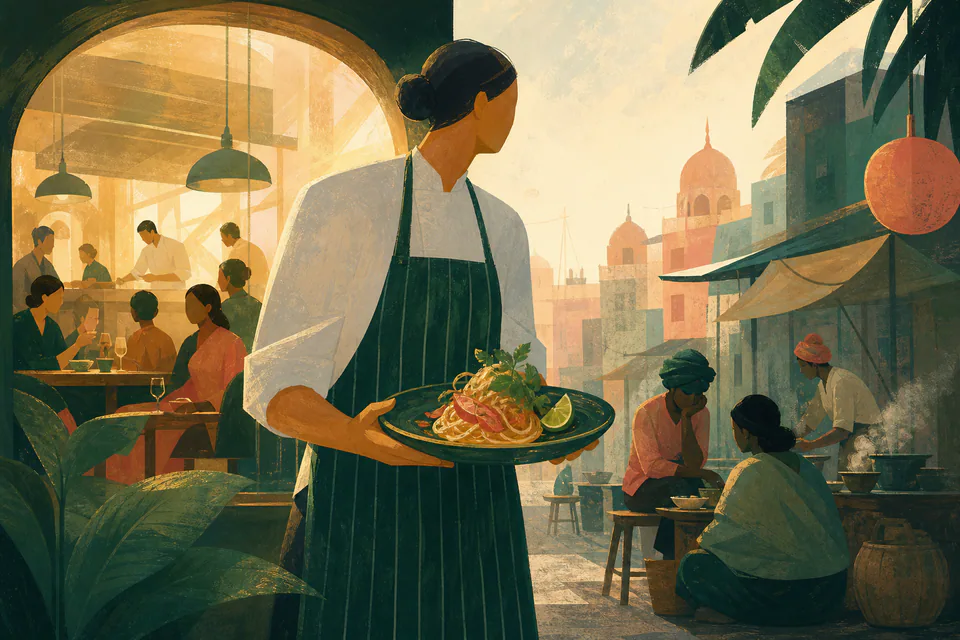
An outsider becomes famous cooking another culture's food. Appreciation or taking over?
A chef becomes known for food from a culture outside their own after years of study with respected cooks. The restaurant is successful, while small businesses run by people from that culture struggle for attention.
When does appreciation become taking opportunity from the people who created a tradition?