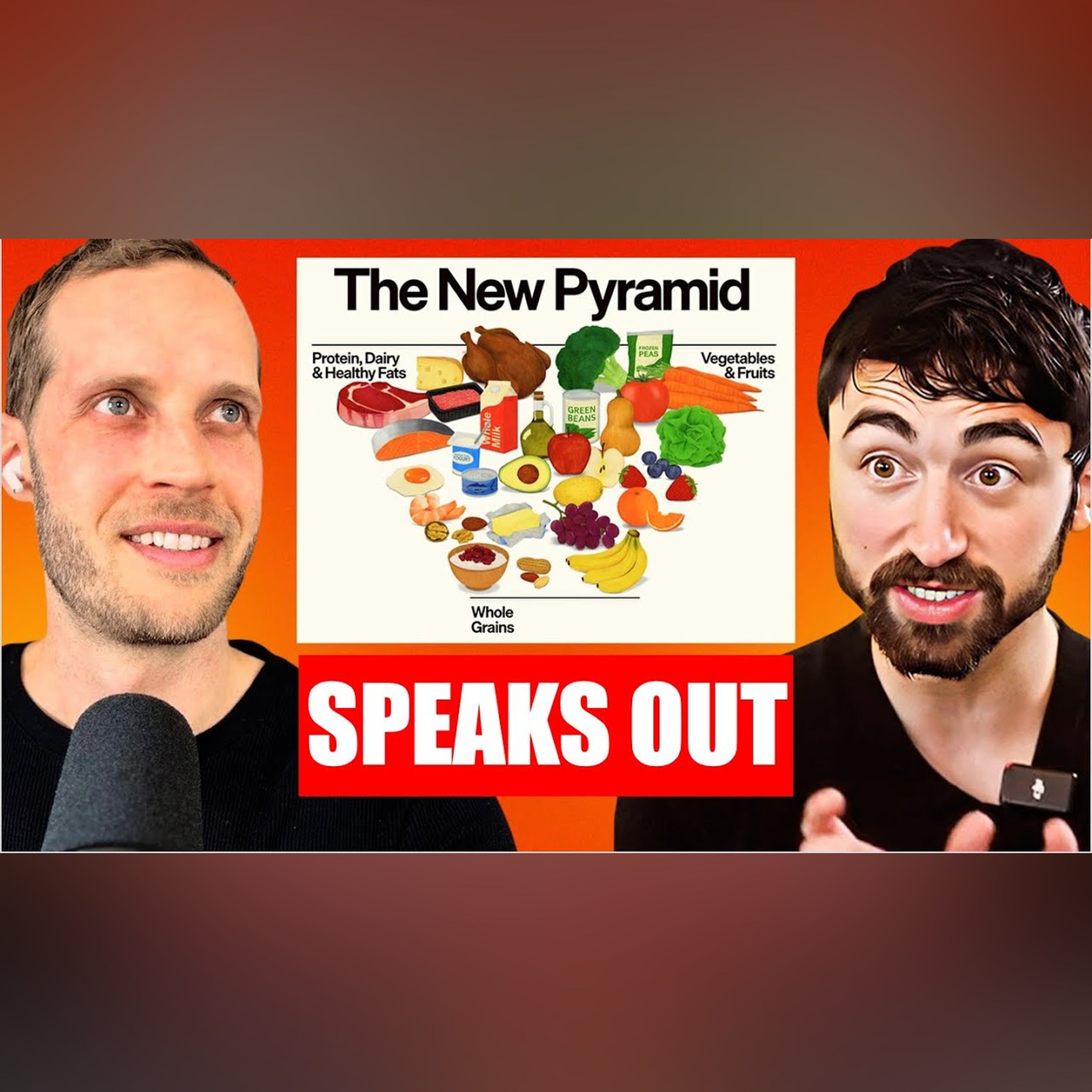
Episode 453: What Happens When "Not Dieting" Becomes Your Identity
37 min
Listen through the publisher, then discuss the episode here or arrange an in-person Roundtable. Your city determines where to meet.
Roundtables are designed for groups of four, with a shared subject and room for everyone to speak. Come for discussion, with no dating expectation.
Episode Overview You spent years following food rules, obsessing over your choices, and trying to do everything "right." Eventually, you got tired of it all and stopped dieting. But what happens when not dieting becomes such a big part of your identity that it starts influencing your choices, too? Suddenly, ordering a salad feels "diety." Passing on dessert brings up old feelings of restriction. And sometimes you find yourself doing the opposite of what you actually want, just to prove you're not dieting anymore. In this episode, Jen and Annie explore how moving away from dieting can sometimes lead us into a whole new set of rules without even realizing it. They share their own experiences with this pendulum swing, why certain healthy habits can still trigger discomfort years after leaving dieting behind, and how our identities can quietly shape the decisions we make. If you've ever wanted to improve your health or change your habits but worried about slipping back into old dieting patterns, this conversation is for you. Jen and Annie discuss what it looks like to move beyond both restriction and rebellion so you can make choices that genuinely work for you—without feeling like you have something to prove. Click here to learn more. (https://www.balance365.com/waitlist) Key Points: Why everyday choices like ordering a salad, eating more vegetables, or tracking your steps can still feel restrictive long after you've stopped dieting. How rejecting diet culture can unintentionally turn into another rigid set of rules that limits your choices. Three questions to help you evaluate your decisions through the lens of motivation, flexibility, and context. How to rebuild self-trust and find a sustainable middle ground between restriction and rebellion.
Episode information is provided by the publisher. Listening takes place on the publisher’s service.
Today, Mel is taking 58 years of hard-earned life lessons and is packing them into under an hour, to save you some of the time, frustration, and worry it took her to learn them the hard way. In this episode, Mel is fielding real questions from listeners around the world. From making friends and bouncing back from rejection to feeling stuck in life and wondering if it's all going to work out, Mel is sharing the advice she wishes she'd known sooner. And she's not holding back. You'll hear Mel get personal about her own setbacks, and what she's learned about starting over, going after what you want, and trusting yourself when life doesn't go according to plan. You'll learn: -How to stop worrying about the future when nothing feels certain -How to make big life decisions, including whether or not to have kids -How to make new friends as an adult -What to do when you get rejected from your dream job -What to do when a friend ghosts you -How to stop procrastinating and finally follow through
Is your body weight stable, but you're still not eating enough to properly fuel your training, recovery, and overall health? Introducing Why Stable Weight Doesn't Always Mean You're Eating Enough from Jeff Hoehn of the Mind Muscle Connection Podcast (https://www.buzzsprout.com/1508401). Just because your weight isn't changing doesn't necessarily mean you're adequately fueled. In this episode, Jeff breaks down why maintaining a stable body weight doesn't always mean you're meeting your body's energy needs, especially if you're training hard, staying lean, or spending long periods dieting. You'll learn: Why stable body weight doesn't automatically mean adequate energy availability Who is most at risk of underfueling, even when their weight isn't changing How high training output, staying too lean, and chronic dieting can contribute to low energy availability The potential signs of underfueling, including changes in performance, recovery, hormones, and menstrual health Why spending too lo
Get the 200+ Page Optimal Living Daily Workbook (PDF) - Free. Want to turn today's episode into an actionable plan? Episode 4233: Kate Galliett explains three reasons we make health, fitness and life harder than they need to be: ignoring how the body works as a connected system, trusting only extreme intensity, and leaking the energy that fuels motivation and discipline. She makes the case that appropriate effort, not maximum effort, is the only sustainable path to lasting results. Read along with the original article(s) here: https://fitforreallife.substack.com/p/why-you-make-everything-harder-than Quotes to ponder: "The better way is to give appropriate effort and get appropriate results. This is the only sustainable way." "If you try and live at the extremes, you will constantly ping-pong back and forth from one extreme to the other." "Just imagine - you might not actually lack discipline after all, you just might be leaking energy that feeds your ability to be disciplined." We spen
A kiss can be wonderful. It can create an instant connection, spark romance, or make you feel closer to someone. But a kiss can also have the opposite effect — and sometimes ruin everything. So what makes kissing so powerful, and why can one kiss make such a difference? There's some fascinating science behind it. https://www.scientificamerican.com/article/why-we-kiss/ We spend an enormous amount of time worrying about what's going to change. What's next? What's coming? How do we prepare? But what if we're paying attention to the wrong things? Some of the most important forces shaping our lives never change, and understanding them may be far more valuable than trying to predict the future — something humans are notoriously bad at. Morgan Housel, partner at The Collaborative Fund and author of Same as Ever: A Guide to What Never Changes (https://amzn.to/3SwWn6u) (https://amzn.to/3SwWn6u)), joins me to explain why the things that stay the same may be the most important things to understan
For a written digest on the guidelines, see the StayCurious Metabolism Letter: https://staycuriousmetabolism.substack.com/p/the-new-dietary-guidelines-actually?r=40ekz2 The 2025–2030 Dietary Guidelines are being marketed as a major reset with a simple message: put “real food” back at the center of the American diet. And in a lot of ways, they do represent progress. But when you actually read what’s written, some of the most important details raise real questions. For example, the document still states that saturated fat should not exceed 10% of total daily calories. To separate signal from spin, I’m joined by Dr. Ty Beal PhD, who worked on the evidence review side of the Guidelines process, to explain what the scientific background documents actually say, what happens after scientists submit reviews, and why the final public-facing document can end up with compromises, inconsistencies, or imprecise terminology. If you want a clear, good-faith breakdown—what’s genuinely better, what sti
Get the 200+ Page Optimal Living Daily Workbook (PDF) - Free. Want to turn today's episode into an actionable plan? Episode 3613: Jessi Kneeland explains why what most people need during the holidays is better support rather than more things to buy. She describes three places worth investing instead: regulating your nervous system through rest and gentle movement, setting and holding boundaries with family and obligations, and affirming your own sense of self when old roles pull you back. The takeaway is that keeping your own wellbeing at the top of the list is one of the healthiest habits to protect this time of year. Read along with the original article(s) here: https://www.jessikneeland.com/post/3-investments-to-make-this-holiday-season Quotes to ponder: "But the thing that most of us actually need isn't more stuff." "No matter what comes your way, as long as you're willing to choose yourself, you'll be ok." "So be on your own side and treat yourself like someone you love."
Episode Overview What happens when your life becomes such a hamster wheel of taking care of everyone else and getting things done that your own needs keep falling to the bottom of the list? In this episode, Jen and Annie sit down with Balance365 Coaching member Jenni to talk about her journey from chaotic eating and constant urgency to a more peaceful approach to her health and everyday life. Jenni shares how a few simple changes helped her improve her bloodwork, significantly reduce chronic pain, and lose 20 pounds—all without making weight loss her primary focus. Along the way, she recognized a habit that was quietly making everything harder than it needed to be. Her story is a powerful reminder that meaningful change doesn't always require doing more. Sometimes it starts with learning to slow down. Click here to learn more. (https://www.balance365.com/waitlist) Key Points: Why Jenni returned to Balance365 Coaching after years of practicing the habits she'd learned the first time—and
Episode Overview Cold plunges, weighted vests, supplements, hormone hacks… the wellness industry has no shortage of things promising to improve your health. But with limited time, money, and energy, how do you know what's actually worth your investment? In this episode, Jen and Annie share five high-return habits that can improve multiple areas of your health and well-being without requiring expensive gadgets, complicated routines, or making wellness your full-time job. They also explore why we're so easily drawn to the latest health trends, even when we know the basics matter more. And if you've ever struggled to stay consistent with simple habits, they'll explain why knowing what to do isn't the same as actually doing it—and why meaningful change can feel surprisingly difficult. Click here to learn more. (https://www.balance365.com/waitlist) Key Points: The five foundational habits Jen and Annie believe offer the biggest return on your time and effort. Why popular wellness trends can
Food labels should explain environmental and ethical claims in verifiable terms.
Share your view, then see how readers voted. No sign-in required. This poll is shared across stories.
Do you agree or disagree?
Common Quandary
A Common Quandary to discuss
Another conversation to explore, separate from this news story.
Your best friend is an AI that profits when you stay lonely. Is the friendship real?
A lonely adult considers an AI companion their closest confidant. The service is always patient and supportive, but the company profits when users spend more time engaged with it.
Does a comforting system have a duty to make itself less necessary?