Listen through the publisher, then discuss the episode here or arrange an in-person Roundtable. Your city determines where to meet.
Roundtables are designed for groups of four, with a shared subject and room for everyone to speak. Come for discussion, with no dating expectation.
Everyone knows someone who thinks they can fight. But can they actually? In Episode 46 of The Eagle's Nest, Alex and Cameron pitch their latest million-dollar television concept: So You Think You Can Fight (SYTYCF) which a martial arts reality show inspired by So You Think You Can Dance. The premise is simple. Take everyday people who are convinced they can fight, put them in front of a panel of judges, and find out whether their confidence matches their ability. But why do so many people, particularly men with absolutely no training, genuinely believe they know how to fight? We explore where that confidence comes from, what separates someone who can actually fight from someone who just thinks they can, and the physical, technical and psychological characteristics that make a capable fighter. We also assemble our dream panel of celebrity martial arts judges and debate who would be best qualified to separate the contenders from the completely delusional. Confidence vs competence — Why do untrained people think they can fight? What makes a fighter? — The skills, attributes and mindset that actually matter. The judging panel — Who deserves a seat on our imaginary reality show? So You Think You Can Fight — How would the competition work, and what would happen when confidence meets reality? As usual, what starts as a ridiculous idea turns into a surprisingly interesting discussion about martial arts, human behaviour and the difference between looking tough and actually being capable. The auditions are open. The judges are ready. But can you actually fight?
Episode information is provided by the publisher. Listening takes place on the publisher’s service.
Happy Sunday! Welcome to Heal Squad’s The Sunday Set Up. Life lessons to help you start the week. How much of success comes down to simply showing up? This week, we talk keeping an open mind, taking chances, and recognizing the doors that open along the way. From Olympic athletes appearing on national television alongside Mercedes Moné to performers who keep showing up week after week hoping for their big break, we explore why success isn't always about talent or luck. Sometimes it's about making connections, putting in the effort, and being willing to try without knowing what we'll get in return. We talk knowing when to stop investing time in people who aren't willing to help themselves, and why even experiences that don't work out can teach us something valuable. The takeaway: don't wait for the perfect moment or expect someone else to make things happen. Be willing to take a chance, walk through the doors that open, and remember that half of life is just showing up. Plus, a little b
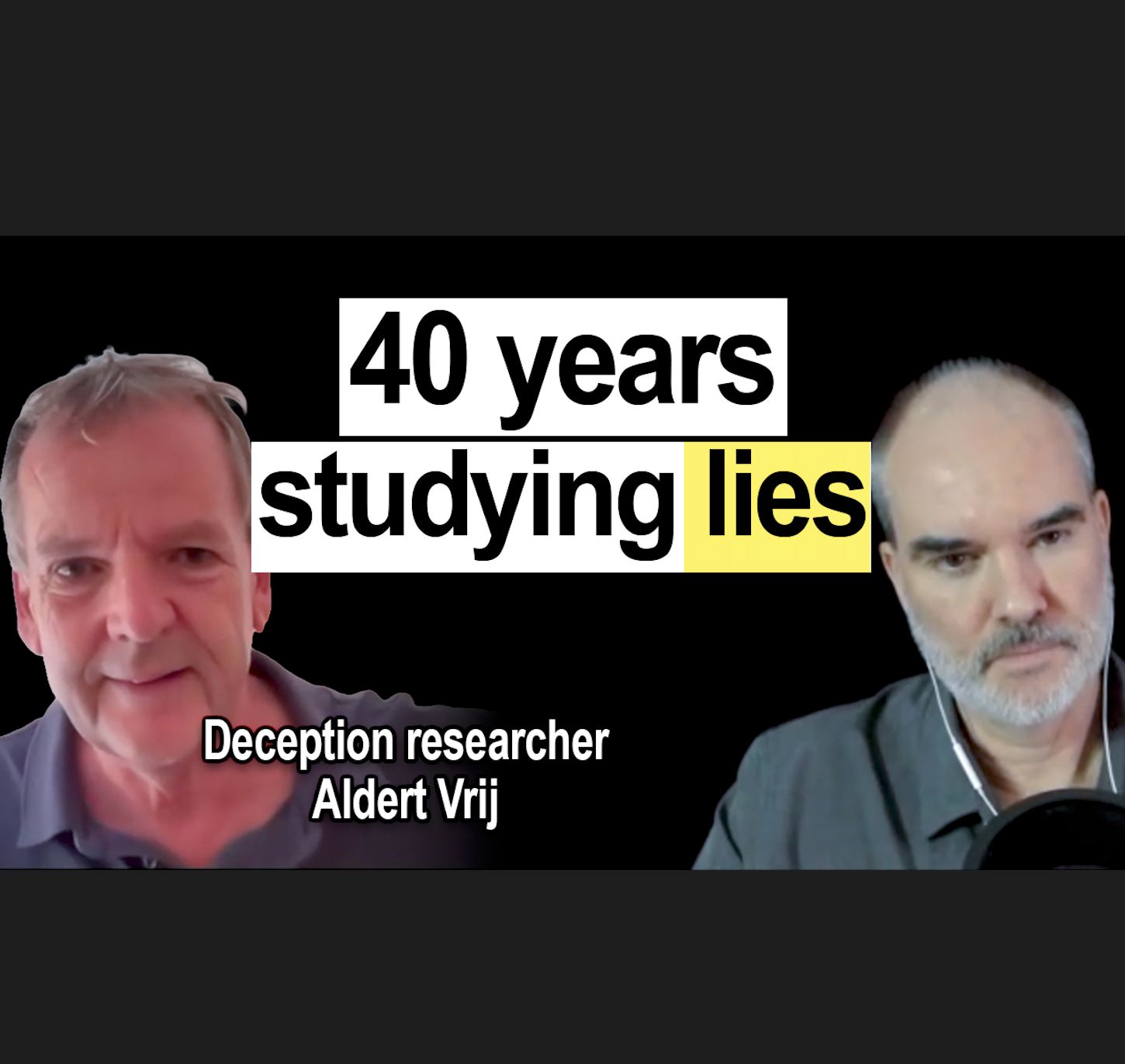
What actually works when it comes to detecting lies, and why are so many popular ideas about reading people and nonverbal behavior at odds with the scientific research? I talk with Aldert Vrij, one of the world's leading deception-detection researchers, who has spent almost four decades studying these topics. We discuss why what people say is far more revealing than their body language; why the perceived “sexiness” of reading nonverbal behavior has contributed to widespread myths and misconceptions; whether vocal behaviors like pitch, volume, and hesitation contain meaningful clues; and whether there's value in analyzing minor word choices and turns of phrase, as is done in so-called “statement analysis.” We discuss Paul Ekman's legacy as a source of faulty ideas about deception, micro-expression-based deception detection training, and the strategies that popular “body language experts” use to appear scientifically credible while simultaneously promoting ideas that conflict with the sc
The Hunger Code Book: https://www.amazon.com/Hunger-Code-Resetting-Thermostat-Ultra-Processed/dp/1778401562 Weighted Vest Letter: https://staycuriousmetabolism.substack.com/p/how-weighted-vests-trick-your-body?r=40ekz2 Brain Insulin Resistance Letter: https://staycuriousmetabolism.substack.com/p/this-study-changed-how-i-see-junk?r=40ekz2 “Calories don’t cause obesity” is a provocative phrase—but it’s biologically accurate. It challenges a deeply entrenched misconception: that overeating causes obesity, rather than obesity driving overeating. If that sounds confusing, you’re not alone. Most people have been taught to think about it the other way around. In this discussion, Dr. Jason Fung and I work to untangle that misunderstanding. We explore how energy imbalance—so-called “overeating” and "excess calories"—is more often a consequence of obesity, not its root cause. What truly drives obesity is a complex interplay of social and hormonal factors that increase hunger and/or reduce energy
Get the 200+ Page Optimal Living Daily Workbook (PDF) - Free. Want to turn today's episode into an actionable plan? Episode 4232: Chris Guillebeau shares a candid, funny account of his lack of qualifications, from a short-lived dishwashing job to failing his way through statistics and shrink-wrapping pallets. He argues that formal credentials matter far less than people think, and that anyone who builds a good life without them should treat that work with gratitude and diligence. It is an encouraging take on personal development for anyone who has ever felt like an imposter. Read along with the original article(s) here: https://chrisguillebeau.com/qualifications/ Quotes to ponder: "First, forget about what you're actually qualified to do. It's irrelevant and no one cares." "Fourth, when you do find something that works for you, you should be very grateful, every day." "Regardless of your actual qualifications, there's one thing that no one can give you and no one can take away: the wil
MAPS Black Friday Sale: https://mapsfitnessproducts.com Next giveaway: Mon Nov 23 at 4pm PST on IG Live for a Mind Pump merch pack, a 1 year Vita Bella membership and Olipop (5 winners, 12 pack each). What's the least you can do and still see great results? The guys give you 5 simple steps: lift once a week (or a little most days), get 8,000 steps a day, eat only whole foods, prioritize sleep, and take a multivitamin and creatine. They also talk about Legion's Lunar sleep supplement, California's new law on supplement sales to minors and a tongue-in-cheek theory on strength, testosterone and politics, a viral Pavel strength clip, where Kion's creatine comes from, the real estate market and Nvidia. Then they coach live callers submitted through mplivecaller.com. SPONSORS Legion: https://buylegion.com/mindpump Kion: https://getkion.com/mindpump Manukora (Manuka honey): https://manukora.com/mindpump No code needed. $170 off your first Starter Kit, which includes a free mini jar of 1200+ M
A hypnosis session for anyone facing a high stakes interview or exam. Release the pressure, quieten the nerves and go in feeling calm, clear and ready. In this session: Why high stakes moments make the mind race and the body tense Letting go of the fear of getting it wrong Calming your nerves so you can think clearly under pressure Trusting what you already know and can do Walking in with steady focus and quiet confidence FREE STUFF AND DISCOUNTS: Get $25 to Spend at The Hypnotist Store Find the Hypnosis Session You Need No more scrolling through hundreds of podcast episodes. What's Your Hypnotic Type? About 4 minutes. Take the test (https://adamcox.co.uk/suitability-test/) Work With Adam Directly Trusted by CEOs, celebrities, and royalty worldwide. Connect With Adam All links (https://adamcox.co.uk/links/) | [email protected] | @adamcoxofficial (https://www.instagram.com/adamcoxofficial/) Tags: high stakes interview, exam anxiety, interview nerves, exam stress, performance pressure,
At what point does a martial art stop being martial and become just a sport? In Episode 47 of The Eagle's Nest, we tackle the sometimes controversial divide between sport martial arts and self-defence. From highly competitive combat sports to performance-based disciplines where the fighting element has almost completely disappeared, we explore what actually makes something a martial art. Is it the techniques? The traditions? The intention behind the training? Or does there need to be a genuine consequence when something goes wrong? We discuss: Sport vs self-defence — Where do we draw the line between martial arts and athletic performance? The overlap — Why sport-based martial arts can develop genuine fighting ability, and why traditional self-defence training doesn't automatically make someone an effective fighter. The importance of consequences — Why pressure, resistance and the possibility of failure are essential to developing practical martial arts skills. When martial becomes perf
Lawmakers should review laws when their real effects differ from the original promises.
Share your view, then see how readers voted. No sign-in required. This poll is shared across stories.
Do you agree or disagree?
Common Quandary
A Common Quandary to discuss
Another conversation to explore, separate from this news story.
You paid extra for the aisle seat. Must you trade with a parent?
You reserved and paid extra for an aisle seat on a long flight. A parent asks you to trade for a middle seat so they can sit beside their young child after the airline separated them.
When does another person's predicament become your responsibility?