Listen through the publisher, then discuss the episode here or arrange an in-person Roundtable. Your city determines where to meet.
Roundtables are designed for groups of four, with a shared subject and room for everyone to speak. Come for discussion, with no dating expectation.
It’s time to dig out your pots, pans, rolling pins and chopping boards! But it’s not sushi on the menu today, it’s music! That’s right, in our first challenge Sam and Tim play Cooking Up Tunes. How many instruments can you spot? Afterwards, the tunes are put to rest but tongues become fantastically twisty in a tantalising game of Tongue Twisters. To kick-off the show, what happens when it rains cats and dogs? Fact: Which insect can travel 100 miles in one single day? Answer: The monarch butterfly. Hosted on Acast.
Episode information is provided by the publisher. Listening takes place on the publisher’s service.
Have you ever wished you could pull a toy right out of thin air? With 3D printing, you actually can! Join Mira and Finn on Science is Not Boring as they explore the wild, futuristic, and totally real world of 3D printers! You'll travel all the way back to 1984 to meet Chuck Hull, the brilliant inventor who used invisible ultraviolet light to freeze liquid plastic into solid shapes. Discover how modern 3D printers act like robotic hot glue guns, melting plastic thread at a scorching 200 degrees Celsius and stacking ultra-thin layers—just the size of a single human hair—to build solid objects! But it’s not just plastic toys. Did you know engineers use massive lasers to 3D-print custom titanium bones for humans? Or that huge robotic nozzles can squirt concrete to build entire houses in just 24 hours? From 110-foot-tall space rockets to mouth-watering chocolate castles and even tools printed by astronauts in zero gravity, 3D printing is completely changing our world. Tap play to learn how
Have you ever guessed the exact right answer on a tricky school test and felt like a total genius? But wait a minute... did you actually *know* the answer, or were you just incredibly lucky? Welcome to the wild, mind-bending world of philosophy! For over two thousand years, starting with the ancient Greek thinker Plato, people thought they had the perfect three-part recipe for knowledge. It was called "Justified True Belief." If you believed something, it was true, and you had a good reason, you officially *knew* it! Case closed, right? Not quite! Jump into a fascinating mystery involving a completely broken town clock that somehow tells the perfect time, and a fluffy dog disguised as a sheep! Discover how a teacher named Edmund Gettier accidentally changed history in 1963 by writing a tiny three-page paper just because his boss told him to. Join Mira and Finn as they explore the surprising difference between a lucky guess and a real fact. Get ready to spin your brain and question ever
FIVE TRIVIA CATEGORIES. ENDLESS FAMILY FUN! Looking for a fun kids trivia podcast the whole family can enjoy? Get ready for another exciting episode of Trivia for Kids – The Podcast, featuring Theme Songs, Jungle Animals, Science, Video Games, and Music! Packed with entertaining trivia questions, surprising facts, funny conversations, and brain-boosting challenges, this family-friendly educational podcast turns everyday moments into an exciting game show! Whether you're heading out on a family road trip, driving to school, looking for screen-free activities, or searching for something educational and entertaining for kids, just press play and join the fun! THIS WEEK'S 5 TRIVIA CATEGORIES: THEME SONGS – Think you know your favorite theme songs? Challenge your musical memory and see how many you recognize! JUNGLE ANIMALS – Journey into the jungle and discover incredible wildlife, fascinating animal facts, and surprising information about some amazing creatures! SCIENCE – How much do you
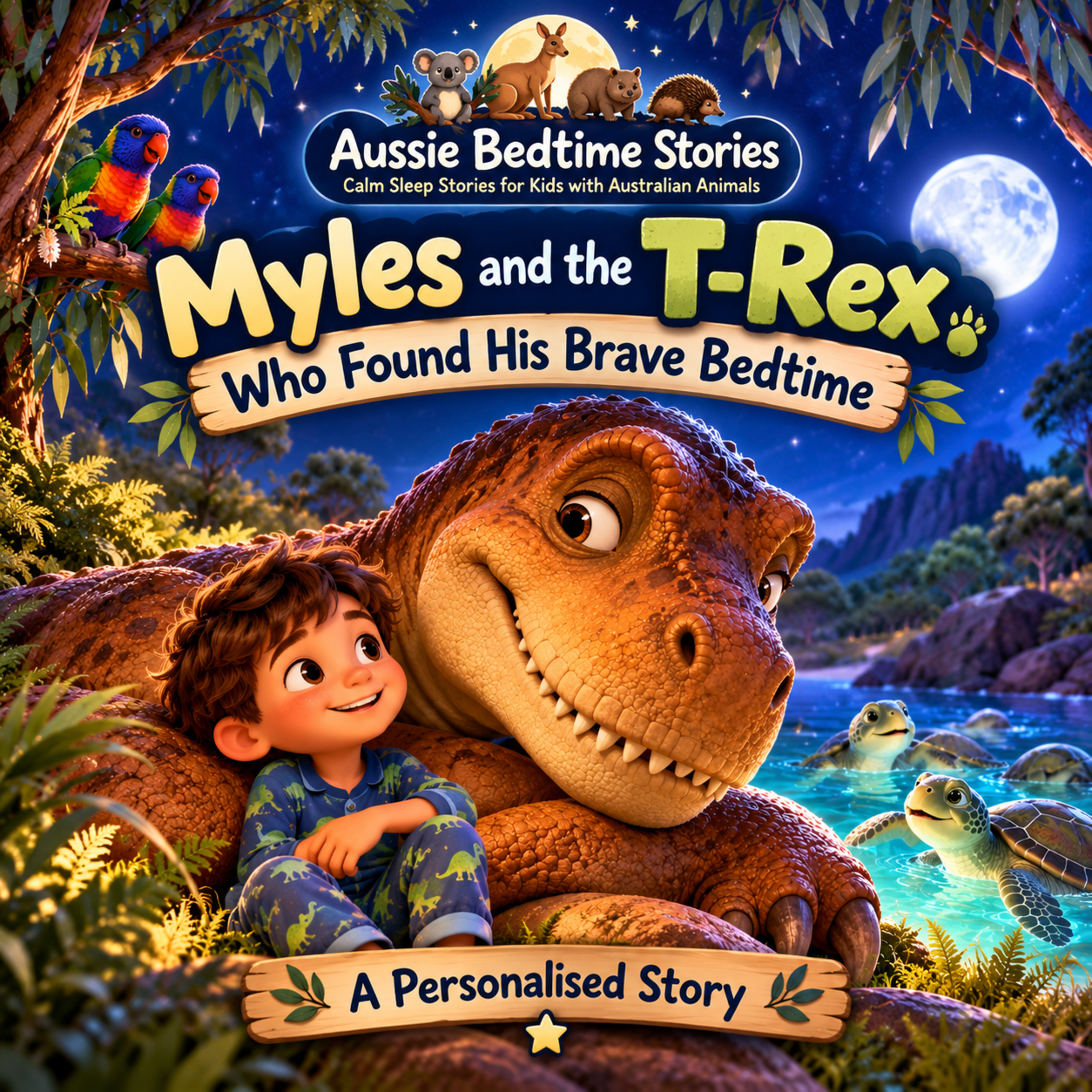
Is your little one scared to sleep in their own bed, worried about bedtime or always asking for one more cuddle? Meet Myles, a five-year-old dinosaur lover who is about to discover that even the biggest, bravest T-Rex can sometimes feel a little nervous at bedtime! In this heartwarming personalised Australian bedtime story, Myles meets Toby the T-Rex, a gentle dinosaur friend who helps him discover that courage doesn't mean never feeling scared. Through a magical dinosaur adventure, Myles learns that his own bed can be a cosy, safe and comforting place to rest. And sometimes, being brave begins with one tiny step. A gentle story about building bedtime confidence, feeling safe and learning to settle in your own bed. Perfect for children who: Feel anxious or frightened about sleeping alone Prefer sleeping in Mum or Dad's bed Need reassurance and comfort at bedtime Are learning to feel confident in their own bedroom Love dinosaurs, T-Rexes and gentle adventures A calming bedtime story for
Has everyone officially lost the plot in the lead-up to Christmas?! In this solo episode, I'm unpacking the manic Christmas energy, the pressure to do ALL the things and my most ridiculous encounter with someone who decided to come at me over a car spot (which I was legally parked in, might I add!). Consider this your reminder that someone else's bad day doesn't need to become yours! Follow Parenthood on Instagram @parenthoodpod Share We’d love it if you could share this episode with a friend! We pay respect to Elders past, present and emerging. Hosted on Acast.
What if your child already loves learning... and you’re just looking for it in the wrong place? This week, I’m exploring one of the questions I get asked more than almost any other: “My child used to be so curious. What happened?” In today’s episode, I challenge one of the biggest myths in modern parenting: that a love of learning looks like a child happily reading, sitting at a desk, completing homework without complaint, and engaging enthusiastically with educational activities. I explain what the research actually tells us and walk you through the psychology of curiosity, the science of intrinsic motivation, why children become obsessed with Minecraft, dinosaurs, trains, or random facts, and why those interests may be far more important than they appear. I also unpack why children seem to have a built‑in radar for anything that feels educational, why homework battles happen so often, and what the evidence really says about homework in the primary years. If you've ever worried that y
How many animals can you think of that live in trees? That’s today's Mission Memory category for Sam and Tim, but as always, they must recall every single animal they think of…and in the right order! Today’s second challenge includes a fascinating combination of wizard t-shirts, tiny tea pots and underground homes as the duo must work out their location in another globe-trotting game of Where in the World? Joke: What kind of nut always has a cold? Answer: Ca-SHEW! Hosted on Acast.
In our first challenge of More Or Less, Tim’s knowledge of months, sandwiches and K-Pop Demon Hunters is put to the test as Sam presents a variety of number based questions. Afterwards, the pair must write down all the examples of a specific piece of headwear that they can muster within 30 seconds in Beat The Clock. Hats off to them! Fact: What is so special about the eyes of a goat? Answer: Goat pupils are rectangular! Hosted on Acast.
Have you heard that butterflies really enjoy buttering fries? Well, at least, that’s the case in another tricky challenge of Tongue Twisters where Sam & Tim well and truly give their tongue a mega workout. The pair rest their tongues and tag in their ears for the second challenge Make It Count - how many referee whistles do you hear? Joke: Why did the melon love swimming? Answer: It was a watermelon! Hosted on Acast.
Teams owe supporters honest explanations during long periods of poor results.
Share your view, then see how readers voted. No sign-in required. This poll is shared across stories.
Do you agree or disagree?
Common Quandary
A Common Quandary to discuss
Another conversation to explore, separate from this news story.
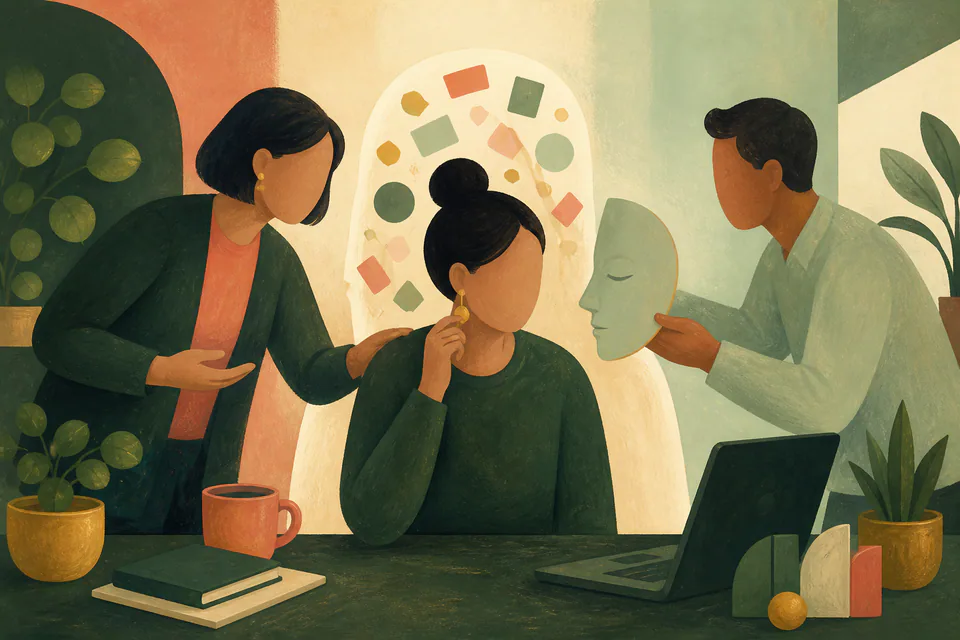
Your boss offers lessons to make you sound “more professional.” Do you take them?
Clients sometimes ask an employee to repeat themselves during calls. Their manager offers company-paid speech coaching framed as clearer communication, but the employee experiences the request as pressure to hide part of their identity.
When does improving communication become demanding conformity?