For Better or Worse: Lab-Grown Meat vs. Regenerative Beef
48 min
Listen through the publisher, then discuss the episode here or arrange an in-person Roundtable. Your city determines where to meet.
Roundtables are designed for groups of four, with a shared subject and room for everyone to speak. Come for discussion, with no dating expectation.
Every domestic cow alive today traces back to roughly 80 wild aurochs. Now a newer version of the cow is being grown in steel tanks, with no cow at all. In this episode, the first in the new For Better or Worse series takes on cultured meat: how it’s made, the strongest case for and against it, and who’s paying on each side of the fight. What actually happens inside the bioreactor, and the single chicken behind a whole product line The fetal bovine serum problem underneath the “slaughter-free” pitch Why regenerative grazing can’t meet global meat demand on its own How the biggest names in beef ended up funding both sides Why no state has banned a bean This episode is for anyone who cares about where their food comes from, and anyone who wants the full picture before choosing a side. This episode was made possible by:
Episode information is provided by the publisher. Listening takes place on the publisher’s service.
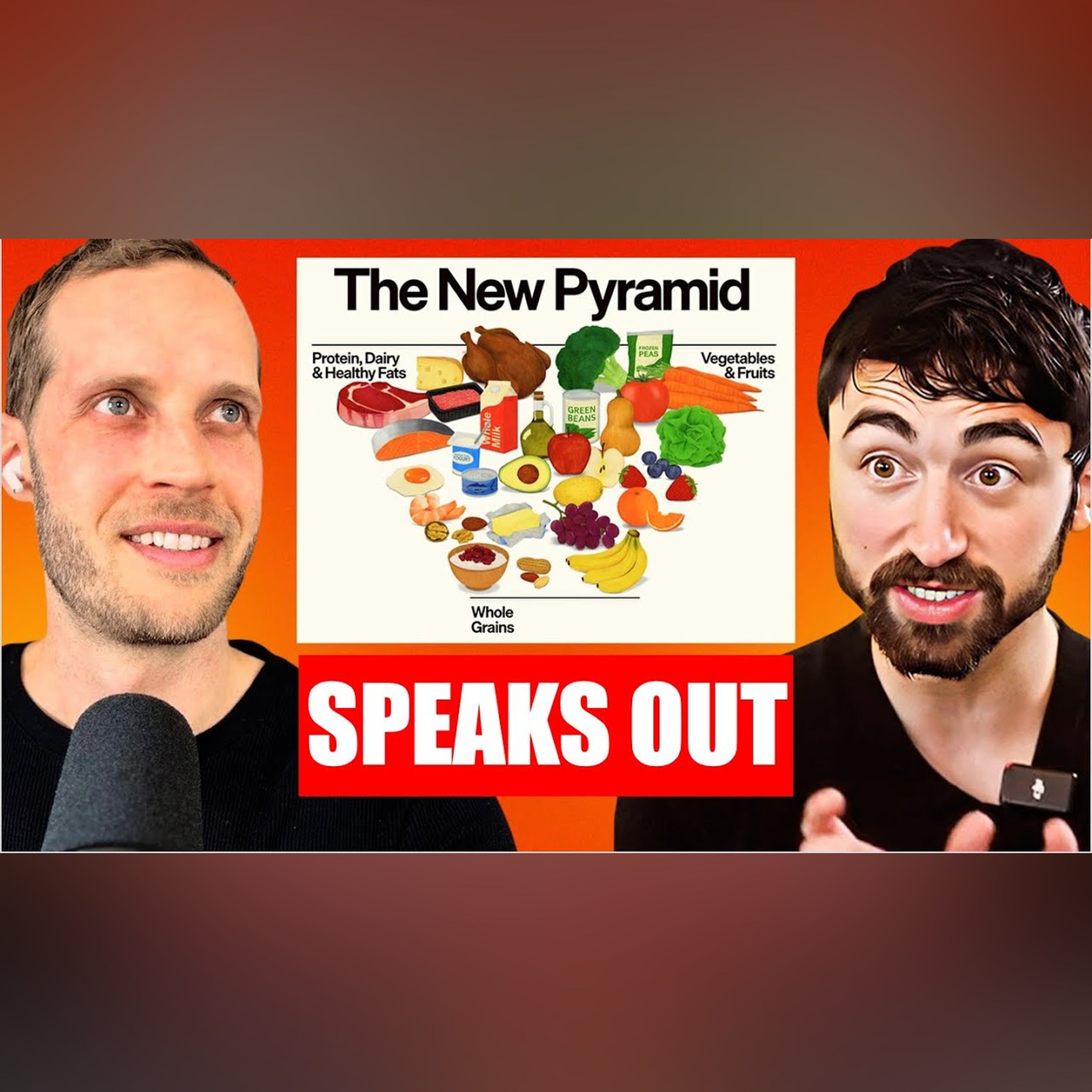
For a written digest on the guidelines, see the StayCurious Metabolism Letter: https://staycuriousmetabolism.substack.com/p/the-new-dietary-guidelines-actually?r=40ekz2 The 2025–2030 Dietary Guidelines are being marketed as a major reset with a simple message: put “real food” back at the center of the American diet. And in a lot of ways, they do represent progress. But when you actually read what’s written, some of the most important details raise real questions. For example, the document still states that saturated fat should not exceed 10% of total daily calories. To separate signal from spin, I’m joined by Dr. Ty Beal PhD, who worked on the evidence review side of the Guidelines process, to explain what the scientific background documents actually say, what happens after scientists submit reviews, and why the final public-facing document can end up with compromises, inconsistencies, or imprecise terminology. If you want a clear, good-faith breakdown—what’s genuinely better, what sti
Master the skills that change lives — enroll in your free human behavior course today: https://nci.university/learn Uploaded 14-03-26 During the first ninety seconds of any interaction, a window opens in the human brain that most people never notice. A specific sequence of neurological events unfolds — predictable, exploitable, and almost never taught outside of military and intelligence training. Very few people alive understand the full mechanics of what happens inside that window. Only operators, interrogators, and behavioral scientists with the right access have ever had this mapped out for them. Someone made sure it stayed that way. Every interaction you've ever had — every negotiation, every first impression, every moment you walked into a room — was governed by this sequence. You were either running it or it was being run on you. Most people spend their entire lives on the receiving end without ever knowing it. Language is the delivery system. But language isn't where it starts.
Iran says it shot down a U.S. drone over the Strait of Hormuz as CBS News reports the U.S. and Israel are weighing a new assault on Iran. MIKE DROP NEWSROOM | 21 NOVEMBER 2026 Iranian state TV claimed Saturday that Iran downed a U.S. drone near Qeshm Island; the U.S. has not confirmed it. CBS News reported, citing sources, that the U.S. and Israel are considering a new assault in the short term, driven by Israeli concern over how fast Iran is rebuilding its missile production and moving sites underground. President Trump told Israel's Channel 12 he is not rushing any decision. At the same time, the New York Times reported Israeli warnings that Iran has made progress on chemical and biological weapons and could use them against U.S. officials, though some U.S. officials doubt those warnings. Mike Ritland breaks down why a single intelligence source shouldn't drive a decision this big, how corroboration works when lives are on the line, and what would actually change his mind. Also cover
Iowa State football suffers a disappointing 48-17 loss to UCF in Orlando, and the Cyclones have plenty to figure out before Farmageddon. Emery Songer, Ben Bruns, and Chris Williams break down what went wrong, including four turnovers, defensive struggles against a mobile quarterback, and missed opportunities that kept Iowa State from staying competitive. The guys discuss the importance of playing with a lead, Iowa State's struggles on the road, the overturned Aiden Flora first-down call, and the lack of transparency surrounding Big 12 officiating. Chris Williams also puts the loss into perspective, explaining why he still views Jimmy Rogers' first season as a success despite the frustrating result. Plus, Aiden Flora's All-American and Heisman potential, the improvement of Iowa State's offensive line, and why next week's matchup with Kansas State is such an important opportunity for the Cyclones to become bowl-eligible. Presented by Fareway Meat & Grocery.
What actually works when it comes to detecting lies, and why are so many popular ideas about reading people and nonverbal behavior at odds with the scientific research? I talk with Aldert Vrij, one of the world's leading deception-detection researchers, who has spent almost four decades studying these topics. We discuss why what people say is far more revealing than their body language; why the perceived “sexiness” of reading nonverbal behavior has contributed to widespread myths and misconceptions; whether vocal behaviors like pitch, volume, and hesitation contain meaningful clues; and whether there's value in analyzing minor word choices and turns of phrase, as is done in so-called “statement analysis.” We discuss Paul Ekman's legacy as a source of faulty ideas about deception, micro-expression-based deception detection training, and the strategies that popular “body language experts” use to appear scientifically credible while simultaneously promoting ideas that conflict with the sc
Listen to the full 1 Hour plus Between Friends episode. Go Directly to this Patreon Episode "I Just Need Everyone to Go Away plus Unicorn Lifeguards, Stalkers, Trauma and Me Fully Melting Down" Picture this: Your houseguest arrives in an hour, the furniture delivery is a disaster, and the bed is in the WRONG room! Chalene shares the hilarious chaos of trying to move a massive bed herself, in a tight dress and heels, while Bret gets sent on an emergency hardware store run. But just when they think they've got it handled, things take a painful turn! This story is part of The Saturday Spill series a little peek into the wild, unfiltered stuff that usually stays on Patreon. Some weeks it's hilarious, some weeks it's jaw-dropping, but it's always real life that doesn't quite fit on the regular show. If you're into a little chaos and behind-the-scenes tea, you're in the right place. If you love it, amazing…you can listen to the full, unedited version here https://Chalene.com/more (https://ww
Are GMOs safe to eat? Who owns the seeds that grow most of America’s corn and soy? In this episode, For Better or Worse breaks down genetically modified crops: the science, the health questions, the patents and the money behind them. What the National Academies found about the safety of eating GM food Glyphosate, Roundup and why a non-GMO label doesn’t mean unsprayed Seed patents, technology agreements and the Supreme Court case against a farmer in his 70s Superweeds, resistant rootworms and the risk of planting the same crop everywhere Why organic stays small, and who’s subsidizing the alternative This episode is for listeners interested in food policy, regenerative agriculture and what’s on their plate. Try all of Commune’s courses free for 14 days at onecommune.com/trycommune. This podcast was made possible by:
Women are not small men. Most of the fasting, training, and recovery advice women follow was built on research in men. Dr. Stacy Sims has spent her career correcting that. Recorded live at The Kinn in Los Angeles, Jeff sits down with Dr. Stacy Sims, PhD, exercise physiologist, nutrition scientist, and author of ROAR, to explore how women can use good stress (fasting, strength training, cold, and heat) to their advantage at every stage of life, from the cycling years through perimenopause and beyond. Why skipping breakfast and training fasted on coffee works against women, and what the 90-minute caffeine rule gets wrong Why 20 grams of protein after a workout isn't enough for women, and why to aim for 35 to 40 grams after 40 What "lift heavy" actually means, and why it's never too late to build muscle and bone Why an ice bath after lifting can blunt your gains, and why Stacy steers women toward the sauna instead Live audience Q&A on creatine, melatonin, methylene blue, brain health, and
Voters just sent Washington a message. Chef Johanna Hellrigl will be watching what happens next from four blocks away. Johanna is a James Beard semifinalist, food-systems advocate and chef-owner of Ama, a restaurant built on farm-direct organic ingredients and a kitchen she has worked to pull plastic out of. She knows a bill backed by only one party usually goes nowhere, and that every fight in Congress eventually reaches someone's dinner table. In this episode, she and Jeff talk about what it would take for food policy to reach the people who need it most, whoever holds power. Why she says "you can't defund and deregulate and make America healthy again," and still sits down with MAHA supporters to ask how they got there The farm bill votes she says she helped flip, and what new leadership on the agriculture committee could change The FRESH Act, and why she believes states should keep the power to lead on food policy What a shutdown or surprise recess does to a restaurant that depends
Major sporting events should offer ways for people with limited budgets to take part.
Share your view, then see how readers voted. No sign-in required. This poll is shared across stories.
Do you agree or disagree?
Common Quandary
A Common Quandary to discuss
Another conversation to explore, separate from this news story.
A stray cat adopts you—and starts killing birds. Do you keep feeding it?
A stray cat visits your yard daily and appears to depend on the food you leave out. Neighbors complain that outdoor cats kill birds and say feeding it encourages the problem without taking responsibility for the animal.
Does caring for one visible animal excuse harm to less visible ones?