Gold Bull Market Phases: Why the Fed Will Be Forced to Print
28 min
Listen through the publisher, then discuss the episode here or arrange an in-person Roundtable. Your city determines where to meet.
Roundtables are designed for groups of four, with a shared subject and room for everyone to speak. Come for discussion, with no dating expectation.
Gold has entered a structural bull market that began when the United States froze Russian reserves in February 2022, prompting central banks worldwide to replace dollar assets with gold at roughly double their usual pace. Felix Nikolas Prehn outlines a three phase framework for understanding the rally. Phase one, now under way, involves methodical institutional buying as sovereign wealth funds and central banks quietly accumulate gold. Phase two begins when the Federal Reserve is forced to resume large scale money printing to refinance roughly 10 trillion dollars in maturing bonds, a step he argues is inevitable regardless of the next chair's stated intentions. Phase three describes a potential government bond death spiral in which rising interest costs compel ever greater debt issuance. He also examines the historical link between oil shocks and gold surges, notes that gold mining ETFs are seeing share redemptions even as underlying profits hit records, and discusses how miner margins are leveraged to the gold price. In this episode: 00:00 Why gold is behaving as it did in the 1970s 03:30 February 2022 sanctions and the start of central bank gold buying 06:53 Phase one explained: calm institutional repositioning 10:01 Phase two: the Fed's impossible maths on debt refinancing 16:43 Private equity and private credit as likely crisis triggers 17:27 Phase three: the government bond death spiral scenario 19:52 Oil shocks as a historical accelerant for gold prices 22:18 Gold miners: leveraged margins and declining ETF share counts Sources mentioned: JP Morgan, https://www.jpmorgan.com Goldman Sachs, https://www.goldmansachs.com Deutsche Bank, https://www.db.com Federal Reserve, https://www.federalreserve.gov Kevin Warsh (nominated Fed chair) GDX (VanEck Gold Miners ETF) GDXJ (VanEck Junior Gold Miners ETF) He co-founded TradeVision.io and founded Winston Daily and The Prehn Institute. The Prehn Institute gives no financial advice, and neither does this podcast. Newsletter: Winston Daily, https://winstondaily.com Research: https://prehninstitute.com Author site: https://felixprehn.com Use coupon 99PC at checkout https://felixfriends.org/stocks
Episode information is provided by the publisher. Listening takes place on the publisher’s service.
Everyone is saying the same thing: higher rates are depressing the usual AI buy-the-dip mentality. Investors supposedly became less enthusiastic because the Federal Reserve is, in its view, tightening, bond yields are or were rising, and so the discount rate applied to future profits is becoming more painful. Or something. That explanation isn’t just incomplete, it’s dead wrong. Eurodollar University's Money & Macro Analysis ---------------------------------------------------------------------------------- That’s exactly what Monetary Metals does. No selling. No trading. Just more gold every month. Check it out here: https://monetary-metals.com/snider ---------------------------------------------------------------------------------- We need to confront our biggest challenge, but hardly anyone knows what it truly is or how to do it. Eurodollar University Live in February 2027 will change all that. Join us and fight for America's future. Start with the next generation. ------------------
Bitcoin doesn't excite Ran Neuner anymore, and the Crypto Banter founder explains where he sees the real opportunity in crypto now. Ran tells me why he took profits at $84K, how he's deploying that cash now that sentiment has hit extreme fear, and the two tests he's watching to tell whether the bull market is still on. He explains why he thinks tokenized stocks and AI agents will run on blockchain rails, how he values tokens on "pressure" instead of FDV, why he thinks the old Bitcoin crowd is moving to Zcash, and how worried he really is about quantum. We also get into the midterms, World Liberty Financial, Solana Breakpoint and STRC. Recorded Thursday, November 19. In this episode: 00:00 Intro 01:10 Is the bull market still on? 02:17 What a correction is supposed to do 03:28 Two tests for the bull market 04:12 Why Bitcoin excites Ran less now 05:11 Trading tokenized Anthropic before the IPO 07:24 How AI agents will move your money 09:31 Why agents will settle on blockchain rails 13:25
Car loans, ATO debt, and rising mortgage costs are eating into investors' cash flow, with one couple saving $30,000 a year in repayments by restructuring their loans. Brokers explain when consolidating loans can work and when it can backfire. On Which Mortgage, Alex Whitlock speaks with Finni brokers Eva Loisance and Costa Arvanitopoulos about how debt consolidation can help property investors manage rising repayments, reduce interest costs, and regain control of their cash flow. The brokers share the case of a business-owning couple paying more than $13,000 a month across their home loan, car and truck finance, personal loan, and ATO debt. By refinancing against the equity in their investment property, they reduced monthly repayments by up to $3,000 and freed up cash flow without rushing into another purchase. The discussion explores when consolidation makes financial sense, the danger of rolling unsecured debts into a mortgage and why borrowers need to maintain their old repayment ha
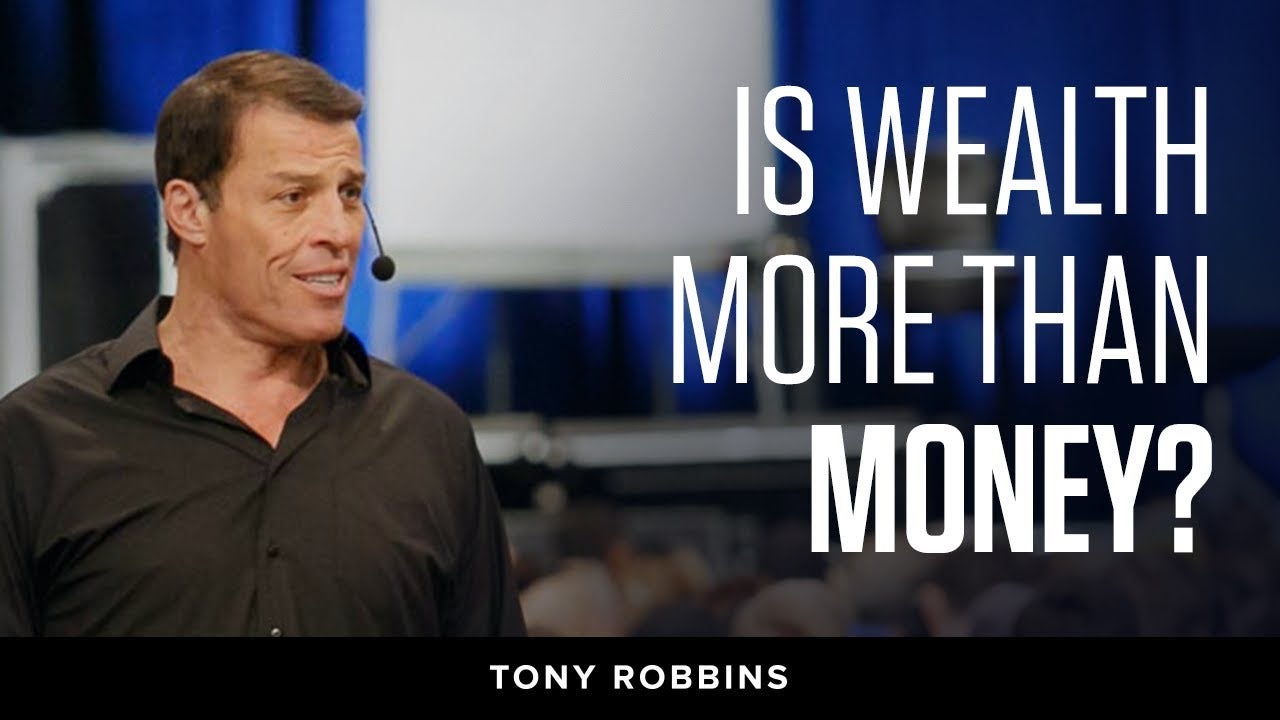
How will you know when you’ve reached true wealth? Is it when you have your dream home? Once you own an expensive car? Perhaps the signifier is when you’re wealthy enough to have your own private airplane? In Tony’s opinion, these are the wrong things to use when measuring your wealth. Uploaded 12-09-19 The people with mansion-sized homes, with three sports cars sitting in the garage, with a private plane that takes them to and from their vacation home – these people may not necessarily have access to true wealth. None of these are indicators of true wealth; they’re indicators of monetary wealth. True wealth is the ability to live life on your own terms. It’s freedom. Tony explains that money itself isn’t wealth, it’s a vehicle – a tool you can use to achieve financial freedom, to go after the dreams you didn’t think were possible, to design your life in a way that makes you feel alive and fulfilled. While Unshakeable is a financial freedom playbook, the process of becoming unshakeable
#JimRohnMotivation #JimRohn #JimRohnSpeech In this Jim Rohn Motivation video, Jim Rohn shares a timeless truth: money without discipline always disappears. Discover why wealth isn’t built by income but by habits — and how discipline transforms money from a master into a servant. Key Topics From This Motivational Video: The law of money and discipline Why more money exposes poor habits How discipline creates true financial freedom The principle of saving and compounding growth The mindset shift from income to stewardship Jim Rohn teaches that prosperity without discipline becomes destruction. Discipline is the foundation of all wealth — the guardrail that prevents opportunity from turning into downfall. Whether it’s saving a dollar or resisting a fleeting purchase, every act of self-control compounds into strength. True success isn’t about having more, it’s about managing more wisely. Discipline first, then money; discipline first, then freedom. This Jim Rohn Motivational Video Is Perfe
Monday 23rd November 2026 Phil and NAB’s Taylor Nugent unpack Friday’s sharp, AI-driven sell-off on Wall Street—where the VIX spiked past 29 and the Nasdaq plunged 5.3% to log a sixth straight loss. Nvidia tumbled 14% following Reuters reports of an SEC accounting probe, while Anthropic fell 8.5% to close near 88.90, after surging past111 following its IPO debut. The risk-off wave sparked a rally in safe-haven bonds—pushing 10-year US Treasury yields down 10 basis points below 5%—and lifted the yen and Swiss franc, while weighing heavily on the Australian dollar. Curiously, precious metals bucked the safe-haven trend—with Comex gold sliding 4.6% and copper falling another 3%—as markets digested stronger UK retail sales, slightly softer Japanese inflation, and a holiday-shortened week ahead, with global PMIs today’s highlight. Hosted on Acast.
We break down why three straight green opens that fade into red closes can be a deliberate distribution signal from big institutions, not harmless noise. Then we connect that selling to a January 18 shift in stablecoin rules and what it means for gold, silver, and building a real plan instead of reacting to headlines. • Repeating green opens that roll over into the close as a classic distribution pattern • Why big funds sell into morning optimism to avoid crashing their own exits • How “buy the dip” stops working when the market regime changes • January 18 and the Genius Act timeline for licensed dollar stablecoins • What a programmable dollar implies for tracking, restrictions, and freezing • Gold and silver weakness versus central bank gold buying strength • Using the 200-day moving average and the gold-to-silver ratio to frame risk • Choosing a time horizon so volatility does not force bad decisions Use coupon 99PC at checkout https://felixfriends.org/stocks
We pull apart Goldman Sachs’ long-term gold price forecast and the “this can’t be true” tension of higher Fed rates alongside a higher gold target. We show how 2022 explains the setup, why central banks are the structural buyer now, and why gold and silver should not be treated as the same bet. • Goldman’s timeline for gold targets through 2027 and 2028 • Why rising interest rates usually hit gold via a stronger USD and higher opportunity cost • The 2022 pattern of retail selling into weakness while central banks accumulate • The key flow: central banks buying roughly 60 tons per month since 2022 • Why sanctions risk and frozen reserves change reserve strategy toward physical gold • What gold repatriation suggests about custody risk and global trust • “Macro hedge demand” and how options and insurance flows fade as rates rise • How a liquidity squeeze can force gold selling even in stressed moments • Why Goldman expects gold to outperform silver through 2027 • Using the gold-silver rat
We break down why the Fed is still hiking even though oil-driven inflation is a supply problem rates cannot fix. We map out what higher-for-longer does to gold, housing, and stock returns so you can build a 2027-ready portfolio plan instead of reacting to headlines. • why oil and shipping costs push CPI up and why rate hikes cannot create more supply • how higher interest rates reduce demand and strengthen the US dollar • why adjustable-rate mortgage resets can squeeze households and cool housing • the real reason gold can fall when rates rise, including opportunity cost and dollar effects • how discounting splits stocks into future cash versus cash now • what tends to outperform in a higher-rate regime and what gets punished • how we think about filtering for quality businesses with margins and free cash flow • why planning for the next switch matters, including the setup before eventual rate cuts Use coupon 99PC at checkout https://felixfriends.org/stocks
An organization should remain responsible for decisions made by its automated systems.
Share your view, then see how readers voted. No sign-in required. This poll is shared across stories.
Do you agree or disagree?
Common Quandary
A Common Quandary to discuss
Another conversation to explore, separate from this news story.
Your carry-on fits only if you sit on it. Do you try the airport sizer?
Your suitcase is slightly larger than the airline allows, although it has fit overhead on previous flights. Checking it costs extra and risks missing a connection. Other passengers have equally questionable bags and staff are checking inconsistently.
Does uneven enforcement weaken a traveler's duty to follow the rule?