GOP Is Done Unless Trump Does THIS Before 2028 | 11/11/26
100 min
Listen through the publisher, then discuss the episode here or arrange an in-person Roundtable. Your city determines where to meet.
Roundtables are designed for groups of four, with a shared subject and room for everyone to speak. Come for discussion, with no dating expectation.
Steve says despite the GOP's Capitol Hill swampy leadership circling the wagons this week, the best hope for Republicans still lies with Trump improving his credibility with the American people. Then, Adam Magers from "The Battle Within" joins the program to talk about his organization's work with veterans and why we should never leave them behind. Hour Two is Buy, Sell, or Hold on a plethora of topics. Daniel Horowitz joins the program for his weekly message of woe and lamentation. TODAY'S SPONSORS: JASE MEDICAL: https://jasemedical.com/ and enter code “DEACE” at checkout for a discount on your order REAL ESTATE AGENTS I TRUST: https://realestateagentsitrust.com/ RAYCON: https://rayconglobal.com/ promo code SteveOpen DOGE YOUR STATE: https://stateleadership.org/campaign/
Episode information is provided by the publisher. Listening takes place on the publisher’s service.
Hey everybody, Tom Bilyeu here. On today’s episode of Impact Theory, we’re taking on a topic that’s got the whole world holding its breath: the escalating crisis between the United States and Iran. As tensions ratchet up, we’re asking the tough questions—how did we get stuck in this “escalation trap,” and what does it mean for America’s global leverage, our economy, and our very sense of security? The conversation focused on why the traditional idea of “strategy” might be failing policymakers, using powerful analogies—like chess versus roulette—to show how doubling down in conflict can spiral out of control. We’ll break down the risks of tactical “wins” that create even bigger crises, the real leverage Iran holds with control of the Strait of Hormuz, and the mounting pressure on President Trump as political support erodes and legacy hangs in the balance. A key theme that emerged is what happens when military might runs into decentralized opposition, and why high-stakes gambles—like the
Read: Matthew 28:19-20; Hebrews 4:12 (https://www.biblegateway.com/passage/?search=Matthew+28%3A19-20%3B+Hebrews+4%3A12) Sheri clutched her new book to her chest as she held the phone to her ear. “Yes, you totally need to read it! The last few chapters are great!” “You always find such fun books! I’ll look for it at the library the next time I go,” her friend Megan said. “Oh, my dad is calling. I’ve got to go.” Sheri hung up, then went into the family room and plopped on the couch beside Mom. “You really enjoyed that book, didn’t you?” Mom said as she folded some towels. “Yes!” Sheri flipped through it. “It’s the best I’ve read in ages! There’s romance, heroes and villains, battles of good versus evil, and so much more!” “That does sound exciting.” Mom smiled. “I know of another book like that, filled with good versus evil, heroes battling villains, and even romance. It’s my favorite.” Sheri furrowed her brow. “What book is that?” Mom held up the book beside her. “The Bible. Have you t
What actually works when it comes to detecting lies, and why are so many popular ideas about reading people and nonverbal behavior at odds with the scientific research? I talk with Aldert Vrij, one of the world's leading deception-detection researchers, who has spent almost four decades studying these topics. We discuss why what people say is far more revealing than their body language; why the perceived “sexiness” of reading nonverbal behavior has contributed to widespread myths and misconceptions; whether vocal behaviors like pitch, volume, and hesitation contain meaningful clues; and whether there's value in analyzing minor word choices and turns of phrase, as is done in so-called “statement analysis.” We discuss Paul Ekman's legacy as a source of faulty ideas about deception, micro-expression-based deception detection training, and the strategies that popular “body language experts” use to appear scientifically credible while simultaneously promoting ideas that conflict with the sc
Thanksgiving is here, and some of your aunts and uncles may have softened their stances since last year. So, should you engage when politics comes up? And if so, how? Jessica Tarlov, co-host of Raging Moderates and Fox News’s The Five returns to the show to offer some tips for handling Thanksgiving (and the rest of the year), discusses her new book, and she and Sarah listen to some voters talk about how political divisions have affected their lives…and what those voters think of people who think differently. Show links: Raging Moderates with Scott Galloway and Jessica Tarlov (https://www.youtube.com/@RagingModerates) Jessica’s book, I Disagree: Winning Arguments Without Losing Friends (https://www.penguinrandomhouse.com/books/803493/i-disagree-by-jessica-tarlov/) Feeling frustrated by the state of American democracy? The Context, a podcast from the Charles F. Kettering Foundation, explores the challenges facing democracy, how to fix what’s broken, and what we can do to make it work bet
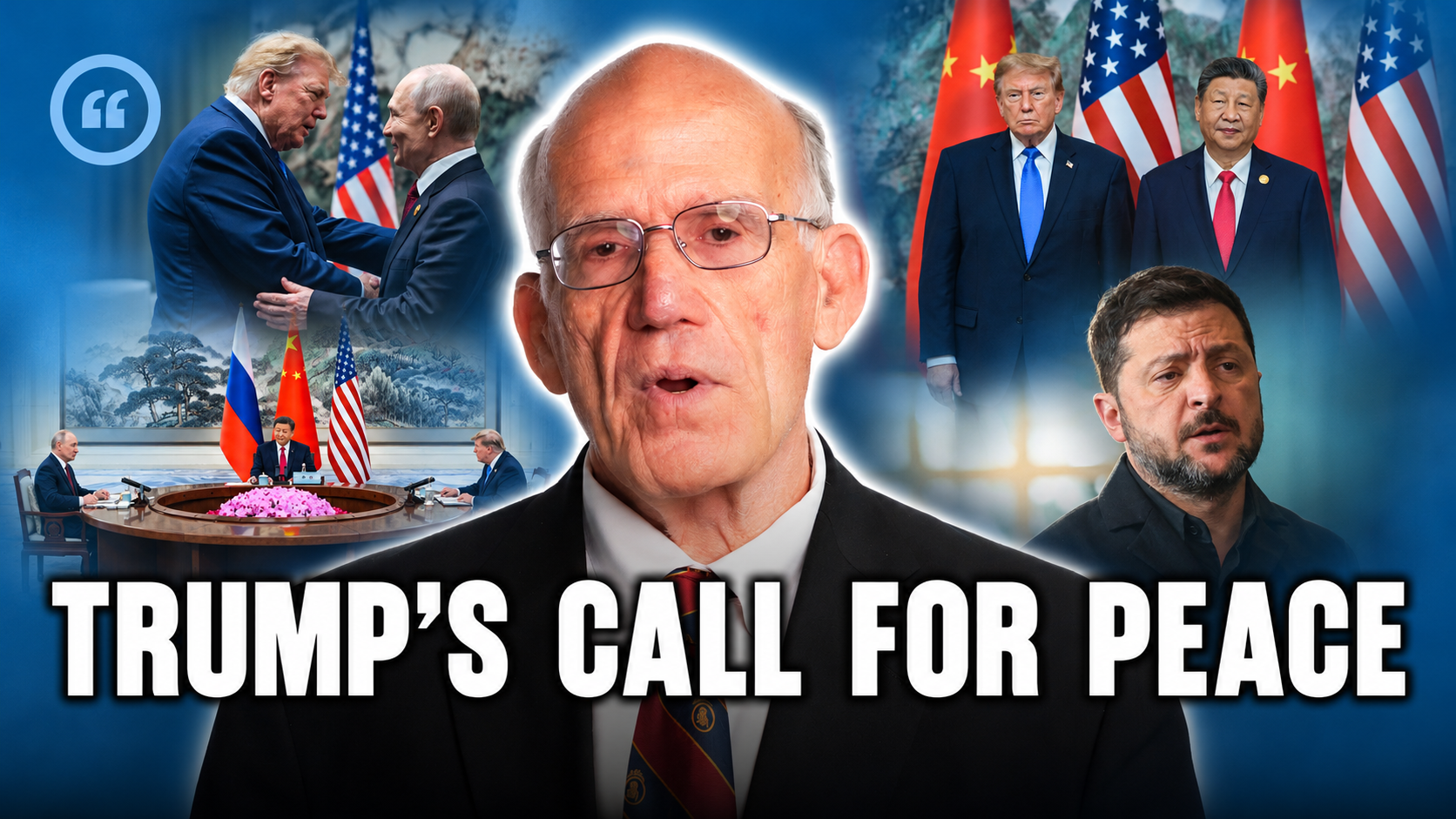
President Donald Trump's first ever trilateral summit with Vladimir Putin and Xi Jinping raises questions about the future of the war in Ukraine and whether a peace agreement could finally be within reach. Victor Davis Hanson and Sami Winc examine the summit on today’s edition of “Victor Davis Hanson: In His Own Words,” discussing Russia's declining influence, potential territorial concessions in Ukraine, and Europe's frustration over Trump's peace negotiations. Hanson criticizes Hillary Clinton's attacks on Trump's diplomacy; he also argues that European leaders have weakened their influence by neglecting defense spending and relying on American military protection. They discuss Elon Musk's shifting political allegiances, and Hanson warns that distancing himself from MAGA may not protect him from Democrat investigations. They also discuss the potential economic benefits of artificial intelligence and the challenges facing Hakeem Jeffries as Democrats prepare to take control of the Hou
MeidasTouch host Ben Meiselas reports on Donald Trump’s midnight meltdown and the late-night executive order aimed at blocking federal employees, contractors, and subcontractors from cooperating with congressional investigations. Meiselas breaks down what the order could mean for congressional oversight and covers the latest market sell-off and outages affecting critical systems, including at the FBI. Visit https://meidasplus.com (https://meidasplus.com/) for more! Remember to subscribe to ALL the MeidasTouch Network Podcasts: https://meidasnews.com/podcast Support the MeidasTouch Network: https://patreon.com/meidastouch (https://patreon.com/meidastouchAdd) Add the MeidasTouch Podcast: https://podcasts.apple.com/us/podcast/the-meidastouch-podcast/id1510240831Buy MeidasTouch Merch: https://store.meidastouch.com (https://store.meidastouch.com/) Follow MeidasTouch on Twitter: https://twitter.com/meidastouchFollow MeidasTouch on Facebook: https://facebook.com/meidastouchFollow MeidasTouch
Steve sits down with Pastor Colin Samul, creator of the Alien Revelations and Alien Illuminations series on the "Cultish" podcast, to dig into what the UFO phenomenon really is and why the government keeps hinting at disclosure. Samul explains the ontological shock that comes when materialism can’t account for the phenomenon, why insiders now openly talk about summoning nonhuman intelligence, and why the disclosure world bristles at the suggestion that it might be demonic. The two break down the occult symbolism in Spielberg’s "Disclosure Day," the rival camps of UFO whistleblowers, and the so-called Terminator hypothesis that the visitors are time travelers. Steve also presses the question the disclosure crowd can’t answer: If they have been crossing trillions of miles for centuries, where are the pilots? TODAY'S SPONSORS: JASE MEDICAL: https://jasemedical.com/ and enter code “DEACE” at checkout for a discount on your order PATRIOT MOBILE: https://patriotmobile.com/STEVE or call 972-P
Steve sits down with Eric Metaxas, best-selling author of "Revolution: The Birth of the Greatest Nation in the History of the World," to ask what the founders would make of America at 250. Metaxas argues the Revolution was a deeply Christian project, pointing to Samuel Adams declaring that the colonies had restored the Sovereign, and to Franklin and Jefferson proposing scenes from the Exodus for the national seal. He contrasts a decadent British elite with colonists willing to suffer at Valley Forge and explains why he believes America is now in the third existential crisis of its history. Metaxas also shares how a faithful fifth-grade teacher planted the seeds for his book 50 years earlier. TODAY'S SPONSORS: MIRACLE MADE SHEETS: https://try.miraclebrand.co/sheets/ksp-v15?utm_source=Podcast_deace&utm_medium=Podcasting&utm_campaign=deace&color=stone TECOVAS: https://www.tecovas.com/?utm_source=podcast&utm_medium=audio&utm_campaign=steve& and save 10% when you sign up for email and texts
Steve sits down with John Amanchukwu, the preacher, author, and activist whose school board speeches have taken him to 23 states, to hear how a North Carolina State football player became one of the most recognizable voices against gender and race ideology in public schools. Amanchukwu talks about the pastor who mentored him and later became his father-in-law, the mother who worked 16-hour days to keep her kids off the free lunch line, and why young men need fathers who pair love with real accountability. Using the story of David’s men at Ziklag, he argues that the real toxic masculinity is the man too weary to fight for his family. The conversation closes on race, as Amanchukwu explains why Scripture teaches one blood, how a speech defending black students got him called a white supremacist, and why he refuses the victim label. TODAY'S SPONSORS: JASE MEDICAL: https://jasemedical.com/ and enter code “DEACE” at checkout for a discount on your order COVEPURE: https://covepure.com/product
Predictable working hours are more important than maximum scheduling flexibility.
Share your view, then see how readers voted. No sign-in required. This poll is shared across stories.
Do you agree or disagree?
Common Quandary
A Common Quandary to discuss
Another conversation to explore, separate from this news story.
Would you want a doctor to give you a fake pill if the lie might make you feel better?
A patient has persistent symptoms that have not responded to standard treatments. A harmless placebo may help, but its effect could weaken if the clinician fully explains that it contains no active medicine.
Can a beneficial deception respect the person it helps?