"Grieving What You Thought Life Would Be While Still Living It Well" With Dr. Lina AbuJamra
47 min
Listen through the publisher, then discuss the episode here or arrange an in-person Roundtable. Your city determines where to meet.
Roundtables are designed for groups of four, with a shared subject and room for everyone to speak. Come for discussion, with no dating expectation.
What does faithfulness look like when the life you’re living isn’t the one you thought you’d have? In this episode, Dr. Lina AbuJamra takes us through the years Moses spent tending sheep in Midian, long before God called him back to Egypt. Lina shares what that story has meant in her own disappointments, and Kaley and Ellen ask about the harder parts of surrender: grieving what you hoped would happen, watching someone else receive what you’re still waiting for, and trusting God when you can’t see what comes next. Lina reminds us that we can bring those questions to God and still be faithful with the people and responsibilities in front of us today. You’ll learn: Why surrender may begin with grieving the life you thought you’d have. How comparison can make it harder to receive the life you have right now. What contentment, obedience, peace, and openhandedness can reveal about a surrendered heart. Why you don’t have to know the outcome to be faithful today. Resources From This Episode: Explore Lina’s book, All Your Life: What It Really Means to Live for Jesus (https://link.amazon/B0484y8NL), and her ministry, Living With Power (https://www.livingwithpower.org/). Read Acts 7:23-35 and Psalm 22—two passages Lina discusses in the episode. Download the free First 5 app (https://first5.org/about). Visitproverbs31.org/p31podcast (https://proverbs31.org/p31podcast) for all the links mentioned in this episode. Click here (https://share.transistor.fm/s/daf456dd/transcript) to download a copy of the episode transcript. Click here (https://proverbs31.org/disclosure-policy/) to view our policy on third-party links.
Episode information is provided by the publisher. Listening takes place on the publisher’s service.
"As you both recovered now, do you still experience doubt when anxiety shows up? Or do you just think, oh, it's a wave, and it'll be over soon?" A listener sent in this question, and a lot of people carry it around during recovery. Drew and Josh answer from their own experience: yes, the doubt still shows up sometimes. What changed is what they do next and how much it costs them. We cover why there is no delete button for old anxious pathways, why a trigger can still produce a flash of fear with a "what was that?" attached, and what that moment looks like now: dropping the shopping bags, then picking them back up instead of staring at them for two hours. Josh describes a sauna session where his heart rate stayed high, and Drew a tired evening on the sofa. Both lasted minutes. We also look at the "how will I know I'm recovered?" question and why asking it repeatedly is often more certainty-seeking. Instead, we talk about measuring functional impact: how long it took, how much of your da
This is a Grave Talks CLASSIC EPISODE! PART TWO What if hearing the voices of the dead wasn’t strange—but simply your everyday reality? For Kelly McCarville, growing up meant living in a world where spirits were never far away. As a child, she didn’t question it. She assumed everyone else could hear them too. Whispers in quiet rooms, shadows that seemed to linger with intent, feelings of presence that were more real than imagined—all of this was as natural as breathing to her. In her home, among her family, it was simply part of life. But as she grew older, it became clear that not everyone had these same abilities. What Kelly thought was “normal” wasn’t the experience of most children. And instead of fading with time, her connection to the other side only deepened. The voices became clearer. The sensations stronger. The glimpses of spirits undeniable. Kelly’s gift was not meant to be silenced—it was meant to be used. Over the years, she embraced her abilities and learned how to harnes
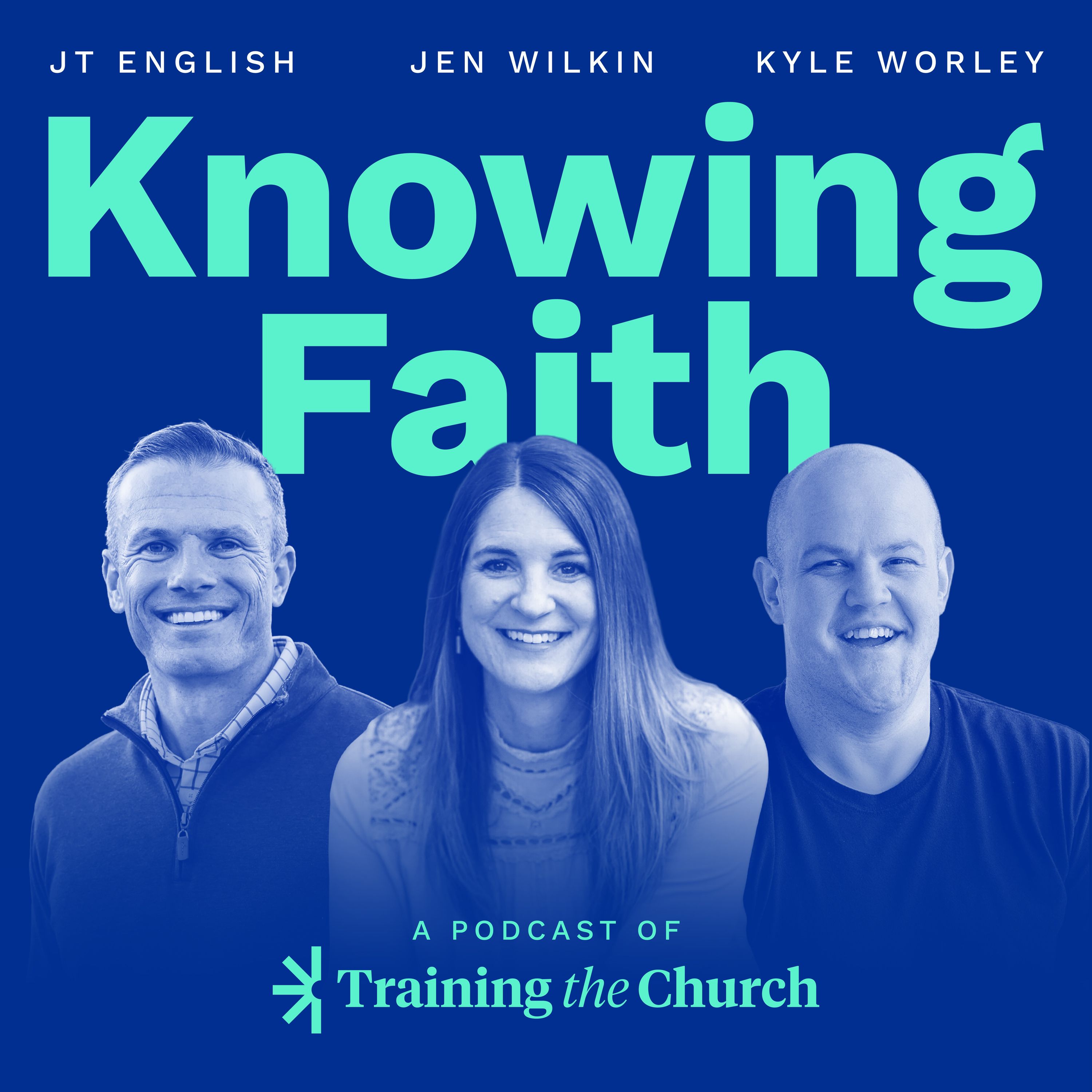
Jen Wilkin, JT English, and Kyle Worley answer questions submitted by their Patreon supporters. See the show notes to learn how you can be part of the community! Questions Covered in This Episode: How do you tread the line and hold your conviction while being charitable on second-tier and third-tier issues? What are your thoughts on the traditional doctrine of hell vs. eventual annihilationism? What is a good filter to choose the right songs to sing with your church on a Sunday? Can I get JT’s AI prompt for the chore chart? What to do when you are praying to God for a life decision but you are note getting anything back? How can I think theologically about space travel? If Jesus returns and someone is in space, what happens? What does it mean that “love covers a multitude of sins (1 Peter 4:8)? What role do the gender forms of words play in translating the original language of the Bible, and how does that help us define the two persons in the Trinity that don't exist in human form? Wou
Friday 27 November 2026 Today is Friday the 27th of November, in the 34th week of Ordinary Time. As you begin this prayer, ask God for the grace to become truly still, so that you may listen to His Word. The Kyiv Chamber Choir sings, In Thy Kingdom from ‘One Thousand Years of Ukrainian Sacred Music’. Today’s reading is from the Gospel of Luke. Luke 21:29-33 Then [Jesus] told them a parable: ‘Look at the fig tree and all the trees; as soon as they sprout leaves you can see for yourselves and know that summer is already near. So also, when you see these things taking place, you know that the kingdom of God is near. Truly I tell you, this generation will not pass away until all things have taken place. Heaven and earth will pass away, but my words will not pass away.’ Here, just before his Passion begins, Jesus repeats the words he used at the outset of his preaching: “The kingdom of God is near”. In a way, any Christian preaching begins with that message. What does it mean to you to hear
I had a faith crisis in my mid-twenties. A big faith crisis. It involved a salamander and it involved a letter. It made me question everything I thought I knew about Joseph Smith, the book he produced, and the religion he founded. The LDS religion. MY religion! And in that time of despair, I clung to the most significant single evidence that the Book of Mormon is ancient, and therefore authentic, and therefore true. I clung to the presence of “chiasmus” in the Book of Mormon; that incredible ancient Hebrew literary form that shows up in such abundance in the Nephite record. But had I been told everything there was to tell about chiasmus? Or had information been withheld from me to make “chiasmus” look like a much more impressive evidence for the Book of Mormon? Was it a solid evidence, or was it fool’s gold? And if I had known it was fool’s gold in my twenties, would I have clung to it as such strong evidence for the Book of Mormon? And if I had not clung to “chiasmus,” as proof of the
I had a faith crisis in my mid-twenties. A big faith crisis. It involved a salamander and it involved a letter. It made me question everything I thought I knew about Joseph Smith, the book he produced, and the religion he founded. The LDS religion. MY religion! And in that time of despair, I clung to the most significant single evidence that the Book of Mormon is ancient, and therefore authentic, and therefore true. I clung to the presence of “chiasmus” in the Book of Mormon; that incredible ancient Hebrew literary form that shows up in such abundance in the Nephite record. But had I been told everything there was to tell about chiasmus? Or had information been withheld from me to make “chiasmus” look like a much more impressive evidence for the Book of Mormon? Was it a solid evidence, or was it fool’s gold? And if I had known it was fool’s gold in my twenties, would I have clung to it as such strong evidence for the Book of Mormon? And if I had not clung to “chiasmus,” as proof of the
What if the feelings you keep pushing aside are the very things you need to bring to God? In this episode, Janel Breitenstein joins Kaley Olson and Nicki Koziarz to talk about bringing fear, anger, grief, and need to God without letting those feelings lead us. They also talk about what are the roles we hide behind, how to tell a friend what kind of support we need, and what it looks like to apologize and repair when we get parenting wrong. Whether you’re raising kids or not, this conversation invites you to be honest with God about what’s really going on. You’ll learn: Why avoiding a feeling doesn’t always keep it from shaping your response. How to tell a friend when you need someone to grieve with you instead of trying to fix things. What apologizing to a child can teach them about forgiveness and God’s love. Resources From This Episode: Get Janel Breitenstein’s book, Emotionally Strong(ish) Parenting (https://www.tyndale.com/p/emotionally-strong-ish-parenting/9798898021191). Read Psa
If you’re running a race that feels much longer and harder than what you signed up for ... this episode is for you. Bestselling author and pastor Max Lucado joins Meredith Brock and Kaley Olson to share a powerful message from the life of Elijah. You’ll discover how to stand firm when society's values shift, why fatigue and discouragement often follow our greatest steps of faith, and how God lovingly responds when you are out of fuel and ready to give up. You’ll learn: Why standing strong in a changing culture starts with knowing who you stand before. How to identify the physical and spiritual signs of depletion before you burn out. What is God’s practical, gracious response when you feel overwhelmed, depressed, or isolated. Why the most courageous thing you can do today might simply be showing up and taking the next step. Resources From This Episode: Click here (https://proverbs31.org/p31podcast) to donate to Proverbs 31 Ministries and to share your story with us! Download a copy of t
Documentaries should disclose editing choices that substantially affect how events are understood.
Share your view, then see how readers voted. No sign-in required. This poll is shared across stories.
Do you agree or disagree?
Common Quandary
A Common Quandary to discuss
Another conversation to explore, separate from this news story.
You are not sick—you just cannot face work today. Do you call in sick?
Your employer offers sick leave but no personal days. You are not physically ill, yet you feel exhausted and know a day away would help. Saying you are sick is the only way to take paid time off without explanation.
Do unjust workplace rules change the duty to be truthful?