Health Insurance Costs Are Rising. Here’s How to Navigate It
21 min
Listen through the publisher, then discuss the episode here or arrange an in-person Roundtable. Your city determines where to meet.
Roundtables are designed for groups of four, with a shared subject and room for everyone to speak. Come for discussion, with no dating expectation.
Elisabeth Benjamin, vice president of Health Initiatives at the Community Service Society and co-founder of the Health Care for All New York Campaign talks about the jumps in price for ACA insurance and other health insurance premiums. Photo: Participant seen holding a sign at the protest. New York patients, union members, and health workers gathered across from Bellevue Hospital in Manhattan, to celebrate the 61st anniversary of Medicare and Medicaid. (Photo by Erik McGregor/LightRocket via Getty Images) Hosted by Simplecast, an AdsWizz company.
Episode information is provided by the publisher. Listening takes place on the publisher’s service.
A wave of major technology outages is raising troubling questions about America's cybersecurity, aging infrastructure, and readiness for a new era of artificial intelligence. Are these isolated technical failures, or warning signs of a much larger national security problem? John Solomon and Amanda Head welcome Ohio Congressman and former Army Ranger Warren Davidson, who discusses recent disruptions involving the FAA, Microsoft, and other critical systems. Davidson calls for greater transparency from government agencies and technology companies, questions whether America's infrastructure is adequately protected against emerging cyber threats, and examines how artificial intelligence could be used both to strengthen defenses and exploit vulnerabilities. The conversation also turns to immigration and national security, with Davidson raising concerns about individuals who entered the country illegally, potential gaps in government screening systems, and the surveillance powers used to moni
Two members of this family knelt beside wounded strangers this week. Only one was seen doing it. Mark Francis on the week India went perfectly for William and Kate — street cricket with Sachin Tendulkar, sixty rupees on the Metro, five Earthshot winners, and Kate alone at a Mumbai maternity hospital on the final day, holding the hand of a mother who had just lost one of her newborn twins. And on Harry in Lviv, meeting the newest members of Ukraine’s Invictus community, in a visit that landed on the one weekend nobody could look — followed by a Telegraph interview in which he said that if asked to sign up again, “I will 100 per cent be there to serve my country”. Plus Camilla’s private letter, Charles and the Butlin’s holiday he never got, and the royal accounts welcoming Robert Pattinson: “Welcome to His Majesty’s Secret Service, Mr Bond.” One subscription, the whole family, no ads. Try it free for 30 days: tap Try Free in Apple Podcasts. Got an App Store gift card? This is a good use
Alan Milburn wants to scrap Pip for under-25s and replace the Universal Credit health element with a new youth allowance. He says the plan could get 440,000 young people into work within a decade and eventually save £3.6 billion a year. With 981,000 young people not in education, employment or training, nobody disputes the scale of the problem. They disagree about its cause. Milburn insists this is not a generation lacking resilience. Yet his own report finds that benefit claims have outpaced any rise in ill health, and it warns of overdiagnosis of ADHD and autism. Michael Simmons puts that contradiction to Milburn directly. He also asks whether the National Insurance and minimum wage rises are pricing young people out of the jobs they need most. Can welfare reform get a generation back to work – or is the deeper problem a loss of resilience that no policy can fix? This episode is brought to you by Raymond James. Combining deep insights into who you are with our financial expertise, th
Bitcoin doesn't excite Ran Neuner anymore, and the Crypto Banter founder explains where he sees the real opportunity in crypto now. Ran tells me why he took profits at $84K, how he's deploying that cash now that sentiment has hit extreme fear, and the two tests he's watching to tell whether the bull market is still on. He explains why he thinks tokenized stocks and AI agents will run on blockchain rails, how he values tokens on "pressure" instead of FDV, why he thinks the old Bitcoin crowd is moving to Zcash, and how worried he really is about quantum. We also get into the midterms, World Liberty Financial, Solana Breakpoint and STRC. Recorded Thursday, November 19. In this episode: 00:00 Intro 01:10 Is the bull market still on? 02:17 What a correction is supposed to do 03:28 Two tests for the bull market 04:12 Why Bitcoin excites Ran less now 05:11 Trading tokenized Anthropic before the IPO 07:24 How AI agents will move your money 09:31 Why agents will settle on blockchain rails 13:25
In a candid conversation, US Sen. Raphael Warnock (D-GA) explains why voters haven’t necessarily fallen in love with the Democratic brand, why the party must center people over politics, and how the path to power runs through the South. This show was edited by Kasia Broussalian, fact checked by Sarah Schweppe, mixed by Shannon Mahoney, video edited by Christopher Snyder, and hosted by Astead Herndon. Photo caption: US Sen. Raphael Warnock (D-GA) reacts while taking the stage to speak during the What's Next summit at Mission Ballroom on November 13, 2026 in Denver, Colorado. Photo by Mark Makela/Getty Images. You can also watch this episode on youtube.com/vox (http://youtube.com/vox). Listen to Today, Explained ad-free by becoming a Vox Member: vox.com/members (http://vox.com/members). New Vox members get $20 off their membership right now.
Over 20,000 Uighur refugees escaped repression in China by fleeing to Syria at the height of its brutal civil war. Originally from north western China, the Muslim minority fought fiercely against the Assad regime. But now that the war is over, they live in limbo, unable to return home or even contact loved ones while the Chinese state continues its campaign against their community. So will the new Syrian government honour their sacrifice? Or try to stay on good terms with the Chinese state? Our reporter has been to northern Syria to meet them. Guest: Anthony Loyd, special correspondent, The Times Host: Luke Jones Producer: Robyn Simon and Harry Stott We want to hear from you - email: [email protected] Read more: They fought for Syria’s freedom. Will they fight for their own? (https://www.thetimes.com/world/middle-east/article/uighur-fighters-syria-xinjiang-china-cfv5733d8) Further listening: SAS in Syria: the untold murder probe (https://pod.fo/e/6c8ea9) Clips: The New York Times,
Three of our favorite segments from the week, in case you missed them. Schumer vs. Van Hollen (First) | Wild NYC: Trees (Starts at 45:05) | Are You Polite to AI Bots? (Starts at 59:51) If you don't subscribe to the Brian Lehrer Show on iTunes, you can do that here (https://itunes.apple.com/us/podcast/brian-lehrer-show-from-wnyc/id73331636?mt=2). Hosted by Simplecast, an AdsWizz company.
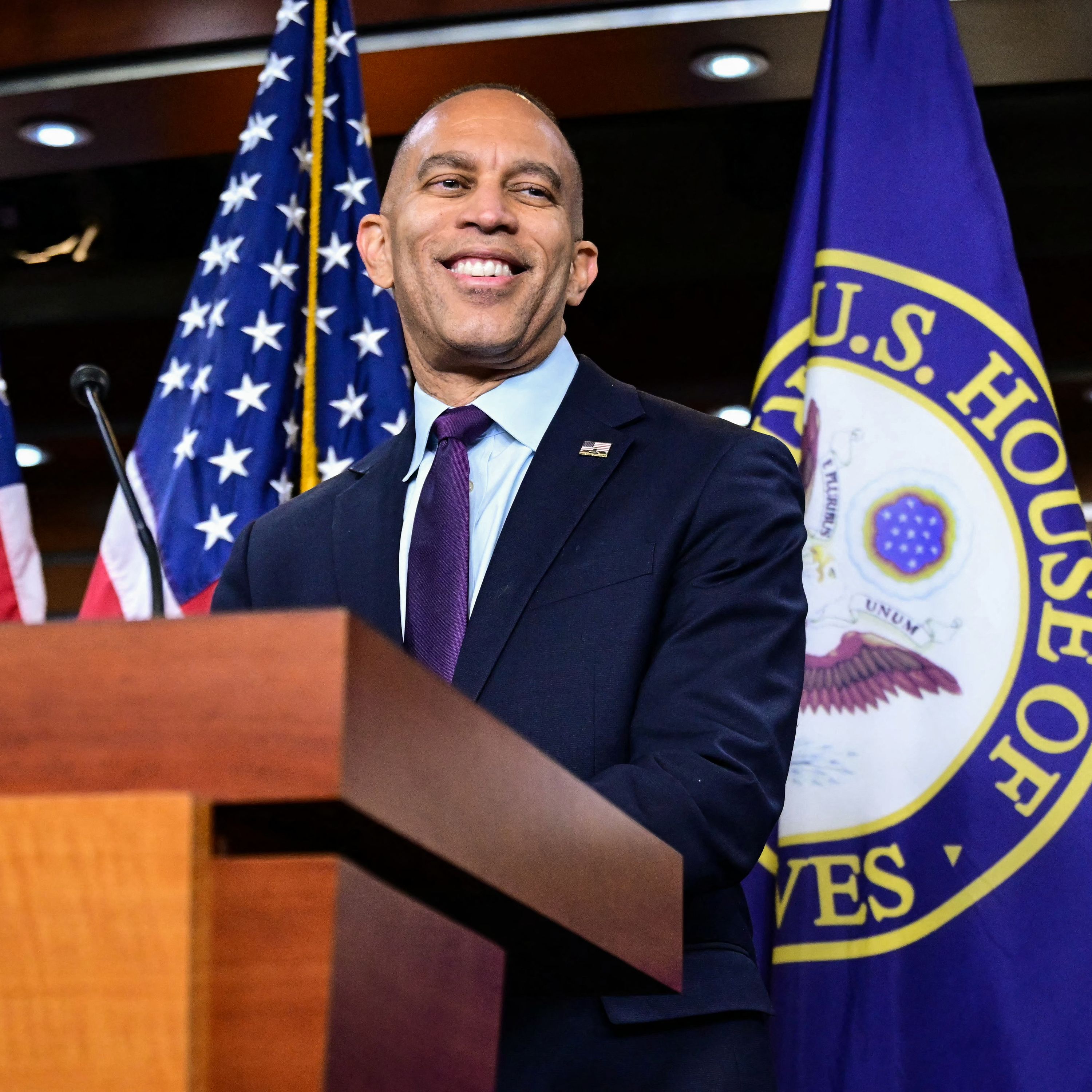
Congressman Hakeem Jeffries is on the edge of becoming the first Black speaker of the House, after a vote this week where Democratic members nominated him for the role. Errol Louis, political anchor of Spectrum New NY1, host of "Inside City Hall (https://ny1.com/nyc/all-boroughs/politics/inside-city-hall)" and "The Big Deal with Errol Louis, (https://spectrumlocalnews.com/section/the-big-deal)" New York Magazine columnist (https://nymag.com/author/errol-louis/) and host of the podcast"You Decide: (https://ny1.com/nyc/all-boroughs/politics/you-decide-with-errol-louis)talks about his Brooklyn roots, and how he might lead the "big tent" Democratic caucus. Photo: US House Minority Leader Hakeem Jeffries, Democrat from New York, speaks during a news conference at the US Capitol in Washington, DC, on November 18, 2026. (SAUL LOEB / AFP via Getty Images) Hosted by Simplecast, an AdsWizz company.
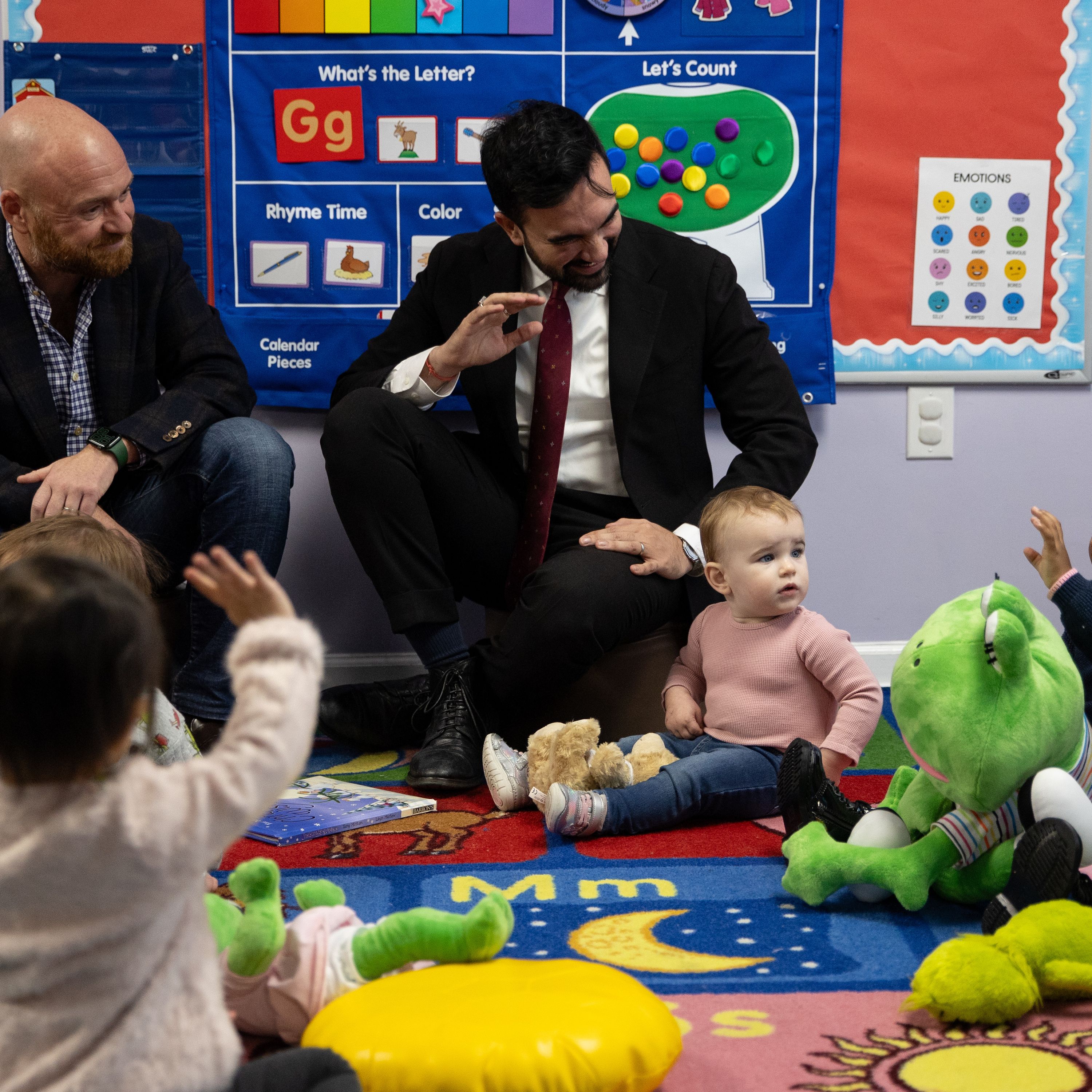
Grace Rauh, executive director of Citizen's Union, talks about their new report (https://citizensunion.org/document/2026-11-17/new-report-free-child-care-in-nyc-could-deliver-a-boost-to-new-yorks-economy/) on the "cost" of childcare to NYC and why making it free would boost the economy. Photo: New York City Mayor-elect Zohran Mamdani interacts with children during his visit to a childcare center in Manhattan, New York, U.S., (Mostafa Bassim/Anadolu via Getty Images) Hosted by Simplecast, an AdsWizz company.
Profitable companies should give workers extra support when reducing their workforce.
Share your view, then see how readers voted. No sign-in required. This poll is shared across stories.
Do you agree or disagree?
Common Quandary
A Common Quandary to discuss
Another conversation to explore, separate from this news story.
Scientists can edit mosquitoes until a deadly disease disappears. Who gets to say yes?
Scientists can potentially release modified mosquitoes whose genes would spread through wild populations and sharply reduce a deadly disease. The ecological effects could cross borders and may be impossible to reverse.
Who may authorize an irreversible change intended to save lives?