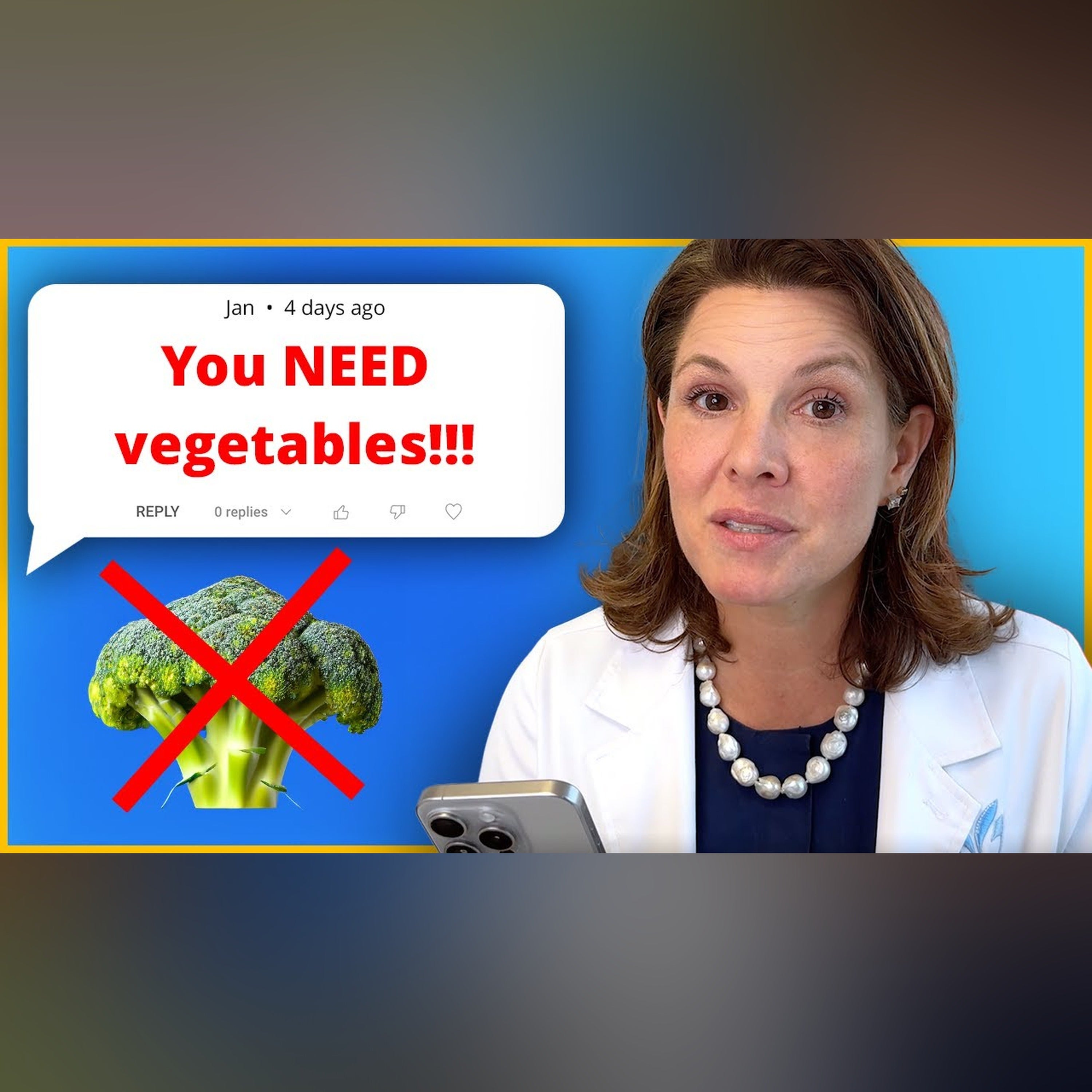
Why is heart failure so common in India, and what is really driving it? In this week's episode of The Health Review, Daniel Kirkham and Dr Sarah Myhill, former GP and functional medicine practitioner, work through the latest health news and ask what you can do about it naturally. This week: - Heart failure & yoga: a large Indian trial found yoga-based rehab improved quality of life. Dr Myhill explains why she thinks mitochondria, blood supply and diet are the bigger story. - Ultra-processed food labels: UCL research suggests traffic light labels miss more than half of the foods UK guidance classes as unhealthy. Dr Myhill shares how she reads a label and her "addiction test" for snacks. - Flu vaccine uptake & winter immunity: uptake is down on last year. Dr Myhill gives her view on why, and on low-carb eating, vitamin D, vitamin C and iodine through the cold and flu season. - Listener question: why hangovers get worse with age, and how to ease the morning after. Send your health questio
I keep my ketogenic diet simple. I don't like talking specific foods, but you all wanted to know what I eat in a day. So I made a simple video to show you how I eat, but many were confused. So let's set the record start on if I have unhealthy eating patterns or not. --------------------- The Workbook: https://bozmd.com/product/ketocontinuum-consistently-keto-diet-for-life-paperback-edition/ --------------------- Thanks for checking out the Dr. Boz Channel. See links below resources and recommendations. Tune in Tuesday nights, 6PM Eastern/5PM Central to watch me Live! We improve health - One ketone at a time. --------------------- FREE STUFF 50 Keto Fat-Facts: http://on.bozmd.com/50fat Dr. Boz Ratio Spreadsheet: http://on.bozmd.com/DBR Documentary Playlist: https://on.bozmd.com/AT --------------------- Dr. Boz’s Online Courses: Consistently Keto: http://on.bozmd.com/CK BRAINS: https://bozmd.com/Brains_t2r/ --------------------- WAYS TO SUPPORT THIS CHANNEL: Share Dr. Boz content with pe
Welcome to a transformative episode of the Nutrition and Life podcast! Today, host Lisa Franz welcomes Christine Paschal, a seasoned professional in energetic healing and mindset coaching, whose profound insights bridge the gap between physical health, energetic balance, and self-worth. Christine shares her journey from anthropology student to board-certified functional medicine coach, highlighting the power of intuition, the importance of reframing deep-seated beliefs, and the vital link between mindset and nourishment. Together, Lisa and Christine dive deep into the roots of self-sabotage, practical strategies to cultivate gratitude, actionable ways to “pattern break” and bring more play and curiosity into life, even into your breakfast routine! If you’re ready to nurture your body, expand your joy, and get un-stuck from old patterns, this episode is full of wisdom, heartfelt encouragement, and actionable ideas for listeners at any stage of personal growth. Timestamp Overview: [00:00
Episode 2885: Vinnie Tortorich and Wendy Strgar discuss why vaginal health matters for women's overall health and removing shame from the conversation. https://vinnietortorich.com/2026/11/vaginal-health-matters-episode-2885 PLEASE SUPPORT OUR SPONSORS Pure Vitamin Club VILLA CAPPELLI EAT HAPPY KITCHEN YOU CAN WATCH THIS EPISODE ON YOUTUBE: @FitnessConfidential Podcast Vinnie's workout videos are available to purchase! TO PURCHASE VINNIE'S WORKOUT VIDEOS, CLICK THIS LINK: https://vinnietortorich.com/workout Vaginal Health Matters Today's topic is vaginal health. The conversation may be too sensitive for younger listeners, so parental discretion is advised. Vaginal health is part of overall health. It's okay to talk about it openly. There's no need for shame or embarrassment. The vagina has its own balance of bacteria. When that balance changes, someone may notice an unusual smell or discharge. Itching, pain, or discomfort can also be a sign that something is off. pH is one part of that
Emma speaks to Dr Luisa Pettigrew, a GP and a senior policy fellow at the Health Foundation, about findings from the latest Commonwealth Fund survey of GPs in 10 high income countries and what they mean for policymakers. The report, published this week, is based on polling of over 10,000 primary care doctors, including 1,000 UK GPs. It found that UK GPs report higher levels of work-related stress and are less satisfied with their daily workload, work-life balance and income than their counterparts in comparable countries, which the Health Foundation said risks an ‘exodus of doctors from frontline care’. In this conversation, Luisa explains the report findings and how UK GPs’ experiences compare with primary care doctors in other countries. She talks about the differences between the responses from men and women GPs in this country, the mismatch between what GPs are expected to do and the reality of what they are actually able to do and what needs to change to ensure the NHS protects th
Can you rewire your brain to turn down chronic pain? Your pain is real, but your brain decides how loud that pain feels and new science shows that self-hypnosis may offer a new route to pain relief. One that goes beyond relying on pills alone. In today’s episode, Stanford psychiatrist Dr. David Spiegel, who has spent decades researching pain, explains how the brain controls pain. You’ll learn why chronic pain can be worsened by fear, anxiety and poor sleep. David explains how pain signals travel from your body to your brain, and why the brain can turn them up or down. He also shares how tools like hypnosis can help with pain management. By the end of the episode, you’ll have a simple 7-step self-hypnosis exercise for drug-free pain relief you can try at home. Build healthy habits. Download the ZOE app today Join ZOE (https://zoe.com/buymembership) Follow ZOE onInstagram (https://www.instagram.com/zoe/). Timecodes 00:00 Intro 01:49 Is your pain really in your brain? 09:07 Can't sleep? H
In this episode I look at the role of hope in health and medicine. Can it be of benefit to us? I explore the science and human factors involved in hope. Links: Snyder’s hope theory: https://positivepsychology.com/hope-theory/ Placebo: https://www.manchester.ac.uk/about/news/placebo-effect-could-treat-pain/ Language in medicine: https://blog.thisinstitute.cam.ac.uk/the-power-of-language-in-the-clinical-setting Learned helplessness: https://www.simplypsychology.org/learned-helplessness.html Hope in older age: https://pubmed.ncbi.nlm.nih.gov/36951616/ Optimism and heart disease: https://pubmed.ncbi.nlm.nih.gov/31560385/ Thank you for listening and for your support. It means a lot to me. Hosted on Acast.
In this episode I look at boundaries - the different types and how to set them. Not having appropriate boundaries increase stress levels and could potentially affect one’s health. Links: Set Boundaries, Find Peace: https://www.amazon.co.uk/Set-Boundaries-Find-Peace-Reclaiming/dp/0349426953 Gabor Mate: https://www.amazon.co.uk/When-Body-Says-No-Hidden/dp/178504222X/?th=1 Useful tips on boundary setting: https://wellnesscenter.uic.edu/news-stories/boundaries-what-are-they-and-how-to-create-them/ Thank you for listening and for your support. It means a lot to me. Hosted on Acast.
In this episode I look at posture which is something that doesn’t get a lot of attention in health care and can have multiple impacts on our health over time. Links: Static loading - https://ergoglobal.com/what-is-static-loading-ergonomics/ Proprioception - https://my.clevelandclinic.org/health/articles/proprioception Thoracic mobility - https://www.healthline.com/health/fitness/thoracic-mobility-exercises Squats - https://www.healthline.com/health/exercise-fitness/squats-benefits Thank you for listening and for your support. It means a lot to me. Hosted on Acast.
People affected by infrastructure routes should have a meaningful role in choosing them.
Share your view, then see how readers voted. No sign-in required. This poll is shared across stories.
Do you agree or disagree?
Common Quandary
A Common Quandary to discuss
Another conversation to explore, separate from this news story.
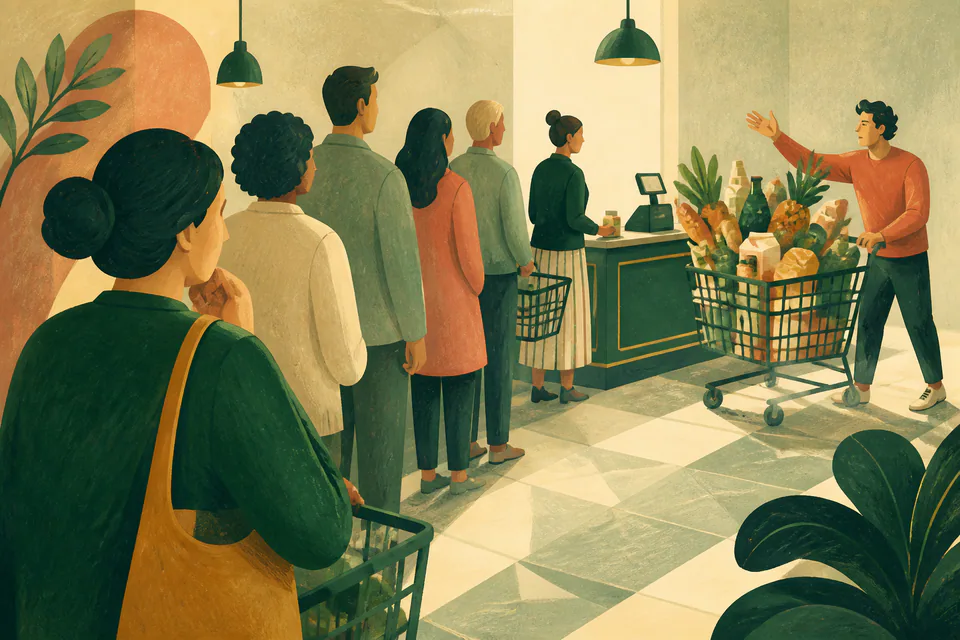
Someone holds a grocery line spot while their partner fills the cart. Is that cutting?
A shopper with one item stands ahead of you in a long checkout line. Just before reaching the register, their partner arrives with a cart packed to the top and joins them. They insist they were shopping together all along.
Can one person reserve a place in line for an unknown amount of work?