Listen through the publisher, then discuss the episode here or arrange an in-person Roundtable. Your city determines where to meet.
Roundtables are designed for groups of four, with a shared subject and room for everyone to speak. Come for discussion, with no dating expectation.
In today's news, we'll meet a Top End giant named Hector and find out about a mysterious underwater meeting place for eels, plus we'll head to the nation's capital for Talk of the Town! Quiz Questions 1.What's the name of the giant thunderstorm that regularly appears over the Tiwi Islands? 2.How many eels have scientists estimated are gathering in the ocean off Tasmania? Is it 1.8, 2.8 or 3.8 million? 3.What's the name of Australia's capital city? Answers 1.Hector the Convector 2.2.8 million 3.Canberra
Episode information is provided by the publisher. Listening takes place on the publisher’s service.
Imagine running an empire of ten million people without ever writing down a single word! Welcome to Tawantinsuyu, the massive Inca Empire hidden high up in the towering Andes Mountains! In 1438, a brilliant ruler named Pachacuti transformed the mountain town of Cusco into a glittering capital city shaped exactly like a giant puma. But how did they keep track of everything without pencils or paper? They used a genius math system made of colorful knotted strings called a quipu! To send important messages, they didn't use horses or wheels. Instead, they relied on superhuman relay runners called chasqui, who sprinted across scary woven grass suspension bridges and could travel 150 miles in a single day! They even built giant green staircase farms right into the steep mountainsides to grow huge amounts of freeze-dried potatoes. And guess what? They kept a very fluffy, squeaky pet in their kitchens for dinner—guinea pigs! Although the Spanish explorer Francisco Pizarro eventually brought dow
THANKSGIVING TRIVIA, NFL FOOTBALL, RIDDLES & MORE! Looking for a fun kids trivia podcast the whole family will love? Get ready for an exciting new episode of Trivia for Kids – The Podcast, filled with Thanksgiving trivia, tricky riddles, geography questions, famous foods and drinks, and NFL football! Whether you're traveling for Thanksgiving, entertaining kids during holiday break, searching for educational podcasts for kids, or looking for a fun family game, we've got you covered! FIVE CATEGORIES. TONS OF FUN. SOMETHING FOR EVERYONE! THANKSGIVING – How much do you really know about Thanksgiving traditions, holiday history, and fascinating facts about this favorite fall celebration? RIDDLES – Put your thinking cap on! Can you solve these tricky brain teasers, clever word puzzles, and riddles before the answers are revealed? GEOGRAPHY – Travel around the United States and the world with trivia questions about countries, states, famous landmarks, and amazing places! FAMOUS FOOD & DRINK –
Have you ever been told to do something just "because I said so"? It can feel super unfair! But did you know that just by being a kid, you have actual, real-life rights? In this thought-provoking episode of Philosophy is Not Boring, Mira and Finn dive into the incredible true story of Janusz Korczak! He was a brilliant doctor in Poland who strongly believed children are "people of today," not just adults-in-training. Imagine living in a place where kids actually get to make the rules! Dr. Korczak ran a famous orphanage where children had their very own court of law, and they could even put grown-ups (including Dr. Korczak himself!) on trial for being unfair! He completely changed how the world treats kids. His groundbreaking ideas even inspired the United Nations to create the Convention on the Rights of the Child—a giant global rulebook that says every kid has the right to be safe, to be heard, and even the right to play! Tune in to discover mind-bending facts about this hero of child
What is everything made of? Think of the chair you’re sitting on, the water you drink, and even you! In this episode, Asher and Kristen are joined by Connor from California. Together they hop aboard the Culture Train to discover the story of the periodic table of elements. First we travel back to the snowy winter of 1869 in St. Petersburg, Russia. A chemistry professor named Dmitri Mendeleev is working late into the night on his textbook. Scientists at the time knew about 63 elements, and it all felt like one enormous, messy list to memorize. We tiptoe through his creaky, lamp-lit study and watch him compare how heavy each element’s atoms are and how each one behaves. He even leaves empty spaces for elements no one has found yet! Then we zoom back to the present to visit Ms. Nielsen’s chemistry classroom. She shows us the giant periodic table on her wall and explains how Mendeleev’s big idea grew into the table scientists all over the world use today. Meet Mrs. Nielsen Teresa Nielsen t
Tuesday 24 November marks the anniversary of the publication of Charles Darwin’s On the Origin of Species in 1859. So this week, we’re dusting off our Shortcut to Evolution to find out how living things change over generations and how all life on Earth is connected. Join Christie and Bryce as they travel back in time in the Squiz Kids Time Machine, dig into the clues fossils leave behind and meet two scientists who came up with the idea of natural selection independently, Charles Darwin and Alfred Russel Wallace. Along the way, find out what bird beaks can tell us about survival and how tiny changes in DNA can help shape life over generations. Listen carefully … there’s a S’Quiz at the end!
Have you ever played a game that entirely plays itself? Welcome to the astonishing Game of Life! Invented in 1970 by a brilliant British mathematician named John Conway at Cambridge University, this isn't a normal board game. All you need is a blank grid of squares and four super simple rules. But what happens next is pure magic—well, actually, it's maths! When you colour in a few squares and follow the rules, the patterns seem to come alive! Some shapes blink like traffic lights, some freeze forever, and one little shape called a "Glider" actually stands up and walks across the paper endlessly! The game became so famous that scientists everywhere were secretly playing it on giant computers. A team led by Bill Gosper even discovered a "Glider Gun" that shoots out new walking shapes like a factory! Join Mira and Finn as they explore this tiny, endless universe built entirely on paper. You will discover how four simple rules can explain the beautiful, unpredictable patterns in our real w
Today on the news, we'll hear about the Signing Choir using Auslan at this year's Schools Spectacular and a new Guiness World Record! Quiz Questions 1.What’s the name of NASA’s program to explore the Moon? 2.What language is the Schools Spectacular choir using? 3.How long did Esther Fischer hold her record-breaking handstand? Answers 1.Artemis 2.Auslan 3.55 seconds
Today in the news, we'll hear how penguin poo is making snow melt, and how a controversial pizza topping is causing a stir in the pineapple capital.... Quiz Questions 1.What was the penguin poo feeding in Antarctica to make the snow melt? 2.Which fruit caused the big pizza debate? Answers 1.Green snow algae 2.Pineapple
In today's news, we’ll remember those affected by war... join a welcoming book club... and investigate a magpie with a very long memory! Quiz Questions 1.On what date do we mark Remembrance Day? 2.What is the name of the reading system that uses raised dots for the blind and vision impaired 3.How many human faces can magpies recognise? Answers 1.November 11 2.Braille 3.About 30 News Noodler If a magpie is trying to protect its babies, should you avoid the area for swooping season? Why or why not?
Organizations should explain important automated decisions in language people can understand.
Share your view, then see how readers voted. No sign-in required. This poll is shared across stories.
Do you agree or disagree?
Common Quandary
A Common Quandary to discuss
Another conversation to explore, separate from this news story.
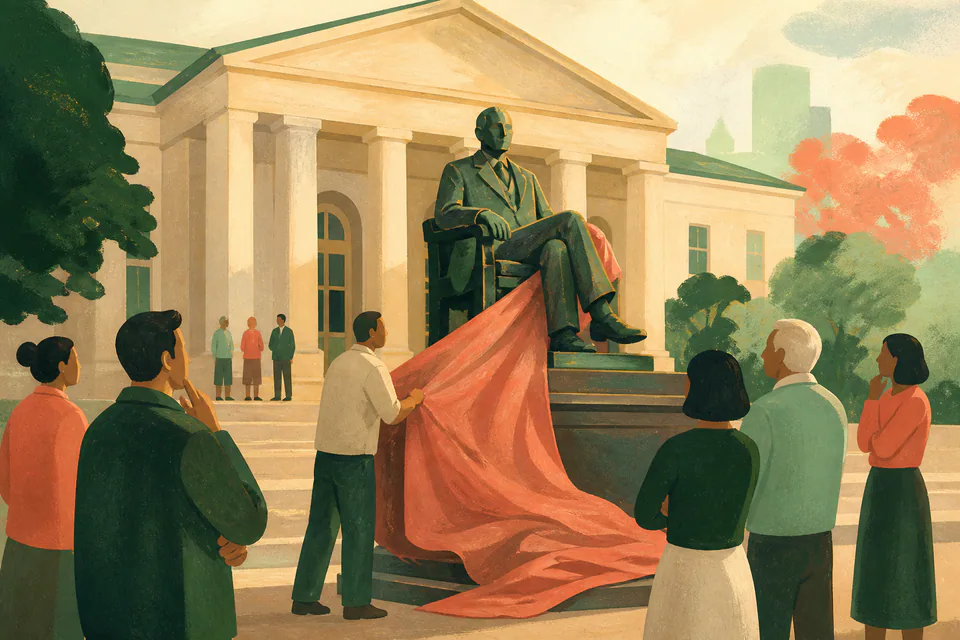
A disgraced billionaire's name is on the beloved campus library. Does it come down?
A major donor funded a beloved public building decades ago. New evidence shows they also caused serious harm that was legal and accepted by many peers at the time. Removing the name may jeopardize future donations.
What does an institution owe the truth when its history funded the present?