Listen through the publisher, then discuss the episode here or arrange an in-person Roundtable. Your city determines where to meet.
Roundtables are designed for groups of four, with a shared subject and room for everyone to speak. Come for discussion, with no dating expectation.
Welcome back to “the podcast from hell.” Last week, Kara and the Secretary broke down what happened during the midterms; this week, they discuss what comes next. They cover Pete Hegseth’s rare press conference as he faces impeachment proceedings. They throw around potential Republican contenders for 2028. And in the wake of the NVIDIA drama, HRC gives listeners an inside look into the kinds of national security risks she monitored as Secretary of State. Plus, High Stakes welcomes its first-ever special guest: the one and only Rachel Maddow. Questions? Comments?
Episode information is provided by the publisher. Listening takes place on the publisher’s service.
Iowa State football heads to Orlando to face UCF, while the Iowa Hawkeyes prepare for a big road matchup against Illinois with their College Football Playoff hopes still alive. Keith Murphy and Andy Fales cover the biggest Iowa sports stories and MORE! on a Murph & Andy fun Friday The guys discuss the historic rainfall in central Florida and what it could mean for Iowa State's offense, Aiden Flora and the Cyclones' push for bowl eligibility. They also preview Iowa-Illinois, including the possibility of Illinois starting its third-string quarterback, and debate the Hawkeyes' playoff chances after the latest CFP rankings. Plus, the latest on the Bill Fennelly situation, including Sienna Harvey's comments and Fennelly's first interview since it happened. The guys review the new John Madden movie, deliver another edition of Iowa Unnecessary Censorship, and MORE! 00:00:00 Sports Memorabilia: What Would You Spend Big Money On? 00:12:00 Iowa State Heads to Orlando to Face UCF 00:21:30 Iowa vs
Master the skills that change lives — enroll in your free human behavior course today: https://nci.university/learn Uploaded 14-03-26 During the first ninety seconds of any interaction, a window opens in the human brain that most people never notice. A specific sequence of neurological events unfolds — predictable, exploitable, and almost never taught outside of military and intelligence training. Very few people alive understand the full mechanics of what happens inside that window. Only operators, interrogators, and behavioral scientists with the right access have ever had this mapped out for them. Someone made sure it stayed that way. Every interaction you've ever had — every negotiation, every first impression, every moment you walked into a room — was governed by this sequence. You were either running it or it was being run on you. Most people spend their entire lives on the receiving end without ever knowing it. Language is the delivery system. But language isn't where it starts.
It's been a high-stakes week in big tech. Anthropic made its blockbuster market debut, and despite a positive first day of trading, the company's shares fell amid a wider tech sell off. Nvidia's Jensen Huang's resignation ripples through the AI sector. And US President Donald Trump has vowed to tax American companies that build data centres abroad.
Indonesia is minus one Vice President after last week's resignation of Gibran Rakabuming Raka, in the wake of a scandal about his high school certificate. Most experts agree that the high school certificate was just an excuse for President Prabowo Subianto to ditch the son of the former president, Joko Widodo, as a rift between the two dynasties grows. With an eye on the 2029 elections, what will Prabowo be looking for in the next Vice President? Guest: Dr Jacqui Baker, Principal Fellow at the Indo Pacific Research Centre, Murdoch University.
Mike Pompeo, former Secretary of State, CIA Director, Fox News contributor, and author of Never Give an Inch: Fighting for the America I Love (@mikepompeo), joined The Guy Benson Show today to break down the trilateral meeting between Presidents Trump, Xi Jinping, and Putin. Pompeo reacted to comments made by President Trump during his press conference early Friday afternoon, and he and Benson discussed the impact of the Iran war on the midterms and the economy. Listen to all that and much more!" Listen here!
In January 1897, blacksmith Edward Shue washed and dressed his bride of three months for burial before the coroner ever reached their log house in Greenbrier County, West Virginia, and at her funeral he kept fussing with her head and neck, propping it on a pillow and wrapping a scarf around her high collar. Her mother, Mary Jane Heaster, had never liked him, and for weeks afterward she prayed every evening for her daughter to come back and tell her what had really happened. FEATURED STORIES IN THIS EPISODE: This Weird Darkness episode runs from the Greenbrier Ghost, the 1897 West Virginia murder victim whose mother said she came back to name her killer, to a bottomless pit in Washington, a wave of Mothman sightings over Chicago, and a London tomb rumored to be a time machine. Elva Heaster was dead – but that didn’t stop her ghost from solving the murder. *** In Stephen King’s “Pet Semetery”, beloved family pets could come back from the dead. *** In Washington there is a hole that some
Democrats outperformed expectations in the midterms. By a lot. While many polls predicted a blue wave, what we got looked more like a tsunami wrapped in a hurricane. But can Democrats bank on those votes in 2028, or are we in a new era of permanent swing voters? Kara sits down with a panel of experts to unpack what the data reveals about the biggest demographic shifts, why more Americans now identify as political independents and whether individual candidates will matter more than party affiliation moving forward. Harry Enten (https://www.cnn.com/profiles/harry-enten) is CNN’s Chief Data Analyst and the host of its "Margins of Error" podcast, where he specializes in data-driven journalism.Andra Gillespie (https://polisci.emory.edu/people/biography/gillespie-andra.html) is a professor of political science at Emory University where her research covers African American politics and political participation. AndRuth Igielnik (https://www.nytimes.com/by/ruth-igielnik) conducts polls and writ
Welcome back to another episode of High Stakes, with co-hosts Kara Swisher and Hillary Clinton. This week, Madam Secretary tunes in from Belfast (she wasn’t grounded in the FAA debacle), and she and Kara discuss the latest on the NVIDIA saga, Jensen Huang, and all the White House briefings Trump probably ignored. They cover the rare FAA grounding last weekend, the populist data center backlash, and the big one: is Congress really ready to regulate AI? Plus, the two bring in a special guest to talk about the dangers of our technological moment: Nobel Peace Prize laureate, Maria Ressa. We’re off next week for Thanksgiving! Enjoy your turkeys. Tune back in at the top of December for more Kara and HRC. Questions? Comments?
For a lot of us, the holidays can feel like navigating a minefield of family tensions that could blow up at any second. That can be especially true after big elections like the one we just had. But author and trained conflict resolution facilitator Priya Parker says that tension isn’t necessarily a bad thing. In fact, she argues healthy conflict is an essential part of deepening our relationships with the people we love most. Kara and Priya talk about what’s lost when we avoid conflict in our lives, how to establish some “healthy heat” with your friends and family, and when it’s time to walk away from a relationship. They also talk about ways to have meaningful experiences with your family this holiday season that don’t center on politics. Questions? Comments?
A striking scientific discovery should face stronger scrutiny before changing established practice.
Share your view, then see how readers voted. No sign-in required. This poll is shared across stories.
Do you agree or disagree?
Common Quandary
A Common Quandary to discuss
Another conversation to explore, separate from this news story.
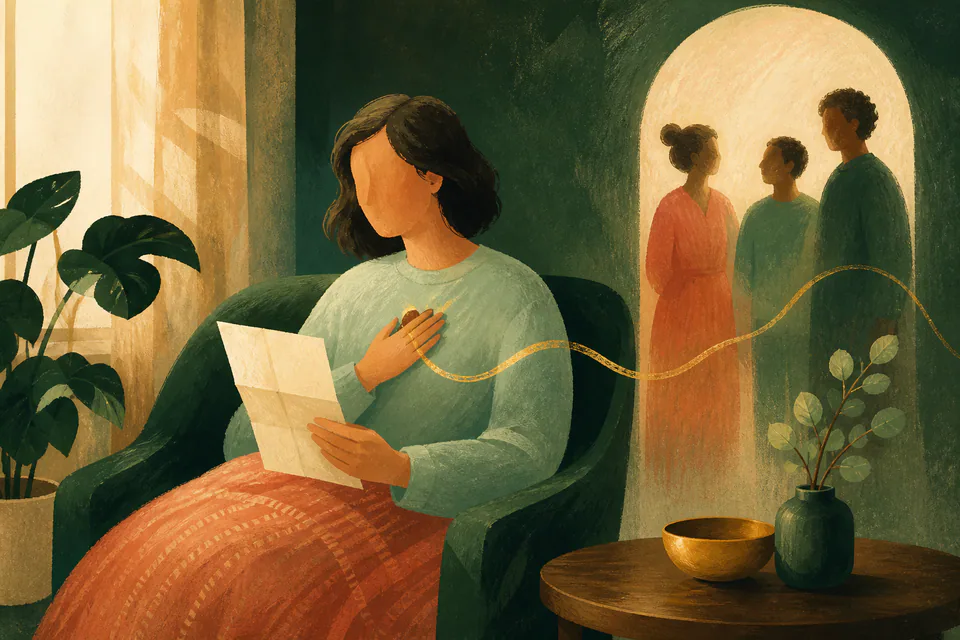
A donor's family wants to hear their loved one's heart beating in you. Do you meet them?
A transplant recipient receives a letter from the donor's family asking to meet. The recipient feels profound gratitude but also discomfort and wants their recovery to remain private and separate from another family's grief.
Can receiving an extraordinary gift create a personal obligation to strangers?