English-language podcasts

Brock and Salk

Hour 4: Data Scientist Steven Patton breaks down Seahawks playcalling

44 min

Listen through the publisher, then discuss the episode here or arrange an in-person Roundtable. Your city determines where to meet.

Roundtables are designed for groups of four, with a shared subject and room for everyone to speak. Come for discussion, with no dating expectation.

Brock and Salk go around the NFL and check in on another QB controversy in Cleveland, the Seahawks injury report is lengthy ahead of Sunday's matchup with the Raiders in Need to Know, and data scientist Steven Patton joins the show to explain some of his work evaluating NFL offensive coordinators, and what it says about Brian Fleury.

Episode information is provided by the publisher. Listening takes place on the publisher’s service.

Listen at the source ↗

Featured places to meet in Palo Alto, CA

Explore these places and arrange a conversation through ThinkMatch.

City guide for Palo Alto, CA

More from Brock and Salk

Brock and Salk

Hour 2: Can Jaxon Smith-Njigba keep this up for the Seahawks?

44 min

Brady Henderson fills in for Salk as he joins Brock to speculate on Seahawks restructuring the contracts of some key players and what it could mean for some players heading to free agency, the NFL is catching heat for the timing of Puka Nacua's three game suspension in Need to Know, and Brock explores what the second half of the season could look like for Seahawks wide receiver Jaxon Smith-Njigba as he looks to put his name in the NFL record books.

Discuss this episode

Community Poll

Corrections should be given prominence comparable to the original reporting error.

Share your view, then see how readers voted. No sign-in required. This poll is shared across stories.

Do you agree or disagree?

Choose one answer

Common Quandary

A Common Quandary to discuss

Another conversation to explore, separate from this news story.

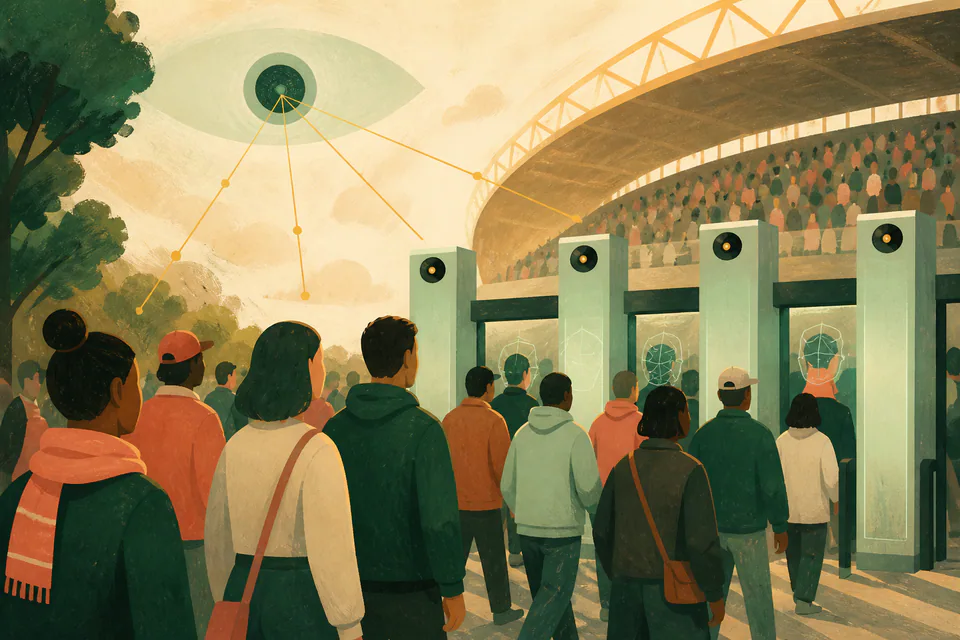
The stadium can ban violent fans by scanning every face at the gate. Would you walk in?

A stadium can use facial recognition to identify people banned for violence and shorten security lines. Every visitor would be scanned, error rates are not zero, and the resulting biometric data could become useful to police or advertisers.

How much privacy may a crowd be asked to trade for collective safety?

Explore this quandary