How Do I Scale My Business Without Hiring? I Don't Like Managing People!
21 min
Listen through the publisher, then discuss the episode here or arrange an in-person Roundtable. Your city determines where to meet.
Roundtables are designed for groups of four, with a shared subject and room for everyone to speak. Come for discussion, with no dating expectation.
Running a business can feel like a constant tug-of-war between growth and freedom. Maybe you've avoided hiring because the thought of managing a team sounds exhausting, or maybe you're worried that scaling means spending your days dealing with people instead of doing the work you actually enjoy. The challenge is that every path to growth comes with compromises, and understanding those trade-offs can completely change how you approach your next stage of business. In this Q&A Wednesday episode, Omar and Nicole answer a question from Andy, who wants to know how to grow his business without hiring more people. They tackle the realities behind that goal and explore what scaling really looks like when you're trying to avoid building a larger team. Along the way, they challenge a few common assumptions about leadership, growth, and what it takes to create leverage as your business expands. Press play at the top of the page and find out whether avoiding hires is helping your growth or quietly holding it back. MBA2861 How Do I Scale My Business Without Hiring? I Don't Like Managing People! Recommended episodes to explore: How Netflix Grew To A $366 Billion Beast. Sharing Their CEO’s Secrets (https://100mba.net/mba2802/) Should I Reinvest In My Business Or Diversify? (https://100mba.net/mba2858) To submit your questions, visit 100mba.net/q (https://100mba.net/q). Watch the episodes on YouTube: https://lm.fm/GgRPPHi Hosted by Simplecast, an AdsWizz company.
Episode information is provided by the publisher. Listening takes place on the publisher’s service.
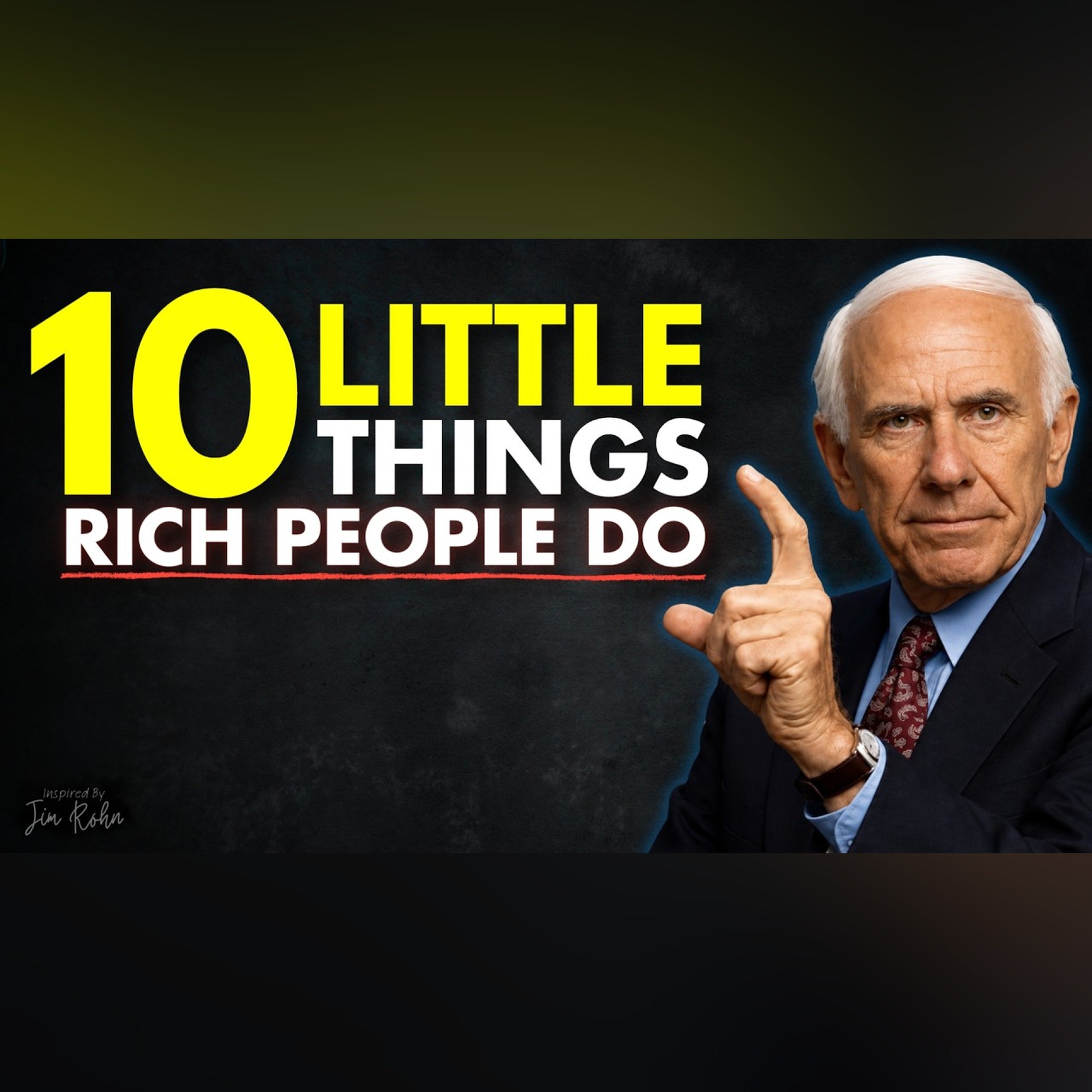
Most people are looking at wealth wrong. They think it comes from doing something big — picking the right stock, starting the right business, inheriting the right money, catching the right break. Uploaded 15-06-26 They're watching for the big move. The dramatic decision. The lucky moment that's going to change their financial life. They're watching in the wrong direction. Wealth doesn't come from a big move. Wealth comes from a thousand small ones, done quietly, every single day, for decades. The people who actually have money — not the people who look like they have money, but the people who actually have it — share a set of habits that are almost embarrassingly quiet. None of these habits would make a good news story. None of them would sell a book. None of them feel like the answer when you first hear them. They are too small, too slow, too unimpressive. But the quiet habits are doing the work. While other people are looking for the big move, the quietly wealthy are running these ha
Welcome to Impact Theory. In today’s episode, the team tackles three big stories. First, they react to Jubilee’s viral debate pitting Shark Tank’s Kevin O’Leary against a group of Gen Z workers over whether anyone in America can still become wealthy through hard work. Tom calls it the K-shaped economy personified and says the young debaters are sharp, but argues the path forward is still getting so good you can’t be stopped: managing up, interviewing well, and being willing to move. He acknowledges the game has gotten harder, blaming inflation, NIMBYism, and offshoring, and pushes back on rent control and top-down fixes. The conversation then turns to a debater’s call for profit-sharing at companies like Starbucks, and a sharp debate over what actually gives workers leverage, from changing jobs to unions. Next, the team dives into the online clash between Elon Musk and anti-monopoly writer Matt Stoller, who argued that Musk isn’t a genius but simply someone who can raise capital from W
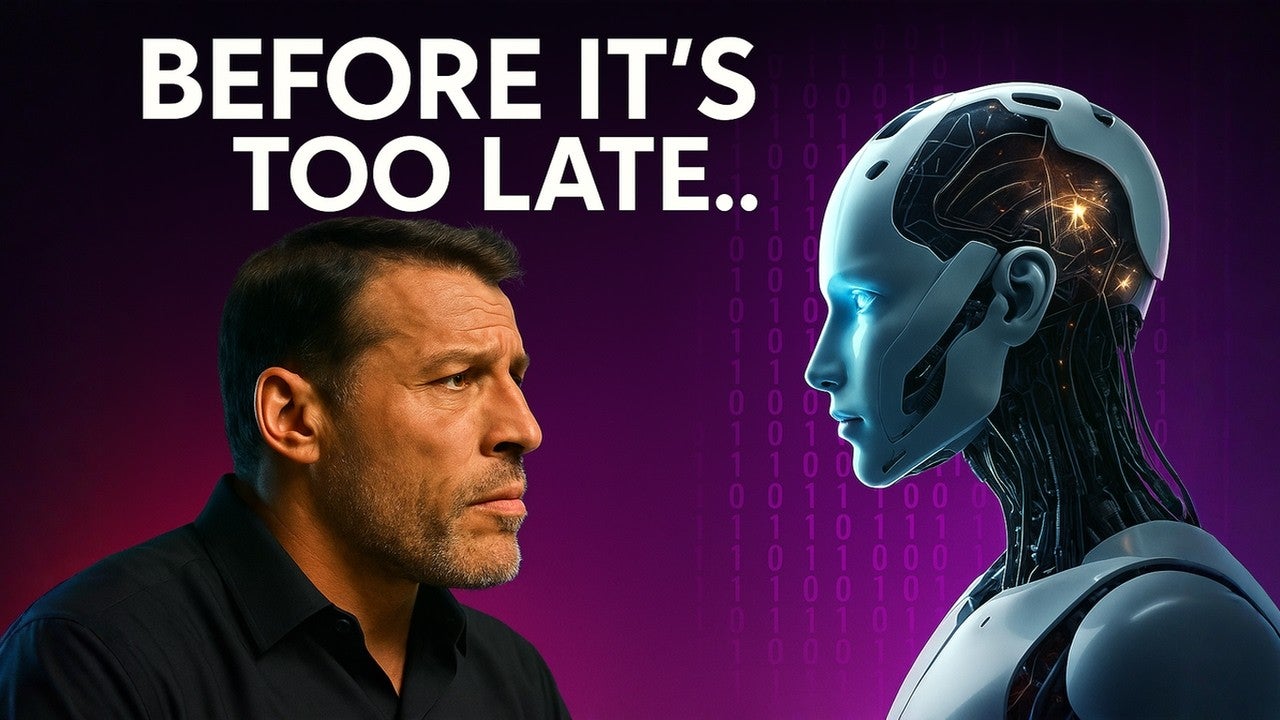
Uploaded 04-05-25 Are you ready for the AI revolution—or will you get left behind? Tony Robbins breaks down what it really takes to thrive in a world that's changing faster than ever. We're talking AI, robotics, nanotech—disruption at a scale humanity’s never seen before. ---- Tony Robbins AI is a fully interactive experience powered by the proven tools and wisdom of the world’s #1 life and business strategist. It’s like having Tony Robbins as your personal guide, available anytime you need support...in your native language! Get the first 14 days of Tony Robbins AI access for $1 when you subscribe today! Learn more about Tony Robbins AI here: https://tonyr.co/4lSeobA Watch more videos like this "AI Is Changing Healthcare Forever" - Marc Andreessen, Ben Horowitz: https://youtu.be/lqb14Cb17M0 Jordan Peterson - "Most People Learn This TOO LATE In Life": https://youtu.be/6fwrTb3dm5Y 3 Skills You NEED to Prepare Yourself for What's Coming: https://youtu.be/K-jOtLM9c7o The World Is Changing
Jess knows that she’s a bit behind when it comes to super. Her current balance is on the small side for her age- and the type of retirement she wants. She knows she needs to do something about it, and has had a handful of conversations about it with experts on the show already. But she was yet to take action. This conversation finally changed that. In this episode, she spoke with Ashton Jones Director of Strategy and Innovation at MLC, who explained how to work out what balance she needs and bridge the gap from where it is now. Jess entered this chat struggling to take action, thinking she needed to add large sums to catch up. But Ashton walked her through simple (and small) actions she can use; including a 1% change that could make up to $200,000 difference to her super by retirement. By the end she finally understood how little it can take to make a huge impact on the life she gets to live in the future- and it can do the same for you. Chapters: 00:00 Why Super Matters 04:49 When to
Why do technologies that look like bad ideas in one era become enormous companies in the next? Originally recorded in 2018, Brian McCullough and Chris Dixon trace the companies, failures, and accidents that built the modern internet. They revisit the battle between the open web and more centralized visions of the “information superhighway,” why eBay helped establish trust between strangers online, what Napster understood about digital media, and how Google found a business model for search. They also look at the dot-com crash and the ideas that arrived before the technology was ready, from cloud storage to grocery delivery, asking what those cycles can teach founders about spotting the next wave. Resources: Follow Brian McCullough on X:https://x.com/brianmcc Follow Chris Dixon on X:https://x.com/cdixon Stay Updated: Find a16z on YouTube: YouTube (https://www.youtube.com/@a16z) Find a16z on X (https://x.com/a16z) Find a16z onLinkedIn (https://www.linkedin.com/company/a16z) Follow our ho
This episode was sponsored by Cardiff LightSpeed VT: https://www.lightspeedvt.com/ Dropping Bombs Podcast: https://www.droppingbombs.com/ Today's Dropping Bombs episode features Ran Grushkowsky, the Berkeley dropout who sold his first company at 16, exited fintech, and lasted two and a half weeks in retirement. Now he runs MassPay, a profitable, bootstrapped payments company on track to move $1 billion a month. Ran breaks down why prepaid cards and paper checks are losing to instant payouts, how AI routes every payment through the best bank in real time, and how paying people faster can turn a cost center into a profit center. Most companies treat paying people like a chore. Ran says that mistake gets expensive within two or three years. If your payout system hasn't changed lately, press play before it costs you. Connect with Ran LinkedIn: https://www.linkedin.com/in/rangrushkowsky X: https://x.com/egblue Additional Resources MassPay: https://masspay.io (https://masspay.io/) MassPay on
Not everyone wants to see you succeed. Some people will cheer you on when your goals are small, but start pulling away the moment you begin to grow. Others may not even realize they're holding you back, yet their influence can slowly erode your confidence, focus, and ambition. The people around you can either fuel your progress or quietly sabotage it. In this lesson, Omar breaks down five types of people who can quietly hold you back as you grow your business and pursue bigger goals. Drawing from his own entrepreneurial journey, he explores the patterns, behaviors, and relationships that often stand between entrepreneurs and the future they're trying to create. Ready to take a closer look at who's shaping your path to success? Click play at the top of the page and discover which influences deserve a place in your life and which ones could be costing you more than you realize. MBA2860 5 People That Will Sabotage Your Success Recommended episodes to explore: Ramit Sethi – Is Starting A B
Building a software product is hard. Building one that customers stick with for years is even harder. Plenty of businesses have impressive features and talented developers, yet still struggle to grow because success in software comes down to more than what's inside the product. In this lesson, Omar shares what he's learned from more than a decade running a software company and breaks down the principles that have the biggest impact on long-term success. From the way you serve customers to the decisions you make behind the scenes, he explores what separates software businesses that last from those that slowly lose momentum. Ready to build a software business that can stand the test of time? Click play at the top of the page and discover the key ingredients behind lasting growth, loyal customers, and a company that stays ahead of the competition. MBA2859 The 5 Secrets To A Successful Software Business Recommended episode to explore: How To Build A Software Business With AI This Weekend.
When your business starts generating real profits, the next move can feel surprisingly complicated. Do you keep pouring those earnings back into growth, or is it time to start building wealth beyond your business? The pressure to make the right decision is real because the path you choose can shape not just your company's future, but your personal financial freedom as well. In this Q&A Wednesday episode, Omar and Nicole tackle a question sent in by Jake, who wants to know whether reinvesting in a business or diversifying into other investments is the smarter move. Together, they unpack the mindset behind this decision, explore how different stages of business growth can influence your approach, and discuss key factors that often get overlooked when weighing your options. Whether you're focused on scaling faster or thinking about the bigger financial picture, this episode offers plenty to consider. Your profits represent years of hard work, sacrifice, and risk. The question is whether t
Neighboring communities should share responsibility for problems crossing their boundaries.
Share your view, then see how readers voted. No sign-in required. This poll is shared across stories.
Do you agree or disagree?
Common Quandary
A Common Quandary to discuss
Another conversation to explore, separate from this news story.
Your neighbor saves a public parking spot with an orange cone. Do you move it?
Street parking is scarce after a snowstorm. Your neighbor spent an hour digging out the space in front of their home and now guards it with an orange cone, even though curb spaces legally belong to everyone. You arrive tired and the cone is blocking the only open spot.
Can effort create a personal claim to something public?