Listen through the publisher, then discuss the episode here or arrange an in-person Roundtable. Your city determines where to meet.
Roundtables are designed for groups of four, with a shared subject and room for everyone to speak. Come for discussion, with no dating expectation.
Will Trump make a deal with Iran, escalate, or walk away? Trita Parsi, co-founder and Executive Vice President of the Quincy Institute for Responsible Statecraft, puts the odds of a deal at less than 50% and says the most likely outcome is a quiet walkaway, with the blockade and sanctions left to decay. But he warns the risk of escalation hasn't passed. Parsi was one of our first guests after the Iran war began, when he told us Tehran would drive up energy prices to swing the midterms against Trump. He's back to explain why the next four weeks matter, how Iran is cushioning the blockade, and whether the Gulf states and China could anchor a new regional security order. In this episode: (00:00) New Supreme Leader Rejects Gray Zone (00:46) Trita Parsi Returns to One Decision (01:54) Trump Three Iran Policy Options (05:22) Nuclear Enrichment as Iranian Leverage (08:50) Trump Legacy and Iran Vindictiveness (13:42) Military Escalation Warning Signs (15:28) What Finishing the Job Means (17:36) Israel Mowing the Lawn Strategy (21:58) Gulf States Pushback Against War (23:44) Iranian Economy Under Blockade (28:37) Why Status Quo Is Unsustainable (32:31) Houthis and Regional Ceasefire Challenge (37:04) Future Gulf Security Architecture Show Notes: Trita Parsi's Substack: https://tritaparsi.substack.com/ (https://tritaparsi.substack.com/%E2%81%A0) Hosted by Sir Richard Dearlove (former MI6 Chief) and co-host John Raine (International Institute for Strategic Studies)
Episode information is provided by the publisher. Listening takes place on the publisher’s service.
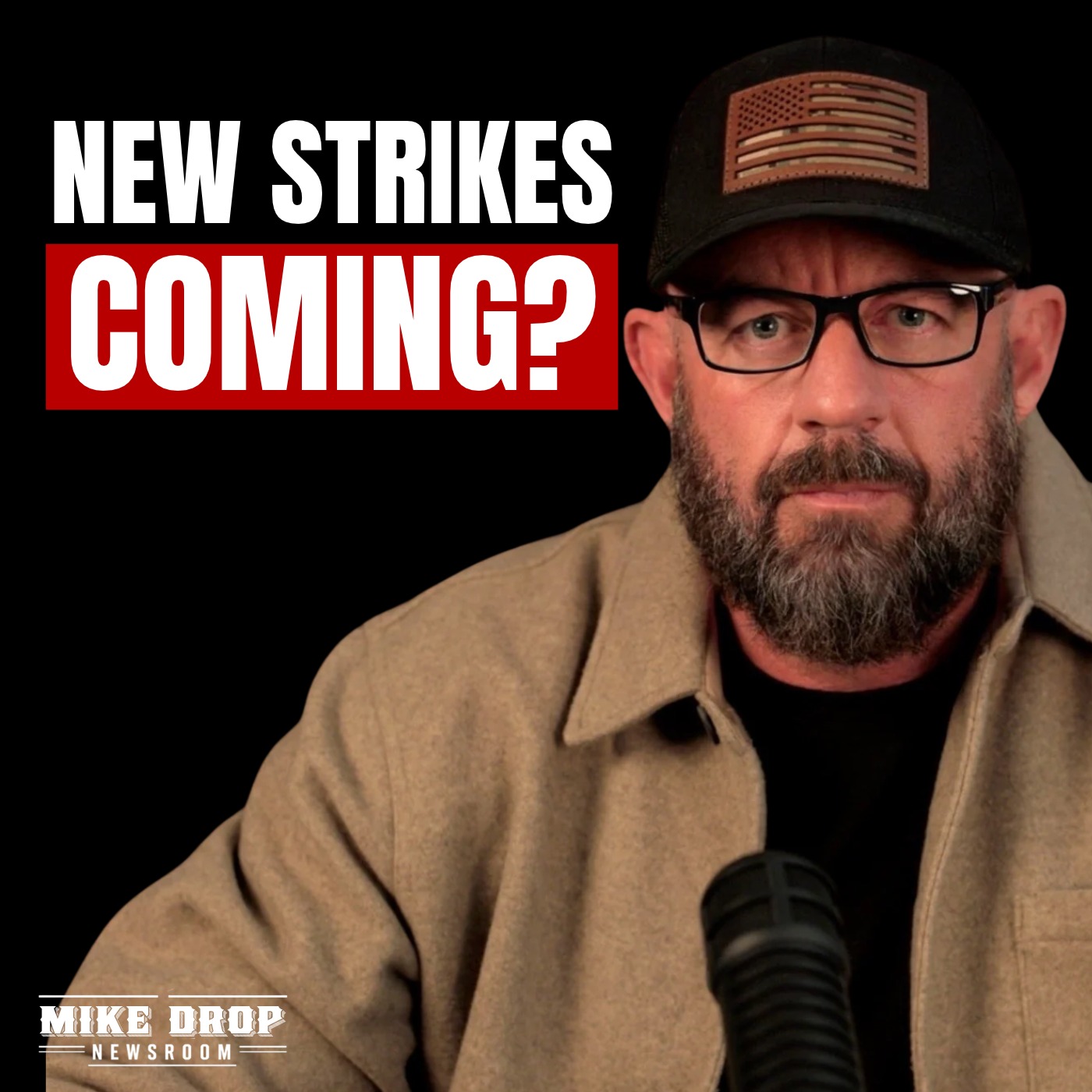
Iran says it shot down a U.S. drone over the Strait of Hormuz as CBS News reports the U.S. and Israel are weighing a new assault on Iran. MIKE DROP NEWSROOM | 21 NOVEMBER 2026 Iranian state TV claimed Saturday that Iran downed a U.S. drone near Qeshm Island; the U.S. has not confirmed it. CBS News reported, citing sources, that the U.S. and Israel are considering a new assault in the short term, driven by Israeli concern over how fast Iran is rebuilding its missile production and moving sites underground. President Trump told Israel's Channel 12 he is not rushing any decision. At the same time, the New York Times reported Israeli warnings that Iran has made progress on chemical and biological weapons and could use them against U.S. officials, though some U.S. officials doubt those warnings. Mike Ritland breaks down why a single intelligence source shouldn't drive a decision this big, how corroboration works when lives are on the line, and what would actually change his mind. Also cover
For review: 1. Iraq has reached a compromise with the powerful Iran-backed militia Kataeb Hezbollah, three senior security officials said, after Prime Minister Ali al-Zaidi readied security forces to move against the group. Reflecting the gravity of the situation, Iraqi Shiite political sources said Esmail Qaani, commander of Iran’s elite Revolutionary Guards’ Quds Force, arrived in Baghdad late on Monday to help defuse tensions with Kataeb Hezbollah, Tehran’s most powerful militia ally in Iraq. 2. Lebanese President Joseph Aoun launched a lengthy rebuke of Iran in an Independence Day address, arguing that the Islamic Republic does not have the right to interfere in Lebanon’s internal affairs, as it long has via support for its local terror proxy, Hezbollah. 3. Yemen’s Houthis launched strikes on the Saudi capital Riyadh on Saturday, after vowing reprisals for a “special operation” by the Saudi-led coalition fighting them. The coalition later said it had “intercepted and destroyed” thr
MeidasTouch host Ben Meiselas reports on Iran doubling down in its standoff with Donald Trump. Meiselas breaks down Iran’s latest move and what it could mean for the Trump administration’s next steps. The Korean skincare brand everyone is talking about. Visit https://meidasplus.com (https://meidasplus.com/) for more! Remember to subscribe to ALL the MeidasTouch Network Podcasts: https://meidasnews.com/podcast Support the MeidasTouch Network: https://patreon.com/meidastouch (https://patreon.com/meidastouchAdd) Add the MeidasTouch Podcast: https://podcasts.apple.com/us/podcast/the-meidastouch-podcast/id1510240831Buy MeidasTouch Merch: https://store.meidastouch.com (https://store.meidastouch.com/) Follow MeidasTouch on Twitter: https://twitter.com/meidastouchFollow MeidasTouch on Facebook: https://facebook.com/meidastouchFollow MeidasTouch on Instagram: https://instagram.com/meidastouchFollow MeidasTouch on TikTok: https://tiktok.com/@meidastouch
A secret relationship can create leverage even before anyone makes a threat. That is the question Tony Brueski puts to Robin Dreeke, retired FBI Special Agent and former chief of the FBI’s Counterintelligence Behavioral Analysis Program, as they unpack the reporting around former Nvidia CEO Jensen Huang. Huang admitted infidelity and resigned in November 2026. Reports linked his affair to Alice Huang, a former Megaspeed executive whom U.S. intelligence reportedly suspected of acting for China. Those suspicions remain unproven publicly. Reuters says it could not independently confirm the alleged intelligence connection; Beijing denies it. Nvidia’s board has said it has no reason to believe company secrets or national security were compromised. That leaves plenty to investigate, but it does not establish blackmail, recruitment or disclosure of protected information. Robin explains why counterintelligence investigators focus on incentives and access, not just intercepted orders or dramati
November 20, 2026 On November 19, Trump met with Xi Jinping and Vladimir Putin in Shenzhen, China, The fact that the president of the US would meet with leaders of China and Russia was bizarre since both China and Russia have been helping Iran in its current fight against the US, Trump appeared to want the fanfare and President Xi played that up, Putin wanted the meeting because it would suggest that Russia was a great power, although it is far from being so and Putin’s war on Ukraine is going poorly, The meeting’s purpose seemed to be to produce propaganda for each of the three leaders, Beyond the propaganda is the larger story of the destruction of the post-World War II rules-based international order, In its place is the idea of dividing the world into spheres of influence, The three leaders met for 90 minutes and issued only a vague "joint declaration toward peace," which vowed to reform the UN and weaken the International Criminal Court, where Putin is already under indictment for
This week on The Necessary Conversation, it's Chad, Haley, and Mary Lou. Bob is still recovering but sent in a video message about Trump calling Putin his friend that we watch together. 🇷🇺 Trump held the first-ever three-way talks with Putin and Xi, called it a "12 out of 10," and produced nothing. Then at a press conference he called Putin his friend — and when asked if Putin is a friend to America, the president of the United States said, "I can't speak to America." That same day, Trump's friend Putin launched massive strikes into Ukraine, hit Poland with two missiles — an act of war against a NATO ally — then struck near a Ukrainian restaurant and drone-bombed the first responders, killing a 7-year-old child and a 20-year-old paramedic. We watch Bob's video and ask Mary Lou: is Russia our friend? 🇨🇳 The House Foreign Affairs Committee revealed Trump's Commerce Department approved nearly 880,000 advanced AI chips for Chinese military-linked companies including Alibaba, Tencent, a
Israel is preparing for another war with Iran, and the decision rests with Donald Trump. Major General Tamir Hayman, former head of Israeli military intelligence, says Israel is swinging between an interim deal and a renewed strike on an hourly basis. Netanyahu wants regime change in Tehran, while Trump wants a deal. Hayman, a 34-year veteran of the IDF and Executive Director of the Institute for National Security Studies in Tel Aviv, joins Sir Richard Dearlove and John Raine to explain why Israel concluded that regime change in Iran was within reach, the three questions any joint US-Israeli operation must answer before it starts, and what Netanyahu’s legacy means for Israeli security. They also discuss the intelligence failures before October 7, the state of Hamas and Hezbollah, the stalled reconstruction of Gaza, how the Gulf states’ stance on the Iran war has shifted, and what Gadi Eisenkot would do differently. Prime Minister Benjamin Netanyahu led the bloc that received the most v
Communities losing a major industry deserve transition support before jobs disappear.
Share your view, then see how readers voted. No sign-in required. This poll is shared across stories.
Do you agree or disagree?
Common Quandary
A Common Quandary to discuss
Another conversation to explore, separate from this news story.
The buffet is unlimited while you are inside. Can one sandwich leave in your pocket?
An expensive hotel brunch advertises unlimited food but forbids takeout. You are full, yet quietly assembling a sandwich for later would cost the hotel almost nothing. Several trays will likely be discarded after service.
Does preventing waste justify ignoring the boundary of a bargain?