Are Nvidia and his new-old CEO too big to fail? This week on Suspension of the Rules, Isaac and Kmele are joined by Batya Ungar-Sargon, filling in for Ari Weitzman while he’s on paternity leave. They start with the shock news of Jensen Huang’s reinstatement as Nvidia CEO. Kmele questions Huang’s judgment and what the board’s reversal says about Nvidia’s stability, while Batya argues the affairs are a distraction from the real story: evidence that Huang was complicit in evading U.S. export controls on chips to China. Isaac makes the case for feeling dirty but okay with Huang’s return given the stakes of the AI race. Then, they turn to what President Trump should do with the last two years of his term. As always, we end with some grievances, this time about a Garmin watch that won’t stop buzzing, a surprise E-ZPass fee, and a micromanaged Thanksgiving. This episode covers: • Jensen Huang’s return to Nvidia • Are the affairs a distraction from the export control story? • Why would the Tru
Donald Trump is facing criticism from Republicans and Democrats after personally intervening to bring Jensen Huang back as Nvidia’s CEO. Why does Trump see Huang as so important to his presidency, and can he survive the political fallout from his own party as well as Democrats? Huang resigned earlier this month after reports of extramarital affairs, including one with a woman US intelligence suspects of spying for China. Trump says he gave Nvidia's board assurances that Huang was not a national security risk. But when asked by the press, Attorney General Todd Blanche would not confirm whether Huang himself had ever been investigated. So what did the administration actually look into, and why did the president get so involved? In this episode, Justin, Sarah and Anthony unpack Trump's role in Huang's return, the questions Democrats and Republicans in Congress want answered before he testifies next week, and the president's own investments in Nvidia. Plus, Trump announces new tariffs on 1
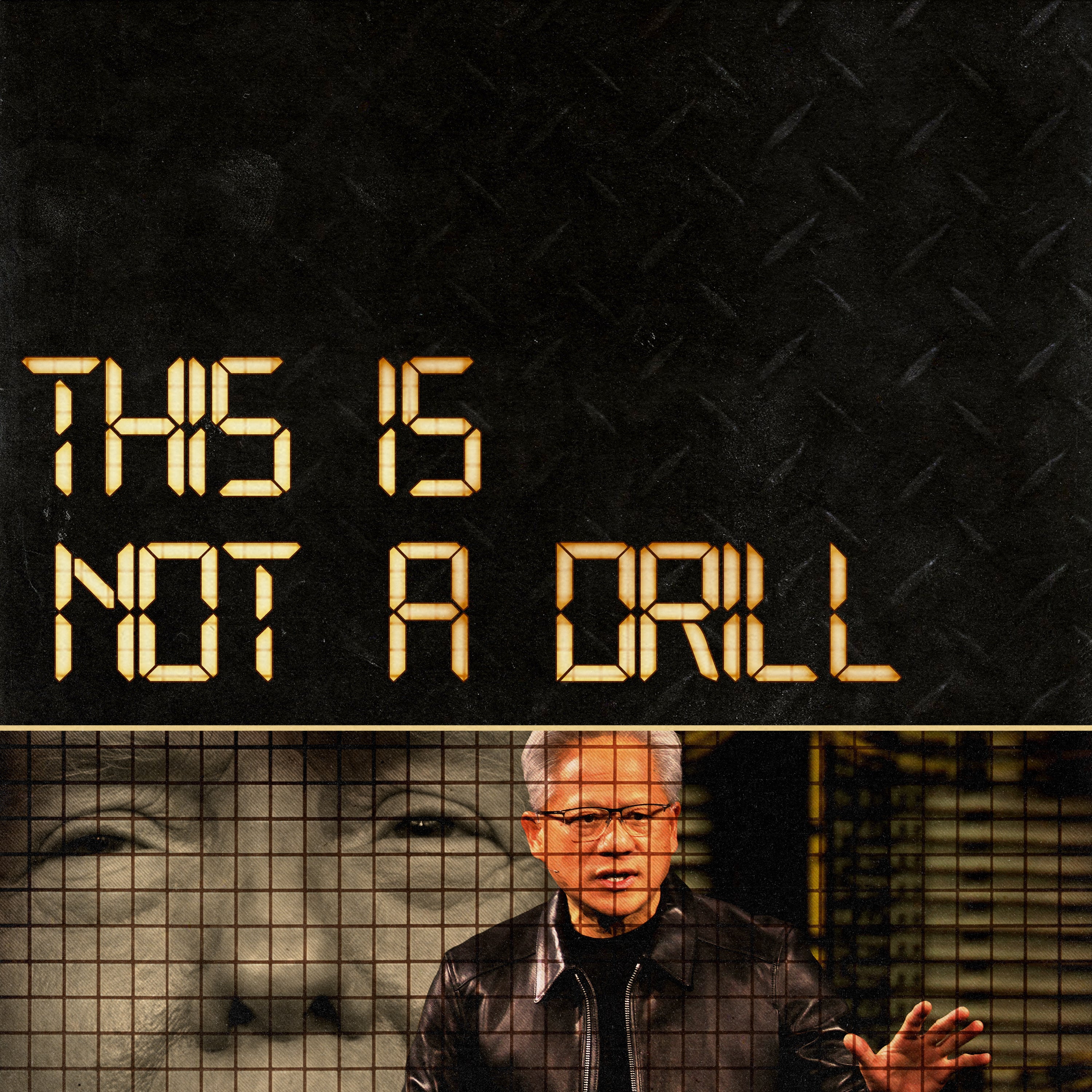
The Jensen Huang Nvidia story is much more serious than a “honeypot” spy story, even if it features one of the world’s richest men. Trump first conferred with Xi and then ordered Nvidia to reinstate its compromised CEO, and profited personally from the resulting stock bounce. The unprecedented intervention raises the question that the President of the United States is acting not in the national interest but for personal gain and to advance his friends. Meanwhile China’s plans to supplant America as the A.I. superpower continue unimpeded. Is the United States still in control of its A.I. technology? Gavin Esler talks to Professor Steve Tsang, director of the SOAS China Institute and co-author of China’s Global Strategy Under Xi Jinping, about this new phase in US-China rivalry. • Buy China’s Global Strategy Under Xi Jinping (https://uk.bookshop.org/a/13277/9780197828816) by Steve Tsang and Olivia Cheung through our affiliate bookshop and you’ll help fund This Is Not A Drill by earning u
President Trump says a pardon for Nvidia CEO Jensen Huang is “an option” as questions remain over the Justice Department’s investigation into the company and potential national security risks ... The US Army prepares to destroy highly unstable lead azide at an Iowa ammunition plant, as nearby residents voice concerns about potential health and environmental fallout ... President Trump says he plans to meet with Michigan Senator-elect Abdul El-Sayed about a proposal to rebrand Medicare for All as “Trumpcare” ... The CIA investigates a breach of unclassified intelligence systems that may have originated in China.
The fallout from the US midterm elections is putting Donald Trump under growing pressure, with corruption and fears over artificial intelligence emerging as major concerns among voters. Now, an extraordinary scandal involving Nvidia CEO Jensen Huang threatens to become a defining crisis for the White House. Allegations that Huang’s relationship with a suspected Chinese spy may have exposed sensitive technology to Beijing have raised serious national security questions. His return to the helm of Nvidia, reportedly following input from senior US government officials, has also prompted accusations of political interference, particularly given Trump's financial interests in the company. Hillary Clinton has described the affair as a ‘national security and corruption scandal’, while Fox News commentators have warned that Democrats could use it as grounds for impeachment. With Nvidia central to America's position in the global AI race, the controversy could have far-reaching consequences for
President Donald Trump and Vice President JD Vance helped bring Jensen Huang back as CEO of Nvidia, and that move is no facing criticism. That push to get Huang his job back has reportedly put Commerce Secretary Howard Lutnick at odds with Treasury Secretary Scott Bessent over the handling of national-security concerns involving Huang’s relationship with a woman whose alleged ties to Chinese intelligence remain in dispute. It also intensified questions over why advanced U.S. chips are reaching China, Iran or Russia. FOX's Eben Brown speaks with Leah Siskind, FDD’s AI Research Fellow, who says we need to focus on controlling where our chips are sent, and especially not allowing them to be sent to China. Click here to Follow the FOX News Rundown: Evening Edition: https://link.podtrac.com/fnr_podeve
Just 11 days after resigning from Nvidia, Jensen Huang is back as CEO. The reinstatement (https://www.wsj.com/articles/nvidia-board-reinstates-jensen-huang-as-ceo-a6b49914?mod=article_inline%3Fmod%3DWSJ_TNBPOD) came after the board faced intense pressure from Silicon Valley, Wall Street investors, and the White House. WSJ tech policy reporter Amrith Ramkumar (https://www.wsj.com/news/author/amrith-ramkumar?mod=WSJ_TNBPOD) tells us about Trump’s involvement in bringing back the chip maker’s longtime leader—and why Nvidia isn’t in the clear just yet. Julie Chang hosts. Hosted by Simplecast, an AdsWizz company.
The long-awaited release of “Grand Theft Auto VI (https://www.wsj.com/business/media/just-how-big-is-grand-theft-auto-vi-the-multibillion-dollar-frenzy-in-charts-7c6a3893?mod=author_content_page_1_pos_3%3Fmod%3DWSJ_TNBPOD)” comes as the videogame industry faces major structural shifts. Waves of studio layoffs, evolving business strategies and the rise of AI tools are reshaping how games are built. We bring you an episode by the WSJ’s What’s News (https://www.wsj.com/podcasts/whats-news?mod=WSJ_WNPOD) podcast that looks at whether “GTA VI” marks the end of an era for human-crafted, massive-budget blockbusters. Hosted by Simplecast, an AdsWizz company.
Anthropic (https://www.wsj.com/finance/stocks/what-to-know-about-anthropics-record-breaking-ipo-372a1fec?mod=hp_4stories_pos_1%3Fmod%3DWSJ_TNBPOD) made its public debut, with shares surging following the largest IPO in history. Journal reporter Kate Clark (https://www.wsj.com/news/author/kate-clark?mod=WSJ_TNBPOD) breaks down what the listing means for Anthropic, its rival OpenAI, and the broader AI ecosystem. Julie Chang hosts. Hosted by Simplecast, an AdsWizz company.
Food labels should explain environmental and ethical claims in verifiable terms.
Share your view, then see how readers voted. No sign-in required. This poll is shared across stories.
Do you agree or disagree?
Common Quandary
A Common Quandary to discuss
Another conversation to explore, separate from this news story.
A pricey AI tutor can turn B students into A students. Should schools let them use it?
An effective AI tutor adapts to each student and dramatically improves performance, but its subscription is expensive. A public school cannot provide it to everyone and worries that allowing its use will deepen existing inequality.
Should access be limited when a beneficial tool cannot yet be shared fairly?