How pensions ate everything. With John Burn-Murdoch
34 min
Listen through the publisher, then discuss the episode here or arrange an in-person Roundtable. Your city determines where to meet.
Roundtables are designed for groups of four, with a shared subject and room for everyone to speak. Come for discussion, with no dating expectation.
Should governments be spending so much on pensions? In countries such as Italy, France and Spain, about one in four euros spent by the state goes towards public pensions. In the UK it’s one in 10 pounds. Meanwhile, younger people are facing a higher likelihood of poverty in old age than those retiring now. The FT’s chief data reporter and columnist John Burn-Murdoch joins host Soumaya Keynes to discuss: is this a short-term problem – or have the assumptions on which many countries base their retirement systems lost all relevance? And either way, what’s the fix? Further reading: How pensions ate the state (https://www.ft.com/content/6986a3b5-12ed-4aad-ac61-f86ded3e6fa3?syn-25a6b1a6=1) Presented by Soumaya Keynes. Produced by Katya Kumkova. Original music by Breen Turner. The show is mixed by Breen Turner and Sam Giovinco. Manuela Saragosa is the executive producer. Flo Phillips is the FT’s head of audio. Read a transcript of this episode on (https://www.ft.com/content/5eab70fb-1f44-4cf3-aa21-27b4b2ad9850)FT.com (https://www.ft.com/content/5eab70fb-1f44-4cf3-aa21-27b4b2ad9850) Hosted on Acast.
Episode information is provided by the publisher. Listening takes place on the publisher’s service.
• Black Friday! Must end Tue Dec 15! (https://www.patreon.com/bunkercast/posts/black-friday-get-175810877) Looking back at the stories of the past seven days… British politics enters a new era of stupidity as Andy Burnham faces a Badenoch-Farage pile-on over “Chicken Nuggetgate”. Why is this nonsense story gripping Westminster? Donald Trump orders Nvidia to reinstate Jensen Huang as CEO. Is America now a Crony State Capitalist nation? Plus: net migration figures in the UK plummet, RIP Andy Taylor of Duran Duran, and Google teases an AI TV channel starring…. YOU. Rafael Behr and Andrew Harrison recap the week’s biggest, strangest and most overlooked stories. • Want more on the Huang scandal and Nuggetgate? Listen to today’s OGWN episode. (https://linktr.ee/ohgodwhatnowpod) Back The Bunker on Patreon to help keep the podcast going – and get early, ad-free episodes, merch and more. (https://www.patreon.com/bunkercast/membership?vanity=bunkercast) Written and presented by Group Editor Andr
After just 48 hours of shocking developments, it has become alarmingly clear that Ontario Premier Doug Ford is channelling Trump's authoritarian playbook, making bold power grabs and spouting outrageous comments about shooting home invaders rather than addressing the root causes of crime. This is not just a passing issue; it’s a call to action! In Hamilton, students have already taken a stand against his cruel OSAP cuts with a walkout, and we must all join in their fervour. Host Laura Babcock passionately expresses the urgency of this moment, and we cannot afford to be silent while our democracy hangs in the balance. Province-wide #FIGHTFORD protests are scheduled for Saturday, November 28—mark your calendars and be there!Meanwhile, Conservative Leader Pierre Poilievre has clearly lost his way, to the point that guest Kevin Boucher from North Bay questions whether he's aspiring to be the next Joe Rogan instead of a responsible leader. This is not just a joke; it reflects a troubling tr
Nick Jenkins is Founder and former CEO of Moonpig, former Dragon on Dragon’s Den, Chair of Virtualstock, NED at Green Energy Options and Trustee at Operation Fistula. Nick has recently founded the South Wilts Ski Club, an infinity ski slope in Wiltshire. Tune in to hear his thoughts on: What were your key sources of support and challenge in the early days at Moonpig? (2:26) How did you pick your first investor-directors? (4:40) What distinctive value did each of your investor-directors bring? (5:42) How did you keep going when your investors told you it wasn’t going to work? (7:06) How did you unlock the value of your board? (8:14) What was the biggest disagreement you had with the board? (9:05) Can you talk through your transition from Founder to Exec Chair? (10:01) How did you strike the balance between autonomy and oversight for your successor? (11:34) How do you add value as a NED today? (13:10) What advice do you have for those trying to scale a successful culture? (13:51) As a bo
On Thursday’s Mark Levin Show, we bring you the best of Mark Levin. Government-run health care sounds appealing because it promises universal, affordable access to care, but this leads to fewer doctors and nurses, longer wait times, lower quality care, higher costs, and greater government control over life-and-death decisions. Universal coverage does not guarantee timely medical treatment and full government-controlled health care would result in rationing, limited access to care, reduced accountability, and diminished patient choice. Politicians, bureaucrats, and the media promote government-run health care despite the clear evidence of its failures, while overlooking the strengths of America’s largely private medical system. Later, Alabama residents are speaking out over plans to expand the Auburn Islamic Center and build a mosque. Residents argued their opposition was not political or based on religious hatred, but on concerns about an ideology which threatens American society. Thes
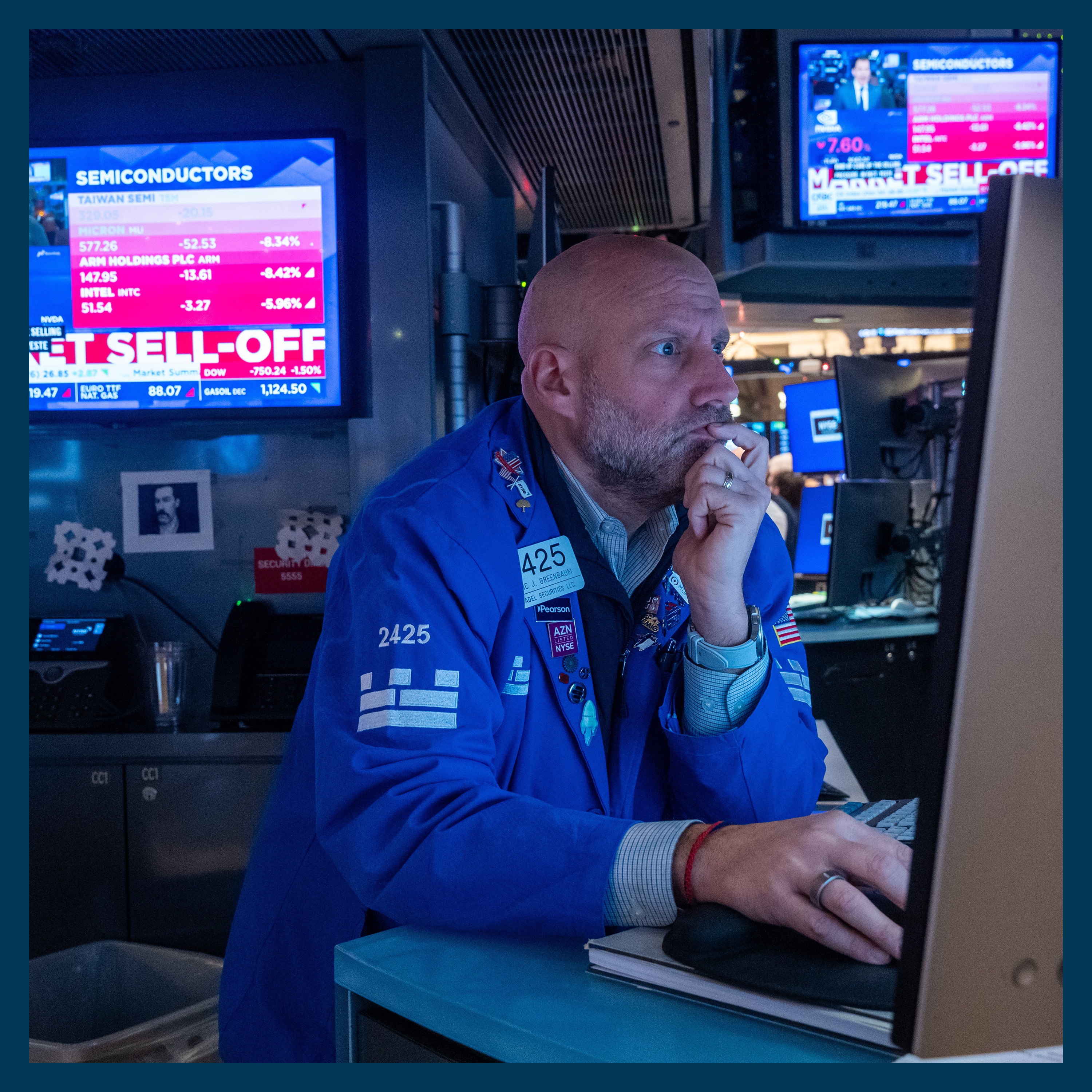
It’s been a volatile period for the world’s stock markets - the fluctuations are linked in part to the resignation and reinstatement of Nvidia’s CEO Jensen Huang, as well as questions about the value of AI companies. So is the bubble finally bursting or is this a minor correction with worse to come? And why do Nvidia’s fortunes have such an effect on global markets? Guest: Rory Cellan-Jones, author and technology correspondent Host: Manveen Rana Producers: Olivia Case and Robyn Simon We want to hear from you - email: [email protected] Read more: Nvidia farce lays bare the fragility of the AI boom (https://www.thetimes.com/us/business-us/article/nvidia-farce-fragility-of-ai-boom-th6j8p3kd) Further listening: The Times Tech podcast (https://podfollow.com/times-tech-podcast) Clips: Bloomberg, CBC, France 24, CBS, Reuters, CNN, MSNBC, Channel 4, Fox News, USA Today. Photo: Getty Images Hosted on Acast.
On Friday’s episode of The Daily T (https://www.telegraph.co.uk/podcasts/the-daily-t-podcast/), Camilla Tominey is joined by Prof Richard Susskind, an AI expert and author, to explore the real and present dangers it poses. He discusses use of the technology by “bad actors”, warns that the technologies to “wreak havoc across the globe” already exist and quotes Bill Gates suggesting that it is “hard to imagine that no bad actor will take advantage of it”. Prof Susskind explains the next stages of AI evolution and predicts that it will be one of the “defining moments of societal development”, comparing it to the invention of the printing press and the steam engine. He also warns that governments and businesses are ill-prepared for the future and “playing whack-a-mole”. He encourages them to “take a step back” and consider what will happen when an artificial general intelligence is developed rather than trying to patch problems as they arise. ► We want to hear from you! ► Sign up to our mo
When Jason Furman was a junior employee at the Council of Economic Advisers, he would pore over spreadsheets and statistical packages, summarise economic papers and fetch a new tie when his boss spilled something on his old one. Furman — now a Harvard professor and senior fellow at the Peterson Institute — says today AI can do everything he used to do, except collect a new tie. So: will AI make economists obsolete? And what can their potential plight tell us about the impact of the technology in other fields? Soumaya speaks to John Burn-Murdoch and Sarah O’Connor, authors of the FT’s AI Shift Newsletter, to find out. To subscribe to The AI Shift newsletter, click here (https://www.ft.com/the-ai-shift). Presented by Soumaya Keynes. Produced by Katya Kumkova, Mischa Frankl-Duval and Edwin Lane. Original music by Breen Turner. The show is mixed by Breen Turner. Manuela Saragosa is the executive producer. Flo Phillips is the FT’s head of audio. Read a transcript of this episode on FT.com (
Europe is nowhere to be found in the AI story. As the US builds new models and crunches through chips, China provides competition and other Asian nations churn out hardware, Europe is often portrayed as a passive spectator. But is that right? Philip Lane, chief economist at the European Central Bank, joins host Soumaya Keynes to discuss. He tells us where the technology is already showing up in the data, and where he sees things going. Presented by Soumaya Keynes. Produced by Katya Kumkova. Original music by Breen Turner. Mix by Sean McGarrity. Manuela Saragosa is the executive producer. Flo Phillips is the FT’s head of audio. Read a transcript of this episode on FT.com (https://www.ft.com/content/626624a3-7e41-46e4-9697-fe57a28f8a3e) Hosted on Acast.
Economist Isabella Weber grew up in Nuremberg, the German city where Adolf Hitler staged his vast Nazi rallies. Growing up in the shadow of that history helped shape her thinking about the relationship between economics and democracy. Now, with the cost of living dominating US politics and fuelling protests across Europe, Weber argues governments must do more to guarantee life's essentials rather than leave them to market forces. She joins guest host Martin Sandbu to explain why she believes we are living through an age of overlapping crises, how targeted price controls for essentials could help and whether making life more affordable can help keep authoritarianism at bay. Presented by Soumaya Keynes. Produced by Mischa Frankl-Duval. Original music and sound design by Breen Turner. Manuela Saragosa is the executive producer. Flo Phillips is the FT’s head of audio. Read a transcript of this episode on FT.com (https://www.ft.com/content/6b969bcb-9c5c-4a6a-9143-2c5c593abd6e) Hosted on Aca
Individuals should control whether organizations share their personal information.
Share your view, then see how readers voted. No sign-in required. This poll is shared across stories.
Do you agree or disagree?
Common Quandary
A Common Quandary to discuss
Another conversation to explore, separate from this news story.
Your partner checks your location whenever you reply slowly. Is that caring or creepy?
A couple shares live phone locations for convenience and safety. One partner begins checking the map whenever a message goes unanswered, even though they have never agreed on when checking is appropriate.
Does granting access also grant permission to monitor?