How the Intl. Community Sold Out Gaza & Killed Itself in the Process (w/ Norm Finkelstein) | TCHR
74 min
Listen through the publisher, then discuss the episode here or arrange an in-person Roundtable. Your city determines where to meet.
Roundtables are designed for groups of four, with a shared subject and room for everyone to speak. Come for discussion, with no dating expectation.
The greatest injustices in the world are often masked in volumes of complex and incomprehensible legal language that are not accessible to the general public. The genocide of Palestinians in Gaza is one horrific example of how the world’s highest legal institutions appear to have gone through the motions of upholding international law, but in reality, are riddled with corruption and political ambition that have enabled the Zionist entity to commit ongoing war crimes and ethnic cleansing. In his most recent book, “Gaza’s Gravediggers: An Inquiry into Corruption in High Places, (https://orbooks.com/catalog/gazas-gravediggers/)” which may be the ‘capstone’ to his life’s work of documenting the settler-colonial state of Israel, Professor Norman Finkelstein lays out in detail the facts about what is occurring in Gaza versus the flawed claims made by the United Nations and international courts. Finkelstein joins Chris Hedges to discuss the “shortcomings” and “outright fraud” in what he calls “pockets of corruption in the international system” in this episode of The Chris Hedges Report. Finkelstein does the tedious work of individually exposing the discrepancies in court reports about Palestine and demonstrating their implausibility, a difficult task when you consider that, as he states, “There’s a very big mental distance between something intuitively not sounding right and trying to prove it.” Fortunately, there are numerous reports from a variety of bodies such as the United Nations and human rights groups that have extensively documented the atrocities taking place in Gaza. Finkelstein pulls on this body of work to contrast the evidence-free claims of careerist international legal officials with the overwhelming amount of reporting conducted on Gaza by the most credible humanitarian organizations in the world. Hedges and Finkelstein discuss the ways World Court judges and United Nations commissioners twist the facts, pick and choose their sources and manipulate events to achieve notoriety or protect their careers. They then provide an analysis of United Nations Security Council resolutions, particularly Resolution 2803, which created the ‘Board of Peace’ that literally gave President Trump ownership of Gaza. This and the failure of the UN Security Council to condemn the US-Israeli attack on Iran, which Finkelstein calls “the most brazen, flagrant breach of the UN Charter,” lead to the regrettable conclusion that these institutions are “no longer [are] valid arbiters of international law.”
Episode information is provided by the publisher. Listening takes place on the publisher’s service.
How do three modelers balance prototype accuracy, personal interests, and production complexity when bringing new HO scale freight cars, auto racks, and couplers to market? In this episode, the Prairie Shadows team discusses their approach to developing HO scale models that respond to both personal enthusiasm and the demands of prototype fidelity. The conversation covers recent and upcoming releases, including the Trinity 5125 PD5000 covered hopper, tri-level Thrall auto racks, Thrall 5150 covered hoppers, and a new in-house HO scale coupler called the Vandelay. The team describes how research, field measurements, and attention to railroad-specific detail drive decisions from initial project selection to production, while highlighting the influence of their own modeling interests and the realities of limited time and resources. Several points emerge around the tension between striving for accuracy and managing complexity, with the group emphasizing the logistics of maintaining detail d
Europe's Little Anarchy: The Rise and Fall of Neutral Moresnet (https://bookshop.org/a/12343/9781501788147)(Cornell UP, 2026) uncovers the history of Neutral Moresnet: a once-forgotten space without borders, nationalism, or a recognized government. Between 1815 and 1919, this square mile of land wedged between Belgium, the Netherlands, and Germany was home to thousands of people living off the grid, free of taxation and oversight. But they also had no political status, police, legal currency, proper law courts, or government presence in sectors like public health, infrastructure maintenance, or education. Meanwhile, practical control over Neutral Moresnet lay in the hands of the local industry: a for-profit, multinational mining company that, because it owned rights to the land, also held a near monopoly on the supply of high-quality zinc to the rest of the world. Dr. Steven Press explores how the residents of Neutral Moresnet sought to improve their quality of life, appealing to Germa
Why does losing weight feel so much harder after 50? If you're eating better, trying to exercise, and doing all the things you think you should be doing—but the scale won't budge—you're not alone. In this episode, we'll look at what's changing in your body after 50, five things worth examining when you're struggling to lose weight, and some simple places to start. I'll also share my own turning point, what I changed, and how I lost 70 pounds and have maintained that weight loss for years. You aren't too old, your body isn't hopeless, and you don't have to keep repeating the same dieting cycle. It's not too late to take a different approach! Links & Resources: Learn more & visit: https://robynpolk.com/ Ready for More Support? I’d love to help you. Work with me 1:1 Loved this episode? Email: [email protected] and tell me why! Join our Facebook community: Loved this episode?
“The only time I would get scared is if I didn’t really believe in something.” - Amanda Rettig Australian designer and founder Amanda Briskin-Rettig has spent 30 years building fashion brands. She founded Mimco in 1996, sold it in 2007, and 13 years ago started A-esque, a self-funded leather goods brand handmade in small batches in Melbourne. Its philosophy is simple: build slowly, create intentionally, and make things that last. In this episode, Amanda shares how to start a fashion brand and grow it sustainably. She covers product development and product architecture, small-batch manufacturing inspired by Toyota’s lean model, and how to avoid excess inventory, deadstock and discounting. She also talks about local manufacturing, building a direct-to-consumer business, brand storytelling, collaborations, and what she learned from building and selling a business. If you want to start a handbag or accessories brand, build a sustainable fashion business, or grow a brand without compromisin
In this segment Jimmy criticizes Democrats for nominating Hakeem Jeffries as House Speaker, arguing that Jeffries' strong support for Israel, corporate donors, and military spending represent a rebuke to voters' demands for change. He highlights Jeffries' past statements backing Israel's military and his opposition to limiting U.S. support for the wars, while questioning the future Speaker's claims that Democrats would fight for affordability and working people. Jimmy reserves additional criticism for progressive lawmakers, including Ro Khanna and Alexandria Ocasio-Cortez, for supporting Jeffries before securing meaningful commitments on Gaza, military aid, or other priorities, leaving them with little leverage. Jimmy argues that efforts to reform the Democratic Party from within repeatedly fail and that progressives should stop giving party leaders their unconditional support. Plus segments on a CNN panel labeling Democratic opponents to Hakeem Jeffries as racists and the EU issuing 3
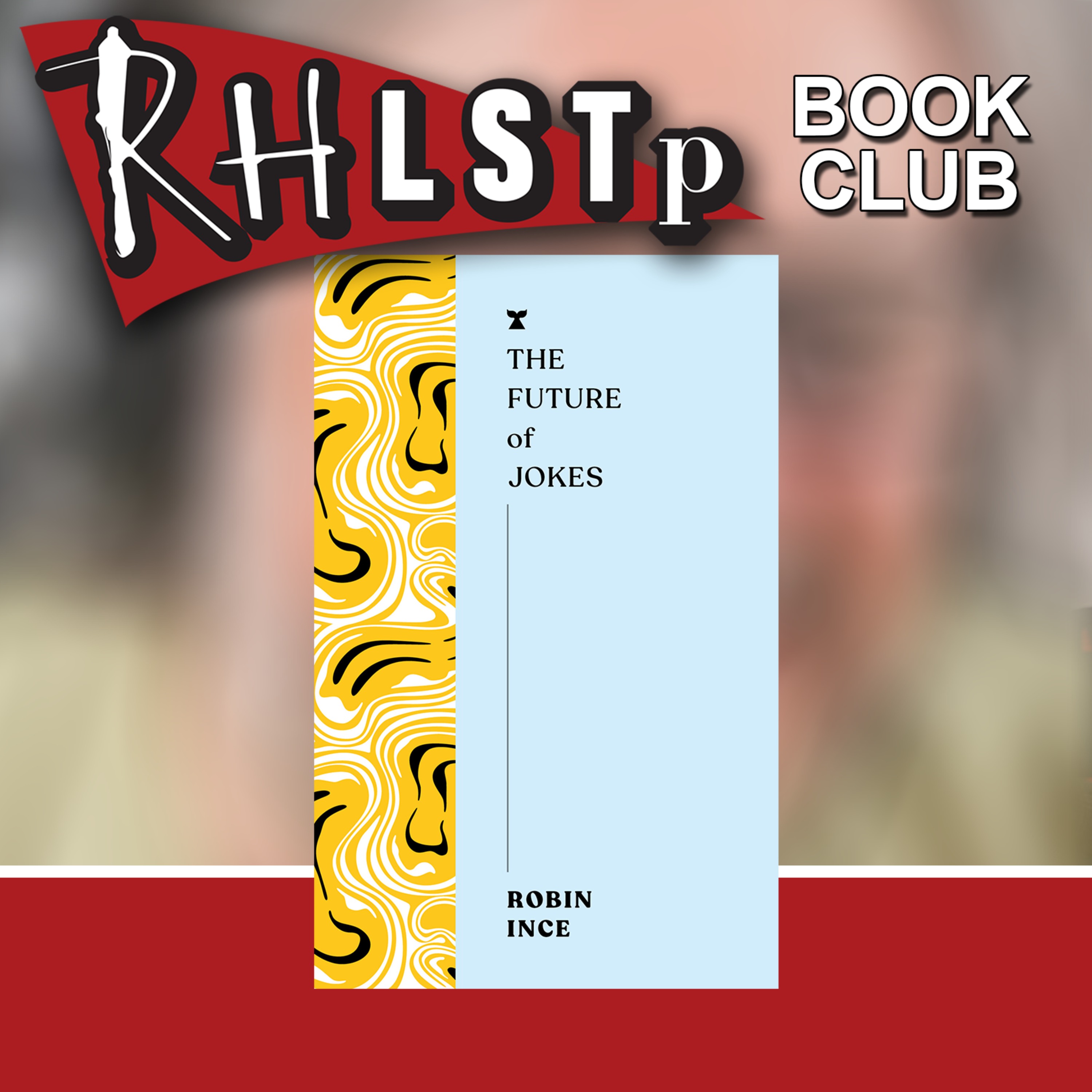
RHLSTP Book Club #202 - The Future of Comedy - Robin Ince comes to Hitchin and on the way to an event pops in to see Rich to talk about his book, The Future of Comedy and the past and future of comedy in general. As expected it’s a wide-ranging conversation taking in when laughter began and when it will end, jokes that work for centuries and jokes that work for an instant, how some performers elevate material beyond what’s on the page, being a product versus being inventive, not turning into your a fuddy daddy, how the internet and AI might change comedy and whether you need a human being in the equation to make anything meaningful, what it’s like to play arenas and why both Robin and Richard create way too much stuff but why the Hell not? Watch our TWITCH CHANNEL (https://twitch.tv/rkherring) Audio mix by Ben Evans (NTO) Thanks to Chris Evans (NTO) Hosted on Acast.
Congressmembers have returned to the Capitol following the recent midterms and are poised to pass the 2027 National Defense Authorization Act (NDAA) that would raise the Pentagon budget to an unheard of $1.5 trillion in a lame duck session. Although the NDAA is typically enacted with little fanfare, this year activists are coming to Washington, DC in the Taxpayer’s Uprising, organized by a coalition of groups, including CODEPINK, Doctors Against Genocide and Veterans for Peace, with the sole purpose of blocking what is being called the “Trump-Hegseth $1.5 Trillion War Bill.” In this episode of The Chris Hedges Report, Jodie Evans, a co-founder of CODEPINK, joins Chris Hedges to discuss the dangers of increasing military spending and why it is imperative that this legislation is stopped. Beyond the obscenity of squandering taxpayer dollars on death and destruction while half of people in the United States are struggling to pay their bills, is that Section 224 of the 2027 NDAA would inte
Keeping food affordable should not require producers to work for an unsustainable income.
Share your view, then see how readers voted. No sign-in required. This poll is shared across stories.
Do you agree or disagree?
Common Quandary
A Common Quandary to discuss
Another conversation to explore, separate from this news story.
Your ex's streaming password still works. When does borrowing become stealing?
Months after a friendly breakup, your television remains logged into your ex's streaming account. They have never mentioned it, the service allows several screens, and your viewing does not increase their monthly bill.
Can silence count as permission when asking might end the benefit?