Listen through the publisher, then discuss the episode here or arrange an in-person Roundtable. Your city determines where to meet.
Roundtables are designed for groups of four, with a shared subject and room for everyone to speak. Come for discussion, with no dating expectation.
In this episode, Dr. K addresses the neuroscience and psychology of overcoming addiction, challenging the viral myth that recovery is as simple as waking up one day and deciding "enough is enough". Citing classic neuroscience experiments like the Libet study, he explains why internal brain rewiring occurs long before conscious results emerge, meaning months of effort without immediate yield should not be mistaken for a lack of progress. He breaks down why lasting recovery relies on three essential pillars: finding a powerful competing interest, building alternate emotional regulation techniques to process negative feelings, and changing your physical environment to eliminate habitual triggers. Mental health resources designed by Dr. K and made with love: https://bit.ly/3ZOopgQ Talk to a HG Coach 1-on-1: https://bit.ly/46bIkdo Dr. Dr. K's Guide to Mental Health: https://bit.ly/44z3Szt HG Memberships : https://bit.ly/3TNoMVf Products & Services : https://bit.ly/44kz7x0
Episode information is provided by the publisher. Listening takes place on the publisher’s service.
Access the masterclass instantly for free: https://nci.university/learn Uploaded 10-01-26 Your goals don’t fail because you lack discipline — they fail because they were aimed at the wrong system. Optimizing behavior without fixing brain chemistry is like issuing commands to a damaged machine. Until the chemical environment is right, effort just increases friction and burnout. All goals live in the conscious mind — but control does not. Real behavior is governed by the mammalian brain, the ancient systems that decide safety, threat, and energy allocation. Every resolution collapses when those lower systems detect risk, even if you consciously “want” the outcome. Goal-setting ignores this hierarchy — and that’s why it keeps failing. Once you target the parts of the brain actually in charge, change stops feeling like force. Discipline becomes unnecessary when the system itself is aligned. Please note that the content provided in this broadcast is for informational and educational purpose
Is your body weight stable, but you're still not eating enough to properly fuel your training, recovery, and overall health? Introducing Why Stable Weight Doesn't Always Mean You're Eating Enough from Jeff Hoehn of the Mind Muscle Connection Podcast (https://www.buzzsprout.com/1508401). Just because your weight isn't changing doesn't necessarily mean you're adequately fueled. In this episode, Jeff breaks down why maintaining a stable body weight doesn't always mean you're meeting your body's energy needs, especially if you're training hard, staying lean, or spending long periods dieting. You'll learn: Why stable body weight doesn't automatically mean adequate energy availability Who is most at risk of underfueling, even when their weight isn't changing How high training output, staying too lean, and chronic dieting can contribute to low energy availability The potential signs of underfueling, including changes in performance, recovery, hormones, and menstrual health Why spending too lo
MAPS Black Friday Sale: https://mapsfitnessproducts.com Next giveaway: Mon Nov 23 at 4pm PST on IG Live for a Mind Pump merch pack, a 1 year Vita Bella membership and Olipop (5 winners, 12 pack each). What's the least you can do and still see great results? The guys give you 5 simple steps: lift once a week (or a little most days), get 8,000 steps a day, eat only whole foods, prioritize sleep, and take a multivitamin and creatine. They also talk about Legion's Lunar sleep supplement, California's new law on supplement sales to minors and a tongue-in-cheek theory on strength, testosterone and politics, a viral Pavel strength clip, where Kion's creatine comes from, the real estate market and Nvidia. Then they coach live callers submitted through mplivecaller.com. SPONSORS Legion: https://buylegion.com/mindpump Kion: https://getkion.com/mindpump Manukora (Manuka honey): https://manukora.com/mindpump No code needed. $170 off your first Starter Kit, which includes a free mini jar of 1200+ M
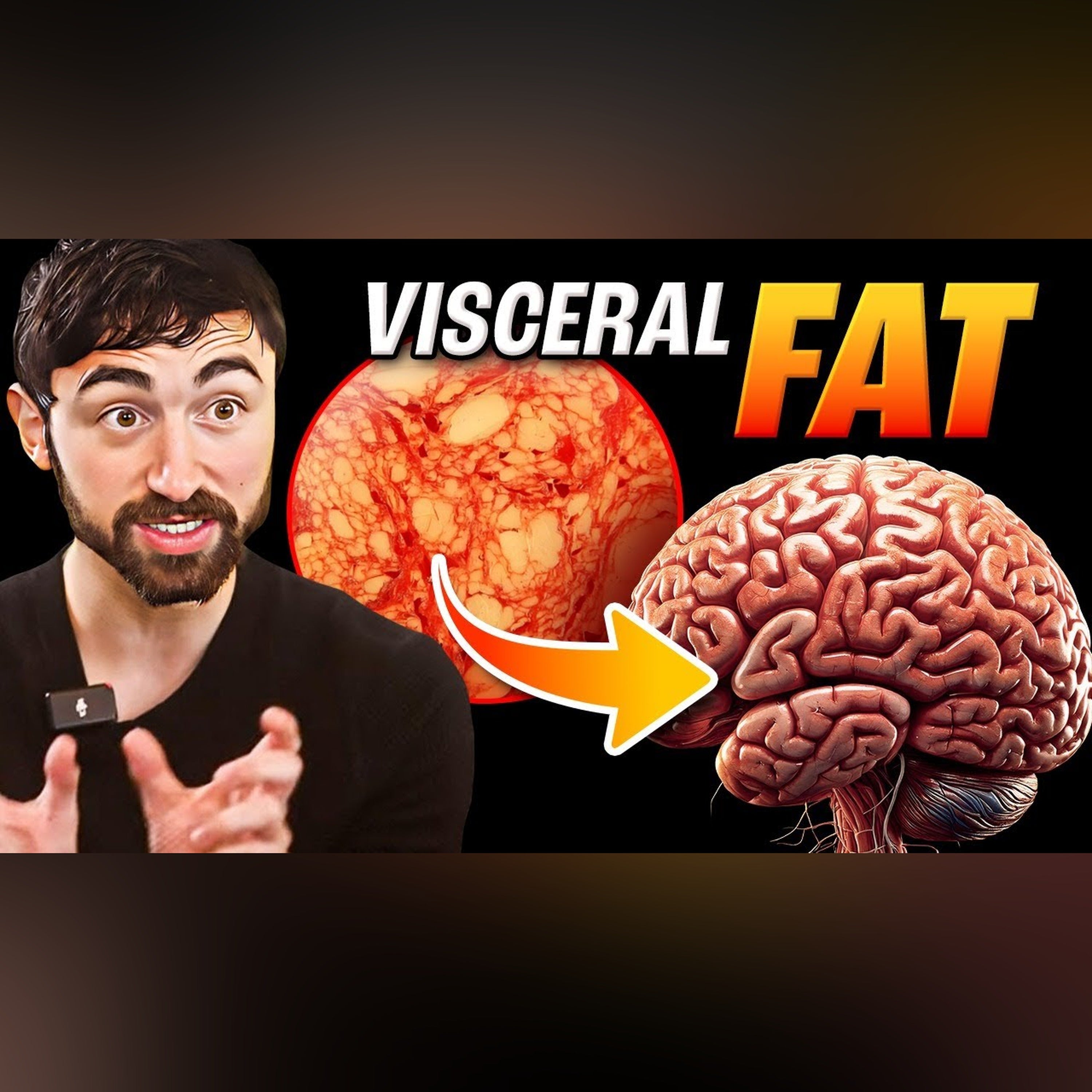
For all references and even deeper nuances, check out the StayCurious Metabolism letter: https://staycuriousmetabolism.substack.com/p/can-visceral-fat-cause-depression?r=40ekz2 Chapter *Call our service line at 815-STAY-CUR (815-782-9287) *Learn more about the data, here: https://staycuriousmetabolism.substack.com/p/life-or-death-in-the-fine-print-the?r=40ekz2 Visceral Fat Randomized Controlled Trial Video: https://youtu.be/lDeegZ1wtAI Description: Most people think of fat as extra weight—something cosmetic or something to “burn off.” But new science is showing something far more profound: visceral fat is an endocrine organ that sends biochemical messages across the entire body, including directly into the brain. And those messages can change mood, increase stress sensitivity, and even promote depression. In this video, we break down a brand-new study revealing how visceral fat releases tiny molecular packages called extracellular vesicles. Inside those vesicles is a specific microRNA—
I Need a Moment Before I React — 10-Minute Breathing Meditation for Anxiety, Stress & Overwhelm | 4-2-6 Breath Do you feel the reply leave your mouth before you've had a chance to choose it? A message on your phone, a particular tone of voice, one more request when you're already stretched thin, and something tightens. This 10-minute breathing meditation for anxiety gives you that moment before you react, a little space to notice what you're feeling when you're stressed and overwhelmed, and then decide what would actually help. For a calm pause whenever you need one, download Anchored, my app for panic and anxiety. Guided sessions, breathing tools and fresh caring tips every day, and it plays with the screen off. iPhone: https://apps.apple.com/us/app/anchored-panic-anxiety/id6785035669 | Android: https://play.google.com/store/apps/details?id=com.martinhewlett.anchored Together we use a calming 4-2-6 breath: in through the nose for four, a gentle hold for two, and a long, easy release f
Trauma and PTSD Expert Arielle Schwartz discusses how journaling and writing practices can help individuals work through trauma and facilitate healing, even without a therapist. She shares practical tips, mental models, and personal insights on trauma, shame, and post-traumatic growth. Sign up for my free Panic Attacks course https://courses.therapyinanutshell.com/ending-panic-attacks-and-anxiety-attacks Can trauma journaling help with healing trauma? In this conversation, Dr. Arielle Schwartz joins me to explore how writing and narrative therapy can support processing and integrating trauma, building self-compassion, and finding greater connection with yourself and others. Whether you’re navigating PTSD, complex PTSD, or painful experiences from your past, approaching your story can feel overwhelming. We discuss how to begin gently, build a foundation of safety, and recognize when it’s time to pause and reach for support. https://drarielleschwartz.com (https://drarielleschwartz.com/)
In this episode, Dr. K analyzes candid feedback from over a hundred software engineers facing burnout, loss of joy in coding, and existential dread in an AI-driven tech landscape. He breaks down the friction between developer reality and executive expectations, where corporate pressure to rapidly increase output with AI tools often results in code instability, production incidents, and tedious code-review assembly lines. Drawing on engineering benchmarks like the DORA report, Dr. K outlines tactical communication strategies for developers to manage upward by matching leadership enthusiasm while proactively documenting technical risks. Ultimately, he emphasizes that cultivating emotional resilience, social proficiency, and clear communication provides engineers with their strongest competitive edge during periods of industry disruption. Mental health resources designed by Dr. K and made with love: https://bit.ly/3ZOopgQ Talk to a HG Coach 1-on-1: https://bit.ly/46bIkdo Dr. Dr. K's Guide
In this episode, Dr. K reacts to stand-up comedy crowd work clips to unpack the psychiatric realities behind humor surrounding depression, ADHD, and modern relationships. He explains how struggling with household chores can be a legitimate clinical symptom of a depressive episode, while exploring how the subconscious can also learn to manufacture complaints to avoid unwanted responsibilities. Dr. K also breaks down the emotional dynamics of dating someone with bipolar disorder and examines how social media fuels widespread misunderstanding around ADHD. Finally, he highlights biological fundamentals like restorative sleep, nutrition, and gut health to demonstrate why physical habits often resolve distress far more effectively than over-pathologizing everyday sadness. Mental health resources designed by Dr. K and made with love: https://bit.ly/3ZOopgQ Talk to a HG Coach 1-on-1: https://bit.ly/46bIkdo Dr. Dr. K's Guide to Mental Health: https://bit.ly/44z3Szt HG Memberships : https://bit.
In this episode, Dr. K investigates the viral internet trend surrounding self-injected peptides for muscle recovery, injury repair, and anti-aging. Drawing on his background in complementary medicine and placebo research at Harvard, he argues that unproven compounds like BPC-157 function largely through a strong placebo response fueled by high prices, novelty, and social media hype. While GLP-1 agonists like semaglutide have clear clinical trial data for weight loss, Dr. K highlights the severe hidden risks of unregulated peptides—including potential cancer acceleration through angiogenesis and dangerous chemical contamination in online orders. Mental health resources designed by Dr. K and made with love: https://bit.ly/3ZOopgQ Talk to a HG Coach 1-on-1: https://bit.ly/46bIkdo Dr. Dr. K's Guide to Mental Health: https://bit.ly/44z3Szt HG Memberships : https://bit.ly/3TNoMVf Products & Services : https://bit.ly/44kz7x0
Canceling a digital subscription should be as easy as starting one.
Share your view, then see how readers voted. No sign-in required. This poll is shared across stories.
Do you agree or disagree?
Common Quandary
A Common Quandary to discuss
Another conversation to explore, separate from this news story.
An app can text exactly like someone you lost. Would you keep talking to it?
A service can create a conversational likeness from a deceased person's messages and recordings. A grieving family member finds it comforting, although the deceased never consented to this use of their data.
Can comfort justify creating a voice the dead never authorized?