How to Get Promoted: 6 Factors That Matter More Than Hard Work
20 min
Listen through the publisher, then discuss the episode here or arrange an in-person Roundtable. Your city determines where to meet.
Roundtables are designed for groups of four, with a shared subject and room for everyone to speak. Come for discussion, with no dating expectation.
If you think your next promotion will come because you’re outworking everyone around you, I’ve got some bad news: hard work doesn’t factor as a primary consideration in promotion decisions. Results matter and, in a perfect world, that would pretty much be the end of the story. But several other considerations come into play. In this episode, I unpack the six factors that really drive who gets promoted; I reveal the right way and the wrong way to work hard; and I show you where your hard work will get the most traction. The leaders who rise the fastest aren’t the ones who do more ‘stuff’ and work punishing hours. They’re the ones who learn to get maximum leverage from their people. ———————— Links mentioned in this episode: No Bullsh!t Leadership episode: Ep.430: How To Speak Up In High-Powered Meetings (http://www.yourceomentor.com/episode430) Amazon link: LBT link: ———————— You can connect with me at: Facebook: https://www.facebook.com/yourceomentor Instagram: https://www.instagram.com/yourceomentor Linkedin: https://www.linkedin.com/in/martin-moore-075b001/ Youtube: https://www.youtube.com/@YourCEOMentor ———————— You're still doing the work your team should own. And you can't see a way to stop. Lean more: https://join.leadershipbeyondthetheory.com/ Hosted on Acast.
Episode information is provided by the publisher. Listening takes place on the publisher’s service.
You've gotten very good at pretending you don't feel it. Uploaded 21-08-26 Maybe it's a conversation with someone you love. Someone you work for. A partner, a parent, a friend who's been quietly taking more than they give. Or the hardest one of all — a conversation with yourself, the one where you finally admit something you've refused to say out loud for years. You know exactly which one I'm talking about. You felt it the moment I said the word. A name came up, or a face, and your stomach did something small and unpleasant, and you pushed it back down where it's been living. That flinch is the most honest thing that's happened to you all day. Here is the truth: the life you say you want — the freedom, the peace, the relationship, the income, the respect — there's a very good chance it's on the other side of one conversation you keep refusing to have. Not ten. One. This seminar unpacks the single mechanic behind a stuck life: the necessary conversation you keep treating like a locked d
AI has dominated the headlines, but the bigger story might be happening in hardware. Bryce and Ren sat down in New York with Andrew Kang, CEO of RoboStrategy, who argues robot intelligence is now where AI was in 2022. With physical work making up roughly half the world's labour, they unpack why specialised robots will arrive before humanoids in your home, how the US and China really compare, and what it means to invest in a theme that is still mostly privately held. In this episode: 00:00:00 Are Robots The Next Trillion-Dollar Investment Opportunity? 00:02:48 Inside The Robotics Revolution At Figure AI 00:04:19 Why Robotics Is Where AI Was In 2022 00:07:51 How Big Could The Robotics Industry Become? 00:09:42 Where Robots Are Already Being Used Today 00:11:37 Why Specialised Robots Could Win First 00:14:22 Who Is Winning The Robotics Race: US Or China? 00:16:54 Why Robots Could Cost Just $2 An Hour 00:19:31 How Andrew Picks The Next Robotics Winners 00:24:33 The Company Powering America
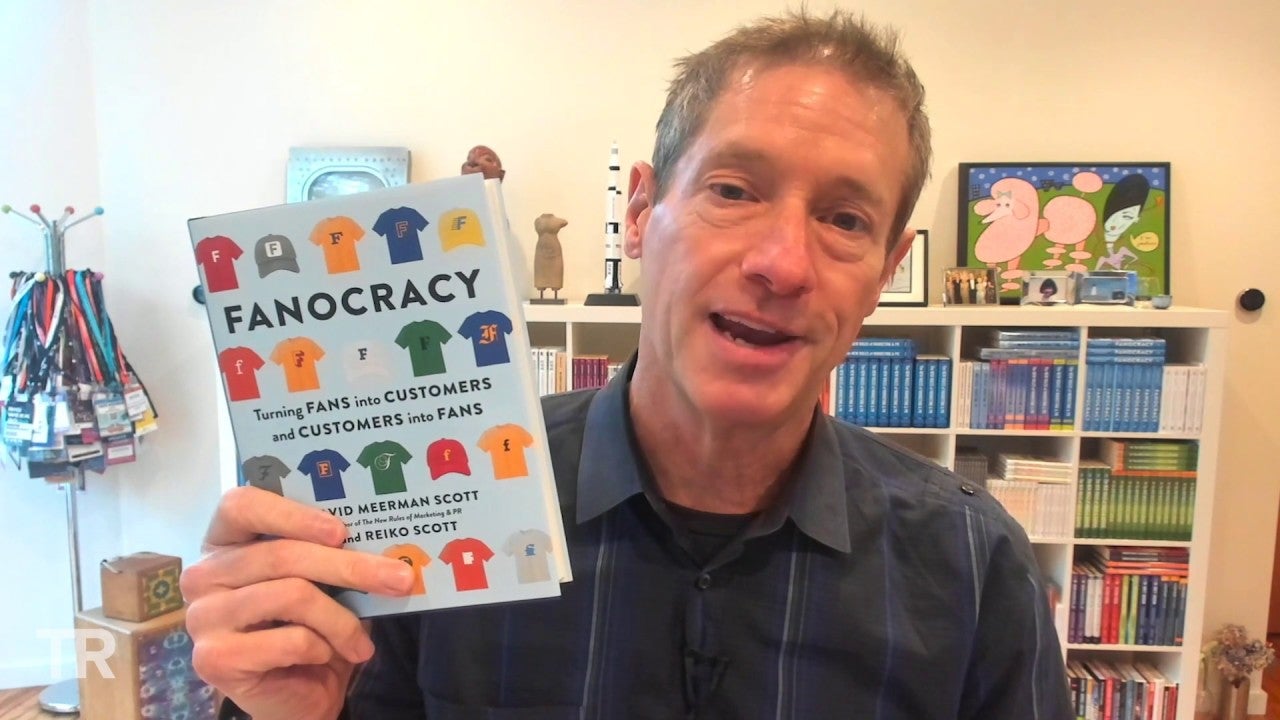
Marketing strategist, visionary and best-selling author David Meerman Scott shares three things you can be doing right now to improve your marketing and communications to create raving fan customers. Uploaded 24-04-20 For his recent book Fanocracy (https://www.fanocracy.com), (https://www.fanocracy.com),/) David researched an essential question for all business owners: Why do we become fans of something? Ultimately, humans are hard-wired to want to be part of a tribe. We want to find people who are like us. When we’re part of our tribe we feel safe and comfortable. When we’re not part of our tribe, we feel uncomfortable. Music creates these tribes. Tony Robbins events create these tribes. Especially in times of stress, business owners can leverage this need for belonging to create raving fan customers. (You can read about raving fan customers at https://www.tonyrobbins.com/career-business/create-raving-fan-customers and watch this video for more). But to do it, you’ll need to shift the
In this video, Disability Attorney Walter Hnot of the Disability Resolution Law Firm goes over the rental home that will replace the lost retirement benefits I will likely face one day. Like the content? Review us here: https://g.page/r/CcwyektC7nCPEAg/review . If the link does not work, Google: Disability Resolution, P.A. Welcome to the largest Social Security Disability Tutorial Video Library On Earth. PRIVATE ONE HOUR PHONE CALL THIS IS HOW YOU CAN GIVE BACK TO HELP GROW THE CAUSE: Option 1: Leave 5 |==================5 STAR REVIEWS==================| Google (Search Disability Resolution Orlando, FL)- https://www.google.com/search?authuse... (https://www.google.com/search?authuse...=) AVVO (Search Walter Hnot) - https://www.avvo.com/attorneys/32817-... BBB (Search Disability Resolution Orlando, FL)- https://www.bbb.org/us/fl/orlando/pro... MARTINDALE (Search Walter Hnot Orlando, FL) - https://www.martindale.com/attorney/w... Option 2: Donate Student Loans : https://www.gofundme.com/
Jess knows that she’s a bit behind when it comes to super. Her current balance is on the small side for her age- and the type of retirement she wants. She knows she needs to do something about it, and has had a handful of conversations about it with experts on the show already. But she was yet to take action. This conversation finally changed that. In this episode, she spoke with Ashton Jones Director of Strategy and Innovation at MLC, who explained how to work out what balance she needs and bridge the gap from where it is now. Jess entered this chat struggling to take action, thinking she needed to add large sums to catch up. But Ashton walked her through simple (and small) actions she can use; including a 1% change that could make up to $200,000 difference to her super by retirement. By the end she finally understood how little it can take to make a huge impact on the life she gets to live in the future- and it can do the same for you. Chapters: 00:00 Why Super Matters 04:49 When to
Are you on track with the Baby Steps? Get a Free Personalized Plan. (https://ter.li/zqzs8w) Have a money question? Ask Ramsey is here to help. (https://ter.li/vpd8ego2) George Kamel and Jade Warshaw answer your questions and discuss: “I am afraid that my creditors will garnish my inheritance check before I have a chance to negotiate” “My mortgage is 55% of my income, should I sell?” “I co-signed on a car loan with my sister and she is behind on her payments. Should I take over the loan and rent it to her?” “Should I switch careers if I keep getting fired from my jobs?” “Should I cash out my 401(k) to pay for a new window?” Next Steps: Have a question for the show? Call 888-825-5225 weekdays from 2–5 p.m. ET New to the show and want to learn more? Check out our 7 Baby Steps! (https://ter.li/1sn8b18j) Start your free budget today. Download the EveryDollar app! (https://ramsey.solutions/8tj2bn) Get your biggest Medicare questions answered. Watch the free webinar now! (https://ter.li/4o3g9
When a soccer player takes a dive and the referee awards a free kick, the only thing you know for certain is that you’ll be seeing a lot more diving. Our parents’ generation went to work in a culture where they took the knocks and kept going (a bit like National Hockey League players in the days before helmets). Today’s workplace looks more like the FIFA World Cup: one light brush from an opponent, and the player writhes around in pain until the referee pays attention. We live in enlightened times, and the duty of care that leaders now exercise is evidence of progress. But there’s a fine line between being supportive and enabling errant behaviour. In this episode, I look at the incentives behind taking a proverbial dive, and why building a resilient culture is much harder than building individual resilience. I also give you six practical steps to shift your team. When it comes to team culture, you’re the referee. ———————— Links mentioned in this episode: No Bullsh!t Leadership episode:
Psychological safety has become the perfect cover for weak leaders looking to avoid conflict. But a team where nobody ever feels uncomfortable isn’t safe; it’s just mediocre. In this Moment, I home in on why psychological safety is a powerful performance tool, if you know how to build it. Psychological safety isn’t about appeasing your people. It’s about creating a culture where they can contribute their ideas, challenge others, and admit their mistakes, without fear of reprisal. If you want to take a deeper dive into how you can really take your team culture to new levels, have a listen to Ep.349: Building a Culture of Psychological Safety (http://www.yourceomentor.com/episode349). ———————— You can connect with me at: Facebook: https://www.facebook.com/yourceomentor Instagram: https://www.instagram.com/yourceomentor Linkedin: https://www.linkedin.com/in/martin-moore-075b001/ Youtube: https://www.youtube.com/@YourCEOMentor ———————— You're still doing the work your team should own. And
Do you spend time worrying about the economy? Or whether AI will hollow out your role? A lot of leaders burn their energy on things that are completely outside of their control, while ignoring the things they actually can influence. Resilience is an essential leadership trait, and the ultimate expression of resilience is grace under pressure. You don’t get there just by sucking it up and putting your game face on. It starts with knowing what you can control and what you can’t, and believing that you can control your environment (at least to some extent). In this episode, I explain the locus of control: a foundational element of all genuinely resilient people; I let you in on a slightly irrational belief that keeps me steady when the chips are down; I give you three practical steps to shift towards an internal locus of control; and I finish with a few ideas for how to bring your team with you. ———————— Links mentioned in this episode: The Economist article: The Quality You Should Most W
Communities should actively welcome newcomers even when local services must adapt.
Share your view, then see how readers voted. No sign-in required. This poll is shared across stories.
Do you agree or disagree?
Common Quandary
A Common Quandary to discuss
Another conversation to explore, separate from this news story.
Someone holds a grocery line spot while their partner fills the cart. Is that cutting?
A shopper with one item stands ahead of you in a long checkout line. Just before reaching the register, their partner arrives with a cart packed to the top and joins them. They insist they were shopping together all along.
Can one person reserve a place in line for an unknown amount of work?