Listen through the publisher, then discuss the episode here or arrange an in-person Roundtable. Your city determines where to meet.
Roundtables are designed for groups of four, with a shared subject and room for everyone to speak. Come for discussion, with no dating expectation.
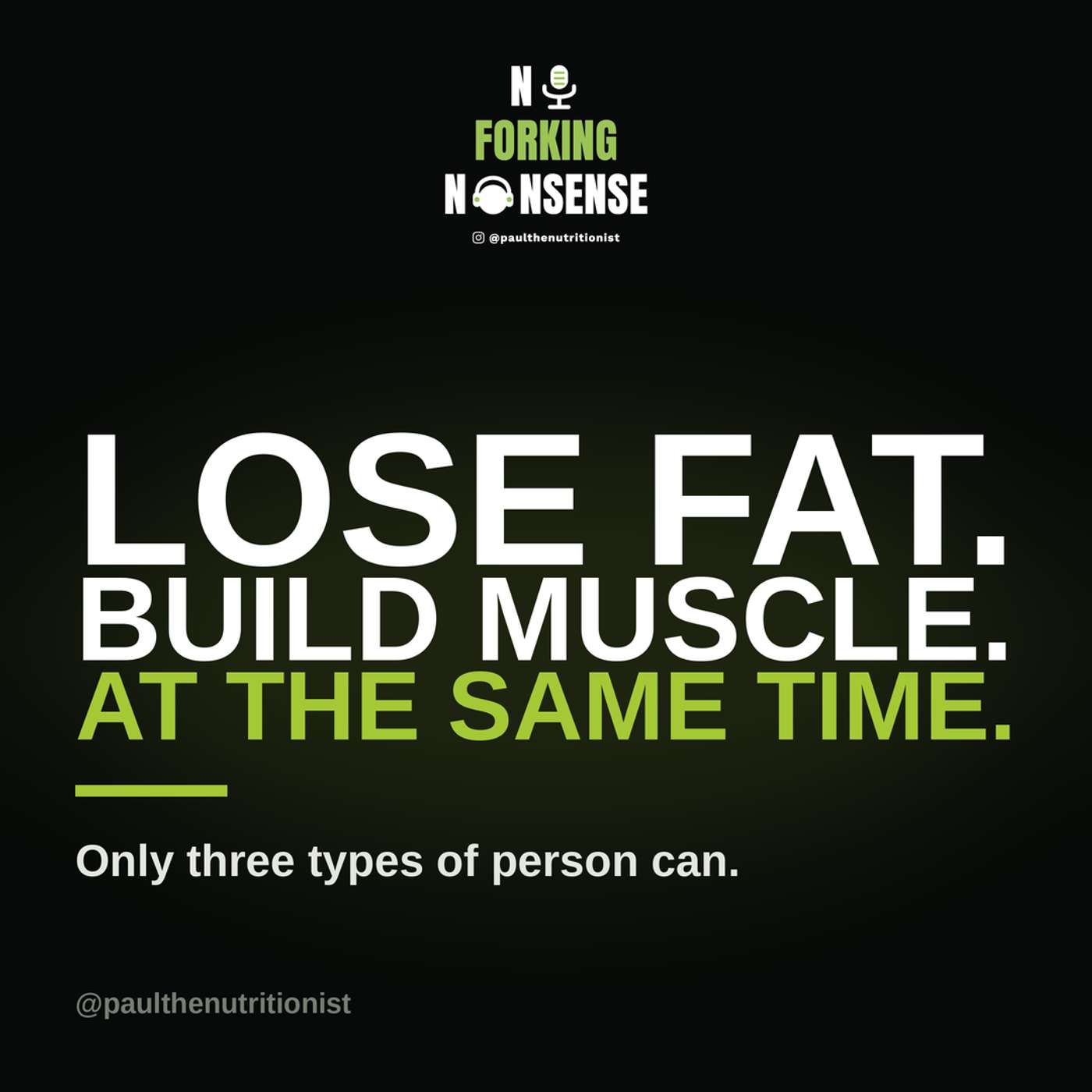
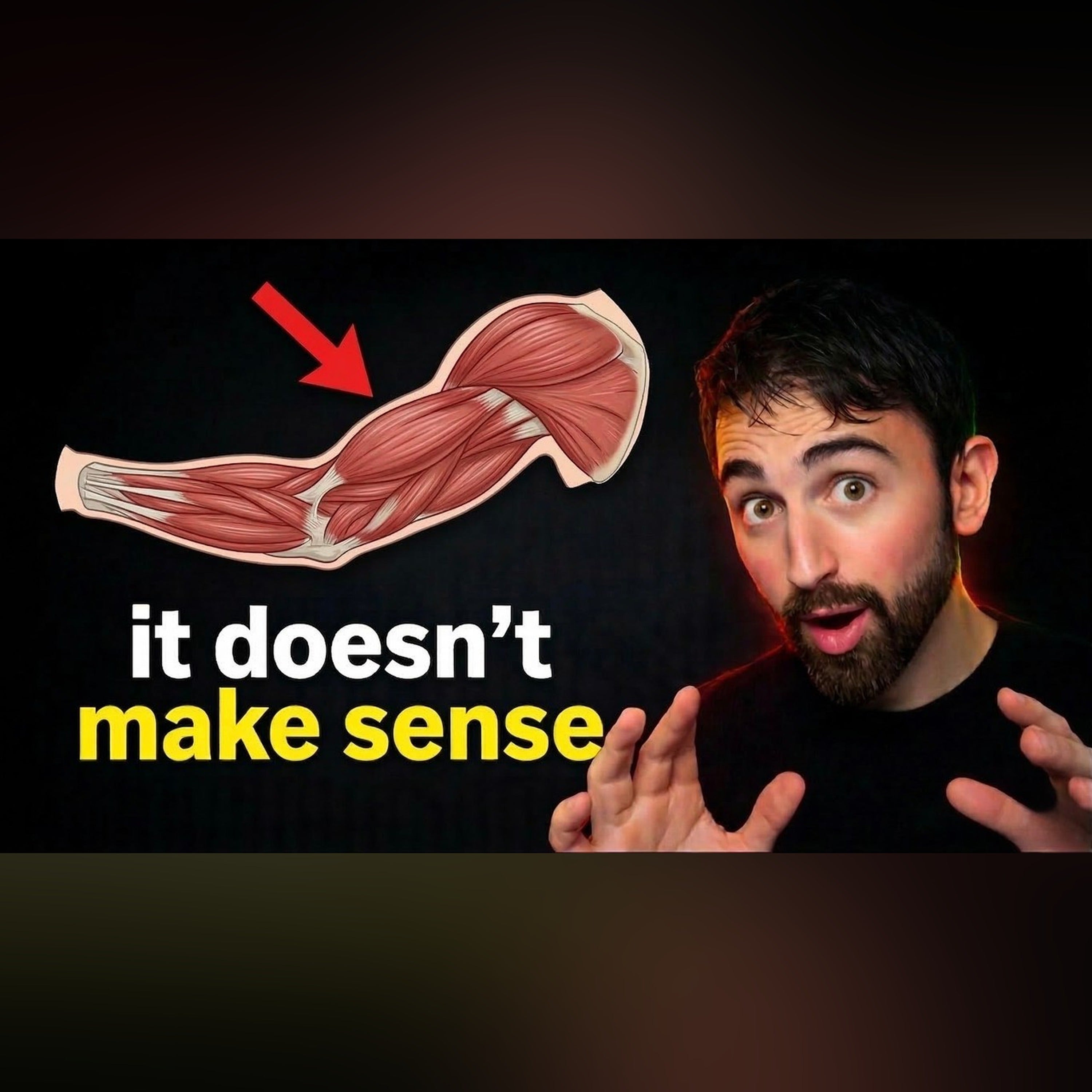
STOP GUESSING YOUR LUNCH: Stood in the supermarket aisle with five minutes to spare? Grab my free Meal Deal Survival Guide and build a high-protein lunch that actually fills you up, in any UK shop, in under 30 seconds mealdeal.carrd.co You’ve been told you have to pick one. Bulk or cut. Build or lose. Pick a lane. It’s rubbish, and it has been for about a decade. You can lose fat and build muscle at the same time. What nobody tells you is that it works brilliantly for three types of person and barely at all for a fourth, and knowing which one you are decides everything else you do. In this episode: The four groups, and why most people put themselves in the wrong one. The best position in the entire sport, and why hardly anyone realises they’re in it. Why being further from your goal makes this bit easier, not harder. The study where two groups ate the same calories and did the same training, and only one of them built muscle. Why 140g of protein can do two completely different jobs depending on when you eat it. The reason your deficit is probably too big, and what losing faster actually costs you. Why your class might not be doing what you think it’s doing. What decides whether the weight you lose comes off as fat or as muscle. This is the one nobody mentions and it isn’t food. And why, if this is working properly, the scale will barely move at all. SEND ME YOUR QUESTIONS A lot of you found this podcast through a sticker in a gym, which was either the best or worst marketing decision I’ve ever made. DM me on Instagram @paulthenutritionist with questions on whatever you’re stuck on. Protein, training, why the scale won’t move, what to eat before a 6am session. I read all of them, I answer as many as I can, and the best ones become episodes...
Episode information is provided by the publisher. Listening takes place on the publisher’s service.
For the written breakdown, references and more nuances, see the StayCurious Letter: https://staycuriousmetabolism.substack.com/p/the-aging-muscle-paradox-how-to-keep?r=40ekz2 Additional referenced letters, including those on creatine and sarcosine can be found at our Muscle Health Archives, here: https://staycuriousmetabolism.substack.com/p/musclehealth Sarcosine Video: https://youtu.be/0thK-Flb1KQ Oleuropein Video: https://youtu.be/ljuimrT2a1s Adapt (Inter-organ Communication) Video: https://youtu.be/R9x5Y57HuoA Creatine Video: https://youtu.be/qdt6xwzeAx0 *When it comes to reputation, quality, and rigorous third-party testing, you really can’t go wrong with Momentous Creatine Monohydrate. It’s extensively tested for heavy metals and banned substances. My personal preference is their pure, unflavored, no dyes or sweeteners, micronized creatine monohydrate * Creatine Ice Cream Recipe Warm 1 pint (473 ml) of Heavy Cream in a pan. While the cream is warm, but not hot, add in 5 egg yolks
Is your body weight stable, but you're still not eating enough to properly fuel your training, recovery, and overall health? Introducing Why Stable Weight Doesn't Always Mean You're Eating Enough from Jeff Hoehn of the Mind Muscle Connection Podcast (https://www.buzzsprout.com/1508401). Just because your weight isn't changing doesn't necessarily mean you're adequately fueled. In this episode, Jeff breaks down why maintaining a stable body weight doesn't always mean you're meeting your body's energy needs, especially if you're training hard, staying lean, or spending long periods dieting. You'll learn: Why stable body weight doesn't automatically mean adequate energy availability Who is most at risk of underfueling, even when their weight isn't changing How high training output, staying too lean, and chronic dieting can contribute to low energy availability The potential signs of underfueling, including changes in performance, recovery, hormones, and menstrual health Why spending too lo
Happy Pot Luck Saturday! We talk Cary Grant, David Niven, Loretta Young, an angel with questionable intentions, and a Christmas movie that takes four nights to finish. We cover the 1947 classic The Bishop’s Wife and try to figure out how a film with five Oscar nominations earns only one and a half candy canes. We talk Cary Grant’s charm, David Niven’s stiff bishop, a wealthy widow who just wants to build a cathedral, and an angel who seems more interested in the bishop’s wife than saving Christmas. We talk Hollywood casting mistakes, Billy Wilder’s rewrites, and on-set tensions. We talk endless ice skating, glowing cathedrals, magically refilling bottles, self-decorating Christmas trees, and familiar faces from It’s a Wonderful Life. We talk Siskel and Ebert, critics who loved the wrong movies, and Kev rewriting the entire story into something we might actually want to watch. Plus, Whitney Houston and Denzel Washington in The Preacher’s Wife, Alastair Sim versus George C. Scott as Scro
This week, I'm talking about a particular kind of person: someone who's always doing things for everybody else, who never seems to have a moment for themselves, and who is absolutely determined that you should know about it. We're probably all guilty of a bit of martyrdom from time to time. I certainly am. The theatrical sigh as you empty the dishwasher for the third time; the "I'll just have a piece of toast"; the "no, no, you sit down, I'll do it" when what you really mean is "I can't believe you're sitting down while I'm doing this." But when martyrdom becomes someone's habitual way of relating to others, it can leave you feeling grateful and resentful at exactly the same time. Today's dilemma comes from a listener whose mum does everything for everyone, and then complains about how much she has to do. She'll spend the morning cooking a family lunch, refuse every offer of help, only to spend the afternoon telling everyone how tired she is. Now, our listener is finding herself snappi
Get the 200+ Page Optimal Living Daily Workbook (PDF) - Free. Want to turn today's episode into an actionable plan? Episode 4233: Kate Galliett explains three reasons we make health, fitness and life harder than they need to be: ignoring how the body works as a connected system, trusting only extreme intensity, and leaking the energy that fuels motivation and discipline. She makes the case that appropriate effort, not maximum effort, is the only sustainable path to lasting results. Read along with the original article(s) here: https://fitforreallife.substack.com/p/why-you-make-everything-harder-than Quotes to ponder: "The better way is to give appropriate effort and get appropriate results. This is the only sustainable way." "If you try and live at the extremes, you will constantly ping-pong back and forth from one extreme to the other." "Just imagine - you might not actually lack discipline after all, you just might be leaking energy that feeds your ability to be disciplined." We spen
If you're training hard but feeling wiped, eating a restricted diet for your gut, or just never hungry after a tough workout, you might not be getting the protein you need. This episode breaks down how much you really need and how to get it without upsetting your gut. YOU'LL TAKEAWAY: Macronutrients and calories 101, and how restrictive diets throw off your balance How your body digests protein, and why it matters before workouts The many roles of protein, from enzymes and iron storage to post-workout appetite How much protein you need, plus 3 easy low FODMAP ways to boost it — RESOURCES & LINKS MENTIONED: ⤵️ Want high touch coaching support for IBS & fuelling performance? Apply for coaching. (http://gutfitnutrition.com/apply) Free Training: How to Control IBS So You Can Fuel Your Training Without a Lifelong Low FODMAP Diet (https://gutfitnutrition.com/heal-ibs-training-live) Supporting your immune system when you're sick (Ep. 70) (https://open.spotify.com/episode/5bCto0jWLcbC5hQW4hrH6
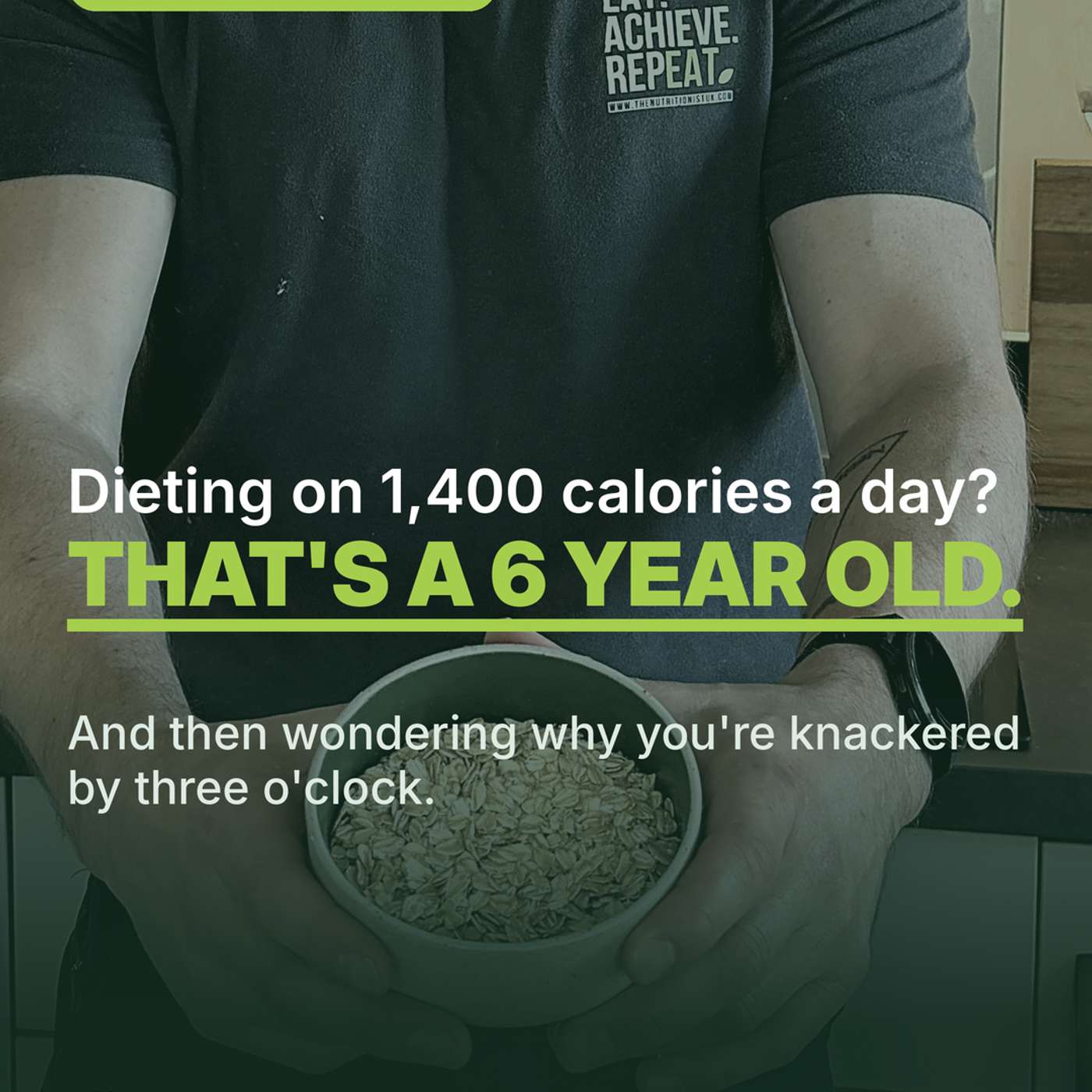
Tiredness is the single most common thing people come to me with. Not weight. Not abs. Energy. And the moment you mention it anywhere near the internet, your feed fills up with multivitamins, liquid iron and someone offering to find your root cause for four hundred quid. Usually it’s none of that. Usually it’s something much more boring, and much easier to fix. In this episode: How much a six-year-old eats in a day, and why that number should worry you if you’re dieting The blood result your GP might have filed under “normal”, and the one word to ask them for ☕ What your third coffee is actually covering up, from someone who drinks a lot of coffee Why you can sleep eleven hours and still wake up feeling hit by a bus ️ Why you’re not greedy at nine o’clock at night, and what’s really going on The twenty calories on a Tuesday that write off an entire week Why your body loves boring far more than it loves perfect No supplements. No root cause programme. Five things to do first, all of the
You’ve trained consistently for weeks. Maybe months. You feel fitter, you feel stronger, and then you look in the mirror and nothing has changed. You’re not imagining it and you’re not doing it wrong. You’ve been sold a lie, and it’s a profitable one. In this episode: What a 45-minute session actually burns, versus what you eat straight afterwards The piece of gym equipment that overstates your calorie burn by up to 93% ⌚ Why your watch is better than the machine and still badly wrong The psychological trap that makes you eat more after training, even when you aren’t hungry What happened when researchers measured hunter-gatherers who walk 15km a day, and why it ruins everything you assumed How joining a gym can quietly make you move less for the other 23 hours The four-day exercise I give every new client before I change a single thing Why being boring with breakfast beats being perfect I’m not telling you to stop training. I’m telling you what’s actually doing the work. Free Meal Deal
A different one this week. No nutrition. No research. Just me telling you what it’s actually like to have the job I spent about eight years trying to get. The freedom is real. So is the bit nobody puts on Instagram. In this episode: ️ The number of people I spoke to in person last week, and why that’s normal now Why there’s nothing in my diary for February. Or March. Or April The messages I get telling me I’m rich, and what actually leaves the account every month The job I got offered at £3.50 an hour that was genuinely Plan D ☕ A black coffee in Cafe Nero at quarter to eleven on a Tuesday, and why it changed everything What a head teacher said to my face when I handed in my notice The week off that was so stressful I’ve never taken another one And the thing I’m launching at the start of December, which you’ll hear here before anywhere else If you’ve ever thought about packing it in and doing the thing you actually want to do, this one’s for you. Free Meal Deal Guide: mealdeal.carrd.co
Arts organizations should take creative risks even when familiar work would sell better.
Share your view, then see how readers voted. No sign-in required. This poll is shared across stories.
Do you agree or disagree?
Common Quandary
A Common Quandary to discuss
Another conversation to explore, separate from this news story.
The proposal is perfect and the ring is terrible. When do you say so?
Your partner proposes with a costly ring chosen after months of secret planning. You love the proposal and want the marriage, but strongly dislike the ring you would be expected to wear every day. Returns are possible for one week.
How much honesty can a loving gesture reasonably be asked to survive?