Listen through the publisher, then discuss the episode here or arrange an in-person Roundtable. Your city determines where to meet.
Roundtables are designed for groups of four, with a shared subject and room for everyone to speak. Come for discussion, with no dating expectation.
How can you enjoy eating out without overthinking food, feeling guilty, or worrying about weight gain? In this conversation, we explore the challenges of eating out while recovering from binge eating, especially when food choices feel easier at home than in restaurants. We discuss food anxiety, the need for control, fear of weight gain, and the difficulty of allowing flexibility around food. We also explore what food freedom actually means: moving away from all-or-nothing thinking, learning to tolerate discomfort, and developing the ability to make food choices without feeling the need to compensate afterwards. Conversation topics: Why eating out can trigger food anxiety and overthinking The connection between binge eating, restriction, and control How fear of weight gain influences food choices Why food freedom isn't the same as eating everything without limits Moving away from compensatory behaviors and all-or-nothing thinking Learning to tolerate discomfort without letting it dictate your choices Why comparing your eating habits and body to others gets in the way Building a more peaceful relationship with food, one experience at a time Book a Call with Marcus Here: https://form.jotform.com/240493269367062 Strong Not Starving YouTube: https://youtube.com/@strongnotstarving?si=zzmTveIdGUD0omuM Stay up to date with Strong Not Starving events and resources ⬇️⬇️⬇️ https://preview.mailerlite.io/forms/2452616/190543834178913405/share (https://www.strongnotstarving.com/snsweeklytips) Website: www.strongnotstarving.com (http://www.strongnotstarving.com/)
Episode information is provided by the publisher. Listening takes place on the publisher’s service.
Is your body weight stable, but you're still not eating enough to properly fuel your training, recovery, and overall health? Introducing Why Stable Weight Doesn't Always Mean You're Eating Enough from Jeff Hoehn of the Mind Muscle Connection Podcast (https://www.buzzsprout.com/1508401). Just because your weight isn't changing doesn't necessarily mean you're adequately fueled. In this episode, Jeff breaks down why maintaining a stable body weight doesn't always mean you're meeting your body's energy needs, especially if you're training hard, staying lean, or spending long periods dieting. You'll learn: Why stable body weight doesn't automatically mean adequate energy availability Who is most at risk of underfueling, even when their weight isn't changing How high training output, staying too lean, and chronic dieting can contribute to low energy availability The potential signs of underfueling, including changes in performance, recovery, hormones, and menstrual health Why spending too lo
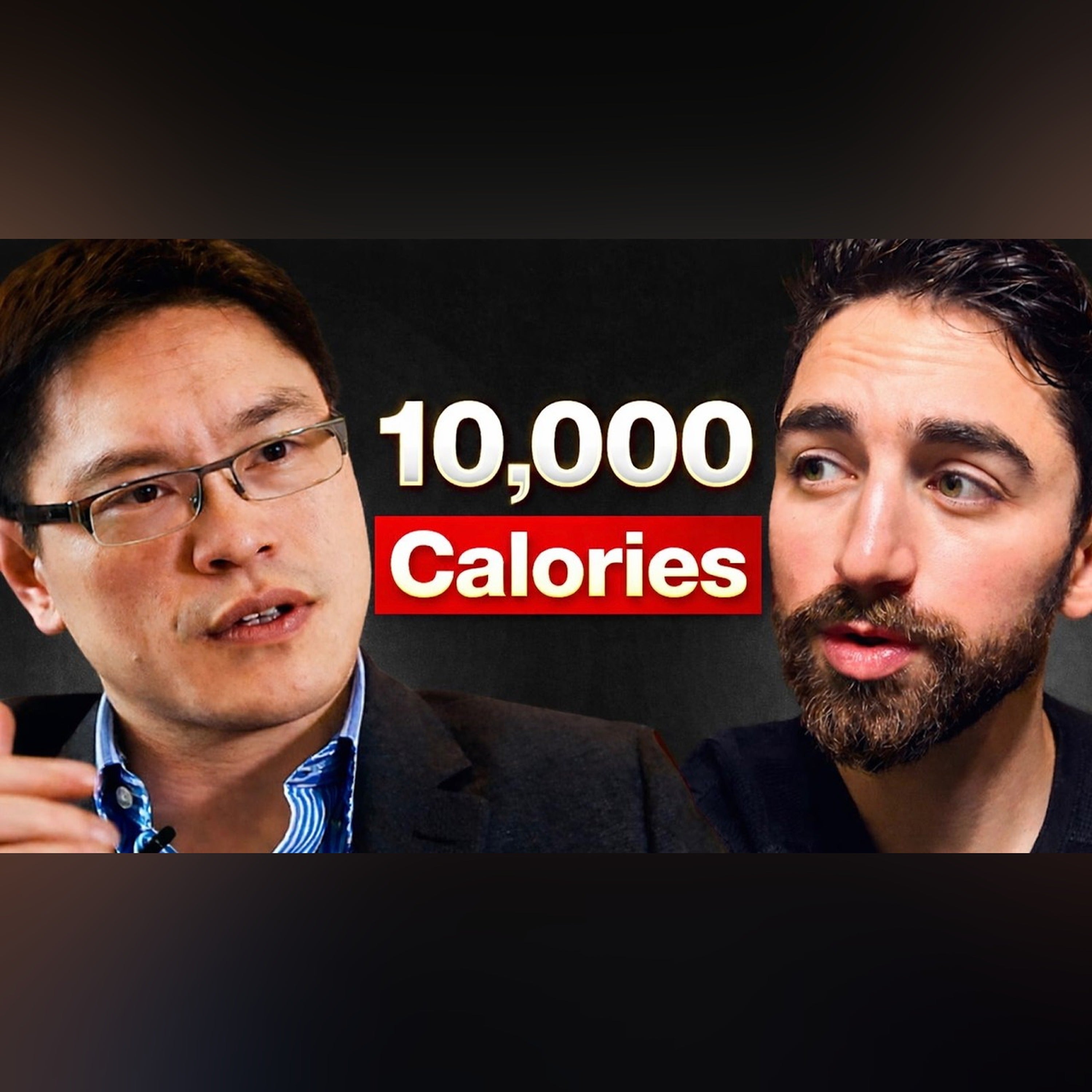
The Hunger Code Book: https://www.amazon.com/Hunger-Code-Resetting-Thermostat-Ultra-Processed/dp/1778401562 Weighted Vest Letter: https://staycuriousmetabolism.substack.com/p/how-weighted-vests-trick-your-body?r=40ekz2 Brain Insulin Resistance Letter: https://staycuriousmetabolism.substack.com/p/this-study-changed-how-i-see-junk?r=40ekz2 “Calories don’t cause obesity” is a provocative phrase—but it’s biologically accurate. It challenges a deeply entrenched misconception: that overeating causes obesity, rather than obesity driving overeating. If that sounds confusing, you’re not alone. Most people have been taught to think about it the other way around. In this discussion, Dr. Jason Fung and I work to untangle that misunderstanding. We explore how energy imbalance—so-called “overeating” and "excess calories"—is more often a consequence of obesity, not its root cause. What truly drives obesity is a complex interplay of social and hormonal factors that increase hunger and/or reduce energy
Today, Mel is taking 58 years of hard-earned life lessons and is packing them into under an hour, to save you some of the time, frustration, and worry it took her to learn them the hard way. In this episode, Mel is fielding real questions from listeners around the world. From making friends and bouncing back from rejection to feeling stuck in life and wondering if it's all going to work out, Mel is sharing the advice she wishes she'd known sooner. And she's not holding back. You'll hear Mel get personal about her own setbacks, and what she's learned about starting over, going after what you want, and trusting yourself when life doesn't go according to plan. You'll learn: -How to stop worrying about the future when nothing feels certain -How to make big life decisions, including whether or not to have kids -How to make new friends as an adult -What to do when you get rejected from your dream job -What to do when a friend ghosts you -How to stop procrastinating and finally follow through
A kiss can be wonderful. It can create an instant connection, spark romance, or make you feel closer to someone. But a kiss can also have the opposite effect — and sometimes ruin everything. So what makes kissing so powerful, and why can one kiss make such a difference? There's some fascinating science behind it. https://www.scientificamerican.com/article/why-we-kiss/ We spend an enormous amount of time worrying about what's going to change. What's next? What's coming? How do we prepare? But what if we're paying attention to the wrong things? Some of the most important forces shaping our lives never change, and understanding them may be far more valuable than trying to predict the future — something humans are notoriously bad at. Morgan Housel, partner at The Collaborative Fund and author of Same as Ever: A Guide to What Never Changes (https://amzn.to/3SwWn6u) (https://amzn.to/3SwWn6u)), joins me to explain why the things that stay the same may be the most important things to understan
Big News! Clicking Here (https://meditationsounds.supercast.com/) Email List (https://bit.ly/3T010m4) Experience deep relaxation with this powerful blend of 432 Hz healing frequency and Brown Noise, designed to calm strong anxiety, stop racing thoughts, and reset your nervous system. This sound mix helps reduce inner pressure in the chest, quiet mental overwhelm, and bring your mind back to a peaceful state. 432 Hz promotes mental clarity, emotional balance, and a sense of inner harmony, while Brown Noise lowers hyperactivity in the brain, creating a grounding and stabilizing effect. Together, they offer a natural, effective therapy for anxiety attacks, stress relief, insomnia, and emotional overload. Put on your headphones, close your eyes, and allow this frequency combination to guide you into deep calm and inner peace. Perfect for meditation, sleep, studying, relaxation, and anxiety recovery. #432Hz #BrownNoise #AnxietyRelief #CalmingSounds #DeepRelaxation #StopOverthinking #Healing
Does your relationship feel like home, or does it feel like standing on the edge of something you might lose? In Part 3 of our Relationship Anxiety series, clinical hypnotherapist and former paramedic Martin Hewlett guides you through the process of teaching your nervous system that love doesn't have to hurt to be real. We explore the physical manifestations of anxiety—the tight chest, the 2:00 AM racing mind, and the "stomach drop" when a text takes too long—and provide the tools to "turn down the alarm" of your internal survival response. If you are ready to stop "cherry-picking" evidence of disaster and start building a foundation of trust, this session is for you. In This Episode, We Cover: The Science of Safety: Understanding how your nervous system confuses love with danger. Guided Visualization: A journey into your own "safe room" where you are already enough. Rewiring the Brain: Moving from worst-case disaster reels to the reality of small, daily kindnesses. Breaking the Cycle:
How do you stop body image thoughts from pulling you back into old food patterns and binge eating? And how can you care about your appearance without making it the center of your life? In this conversation, we explore the relationship between body image, binge eating, self-worth, and the emotional patterns that can keep us stuck in old behaviors. We discuss what happens when an unflattering reflection, photograph, or moment of body dissatisfaction triggers anxiety, panic, and the urge to change our appearance immediately. How can we navigate these feelings without falling back into restrictive habits, binge eating, or appearance-driven decisions? We explore: How to handle negative body image thoughts: What to do when seeing your reflection triggers a spiral of self-criticism, anxiety, or the feeling that you need to fix your appearance immediately. Changing your relationship with appearance: How to care about how you look without making your appearance the center of your life. Rewritin
An institutional apology should include a concrete plan to prevent repetition.
Share your view, then see how readers voted. No sign-in required. This poll is shared across stories.
Do you agree or disagree?
Common Quandary
A Common Quandary to discuss
Another conversation to explore, separate from this news story.
The mayor is excellent at the job—and secretly cheating on a spouse. Is that news?
A local official is effective, honest in office, and privately having an affair. A journalist can verify it but finds no misuse of public resources or direct connection to official duties.
Does private dishonesty reveal something citizens are entitled to judge?