English-language podcasts

Extraordinary Creatives

How to Talk About Personal or Vulnerable Work

22 min

Listen through the publisher, then discuss the episode here or arrange an in-person Roundtable. Your city determines where to meet.

Roundtables are designed for groups of four, with a shared subject and room for everyone to speak. Come for discussion, with no dating expectation.

If you're making work that comes from somewhere deeply personal, how much do you actually have to tell people about where it came from? I've been thinking about this because it's something that comes up quite often when I'm working with artists. Perhaps you've been through a bereavement, an illness, a relationship ending, a difficult childhood, or something else that has affected you profoundly. Inevitably, that experience has found its way into the studio. Then you get to the point where the work has to leave the studio. You need to write about it. Somebody asks you about it in a studio visit. You're writing your About page or preparing for an artist talk and suddenly there's this question: how much do I say? I think that's a really interesting question because there's a difference between something being important to the work and thinking you have to explain it publicly. Some artists are extraordinarily open about their lives. For those artists, that degree of revelation became part of their language. You may want to do that too, or you may want to say a lot less about your experiences. This episode will help you to get the balance right, for you. KEY TAKEAWAYS Think about boundaries and what you want to share before you publish. Once something is part of your public story, people will ask about it. What feels right to share mid-processing may not feel right in five or ten years. Give people enough context to open the door, then stop. Think less about how brave you ought to be. Think more about what information genuinely helps somebody meet the work. Sometimes explaining everything can actually make the work smaller. The story can also follow you for years. BEST MOMENTS "The person looking at the work doesn't necessarily need the details of what happened, who it happened to, when it happened or what you went through. You get to decide where that boundary sits." "We sometimes confuse honesty with disclosure. “Making vulnerable work doesn't mean you have to make yourself vulnerable in every situation in which that work is discussed… You can be deeply courageous in the studio and have very clear boundaries outside it.” "Sometimes explaining everything can actually make the work smaller." PODCAST HOST BIO **** Ready to transform your art career? Join today! **** Unlock Your Artworld Network Self Study Course **** Book a Discovery Call Today **** Discover Your Extraordinary Creativity

Episode information is provided by the publisher. Listening takes place on the publisher’s service.

Listen at the source ↗

Featured places to meet in Palo Alto, CA

Explore these places and arrange a conversation through ThinkMatch.

City guide for Palo Alto, CA

More from Extraordinary Creatives

Extraordinary Creatives

How Do You Make a Sound That Doesn't Exist? The Magic of Foley Art with Ruth Sullivan

47 min

Do you want to know how the sound of a murder in Killing Eve was created? Well, it might involve a cabbage. My guest today is Ruth Sullivan, a Foley artist whose extraordinary job is to make the sounds that bring films, television, and theatre to life. She's worked on everything from Killing Eve and Downton Abbey to Mamma Mia! and Peppa Pig. And she's performed live on stage, making sounds with the most unlikely objects. We talk about how she stumbled into this wonderfully peculiar profession, why she needs to get inside a character's head, and how the strangest parts of our creative lives can turn out to be the most valuable. Welcome to Extraordinary Creatives. KEY TAKEAWAYS Notice the colors, smells, and textures of your environment, like the bright heat of childhood memories.Those sensory impressions will feed directly into the atmospheric world of your creative work later on. Even if you stumble into a completely different artistic field, the discipline you learned years ago. Wheth

Discuss this episode

Extraordinary Creatives

The Art Career Questions Nobody Teaches You to Answer

65 min

Hello and welcome to a slightly different episode of Extraordinary Creatives. Today, I'm inviting you behind the scenes of my coaching membership, to listen in on one of our live Art Surgery sessions, where artists bring me the questions, dilemmas, and decisions they're wrestling with in their creative lives. We cover everything from approaching galleries and finding mentors to selling work, building your website, collaborating with brands, and keeping your practice going when your health is unpredictable. Members submit questions in advance and pop them into the live chat, so it's a very spontaneous conversation. And of course, depending on the circumstances, I might approach some of these questions differently on another day. Our Art Surgeries usually last 30 minutes, although we've been doing a few longer ones recently to welcome new members. I hope you find something useful here, perhaps an answer to a question you've been sitting with yourself. And if you'd like to bring your own

Discuss this episode

Extraordinary Creatives

How Time Reveals New Meaning in the Work We Make with Jeremy Liebman

88 min

As a child, Jeremy Liebman hated having his photograph taken by his dad. He and his twin brother were forever being asked to sit still while their father tested his camera and lighting. Today, Jeremy photographs some of the world's most recognisable faces, including Walton Goggins and Stellan Skarsgård. But it's his deeply personal book Coincidence that brings us to the heart of this conversation. Through photographs of his young children and his father, who was living with Alzheimer's, Jeremy explores memory, love and what happens when language can't quite capture our experience of the world. We talk about finding your own creative voice, why being an introvert can be a strength, the importance of genuinely seeing another person, and why building a creative career takes far longer than most of us imagine. I'm Ceri Hand, this is Extraordinary Creatives, and my guest today is photographer Jeremy Liebman. KEY TAKEAWAYS You don’t have to adopt somebody else’s way of working. If you’re int

Discuss this episode

Community Poll

Communities should invest in adapting to unavoidable hazards as well as preventing future damage.

Share your view, then see how readers voted. No sign-in required. This poll is shared across stories.

Do you agree or disagree?

Choose one answer

Common Quandary

A Common Quandary to discuss

Another conversation to explore, separate from this news story.

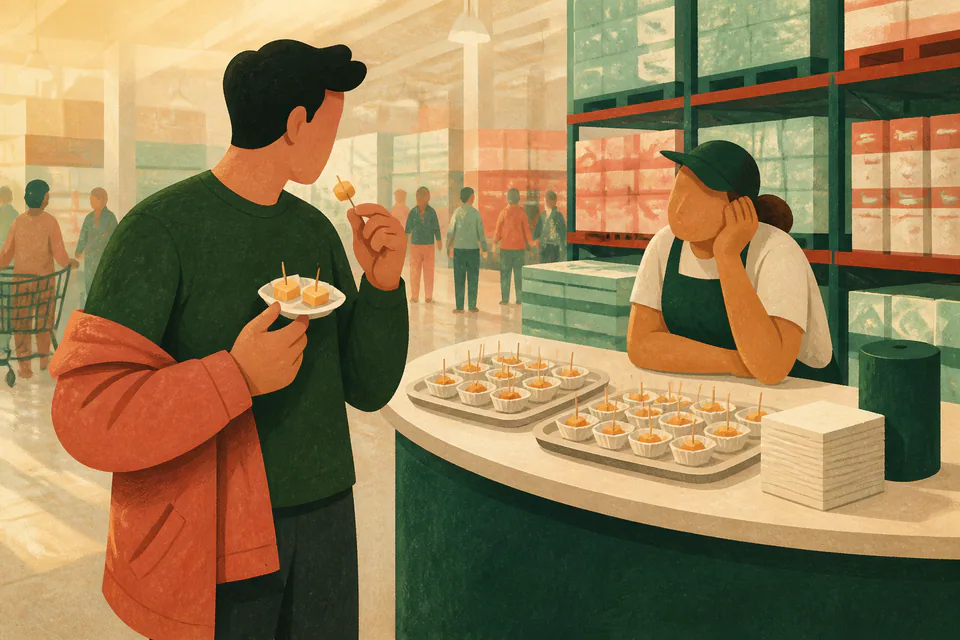
You love the free sample but will never buy it. How many times may you circle back?

A warehouse store is offering delicious samples. You have no intention of purchasing the product, but the employee seems bored and has trays to spare. After taking two, you consider removing your jacket and returning for a third.

Is exploiting generosity wrong when the giver appears not to care?

Explore this quandary