How Your Beliefs Change Your Body and Health | Alia Crum
80 min
Listen through the publisher, then discuss the episode here or arrange an in-person Roundtable. Your city determines where to meet.
Roundtables are designed for groups of four, with a shared subject and room for everyone to speak. Come for discussion, with no dating expectation.
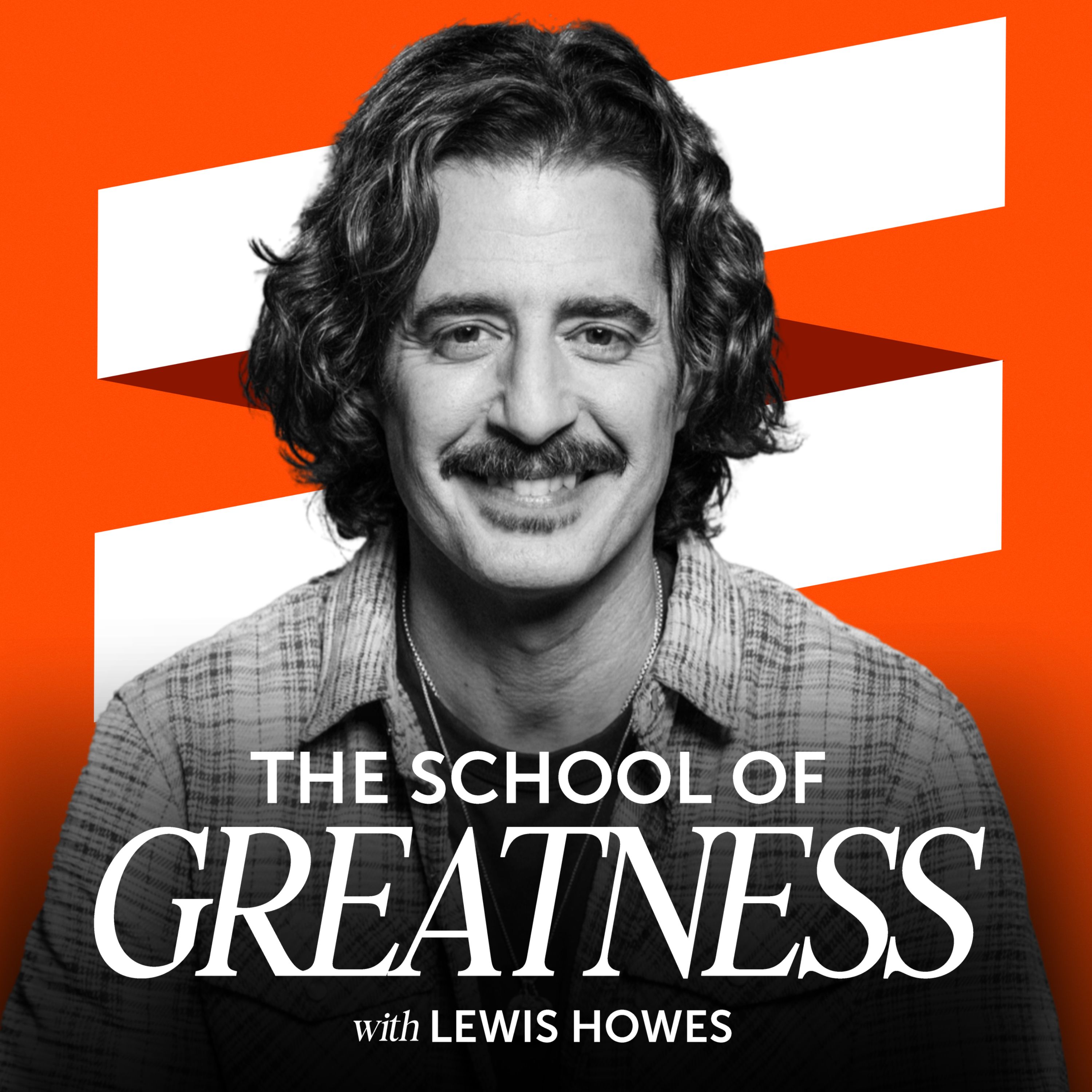
Your beliefs can lower your blood pressure even when nothing else about your day changes. Dr. Alia Crum, a Stanford psychology professor who runs the Stanford Mind & Body Lab, sat down with Lewis to explain how what you believe about stress and about your own body shapes your health. In one study, 84 hotel housekeepers heard that their work already met the Surgeon General’s exercise guidelines. Four weeks later, the women who got that message had lost about two pounds, and their systolic blood pressure had dropped by roughly 10 points. In another, people drank the same milkshake twice, and their hunger hormone fell more sharply when they were told it was the indulgent one. Alia also argues that stress shows up because you care about something, and that seeing it as a teacher changes both your cortisol and your focus. She talks about her own eating disorder as an athlete and about enoughness, the core belief behind her book Believe: The Mind’s Power to Create Reality. Then Lewis asked what she still struggles with, and she admitted, “I have this belief that I never have enough time.” When she tried saying “time is abundant” out loud, Lewis watched her whole face get lighter. Alia's Instagram (https://www.instagram.com/draliacrum/?hl=en) Alia's LinkedIn (https://www.linkedin.com/in/alia-crum-a97a4821/) Alia's X (https://x.com/AliaCrum) In this episode you will: Discover how housekeepers lost weight and lowered blood pressure by changing one belief Reframe stress as fuel using the acknowledge, welcome, utilize method Pinpoint the core belief driving your burnout, guided by Alia Crum Learn why a warm, capable doctor can double the power of a placebo Replace the “I'm not enough” story with a working belief of enoughness Apply the say it, see it, live it practice to make new beliefs stick For more information go to https://lewishowes.com/2007 Get More From Lewis! (https://lewishowes.com/follow) Hosted by Simplecast, an AdsWizz company.
Episode information is provided by the publisher. Listening takes place on the publisher’s service.
For written details on this paper, see the StayCurious Metabolism Newsletter: https://staycuriousmetabolism.substack.com/p/the-art-of-a-heartbeat-one-of-the?r=40ekz2 Snyder Interview 1: https://youtu.be/mCrc4gfbK2o Snyder Interview 2: https://youtu.be/kMpGkg4zMOU Snyder Interview 3: This one! Snyder Interview 4: Coming Soon… Leptin Resistance Letter: https://staycuriousmetabolism.substack.com/p/obesitys-secret-letters-the-hidden?r=40ekz2 Gift Guide: https://staycuriousmetabolism.substack.com/p/saint-dr-nicks-holiday-gift-guide?r=40ekz2 This conversation with Stanford’s Professor Michael Snyder breaks down one of the most important exercise studies ever published — a deep, molecular look at what really happens inside your body when you work out. We explore how thousands of molecules shift in real time, why inflammation during exercise is actually a good thing, how omega-3 signaling, mitochondrial remodeling, nitric oxide pathways, and metabolic flexibility all come together in a coordin
Master the skills that change lives — enroll in your free human behavior course today: https://nci.university/learn Uploaded 15-01-26 EXECUTIVE SUMMARY: Video: What It Feels Like to See Into People Purpose: Reframe how human behavior is actually driven and perceived Outcome: Permanent shift in how you experience people and conversations CORE IDEA: Human behavior is not driven by beliefs, opinions, or logic. Those are after-action reports. Behavior is driven by the nervous system’s constant assessment of: • safety • approval • power • avoidance of shame Decisions are made before conscious thought. Beliefs are constructed afterward to justify what already happened. WHY THIS MATTERS: Most people spend their lives interacting with: • beliefs • arguments • explanations • surface narratives As a result, they miss the layer where real decisions are made. This video focuses on that lower layer — the one that actually governs: • conflict • influence • attraction • resistance • leadership • trus
Let go of negative thoughts, release limiting beliefs, and drift into peaceful sleep with this gentle guided sleep hypnosis for positive thinking, self confidence, and inner peace. If you've been struggling with self doubt, harsh self criticism, or the feeling that you're never good enough, this soothing bedtime journey invites you to replace those familiar thoughts with kinder, more supportive beliefs. As you settle into deep relaxation, a slow and peaceful induction helps your body soften and your mind become quiet. You'll imagine stepping into an old wood-panelled lift that gently carries you down ten floors, allowing you to relax more deeply with every level. At the bottom, you'll discover a beautiful inner library filled with the stories you've told yourself throughout your life. Here, old beliefs such as "I am not enough" and "I always fail" can be gently put away, making room for new, encouraging thoughts: • I am learning and growing every day. • I can handle things one step at
# The Magic of Thinking Big | Jim Rohn Motivation The size of your results often begins with the size of your thinking. Uploaded 31-08-26 In this powerful motivational video inspired by Jim Rohn, you’ll discover how thinking bigger can change the way you set goals, make decisions, handle challenges, and approach your future. Too many people limit themselves before they ever give themselves a real chance. They expect less, aim lower, and settle for what feels comfortable. Jim Rohn teaches that personal growth begins with your philosophy. When you raise your expectations, develop a stronger mindset, surround yourself with better ideas, and take action on bigger goals, you give yourself the opportunity to achieve more than you once believed possible. Thinking big does not mean ignoring reality. It means refusing to let fear, doubt, or small thinking decide what your future can become. If you're ready to raise your standards, think bigger, and start working toward a greater life — this mes
Imagine if every big change in our lives came with a whole community stepping up beside us… In this episode, I sit down with Dr Arne Rubinstein, former GP and emergency doctor, founder of the Rites of Passage Institute, and a man who's spent more than 30 years walking young people across the threshold into adulthood. Arne's work began around a fire at his very first men's gathering, listening to a hundred men wrestle with the same handful of wounds. Then in the Emergency Dpt, he kept meeting teenagers who'd pushed it one step too far... kids trying to become adults with nobody there to hold them. He came to believe every young person will go through a rite of passage either way. The question is whether we leave them to create their own, or gather around and help. We talk about why our culture is so good at turning away from the big moments - from first periods to menopause to death - and what opens up when we turn towards them. We explore: Separation, transformation and integration, an
November 21, 2026 On November 22, 1963, President John F. Kennedy and First Lady Jacqueline Kennedy were visiting Texas, They hoped to heal a rift in the Democratic Party, as the white supremacists who made up the base of the party’s southern wing loathed the Kennedy administration for its support for Black rights, That base was furious about the administration’s backing of James Meredith, the first Black American to enroll at the University of Mississippi, By going to Dallas, Kennedy hoped to mend some fences in the state Democratic Party, The President's motorcade began with high spirits, Lady Bird Johnson thought, when she heard three shots, that it “must be firecrackers or some sort of celebration,” The Secret Service, knowing what had happened, rushed the motorcade to a hospital, When Vice President Johnson and Lady Bird were told that the President was dead, officials rushed LBJ away, In the confusion - in addition to the murder, it wasn't clear how extensive the plot was against
Faith came for one broke actor on the morning he was $80 overdrawn with $20 in his pocket. Jonathan Roumie, the actor who plays Jesus in The Chosen, sat down with Lewis to talk about the day he stopped trying to run his own life. For nearly 20 years he chased acting on his own strength. He drove rideshare and painted houses to cover rent, and took catering work on top of that. That Saturday in May he dropped to his knees in front of the crucifix in his studio apartment and wept as he handed God his career. Then he spent the $20 on food, walked to the mailbox and found four checks worth $1,100. Jonathan explains how surrender differs from quitting and why being broke is not the same as being humble. Prayer and mystery shape every scene he plays. He also talks about separating his shoulder while filming the crucifixion and about the viewers who wrote to say the show kept them alive. Three months after that morning on his knees, Dallas Jenkins called and asked the 44-year-old to play Jesu
Overthinking starts the moment one bad thought gets stuck on a loop and refuses to leave. Dr. Ethan Kross, a University of Michigan psychologist who has studied chatter for over 20 years, sat down with Lewis to explain why your inner voice spirals and how to pull it back. His book, Chatter: The Voice in Our Head, Why It Matters, and How to Harness It, lays out 26 tools, and he walks through a handful of them here. The simplest one sounds strange at first. You coach yourself silently, using your own name, the way LeBron James and Jennifer Lawrence both did in interviews. Ethan's team texted people five times a day for two weeks to track this kind of self-talk and found no link to narcissism at all. He also explains why venting to a friend can turn into co-rumination and leave you just as upset as when you started. A moment of awe in nature can shrink your problems, and Rafael Nadal lines up his water bottles because the ritual gives him “the order I seek in my head.” Negative emotions s
Manifestation only works when you stop doubting, and sometimes what you end up manifesting is peace. Lil Jon, the award-winning producer behind Yeah and Turn Down for What, sat down with Lewis to talk about turning 50 and realizing he could not name a single thing that made him happy except doing things for other people. He shares how his daily affirmations inside a copper pyramid carried him through a divorce after 18 years, and why he finally called his old mentor Paul Lewis to apologize 25 years too late. He goes deeper in his book I Only Shout So You Can Hear Me, along with the meditation and gratitude habits that rebuilt his happiness. You also hear how his album Crunk Rock flopped without a single song landing. He kept producing anyway, and the next thing he made was Turn Down for What. After a therapy session helped him see his son's side of a tense call, Lil Jon phoned him back and said, “I'm sorry. I hear you and I see you.” His son was gone the next morning. Pre-Order:I Only
An institutional apology should include a concrete plan to prevent repetition.
Share your view, then see how readers voted. No sign-in required. This poll is shared across stories.
Do you agree or disagree?
Common Quandary
A Common Quandary to discuss
Another conversation to explore, separate from this news story.
Your carry-on fits only if you sit on it. Do you try the airport sizer?
Your suitcase is slightly larger than the airline allows, although it has fit overhead on previous flights. Checking it costs extra and risks missing a connection. Other passengers have equally questionable bags and staff are checking inconsistently.
Does uneven enforcement weaken a traveler's duty to follow the rule?