Listen through the publisher, then discuss the episode here or arrange an in-person Roundtable. Your city determines where to meet.
Roundtables are designed for groups of four, with a shared subject and room for everyone to speak. Come for discussion, with no dating expectation.
Here's a Thought… #2811 with Brooks Jensen Disproportional Scaling Morphing an image through disproportional scaling has never occurred to me. Jeff Schewe opened my eyes about this a few years ago. When I resisted because this would make my images less real, Jeff reminded me that everything we do in photography is unreal. He was right.
Episode information is provided by the publisher. Listening takes place on the publisher’s service.
What happens when photography becomes more than just a profession, and transforms into something that can change lives? This week on The Camera Life Podcast, we're joined by Gavin Blue OAM, an accomplished Melbourne-based commercial photographer with more than 30 years of experience capturing people, places and stories. From photographing CEOs, politicians, royalty and Olympic athletes to working with major Australian brands, Gavin has built an extraordinary career across advertising, editorial and corporate photography. He's also played a significant role in shaping Australia's photography industry, having served as President of the Australian Commercial and Media Photographers (ACMP). But Gavin's most meaningful contribution to photography goes far beyond his commercial work. Following the heartbreaking loss of his daughter Alexandra in 2006, Gavin went on to co-found Heartfelt in 2010, a volunteer organisation providing professional photographic memories, free of charge, to families
Why does losing weight feel so much harder after 50? If you're eating better, trying to exercise, and doing all the things you think you should be doing—but the scale won't budge—you're not alone. In this episode, we'll look at what's changing in your body after 50, five things worth examining when you're struggling to lose weight, and some simple places to start. I'll also share my own turning point, what I changed, and how I lost 70 pounds and have maintained that weight loss for years. You aren't too old, your body isn't hopeless, and you don't have to keep repeating the same dieting cycle. It's not too late to take a different approach! Links & Resources: Learn more & visit: https://robynpolk.com/ Ready for More Support? I’d love to help you. Work with me 1:1 Loved this episode? Email: [email protected] and tell me why! Join our Facebook community: Loved this episode?
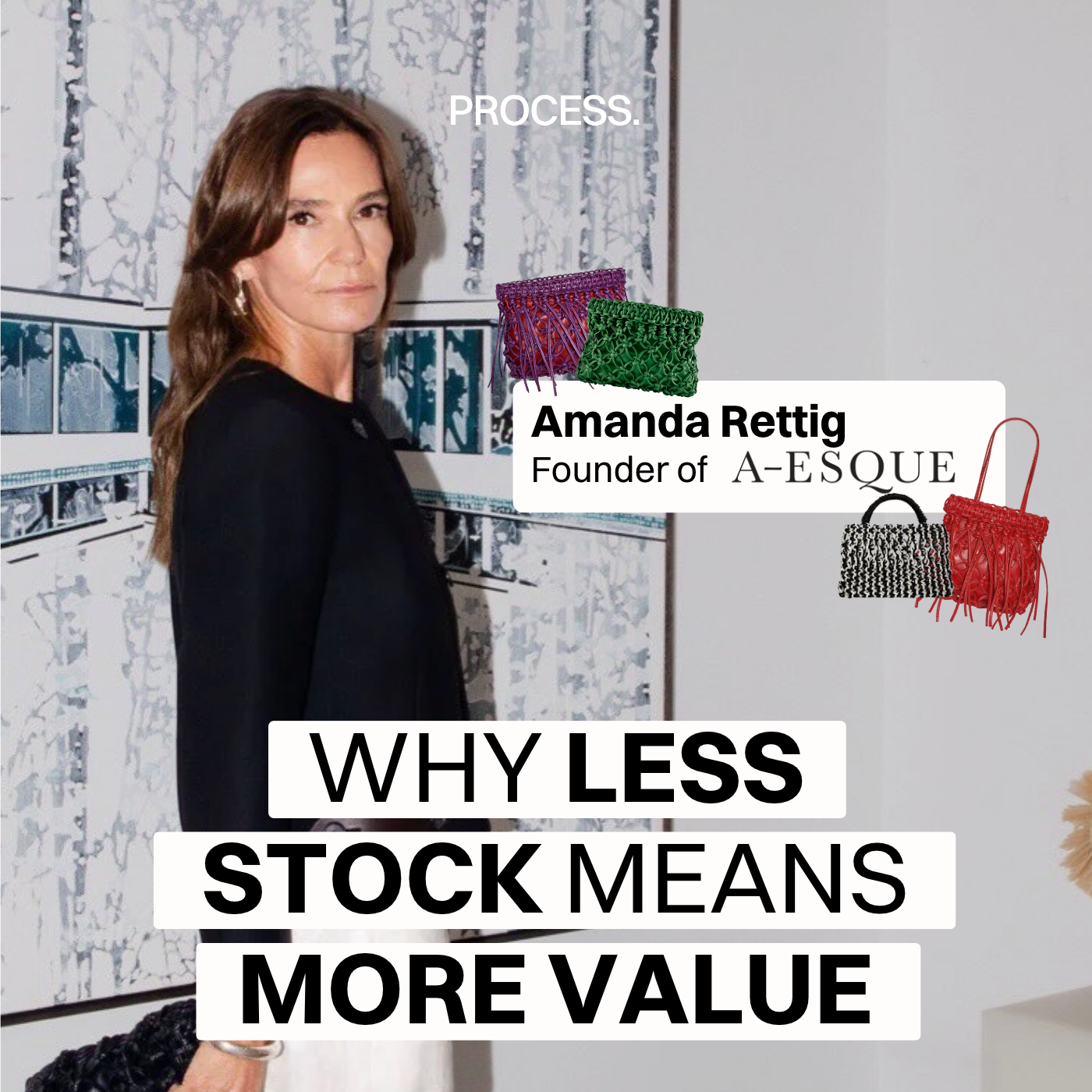
“The only time I would get scared is if I didn’t really believe in something.” - Amanda Rettig Australian designer and founder Amanda Briskin-Rettig has spent 30 years building fashion brands. She founded Mimco in 1996, sold it in 2007, and 13 years ago started A-esque, a self-funded leather goods brand handmade in small batches in Melbourne. Its philosophy is simple: build slowly, create intentionally, and make things that last. In this episode, Amanda shares how to start a fashion brand and grow it sustainably. She covers product development and product architecture, small-batch manufacturing inspired by Toyota’s lean model, and how to avoid excess inventory, deadstock and discounting. She also talks about local manufacturing, building a direct-to-consumer business, brand storytelling, collaborations, and what she learned from building and selling a business. If you want to start a handbag or accessories brand, build a sustainable fashion business, or grow a brand without compromisin
Emerald Story Book. There is no richer theme for children’s stories than the miracle of Spring. Some of the myths and legends are interesting or amusing because flowers, insects, or birds are presented as personalities and emphasise human qualities or feelings. Some of the stories and poems contribute to the child’s store of knowledge by attracting his attention to some fact, beauty, or blessing in nature which may have escaped his notice. Still others make an appeal by suggesting or affirming the abiding hope symbolised in the thought, “See the land her Easter keeping.” The child’s heart is filled with the joy of spring,—with the rapture expressed in the thrush’s song which Mrs. Ewing describes. “Fresh water and green woods, ambrosial sunshine and sun-flecked shade, chattering brooks and rustling leaves, glade and sward and dell. Lichens and cool mosses, feathered ferns and flowers. Green leaves! Featured on Anne of Green Gables - Lucy Maud Montgomery. Public-domain recording courtesy
Of all the things Nick Grime could have promised his ten-year-old son on Halloween, "your dreams will come true" might be the cruelest. Nick knows about the man in the castle. He knows Michael has spent hours in therapy trying to explain what happens there. He just never thought of those dreams when he tucked a handful of good fortunes into the barmbrack he was baking for his family. At 1:35 in the morning, Nick sits on the edge of Michael’s bed. His son is wide awake, staring at the ceiling. He knows something comes to the window at 1:36. He also knows that every time he dreams this part, he ends up looking, no matter how hard he tries to keep his eyes on the plaster. Nick puts an arm around him. For once, when the thing his son fears comes to the glass, his dad will be there. It hasn’t occurred to Nick to ask what happens to the parents in Michael’s dream. Listen on YouTube: https://www.youtube.com/@chillingtalesfordarknights/ FEATURED STORY: "A Fine Barmbrack" by Seth Paul Performed
Of all the things Nick Grime could have promised his ten-year-old son on Halloween, "your dreams will come true" might be the cruelest. Nick knows about the man in the castle. He knows Michael has spent hours in therapy trying to explain what happens there. He just never thought of those dreams when he tucked a handful of good fortunes into the barmbrack he was baking for his family. At 1:35 in the morning, Nick sits on the edge of Michael’s bed. His son is wide awake, staring at the ceiling. He knows something comes to the window at 1:36. He also knows that every time he dreams this part, he ends up looking, no matter how hard he tries to keep his eyes on the plaster. Nick puts an arm around him. For once, when the thing his son fears comes to the glass, his dad will be there. It hasn’t occurred to Nick to ask what happens to the parents in Michael’s dream. FEATURED STORY: "A Fine Barmbrack" by Seth Paul Performed by Otis Jiry Produced by Seth Paul Support Us and Listen Ad-Free (Becom
Here's a Thought… #2812 with Brooks Jensen Flipping Left to Right Our written language determines whether or not we see natively left to right, or right to left. I definitely see left to right, not just for reading the written word but also in my photographic images. There must be some connection here that leads me to flip images left to right with more images than you might guess.
Here's a Thought… #2810 with Brooks Jensen Where to Crop Sometimes we have irrational ideas that can barely be justified. Where to crop is an illustration of this for me. I always prefer cropping optically, with a zoom lens, in the field, with the subject before me. The alternative is cropping during processing, in the computer, where we throw away precious pixels. I almost never crop in processing. Am I being irrational about this?
Here's a Thought… #2809 with Brooks Jensen There Is No Try Yoda said it so succinctly: Do or do not; there is no try. I often feel like I want to say this to all those YouTube influencers. I want to see their finished work more than I want to see how they got there. Is there truth to that old canard "Those who can do; those who can't teach." I don't think so, but I do find myself more interested in their results than I see in their videos.
Schools should be judged on student wellbeing as well as academic results.
Share your view, then see how readers voted. No sign-in required. This poll is shared across stories.
Do you agree or disagree?
Common Quandary
A Common Quandary to discuss
Another conversation to explore, separate from this news story.
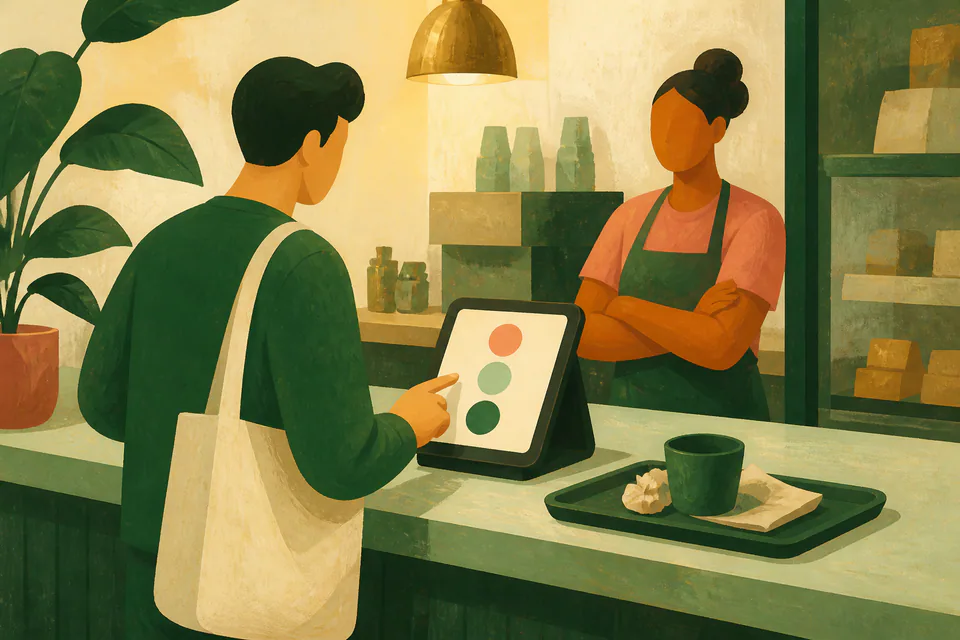
The touchscreen asks for a 25% tip while the cashier watches. What do you press?
At a counter-service shop, you place your own order, collect it, and clear the table. The payment screen suggests a twenty-five percent tip while an employee watches you choose.
When does a voluntary custom become an unfair social demand?