Listen through the publisher, then discuss the episode here or arrange an in-person Roundtable. Your city determines where to meet.
Roundtables are designed for groups of four, with a shared subject and room for everyone to speak. Come for discussion, with no dating expectation.
Senior civil servant Richard Jackson was used to dealing with top-secret government information. It was a responsibility he took extremely seriously. In his office, everything was locked away with complicated combination locks, with briefcases of information physically chained to officials' wrists when travelling between buildings. But on his way into the Cabinet Office one day, panic struck. Richard realised he had made a catastrophic mistake: he had left a secret file on the train. Richard tells Dr Sian Williams about the horror of being thrust into the public eye, the feelings of shame that followed, and how he used the experience to help others. Producer: Sarah Shebbeare If you are suffering distress or despair and need support, including urgent support, a list of organisations that can help is available at bbc.co.uk/actionline
Episode information is provided by the publisher. Listening takes place on the publisher’s service.
TONGUE: A Cognitive Hazard: https://a.co/d/6GU1oFe Uploaded 23-11-25 You’ve been walking around thinking you’re seeing the world, but really you’re just seeing whatever your language lets you have. Once you catch it in the act, it feels like finding a glitch in your own brain. Until this hits you, you don’t realize how much of your life has been pre-chewed, pre-labeled, and handed to you like baby food. And yeah, I’m about to show you the part that makes people sit in silence for a minute and rethink everything. Reality’s been on autopilot while language has been editing your perception like a drunk film editor. Every emotion, every memory, every “truth” you think you discovered—turns out most of it was installed, not chosen. Go ahead and watch the live demo in this video and feel how fast your mind slaps a label on anything it sees, like it’s terrified of raw experience. Once you try even two seconds of not naming something, you’ll feel the world punch through your skull in a way you
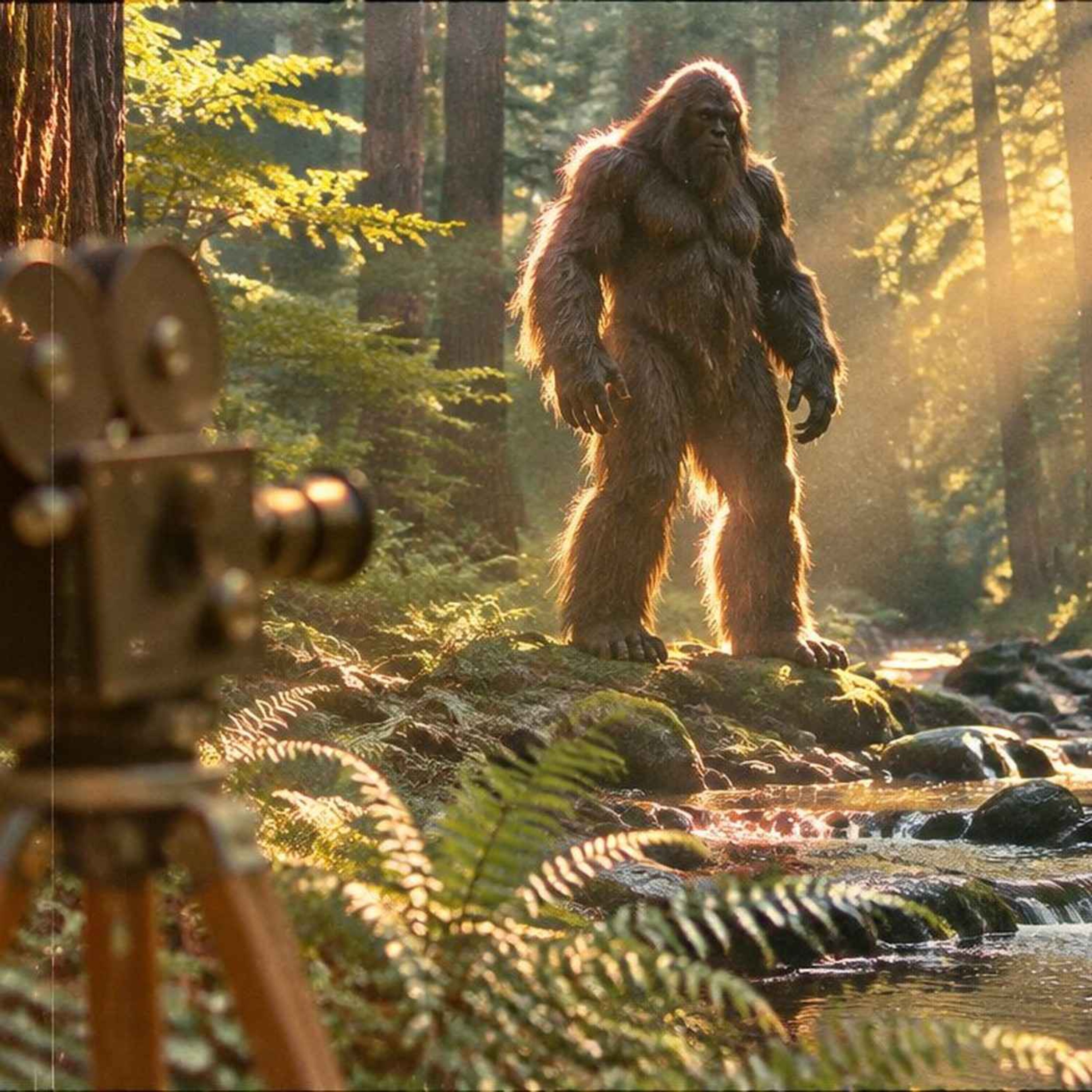
In today's brief: The Bigfoot rehearsal reel: a new documentary says a 1966 reel shows someone in a Bigfoot suit rehearsing the walk from the 1967 Patterson-Gimlin film. A radar ghost over Japan: a 1956 file in the Pentagon's eighth UAP release describes an F-86D that could never catch a target on its radar. The Forest Service's plaster casts: a 1982 investigation of giant tracks in the Umatilla National Forest, later called a very clever hoax. A flash over Cranbrook: seven fireball reports over British Columbia, not yet confirmed. Connecticut's Haunted History Trail: about 130 sites, from a 1647 witch hanging to the Mark Twain House. The sea pig's secret: an unknown bacterium living under the skin of deep-sea sea cucumbers. Quick hits: more Pentagon UFO files on a rolling basis, a soaked Sasquatch in New Jersey, and the last week of the million-dollar Bigfoot bounty. Every story and source: https://believepod.com/ufo-paranormal-news-23-november-2026/ New episodes every morning. Keep y
For nearly a year, a group of friends regularly explored the abandoned buildings of Taunton State Hospital in Massachusetts. They'd been through nearly every part of the property, but one basement remained a mystery, sealed behind a chained and padlocked door. Eventually, curiosity got the better of them. Armed with bolt cutters and flashlights, six friends made their way into the dark basement. At the far end, they discovered disturbing markings and what appeared to be bloodstains. Then one of them claimed something had touched her—and things quickly became terrifying. A piercing screech, flashlights suddenly going dark, and a frightening encounter with shadowy figures sent the group scrambling for the exit. They had spent months exploring the hospital without experiencing anything like it. Had they finally encountered something paranormal, or was there a reason that basement had been locked away? #RealGhostStoriesOnline #TauntonStateHospital #HauntedAsylum #AbandonedHospital #ShadowF
Imagine if every big change in our lives came with a whole community stepping up beside us… In this episode, I sit down with Dr Arne Rubinstein, former GP and emergency doctor, founder of the Rites of Passage Institute, and a man who's spent more than 30 years walking young people across the threshold into adulthood. Arne's work began around a fire at his very first men's gathering, listening to a hundred men wrestle with the same handful of wounds. Then in the Emergency Dpt, he kept meeting teenagers who'd pushed it one step too far... kids trying to become adults with nobody there to hold them. He came to believe every young person will go through a rite of passage either way. The question is whether we leave them to create their own, or gather around and help. We talk about why our culture is so good at turning away from the big moments - from first periods to menopause to death - and what opens up when we turn towards them. We explore: Separation, transformation and integration, an
Melania Trump faced fresh questions over the Jeffrey Epstein files, while Hakeem Jeffries confronted growing resistance to his bid for House Speaker. In an exclusive interview with Don, Rep. Robert Garcia discussed the battle for Democratic leadership, the fight to release millions of pages of Epstein-related documents, and his plans to hold the Trump administration accountable. Garcia addressed the possibility of subpoenaing First Lady Melania Trump as questions continued over her past acquaintance with Ghislaine Maxwell and claims made by Jeffrey Epstein. Meanwhile, Democrats faced an internal leadership showdown. Progressive lawmakers were withholding support from Hakeem Jeffries, Ayanna Pressley's name was being floated as a possible alternative, and Senator Chris Van Hollen was challenging Chuck Schumer for Senate leadership. Don also examined the White House's warning to Democrats pursuing investigations and asked whether the incoming congressional majority was prepared to use it
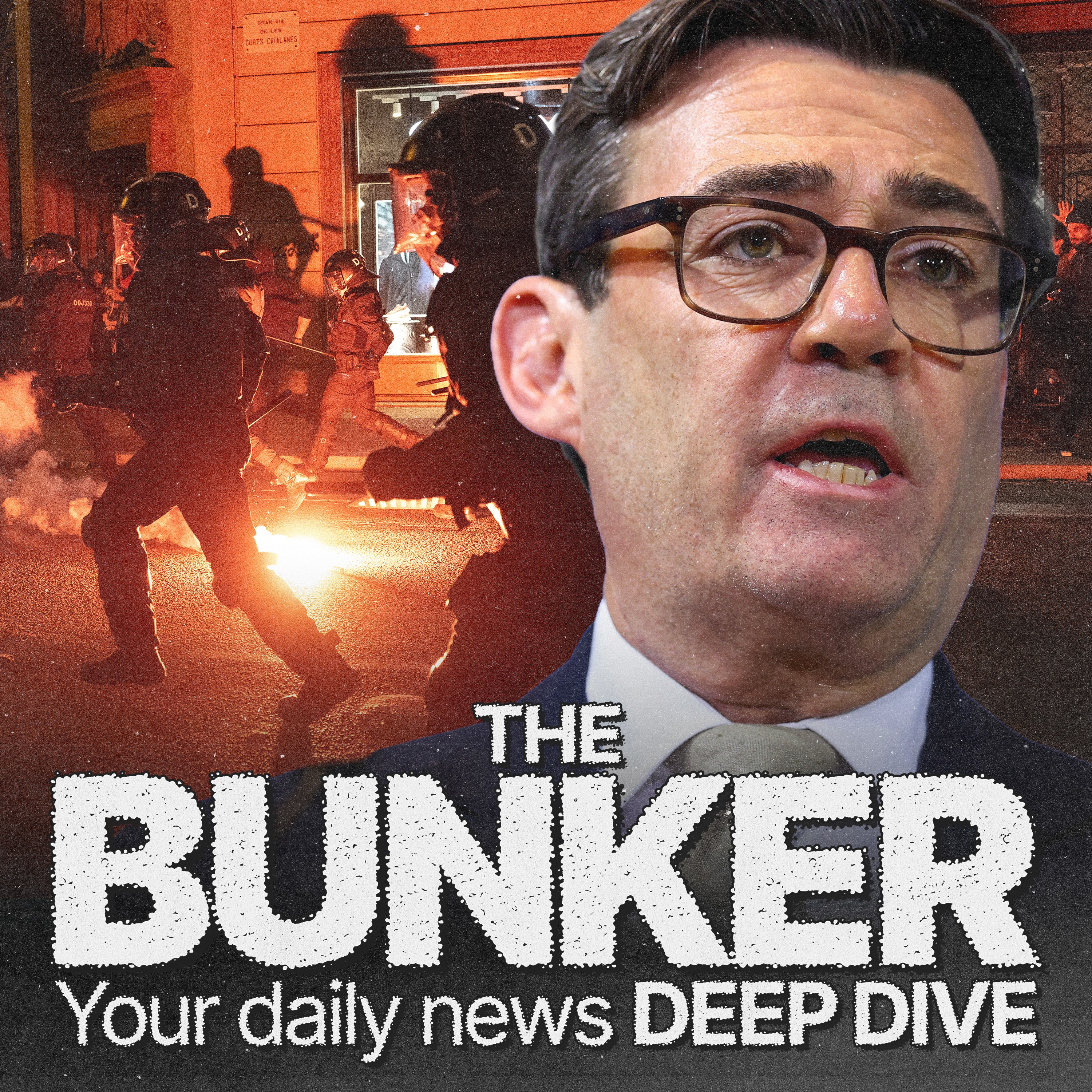
• Black Friday! Must end Tue Dec 15! Setting out the stories that will shape the week ahead… Burnham’s new EU deal gets the Continuity Brexiters foaming at the mouth. Are we ready for 2016 all over again? Plus why COP’s collapse might not be the disaster it seems, Europe digests the Trump/Xi/Putin tyrantfest, Spain teeters on the edge of admitting the far-right into Government… and don’t miss the supermoon. Ros Taylor and Andrew Harrison have the stories of the next seven days. • Don’t miss our mini-series The Conspiracy Files with Alex von Tunzelmann, starting on the Bunker feed on Tue 24 Nov. • Back The Bunker on Patreon (https://www.patreon.com/bunkercast/membership?vanity=bunkercast) to keep the podcast in rude health – and get early, ad-free episodes, merch and more. Written and presented by Group Editor Andrew Harrison with Ros Taylor. Produced by James Liddell. Audio production by Simon Williams. Music by Kenny Dickinson. Artwork by James Parrett. Managing Editor: Jacob Jarvis.
Keeping a league competitive is more important than maximizing rewards for its strongest teams.
Share your view, then see how readers voted. No sign-in required. This poll is shared across stories.
Do you agree or disagree?
Common Quandary
A Common Quandary to discuss
Another conversation to explore, separate from this news story.
You are vegetarian, but the leftover steak is headed for the trash. Do you eat it?
A vegetarian avoids buying meat because of animal welfare concerns. At work events, untouched meat is routinely thrown away, and eating it would neither increase demand nor cause another animal to be harmed.
Should a moral practice be judged by its consequences or its consistency?