Listen through the publisher, then discuss the episode here or arrange an in-person Roundtable. Your city determines where to meet.
Roundtables are designed for groups of four, with a shared subject and room for everyone to speak. Come for discussion, with no dating expectation.
In early November 2013, Super Typhoon Haiyan struck parts of Asia and Oceania, with the Philippines experiencing the brunt of the storm. It would prove to be one of the most powerful typhoons to hit land in recorded history. Joanna Sustento, who lived in Tacloban City during the disaster, was just 22 years old when she lost most of her immediate family. She tells Ryan Keane her devastating story of panic and grief. (Photo: A ship lying next stripped trees and building rubble and debris in Tacloban city's Anibong district and and a view of the same street ten years later. Credit: Ted Aljibe/AFP via Getty Images)
Episode information is provided by the publisher. Listening takes place on the publisher’s service.
Algorithms are fundamental to the story of mathematics – they’ve been around for over four thousand years. A theorem may prove that a solution to a problem exists, but an algorithm gives you the directions to actually find it. This lecture explores four key algorithms that have not just shaped pure mathematics, but have found unexpected applications in areas as diverse as nuclear physics, film-making, medicine, and music. This lecture was recorded by Sarah Hart on October 15th 2026 at Binks Hall, St John's College, Durham University, Durham. Sarah Hart was the first woman Professor of Geometry at Gresham College, and Acting Provost between March and October 2025. She is also Professor Emerita of Mathematics at Birkbeck, University of London. Professor Hart studied at Oxford and Manchester, gaining her PhD in 2000. Postdoctoral research and teaching followed, including a prestigious Engineering and Physical Sciences Research Council Fellowship, before she was appointed to a lectureship
Feeling overwhelmed by anxiety or experiencing a panic attack right now? This gentle guided meditation is designed to help you slow down, reconnect with the present moment, and find a sense of calm, one breath at a time. If you're feeling panic, begin at the very start. Through a soothing voice, gentle breathing exercises, and grounding techniques, you'll be guided to feel the support beneath you, notice your surroundings, and gradually release physical tension. As the meditation continues, you'll explore what happens in your body during a panic attack, why anxiety can feel so intense, and how to respond to those sensations with greater understanding and self compassion. Instead of fighting the wave of anxiety, you'll practise allowing it to rise and pass while remaining connected to the present moment. This peaceful journey includes: • Immediate grounding techniques for moments of panic • Gentle breathing with a longer, slower exhale • Understanding the physical sensations of anxiety
In 1920, 14 people attending a Gaelic football match in Dublin, Ireland were killed when British Military officers opened fire. In 1783, the first human took flight in a hot air balloon. In 1916, the Titanic’s sister ship, the Britannic, hit a mine in the Aegean sea and sank in 55 minutes, killing 30 people. In 2002, NATO extended official invitations to Slovakia, Bulgaria, Estonia, Latvia, Romania, Lithuania, and Slovenia to become new alliance members.
Tuvalu looks like paradise – a cluster of islands, with white sandy beaches lined with palm trees, surrounded by the deep blue of the Pacific Ocean. But the tiny nation, which is roughly midway between Australia and Hawaii, is facing the existential threat of rising sea levels, caused by climate change. The 11,000 or so inhabitants are reckoning with a future where their country may no longer be habitable. With world leaders meeting at the UN COP31 climate talks, we bring together three young women to share their experiences of life in Tuvalu. “I want my children to understand [Tuvaluan] values, to know the language,” Moeli tells us. “To know more about Tuvalu, you have to sit down, respect the elders, no talking when elders are talking, everything like that.”
Listen to the full 1 Hour plus Between Friends episode. Go Directly to this Patreon Episode "I Just Need Everyone to Go Away plus Unicorn Lifeguards, Stalkers, Trauma and Me Fully Melting Down" Picture this: Your houseguest arrives in an hour, the furniture delivery is a disaster, and the bed is in the WRONG room! Chalene shares the hilarious chaos of trying to move a massive bed herself, in a tight dress and heels, while Bret gets sent on an emergency hardware store run. But just when they think they've got it handled, things take a painful turn! This story is part of The Saturday Spill series a little peek into the wild, unfiltered stuff that usually stays on Patreon. Some weeks it's hilarious, some weeks it's jaw-dropping, but it's always real life that doesn't quite fit on the regular show. If you're into a little chaos and behind-the-scenes tea, you're in the right place. If you love it, amazing…you can listen to the full, unedited version here https://Chalene.com/more (https://ww
Charlie Kirk’s assassination will dominate the headlines—but before the truth is even clear, the disinformation machine is already spinning. This video exposes how suppression, radicalization, and division are weaponized—not by ideology, but by systems designed to keep you outraged, divided, and distracted. Uploaded 11-09-25 We’ll reveal: • Why suppression is the biggest red flag in history—and why it always signals weakness, not strength. • How highly suggestible people are radicalized—not by one side or the other, but through media outrage loops, algorithmic echo chambers, and deliberate manipulation. • The illusion of “left vs. right”—a distraction designed to pit neighbors against each other while corruption, corporate power, and elites escape untouched. • The common ground we all share: freedom, safety, stability, fairness—and what none of us want: corruption, endless wars for profit, elites with different rules, surveillance states, and justice systems that bend for the powerful
In 1976, the world was introduced to the underdog boxer Rocky Balboa. The film, which pitted an unknown challenger against the heavyweight champion of the world, made its star and writer, Sylvester Stallone, a household name. Stallone had written the script in three and a half days, but despite enthusiasm from producers for the story, he struggled to convince them to give him the part. Made with a small budget and on a tight deadline, the movie won three Academy Awards, including best picture. Produced by Tim O’Callaghan using interviews Sylvester Stallone has given to the BBC.
In 1984, doctors in the USA controversially transplanted a baboon heart into a baby girl when they couldn’t find a human donor. The baby, known as Baby Fae, had been born three weeks early and had been diagnosed with 100% lethal hypoplastic left heart syndrome. The surgery was led by Dr Leonard Bailey, who spoke to Rebecca Kesby in 2012 about the efforts to save Baby Fae. (Photo: Baby Fae listening to her mother's voice in the isolation unit. Credit: Loma Linda Hospital)
A new action-adventure computer game - designed in Scotland - became a surprise global hit in 1997. But Grand Theft Auto also courted controversy and sparked debate over violence and drugs in video games. In 2013, Paul Schuster spoke to Brian Baglow - one of the original team behind the launch. (Photo: Grand Theft Auto: Vice City 2003. Credit: John Ewing/Portland Press Herald via Getty Images)
Equipment rules should preserve fair competition even when they limit innovation.
Share your view, then see how readers voted. No sign-in required. This poll is shared across stories.
Do you agree or disagree?
Common Quandary
A Common Quandary to discuss
Another conversation to explore, separate from this news story.
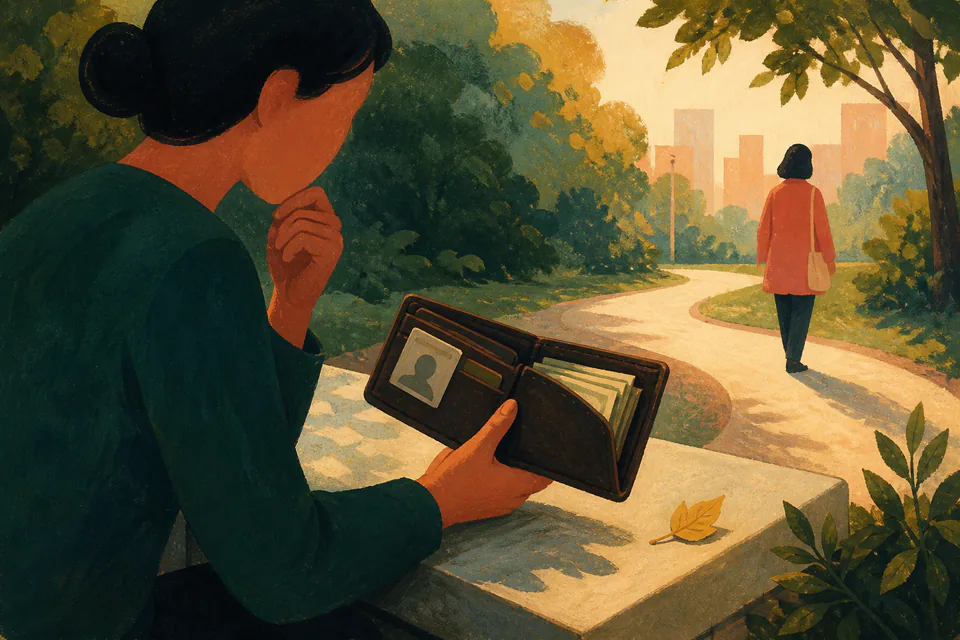
You find a wallet full of cash. Can you take a finder’s fee before returning it?
You find a wallet containing identification and several hundred dollars. Returning it will require a detour and some effort. The owner would probably never know if a small amount were missing.
Can an unrequested good deed entitle someone to compensation?