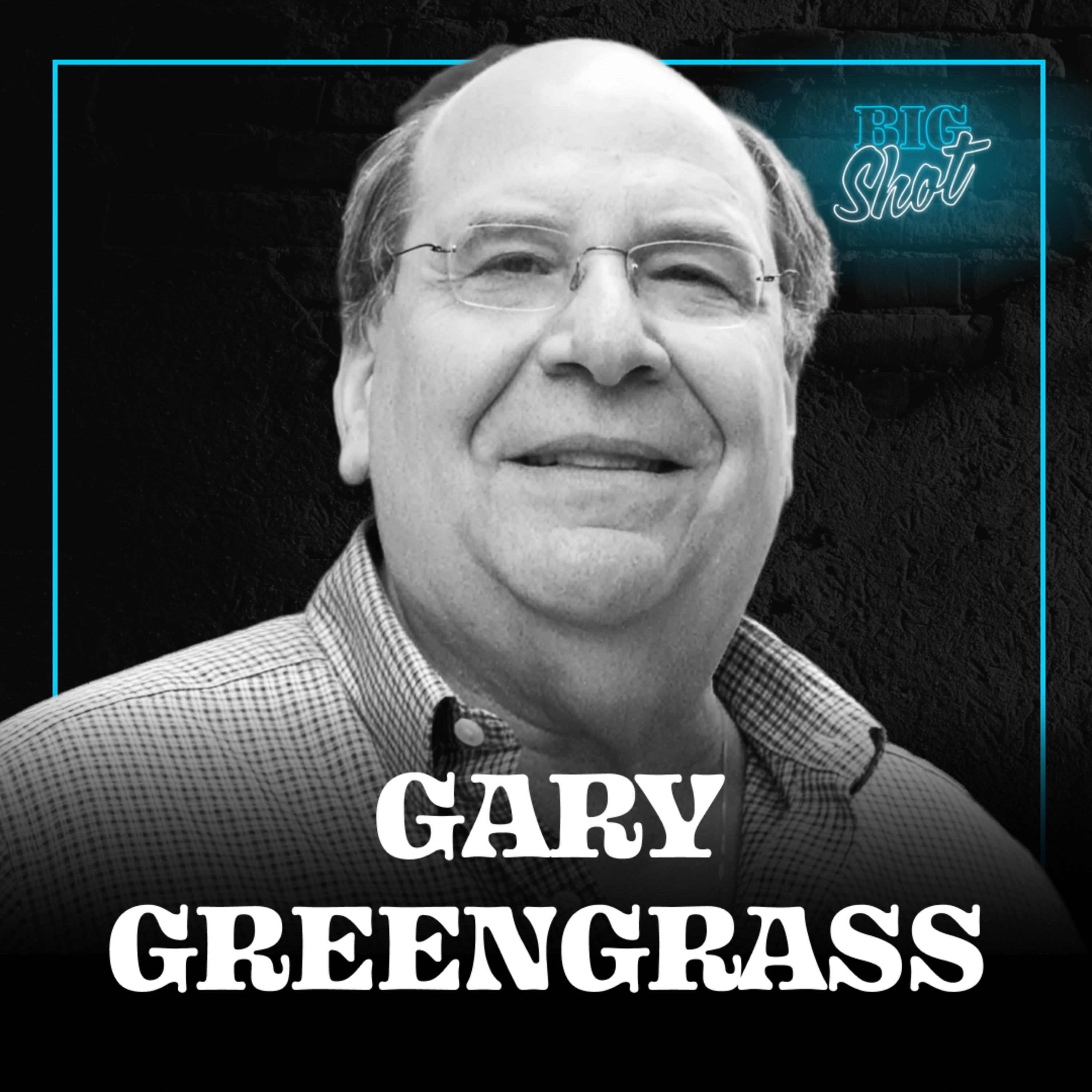
If the Walls at Barney Greengrass Could Talk | Gary Greengrass
34 min
Listen through the publisher, then discuss the episode here or arrange an in-person Roundtable. Your city determines where to meet.
Roundtables are designed for groups of four, with a shared subject and room for everyone to speak. Come for discussion, with no dating expectation.
Barney Greengrass started as a Jewish appetizing shop in Harlem in 1908. More than a century later, people still line up on Manhattan’s Upper West Side for its hand-sliced lox and house-made blintzes. In this episode of Big Shot, third-generation owner Gary Greengrass joins Harley Finkelstein and David Segal to talk about what’s worth changing in a family business and what’s worth protecting. He shares why he built up mail order, what keeps him behind the counter, and how three generations of New Yorkers have made the shop their own. — In This Episode We Cover: (00:00) Intro (01:35) What is a Jewish appetizing shop? (03:34) Harlem roots and keeping standards high (07:10) Expanding to Beverly Hills (08:32) Why they skip reservations (10:48) Joining the family business (13:28) Building the mail-order business (15:18) Why Gary is wary of private equity (17:40) Antisemitism and Hank Greenberg (23:27) The Sturgeon King and Law & Order (26:24) Gary’s go-to order (28:07) Working with his father and carrying on the business — Where To Find Gary Greengrass: • Barney Greengrass website: https://www.barneygreengrass.com/ — Where To Find Big Shot: • Website: https://bigshot.show/https://www.bigshot.show/ • YouTube: https://www.youtube.com/@bigshotpodcast • TikTok: https://www.tiktok.com/@bigshotshow • Instagram: https://www.instagram.com/bigshotshow/ (https://www.instagram.com/bigshotshow) • Harley Finkelstein: https://twitter.com/harleyf • David Segal: https://twitter.com/tea_maverick • Production and Marketing: https://penname.co (https://penname.co/)
Episode information is provided by the publisher. Listening takes place on the publisher’s service.
Why You Will Never Earn Your Fortune | Tony Robbins and Gary Vee: Creating a Money Machine | Tony Robbins Podcast Uploaded 14-05-19 In this episode of the Tony Robbins Podcast, we’re bringing you to the #AskGaryVShow. Gary Vaynerchuk is a serial entrepreneur and CEO and founder of VaynerMedia – a full-service digital agency servicing Fortune 500 clients across the company’s 4 locations. Gary has also made his mark as a public speaker, venture capitalist, New York Times bestselling author, and has been named to both Crain’s and Fortune’s “40 Under 40” lists. Gary is also the host of his podcast, The Gary Vaynerchuk Audio Experience, and of course, the ever-popular #AskGaryVShow, a business and marketing focused Youtube show with over 800,000 subscribers. Tony recently stopped by the Gary V Show to talk business, wealth, strategy and psychology. They discuss what it means to be Unshakeable, the power of gratitude, and their morning rituals, and they give advice to entrepreneurs and busin
What if the way to build a world-changing company is to stop chasing money altogether? In this episode of From Underdog to Entrepreneur, Pat Miller sits down with Naveen Jain, founder and CEO of Viome, a gut microbiome and personalized nutrition company, and co-founder and executive chairman of Moon Express. Naveen previously founded InfoSpace, Intelius, and Talentwise, and is the author of Moonshots: Creating a World of Abundance and the new book Counterintuitive: Unconventional Principles for Success in Life and Business. Naveen opens with gratitude for the opportunities he found as an immigrant in America, then shares the framework he uses before starting any venture: ask "Why this? Why now? Why me?" He explains how Moon Express became the first company to get permission to leave Earth orbit, helped change U.S. law so private companies can own what they bring back from space, and became one of six companies to win a NASA contract. Then his father was diagnosed with stage four pancre
It's backward. Almost entirely backward. And believing it backward is one of the reasons people stay where they are. Uploaded 28-09-26 The truth is the habits came first. Long before the money. The people who eventually built something were practicing the behaviors of wealth while they were still poor, still ordinary, with nothing in the bank to justify the way they were living. The money didn't create the habits. The habits created the money. And that changes everything. It means you don't have to wait. You don't have to arrive at some future amount before you're allowed to start becoming the person you want to become. Here is the truth: the money will test who you already are. Build the wrong person first and hand them money, and the money leaves. Build the right person first, and the money stays and multiplies. The habit is the foundation. The money is just the house you build on top of it. This seminar walks through ten habits you must understand about becoming wealthy before the w
Former Atlanta Braves closer John Rocker joins Patrick Bet-David to explain why he took steroids and what happened when MLB asked him to take a steroid test. He also revisits the 1999 Sports Illustrated interview that led to his MLB suspension and recalls returning to Shea Stadium in an SUV with bulletproof glass. --- ⚫️ SHOP BLACK FRIDAY SHOP THE NEW FLB SNEAKER BUSINESS PLANNING WORKSHOP GET THE FLB1s BET-DAVID CONSULTING 🇰 KALSHI SHOP THE ICON COLLECTION Ⓜ️ CONNECT ON MINNECT Ⓜ️ PBD PODCAST CIRCLES BOARDROOM CIGAR LOUNGE --- Valuetainment: https://www.youtube.com/@VALUETAINMENT Bet-David Consulting: https://www.youtube.com/@BetDavidConsulting VT Gen Z: https://www.youtube.com/@vtgenz Valuetainment Comedy: https://www.youtube.com/@ValuetainmentComedy --- ABOUT US: Patrick Bet-David is the founder and CEO of Valuetainment Media and the author of the #1 Wall Street Journal bestseller “Your Next Five Moves” (Simon & Schuster). He lives in Fort Lauderdale, Florida, with his family and i
A strong month makes you feel impressive. A slow one makes you question your worth. How much of your identity have you asked the business to carry? In this episode of The Level Up Podcast, Paul Alex breaks down how to care deeply about business results while keeping a fuller view of who you are. When every result becomes personal, admitting a problem can feel like admitting failure as a person. Paul explains how that pressure can interfere with the clear review the work actually needs. Friendships, family commitments, and interests remain meaningful alongside ambition. Giving one of those parts of life real attention can help you return to the business with a specific question about what needs improving. A result becomes easier to address when it stays connected to the work it describes. In this episode, you’ll learn: • How business performance can become an unfair measure of personal worth. • Why protecting an identity can get in the way of correcting a problem. • What commitments out
On January 13th, 1999, eighteen-year-old Hae Min Lee disappeared after leaving Woodlawn High School outside Baltimore. Four weeks later, a man walking in Leakin Park found her strangled in a shallow grave. In 2000, a jury convicted her ex-boyfriend Adnan Syed of her murder. In Part 1 of Murder: True Crime Stories, host Carter Roy examines Hae's life, the friend of Adnan's who pleaded guilty to helping bury her, and the podcast that made her case famous while telling almost nothing about her. This episode contains descriptions of extreme violence and may not be suitable for all audiences Follow Murder: True Crime Stories for Part 2 of this episode: https://pod.link/1745145932 To hear episodes ad-free, subscribe to Crime House+. Need More to Binge? Follow me on Social Instagram: @Crimehouse (https://www.instagram.com/crimehouse/) TikTok: @Crimehouse (https://www.tiktok.com/@crimehouse) X: @crimehousemedia (https://x.com/crimehousemedia)
Danny Meyer grew up in a Jewish family in St. Louis with two competing lessons about business: his father’s entrepreneurial spirit taught him to dream big, while his bankruptcies taught him the risks of growing too fast. With an early love of food, travel, and hospitality, Danny opened Union Square Cafe at 27. He went on to build Union Square Hospitality Group, behind celebrated restaurants like Gramercy Tavern and The Modern, and founded Shake Shack, turning a project to revitalize Madison Square Park into a global restaurant chain. In this episode of Big Shot, Harley Finkelstein and David Segal explore how Danny’s upbringing shaped his approach to entrepreneurship, his deliberate expansion, and the stories behind his iconic restaurants. They also discuss the difference between service and hospitality, building enduring teams and cultures, and the optimism that keeps Danny asking, “What could possibly go right?” — In This Episode We Cover: (00:00) Intro (03:13) Growing up Jewish in St
Polluters should pay cleanup costs even when the damage occurred many years ago.
Share your view, then see how readers voted. No sign-in required. This poll is shared across stories.
Do you agree or disagree?
Common Quandary
A Common Quandary to discuss
Another conversation to explore, separate from this news story.
Your best friend is an AI that profits when you stay lonely. Is the friendship real?
A lonely adult considers an AI companion their closest confidant. The service is always patient and supportive, but the company profits when users spend more time engaged with it.
Does a comforting system have a duty to make itself less necessary?