Inside Olympia -- School Choice Tax Credit Discussion
56 min
Listen through the publisher, then discuss the episode here or arrange an in-person Roundtable. Your city determines where to meet.
Roundtables are designed for groups of four, with a shared subject and room for everyone to speak. Come for discussion, with no dating expectation.
On this episdoe of Inside Olympia: Should Washington opt into President Trump's school choice tax credit? The deadline to decide is coming up and a chorus of voices on the left and right say yes, but opponents insist it's a bad deal for Washington. We debate this issue. On the program Laura Ruderman, CEO of the Technology Alliance and Mike Preiner, Founder of the Math Agency. Plus, State Superintendent of Schools Chris Reykdal.
Episode information is provided by the publisher. Listening takes place on the publisher’s service.
Today, former prime ministers including Brexit negotiations veteran Theresa May have been giving their verdicts on Andy Burnham’s UK-EU reset deal. Theresa May told Laura she was “slightly aghast” at some of Burnham’s language about moving closer to the EU. She said her advice to the new PM was “people voted for Brexit. Brexit is done. Just accept Brexit and move on.” Plus, Tony Blair told the Sunday Times "I was painted as saying Britain should just go back and rejoin - I'm not saying that - it's heavily conditioned". Laura, Paddy and Henry at home discuss whether their interventions will weigh on Andy Burnham’s mind. You can now listen to Newscast on a smart speaker. It works on most smart speakers. New episodes released every day. The presenters were Laura Kuenssberg and Paddy O’Connell. It was made by Anna Harris with Jesse Fox. The social producer was Sophie Millward. The technical producer was Mike Regaard. The assistant editor is Chris Gray. The senior news editor is Sam Bonham.
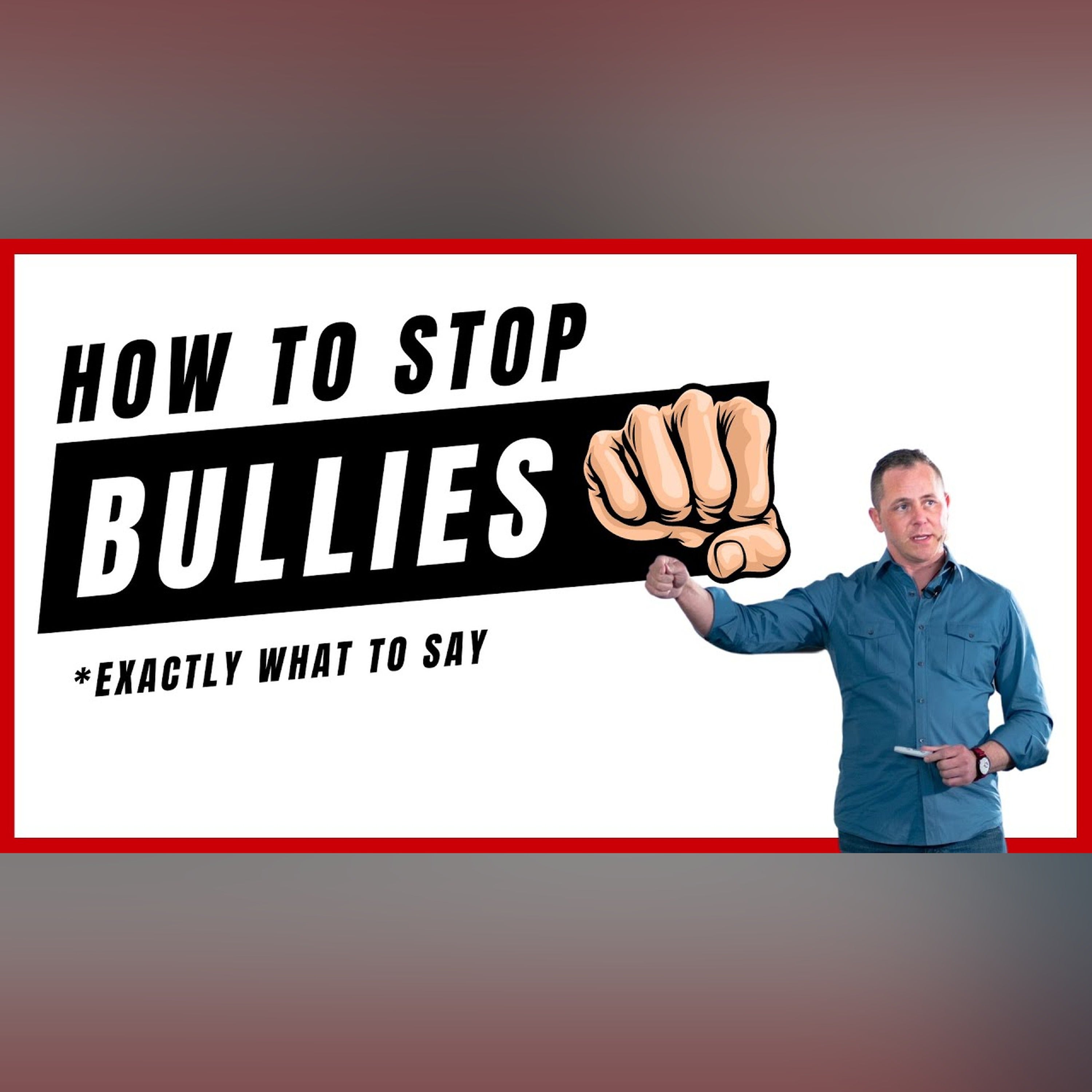
Join NCI University today to master human behavior and influence: Uploaded 03-09-22 Bullies come in all shapes and sizes. In this video, I'll walk you through what bullying is, the types of bullies, how to identify them, and how to deal with them, with direct word-for-word examples. Bullying is unwanted, aggressive behavior among school aged children that involves a real or perceived power imbalance. The behavior is repeated, or has the potential to be repeated, over time. Both kids who are bullied and who bully others may have serious, lasting problems. In order to be considered bullying, the behavior must be aggressive and include: An Imbalance of Power: Kids who bully use their power—such as physical strength, access to embarrassing information, or popularity—to control or harm others. Power imbalances can change over time and in different situations, even if they involve the same people. Repetition: Bullying behaviors happen more than once or have the potential to happen more than
Screen time in schools, kids and AI: why Australian students just posted their worst ever reading and maths results. The federal Education Minister says screens are part of the problem. Sweden led the world putting tablets in classrooms and is now pulling them back out. NSW will cap kindy kids at 15 minutes of screen time a day from next year. So were the "hippie" Steiner schools ahead of their time all along? Karl sits down with Andrew Hill, CEO of Steiner Education Australia, which represents 53 schools that keep screens out of early childhood classrooms. Andrew explains why some Silicon Valley tech executives sent their own kids to a screen-free Steiner school, who has profited from a laptop for every kid ("the terrible thing about handwriting is that it's free"), and why he believes Bluey's creator modelled the show's school on a Steiner school in Queensland. Karl also puts the tough questions: Will kids without screens be left behind? Is it all woo-woo? What about bullying, fees a
Alex Murdaugh was a thief and a liar by his own admission. Does that mean a jury can skip the hard work of examining the murder evidence? Psychotherapist Shavaun Scott joins Tony Brueski to untangle the psychological problem behind Murdaugh's upcoming retrial: people can be furious about what someone did and still owe him a fair decision on what prosecutors have actually proved. Murdaugh's convictions for killing his wife Maggie and son Paul were overturned in May 2026 after South Carolina's highest court found improper influence by former clerk Becky Hill. His new trial is scheduled for April 5, 2027. The evidence dispute is not going away, either. Defense lawyers claim the lead investigator misled grand jurors about blood spatter on Murdaugh's shirt; prosecutors reject the claim that the grand jury was materially misled and emphasize the kennel video and other evidence. Tony also walks through the removal of Juror 785, Myra Crosby. She was dismissed just before the closing arguments
Countries are leaving the UN's annual climate summit without reaching an agreement after the European Union and others rejected the final deal. As Candice Cole reports, the biggest sticking points were around fossil fuels. Washington's governor has called the video of two people being arrested by ICE at an airport in Seattle "chilling." Heidi Petracek reports on the cancellation of a federal government program that helped community groups sponsor and support refugees coming to Canada. David Murdock on the election of the new Liberal leader in Nova Scotia. Melissa Ridgen reports on warnings from the trucking industry that bridge and overpass strikes in Western Canada are only going to get worse. Heather Yourex-West takes us through the new Airbnb rules and what they mean for hosts and guests. Plus, Felicia Parrillo introduces us to three Montreal students who won an international NASA competition.
This week on The Necessary Conversation, it's Chad, Haley, and Mary Lou. Bob is still recovering but sent in a video message about Trump calling Putin his friend that we watch together. 🇷🇺 Trump held the first-ever three-way talks with Putin and Xi, called it a "12 out of 10," and produced nothing. Then at a press conference he called Putin his friend — and when asked if Putin is a friend to America, the president of the United States said, "I can't speak to America." That same day, Trump's friend Putin launched massive strikes into Ukraine, hit Poland with two missiles — an act of war against a NATO ally — then struck near a Ukrainian restaurant and drone-bombed the first responders, killing a 7-year-old child and a 20-year-old paramedic. We watch Bob's video and ask Mary Lou: is Russia our friend? 🇨🇳 The House Foreign Affairs Committee revealed Trump's Commerce Department approved nearly 880,000 advanced AI chips for Chinese military-linked companies including Alibaba, Tencent, a
On this episode of Inside Olympia ... Retiring Washington state Rep. Larry Springer, D-Kirkland, reflects on 22 years in the House, including his work on charter schools, wildfire prevention and small-business advocacy. The deputy majority leader discusses his increasingly progressive Democratic caucus, qualified support for the millionaires tax, concerns about state spending and the challenge of holding political allies accountable.
On this episode of Inside Olympia: The new state librarian Melody Skye Weaver discusses budget cuts, restricted access to historic collections and a proposal to return the State Library and Archives to the Capitol campus in a new public building. Also on this episode, Washington Democrats expand their legislative majorities after the midterm elections. Journalists Paul Queary of The Washington Observer and Jerry Cornfield of the Washington State Standard assess the results.
Youth sport should prioritize lasting participation over early selection of elite performers.
Share your view, then see how readers voted. No sign-in required. This poll is shared across stories.
Do you agree or disagree?
Common Quandary
A Common Quandary to discuss
Another conversation to explore, separate from this news story.
A stranger is behaving horribly in public. Do you record them?
You witness a stranger berating a service worker in public. Recording could create accountability and protect the worker, but posting the video could expose everyone involved to a permanent online audience.
Who gets to decide when public behavior becomes public content?